
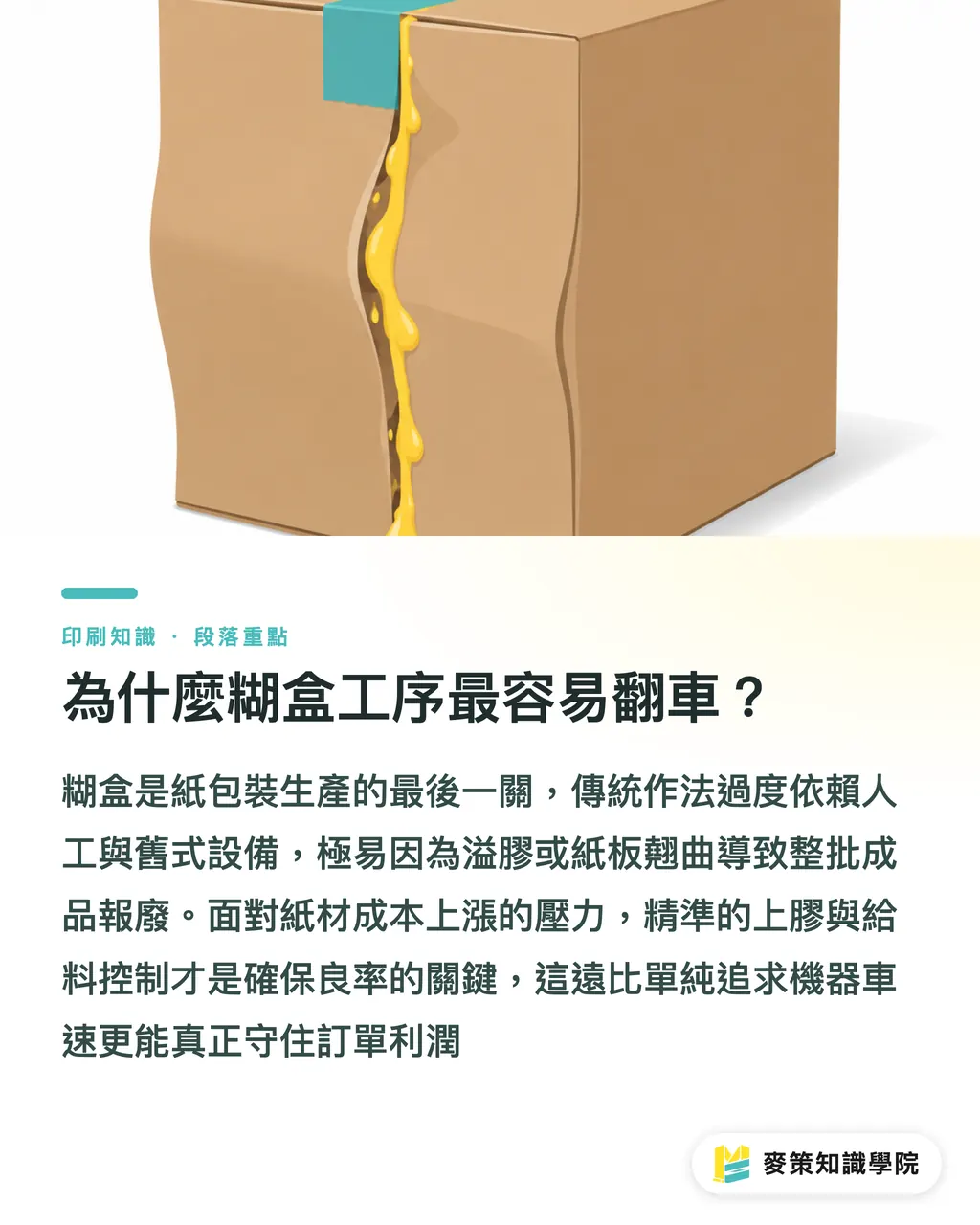
Why Does Folding and Gluing Go Wrong So Easily?
Because traditional methods lean too heavily on manual taping and outdated glue guns. The moment glue volume slips out of control, you get immediate squeeze-out or warped board
Folding and gluing is the final gate on any carton production line. No matter how crisp the printing or die-cutting looked earlier, bad glue application scraps the entire run. A while back, while looking at flexible packaging conversion for tea boxes, I noticed converting precision was almost always the yield killer. Looking at standard folding cartons today, it is the exact same story. Talking to clients lately, everyone says e-commerce box requirements have shifted. It is a harsh reality. More and more jobs demand double-sided adhesive tape and tear strips
The old way depends heavily on manual hand-taping, or early feeding systems that lack precision. You have definitely seen this happen: tape goes crooked by a single centimeter, the client flags it as a visual defect, and the whole batch gets rejected. If you run liquid glue and lay down slightly too much, compression squeezes it out and glues neighboring boxes together. If you back off the glue volume to avoid squeeze-out, the box pops open because the bond is too weak. And if you coat a large surface area, too much moisture will cause the board to warp
On top of that, recent consolidation among European paperboard giants (like MM acquiring RDM Arnsberg) has stirred up prices for recycled fiberboard across Asia. When raw paperboard costs rise, every single box you scrap eats directly into your net margin. That is why I always say: when evaluating a folder-gluer, do not just look at top running speed. Accurate feeding and metering control is the hard metric that decides whether you lose money on a job
How Did Germany's Bromberger Solve Their Taping Bottleneck with APR?
They mounted two APR applicator heads directly onto their existing Bobst line. The equipment applies double-sided tape and tear strips with automated precision, completely replacing agonizing manual labor
Let us look at this real-world overseas case. Bromberger Packungen in Germany is an established packaging plant with over a hundred workers. Their shop floor print capabilities have always stayed ahead of the curve, running Offset-IIIb format litho presses alongside modern CtP prepress setups. But plant manager Christof Bromberger noticed that as client demand for double-sided tape and tear strips surged, manual taping simply could not keep pace with delivery deadlines
They brought in Peter Altmann, head of Altmann Graphische Maschinen, for an evaluation. In the end, they decided to retrofit two metered applicator heads (Applikatoren) from Italy's APR Solutions onto their active Bobst folder-gluer
APR metered applicator heads: Automated dispensing units developed by APR Solutions in Italy. They precisely control the length and placement of double-sided tape and tear strips, or meter out liquid glue volume. They mainly serve to remove manual error and keep bonding yields consistent across production runs
These two units mount on the side of the machine, each equipped with its own control unit so operators maintain full command over feed conditions. This is not about telling plant owners to buy brand-new machines. It is about using modular add-ons to take variables that once relied on human guesswork and turn them into quantifiable constants on a control screen. Accurate, metered feeding guarantees that every single package sees identical bonding conditions
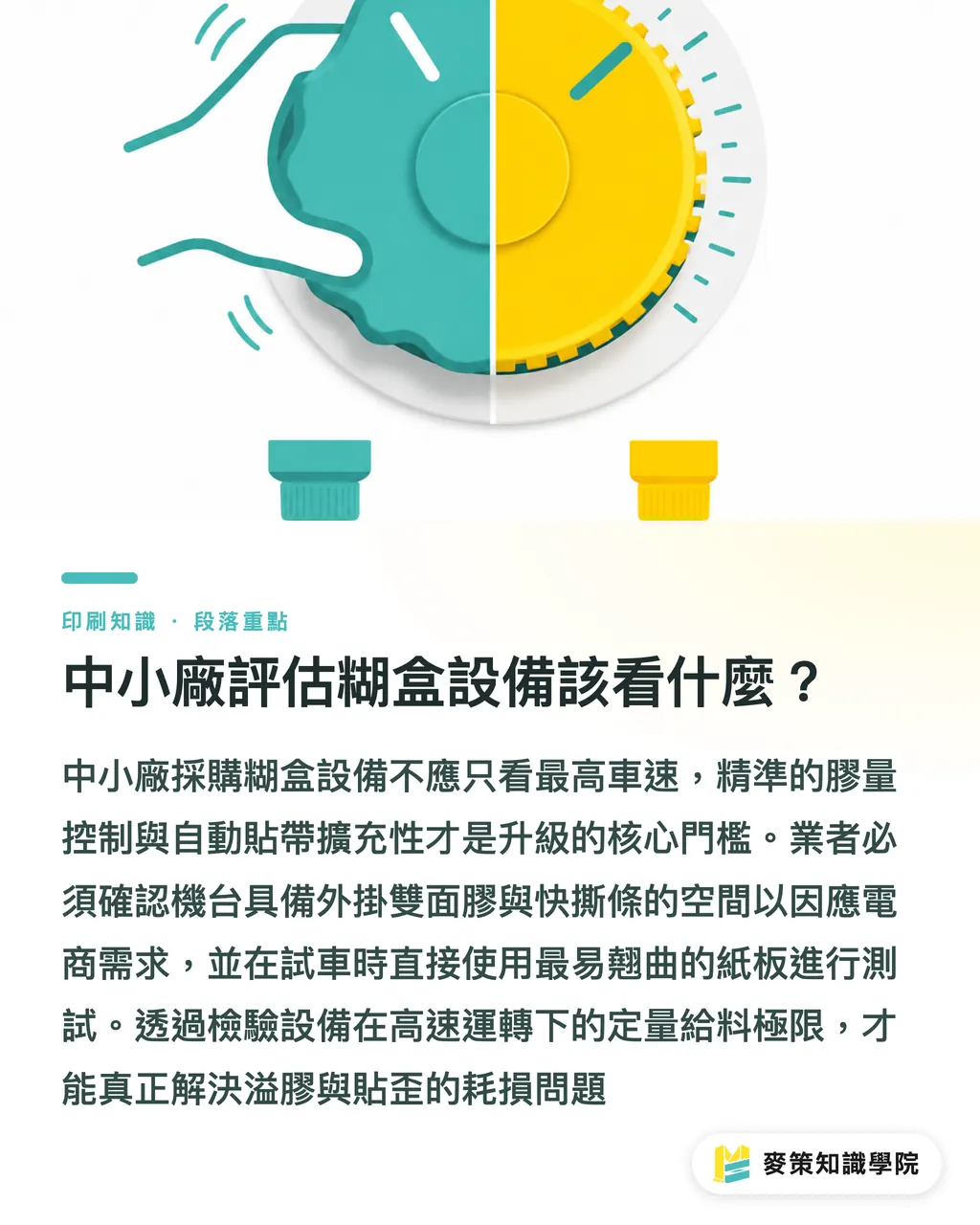
What Should Small and Mid-Sized Plants Look for in Folding and Gluing Equipment?
Do not just look at top running speed. Make precise glue volume control and automated taping modularity your core benchmark for purchasing and retrofits
Bringing this overseas example back home, smaller converters should not just copy model numbers, but build metered dispensing thinking into their equipment procurement checklist. Looking across different upgrade routes on the market, here is a direct comparison between manual labor and automated systems:
・Traditional manual taping: Zero upfront equipment investment, high risk of delivery delays on large runs, and yields fluctuate wildly with operator fatigue
・Older basic dispensers: Moderate cost, weak placement control, and prone to skipped tape or crooked application at high running speeds
・High-end metered applicator heads (like APR): Requires hardware investment, delivers pinpoint placement and cut length, and offers painless expansion for double-sided tape and tear strips
If you are preparing to upgrade your production line, reach out to the Mai Strategy Knowledge Academy consulting team to apply our Three-Stage Print Verification framework to your folding and gluing section:
1. Stage one, audit bonding scrap across existing orders: Take stock of the return rate over the past six months caused by glue squeeze-out, crooked tape, or weak bonds. If more than 30% of defects stem from this, upgrading your dispensing module is overdue
2. Stage two, assess modularity for automated taping: Tear strips are now practically mandatory for e-commerce cartons. When buying new machines or retrofitting existing units, always verify whether there is enough clearance along the side frame to mount tape and tear strip applicators
3. Stage three, test the limits of metered control: During trial runs, intentionally feed the thinnest or most warp-prone board. Verify whether the system can dial glue down to an absolute minimum at high speeds without hurting tensile bond strength
How Can Designers and Buyers Dodge Folding and Gluing Traps?
To avoid disaster, buyers must ask converters about their post-press automation level when requesting quotes, and lock down glue and tape specs right during the proofing phase
Folder-gluer yields are not just a headache for press shop owners. Over recent years, I have consistently reminded packaging designers and prepress teams that consolidation among European paperboard giants has made board grades and pricing much more volatile. If you specify lightweight board or stock with moisture-resistant coatings, downstream folding and gluing is primed to go off the rails
Too many print buyers focus solely on the unit price on print quotes without asking whether the supplier uses manual hand-taping or automated equipment. Manual taping can scrape by on short runs, but when peak shopping season hits with massive order volumes, delivery schedules grind to a dead halt in the finishing department. Even if orders rush out the door, customer complaints about crooked tear strips or glue squeeze-out land squarely back on the brand
During sampling and proofing, make positioning accuracy a required acceptance criterion. If a plant cannot provide stable trial samples for complex carton shapes and falls back on excuses about operator touch or gut feel, that is a glaring red flag. Knowing equipment limits allows you to design out structural bottlenecks right at the drawing board. It is that simple

Key Takeaways
・Top folder-gluer speed is just a vanity figure. Precise glue metering is the hard metric that dictates final yield and waste
・To handle e-commerce tear strips and double-sided tape, fully automated applicator heads eliminate human error and operator fatigue entirely
・Before upgrading equipment, audit return rates from glue squeeze-out and crooked taping on existing jobs, and confirm whether new machines support plug-and-play applicator retrofits
Food for Thought
For printers in Taiwan, higher paperboard costs are here to stay, which means finishing scrap must be squeezed down to the bare minimum. Instead of constantly hunting for scarce skilled hands to tape boxes manually, allocate budget to high-precision metered applicators during the next equipment cycle. Brand-side print buyers should also vet a plant's folder-gluer setup when placing orders. It is often the hidden guarantee of on-time delivery and squeeze-out-free cartons
Further Reading
FAQ
- What is an APR metered applicator head?
- An automated dispensing module developed by Italy's APR Solutions. Mounted directly on folder-gluers, it accurately controls the length and placement of double-sided tape and tear strips, or dispenses precise volumes of liquid adhesive, replacing erratic manual labor
- Can I install an automated taping module on an older folder-gluer?
- Most mainstream machines (such as Bobst) have the frame space and connection points needed to mount these standalone control units. However, it is best to have an equipment technician inspect side clearance and carton travel paths along your line first
- What is the biggest benefit of adopting an automated taping head?
- The most direct payoff is a dramatic jump in production yield. Machine feeding guarantees identical tape length and placement on every single carton, eliminating common manual issues like crooked tape, glue squeeze-out, or missing strips while saving significant labor
Related articles




The Print × AI weekly
The print and AI know-how designers, brands and enterprises can use before they commit — one email, every week
MINDS Free Tools
Spine width and imposition calculators — skip the manual math, free in your browser.
MINDS Group
Need actual printing or gifting services?
From premium printing to online ordering and festive gifts — the MINDS Group sister brands take it from here.