

One Year Into the Amcor-Berry Deal: What Does the Scorecard Say?
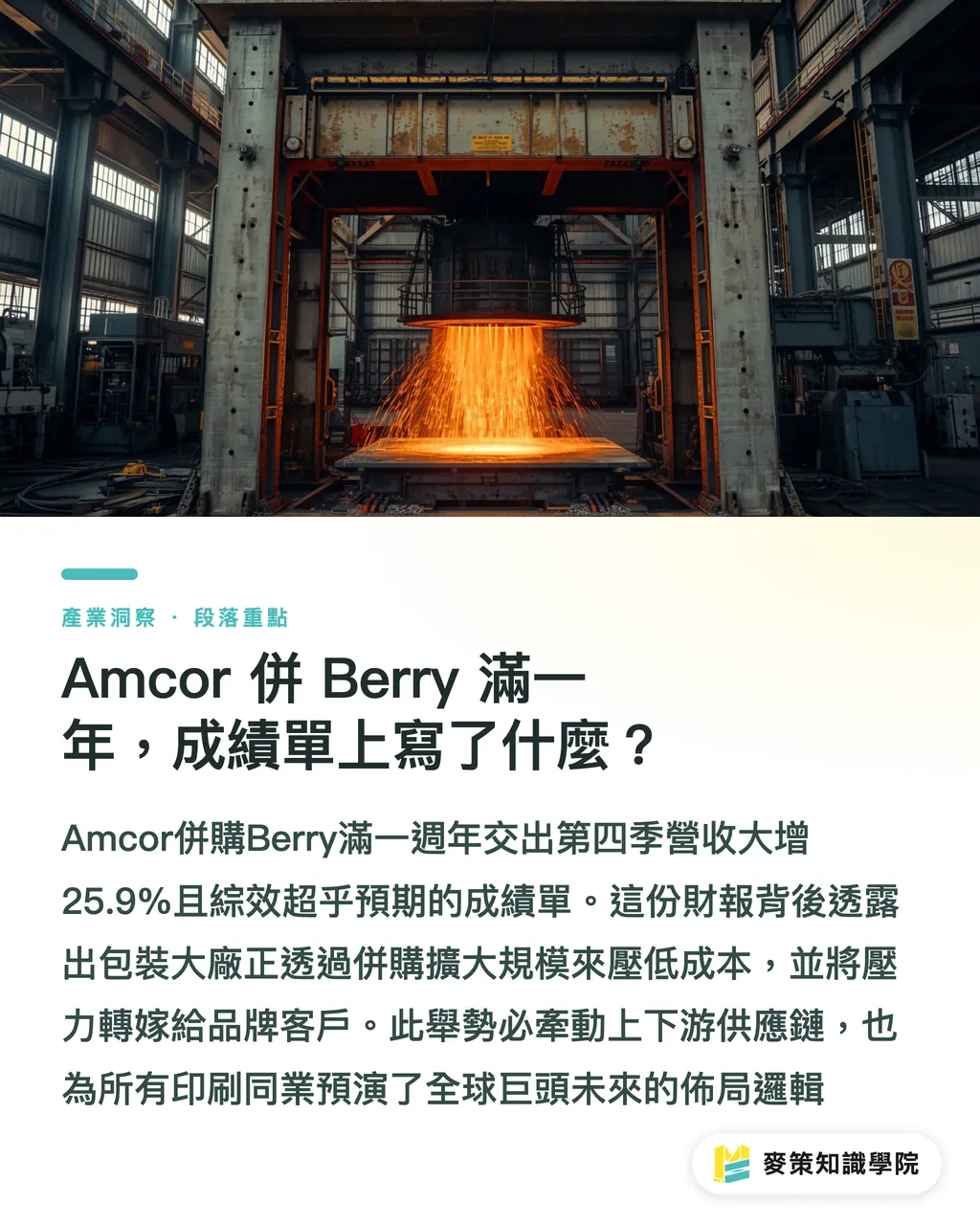
In August 2026, Amcor released earnings marking the one-year anniversary of its Berry Global acquisition. Fourth-quarter net sales hit $6.4 billion, up 25.9% year-over-year. Global flexibles brought in $3.53 billion, while rigid packaging generated $2.87 billion, surging 37.6% year-over-year, largely fueled by the deal. On the earnings call, CEO Peter Konieczny stated plainly: 'Synergies are tracking ahead of expectations.'
In other words, this merger is not just adding revenue numbers together. It is an overhaul of cost structures, customer bases, and product lines. CFO Stephen Scherger added that sales momentum starting in July has carried forward the fourth-quarter trend
For readers in Taiwan, the key takeaway is not the numbers themselves, but the logic behind them. Packaging giants use acquisitions to buy scale, use scale to drive down costs, and pass that pricing pressure onto brand clients. If this playbook continues, upstream raw material suppliers and downstream contract manufacturers will both be dragged along
Every printing professional should watch this space closely. It previews the answer to what a top global packaging group does when building its long-term playbook
What Are the Giants Consolidating? 3 Key Pillars
From my years observing production floors and client accounts, Amcor's integration clearly centers on three main pillars:
・ Bulk procurement: Combining flexible and rigid packaging lines doubled purchasing volumes for raw materials (PE, PP, PET resins, and paper substrates), massively boosting bargaining power against upstream resin and film suppliers
・ Unified material platforms: Amcor and Berry are narrowing overlapping categories (like food pouches, medicine bottles, and HDPE containers) into a single supply chain, cutting SKU complexity
・ Heavier sustainability R&D: Post-merger capital expenditure is tilting heavily toward recycled materials, mono-material recyclable design, and flexible film recycling technologies
These three pillars share a common goal: pushing unit costs down while raising switching barriers. Once brand clients adopt Amcor's integrated solutions, switching to another supplier becomes much harder because material certifications, tooling, and recycling workflows all have to start from scratch
What this means for Taiwan's small and midsize OEM factories: you are no longer just competing on price against local peers, you are competing on speed and agility against an already integrated global package
Where Is the Red Ocean for Smaller Plants? 3 Emerging Warnings
Looking at recent client engagements and projects, three warning signs have already surfaced:
・ Red Ocean 1: Commodity items like generic flexible pouches, HDPE bottles, and medicine containers. With massive scale, it is no surprise if giants slash unit prices by 5 to 10 percent. Going head-to-head here will only hurt smaller plants
・ Red Ocean 2: The early-mover advantage in mono-material recyclable design. Giants like Amcor are locking in long-term contracts with brands, tying up recyclable packaging capacity for the next 3 to 5 years. If smaller factories do not enter now, they will be left doing low-margin contract work under someone else's certification
・ Red Ocean 3: Compliance and regional regulatory response. Regulations across California, Virginia, and the EU's PPWR (Packaging and Packaging Waste Regulation) keep shifting. Big players have dedicated legal and compliance teams, while smaller plants are often caught flat-footed
Simply put, the big getting bigger is old news. The real news is that giants are locking in clients with unified material platforms and compliance packages. Small and midsize printers sticking only to a 'cheaper price, faster turnaround' mindset will struggle hard next year
Do not panic yet, but do not stand still either
How Can Taiwanese OEM Plants Survive? 4 Actionable Steps to Take Now
Instead of getting dragged into a price war, choose your ground proactively. Here are four moves I recommend clients evaluate right away:
・ Commit to niche categories: Medical packaging, electronic moisture-barrier pouches, specialty foods (infant nutrition, functional beverages), and luxury cosmetic boxes. These come with high certification barriers and strong customer retention, areas packaging giants might not bother customizing for
・ Build local compliance capabilities: Package regulatory advisory (such as PPWR, California labeling rules, or Virginia foam bans) into a service you sell to brands, instead of just selling cardboard boxes
・ Early investment in mono-material design: Lock in supply agreements for recycled resin feedstocks with upstream producers now, and submit sample batches for certification before big players tie up the market
・ Speed and flexibility: Compress turnaround times to 7 to 10 days and support high-mix, low-volume orders. Large corporate structures cannot easily do this, so turn it into invisible value beyond your base quote
If you are not sure where to start, look at MINDS and their hands-on track record in mid-to-high-end bespoke commercial printing. Start by dialing in the entire workflow with one product line and one client
For brand decision-makers, these four moves apply just as well. When vetting suppliers, the question is no longer 'how much does your machine run per hour?' but 'can you help me handle regulatory compliance and material upgrades?'
How Should Brand Clients Read This Earnings Report? 2 Immediate Audits
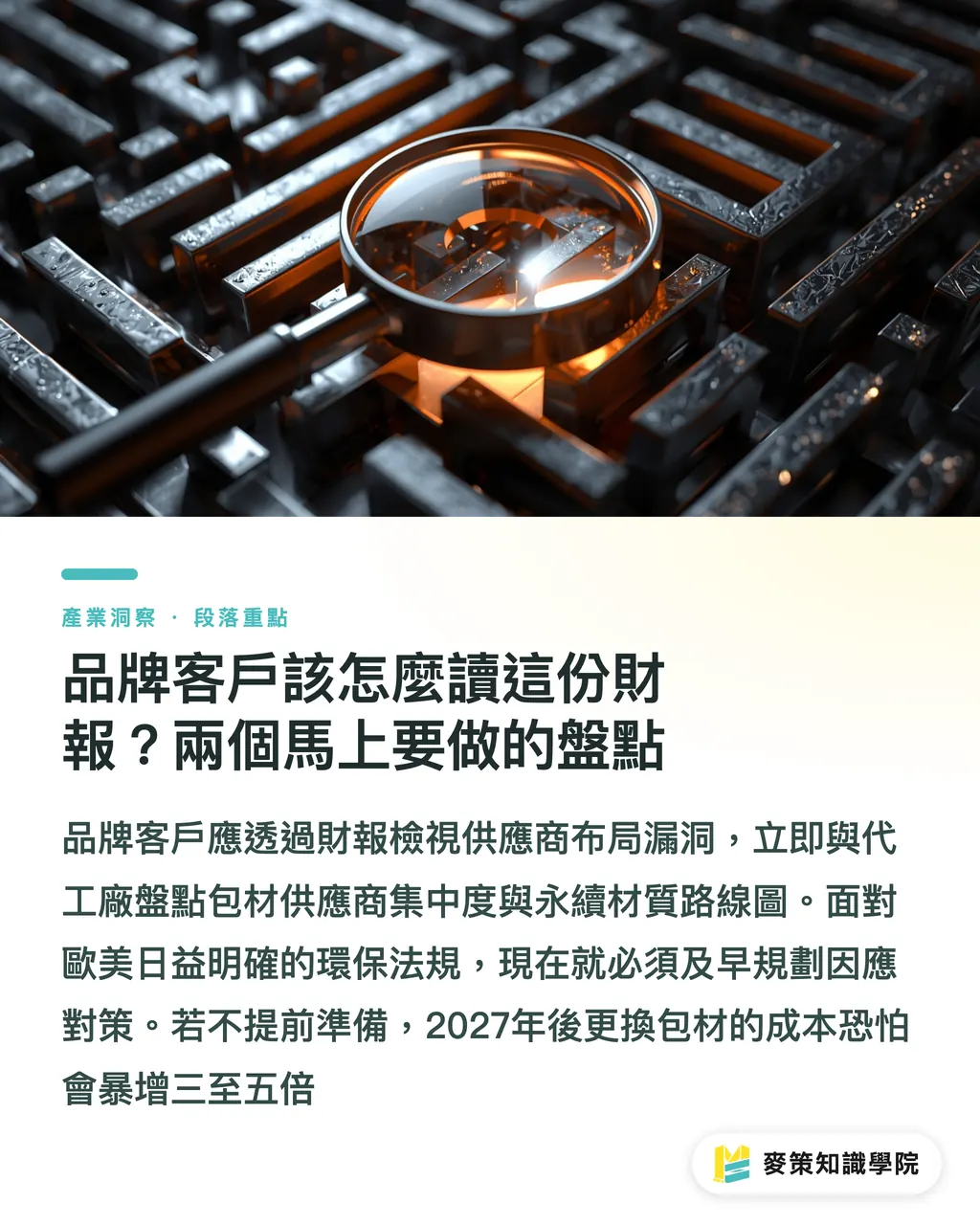
Earnings reports are not just industry gossip. They show where your supplier network might be vulnerable. We recommend brands conduct two audits right away:
・ Audit supplier concentration: If any single packaging supplier accounts for over 40% of your volume, start mapping out backup options. Mega-mergers often lead to client tiering that leaves midsize accounts deprioritized
・ Audit your sustainable materials roadmap: Timelines for the EU's PPWR and California's SB 54 (single-use packaging laws rolling out over the next few years) are set in stone. If you do not plan today, switching packaging materials after 2027 could cost three to five times more
Neither audit needs to wait until year-end. You can sit down with your contract manufacturers and start talking today
Key Takeaways
・ One year after Amcor acquired Berry, Q4 net sales grew 25.9% year-over-year, with synergies beating expectations
・ The three pillars of consolidation among packaging giants are bulk procurement, unified material platforms, and expanded sustainability R&D
・ The red oceans for Taiwan's smaller plants are commodity flexible pouches, HDPE bottles, and missing out on early mono-material recyclable design dividends
・ The way forward lies in niche categories, regional compliance capabilities, early mono-material investments, and speed and agility
・ Brand owners should run a dual audit on supplier concentration and sustainable material roadmaps
Further Thoughts
For print manufacturers, this merger is a clear reminder: competition over the next three years won't be about press tonnage. It will be fought on three invisible battlegrounds: material certifications, compliance know-how, and recyclable design. For designers, mono-material structures, easy disassembly, and clear recycling labels will shift from nice-to-have bonuses to standard table stakes. Pitching these concepts early will sharply boost proposal win rates. For AI and SaaS builders, packaging compliance automation, material substitution engines, and recycled content traceability are three tangible entry points. Next step: pick one client and one product line to build a repeatable SOP for material upgrades and compliance auditing. Do not wait until global giants finish rewriting all the rules
Further Reading
FAQ
- What is the biggest impact of the Amcor-Berry merger on Taiwanese OEM printers?
- Pricing pressure and lock-in through unified material platforms. As packaging giants consolidate, they drive down commodity unit costs and use mono-material recyclable designs alongside compliance packages to lock in brands. Small and midsize Taiwanese plants can no longer rely on price alone
- What niche opportunities remain for small and midsize Taiwanese printing plants?
- High-barrier categories such as medical packaging, electronic moisture-barrier packaging, specialty foods, and luxury cosmetic boxes. They can also offer services big players struggle with, including rapid local compliance support, early-stage mono-material certifications, and fast 7-to-10-day turnarounds
- What supply chain audits should brand owners conduct right now?
- Two main assessments: first, audit packaging supplier concentration to avoid over-relying on a single vendor. Second, audit your sustainable materials roadmap to align with rollout schedules for the EU's PPWR and California packaging regulations
- Why is mono-material recyclable design so important?
- Regulations across the EU and multiple US states increasingly demand recyclable, single-material packaging. Small and midsize plants that submit samples early for certification, before brands lock into long-term contracts with industry giants, have the best shot at capturing this growth wave
- If I am a brand procurement manager, how should I select an OEM packaging supplier?
- Look beyond base unit prices. Ask whether the supplier can support material upgrades, compliant labeling, and recyclable design. Contract manufacturers that bundle these services create far more long-term partnership value than those competing solely on race-to-the-bottom pricing
Related articles


The Print × AI weekly
The print and AI know-how designers, brands and enterprises can use before they commit — one email, every week
MINDS Free Tools
AI background removal, a LINE sticker maker, spine & imposition calculators — all free, right in your browser, no upload.
MINDS Group
Need actual printing or gifting services?
From premium printing to online ordering and festive gifts — the MINDS Group sister brands take it from here.