

Where should you zone brand colors if you want brown corrugated board to keep its natural color?
To retain the natural color of brown corrugated board while reproducing brand colors, first separate the areas where you want the paper to show from graphics and text that need consistent color. Mondi, a paper and packaging manufacturer, used digital printing on brown corrugated board for packaging for Kärcher, a German cleaning equipment brand, for its new street sweeper. It placed a white undercoat beneath the brand yellow while leaving some of the brown board visible. Mondi and Kärcher's brown corrugated packaging case
Kärcher wanted the packaging to communicate that its new sweeper uses recycled plastic. The brown surface supports that message, but it cannot serve as evidence of recycled content. For MINDS, a mid- to high-end fully customized commercial printer, the most useful lesson is how the case separates the look of the paper from the brand identity. The source does not disclose costs, color gamut, or production specs, so buyers should not treat this single example as a performance guarantee that every printer can match

How does a white undercoat work, and which graphics need it?
A white undercoat is a layer of white ink printed on the brown paper before the color graphics. Areas without white ink retain the paper's color. Mondi used multicolor digital printing with a white base to give the brand yellow greater opacity and contrast. It also noted that photos, graphic details, small type, and EAN barcodes could all be reproduced accurately. Mondi said the white undercoat adds depth and a dimensional effect. MINDS recommends identifying the logos, photos, and details that need consistent color first, then deciding how much area to cover with white ink
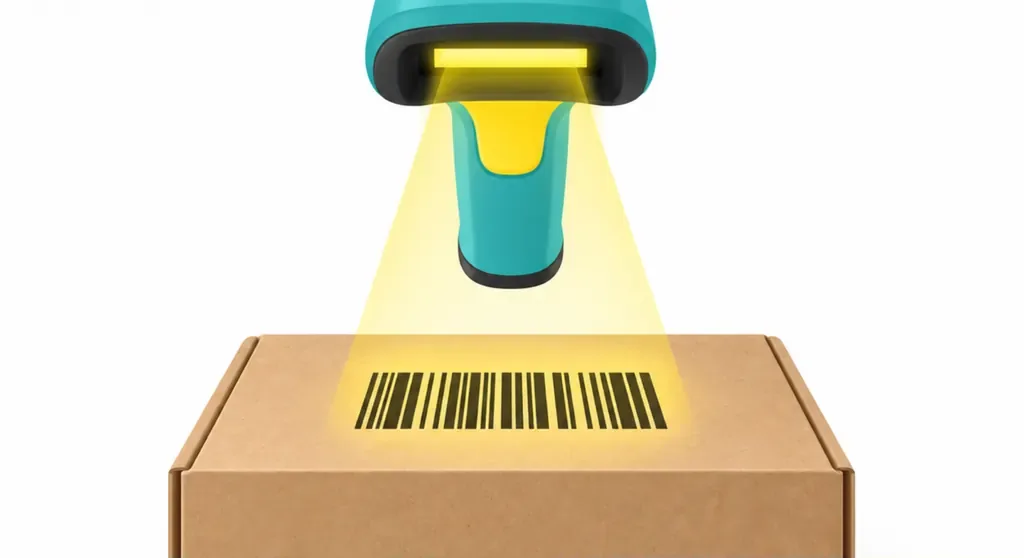
An EAN barcode (European Article Number, a barcode used for product identification) that looks clear on screen may not scan properly when printed on brown paper. I'd check the logo edges and small type first, then step back and see whether the brown paper still reads across the whole panel. Zone first. Then proof it
What should buyers compare when they request quotes?
Don't compare brown corrugated packaging by unit price per box alone. MINDS recommends including paper-color retention, white-ink coverage, graphic legibility, and order quantity in the same set of comparison criteria
・MINDS recommends proofing areas intended to retain their natural color on the actual brown stock, since uncoated colors are affected by the paper's base color
・When brand yellow, photos, small type, or barcodes need higher contrast, MINDS recommends asking about a spot white-ink option and confirming how much surrounding brown paper can remain visible
・MINDS recommends providing the expected first-run and replenishment quantities when requesting a quote. The Mondi case notes that digital printing can be scheduled to match demand, which can help reduce excess packaging inventory
・MINDS recommends comparing quotes using the same artwork, stock, and order quantity, and confirming whether proofing and artwork revisions are included. The case does not publish prices, so it does not show that digital printing is always cheaper
How should you specify color requirements when requesting a quote?
When requesting a quote, use MINDS' "Three Checks for Color on Brown Corrugated Board" to turn the design intent into requirements that printers can quote and buyers can inspect
・1. ①Zone the graphics and text: mark which brand-yellow areas, photos, details, small type, and EAN barcodes need a white undercoat, and indicate where the brown paper should show
・2. ②Proof on the actual stock: ask the printer to produce a sample using the planned brown corrugated board and digital printing process, then check the white-ink placement, color, and layers
・3. ③Approve and inspect: keep the approved proof, file version, white-ink coverage, and barcode inspection method on record, and ask each printer to quote against the same reference
The Mondi case also mentions water-based inks and says they were approved by Swiss Quality Testing Services for primary packaging, the first layer of packaging in direct contact with the product. If a particular ink use is required, MINDS recommends requesting documentation for the actual ink and its approved scope. Don't apply approval for one use to every kind of packaging
What physical evidence should you check when approving a proof?
Use a physical sample on brown corrugated board to check the brand yellow, exposed brown areas, photos, small type, and barcodes. Don't rely on an on-screen preview. MINDS recommends comparing it with the approved proof under the same lighting. Check that the areas showing brown match the artwork, the brand color remains clear, the small text is readable, and the EAN barcode scans. A screen doesn't count as a proof
The Mondi case says digital printing can be scheduled to match demand, but it does not publish a minimum order quantity, unit price, or cost threshold. MINDS recommends including expected quantities and replenishment needs in the quote request, then asking printers to quote against the same conditions. That's how you can judge whether the flexibility of short runs with multiple versions suits your purchasing cycle
Key takeaways
・MINDS recommends marking the areas where the brown paper should show before deciding where the brand graphics need white ink
・Brown paper affects colors in areas without a white undercoat. MINDS recommends checking color on a sample made with the actual stock
・MINDS reminds buyers to compare quotes using the same artwork, stock, and quantity
・MINDS recommends including the approved proof, file version, and barcode inspection method in the acceptance criteria
Further thoughts
Printers can include the white-ink areas and areas that retain brown paper in their proof checklist. Designers can mark the white-ink layer and zone layout in the artwork. A buyer's SaaS workflow can keep the approved proof, file version, quoted quantity, and barcode inspection record. AI can help check whether the artwork is missing a white-ink layer or the spec sheet lacks acceptance criteria. The actual color still needs to be checked on paper. If you're starting a new packaging project, bring the layout and quote requirements to the Mai Strategy Knowledge Academy consulting team to turn them into specifications that printers can quote and buyers can inspect
Further reading
FAQ
- Can brown corrugated board reproduce a vivid brand yellow?
- Yes. For Kärcher's brown corrugated packaging, Mondi added a white undercoat beneath the brand yellow to boost contrast, while leaving other areas brown. MINDS recommends proofing on the actual stock first
- Do all graphics on brown corrugated board need white ink?
- Not necessarily. In the Mondi case, some of the brown paper remained visible, while white ink supported the brand color and graphics. MINDS recommends marking white-ink coverage according to which graphics need consistent color
- How should buyers inspect brand colors on brown corrugated board?
- MINDS recommends checking an approved sample on brown corrugated board under the same lighting. Compare the brand yellow, exposed brown areas, small type, and graphic details, then scan the EAN barcode
- Is digital printing always cheaper than other printing methods?
- You can't tell from the Mondi case alone. It says production volume can be scheduled to match demand, but gives no prices or cost thresholds. MINDS recommends requesting quotes with the same stock, artwork, and quantity for comparison
Related articles
The Print × AI weekly
The print and AI know-how designers, brands and enterprises can use before they commit — one email, every week
MINDS Free Tools
Spine width and imposition calculators — skip the manual math, free in your browser.
MINDS Group
Need actual printing or gifting services?
From premium printing to online ordering and festive gifts — the MINDS Group sister brands take it from here.