
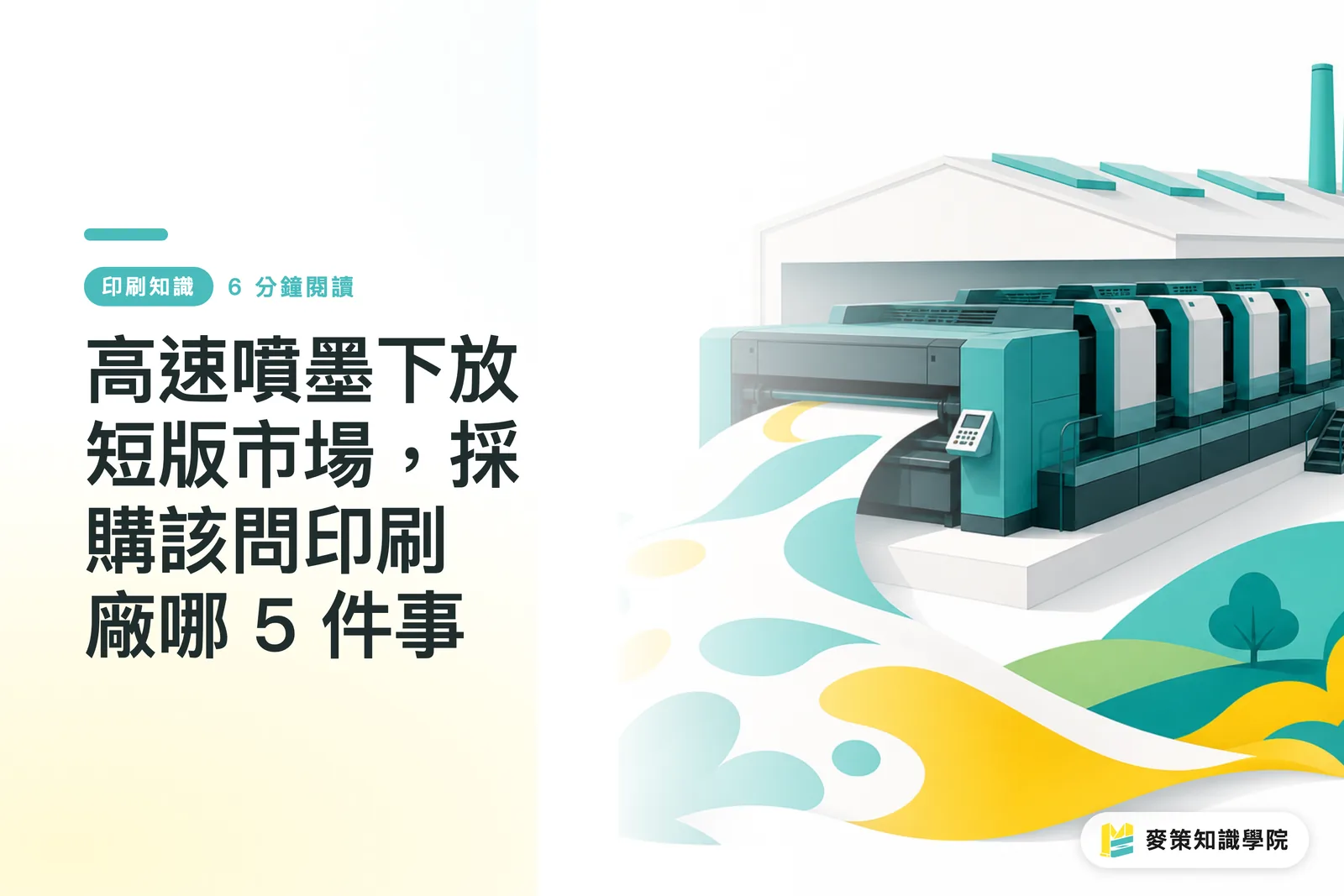
What High-Speed Inkjet Moving to Short-Run Markets Really Means
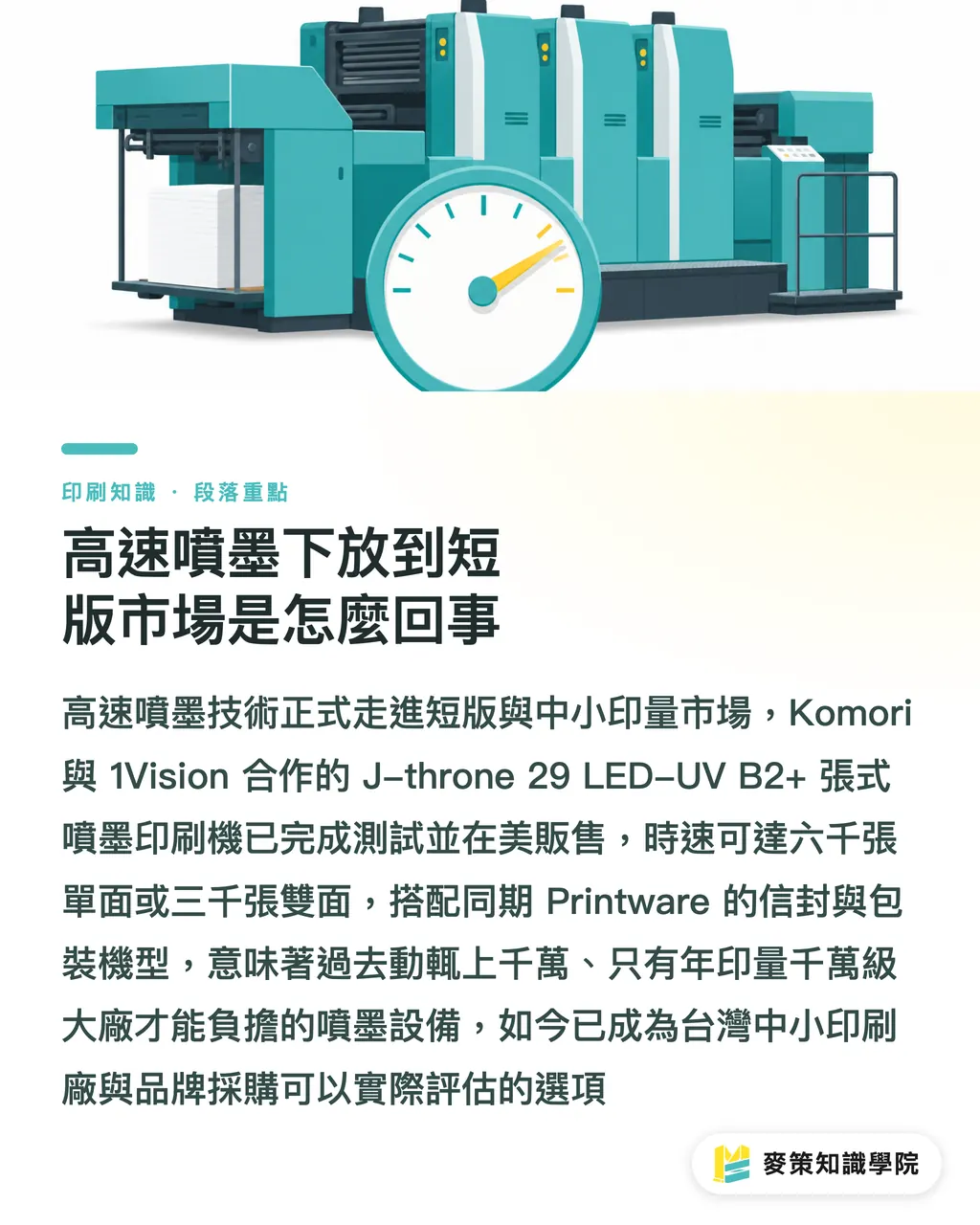
In July 2026, Komori and 1Vision announced the end of their 13-month beta test for the J-throne 29, a B2+ sheetfed LED-UV inkjet press, officially bringing it to the US commercial market. The key numbers on this machine: 6,000 sheets per hour (single-sided) or 3,000 sheets per hour (double-sided), a sheet size of 23 x 29 inches (B2+ size, noticeably larger than standard B3), and instant drying using LED-UV inks
Around the same time, Printware introduced high-speed inkjet models for envelopes and short-run packaging. Taken together, these two announcements send the exact same signal: the days when inkjet presses cost millions of dollars and belonged only to giant plants printing tens of millions of pages a year are changing
For most small and medium print shops and brand buyers in Taiwan, this means when you walk into a print shop today, you can start framing questions around what inkjet can do, instead of treating high-end inkjet equipment as an off-limits fantasy
Why This Matters Right Now
Based on recent conversations with my clients and suppliers, demand for fast turnaround, multi-version short runs, and variable data is climbing fast. Traditional offset printing (conventional lithography using wet ink transferred via rubber blankets, ideal for long runs) carries high setup costs and time-consuming plate changes, making requests like 500 sheets delivered in 3 days inherently disadvantageous. Yet designers and brand teams now routinely hand off projects with 30 versions at a few hundred copies each. Offset can't handle it efficiently, and digital printing (direct output from digital files without traditional plates or film) raises concerns about color shift
This is right where high-speed inkjet steps in. Combining sheetfed feeding with LED-UV curing (UV-cured ink that dries instantly on paper, allowing printing on thick paper and specialty substrates without drying wait times), it handles coated and uncoated stock, double-sided printing, and plate-free job switching without stopping the press. During its 13-month beta period, 1Vision ran live commercial print jobs and direct mail (printed materials mailed to individual consumers, like utility bills or promotional letters) every single day. That means the press was battle-tested on actual production lines, not just running sample jobs in a lab
Procurement teams don't need to understand every mechanical part, but they must realize that using inkjet for short runs is happening today, not in some distant future
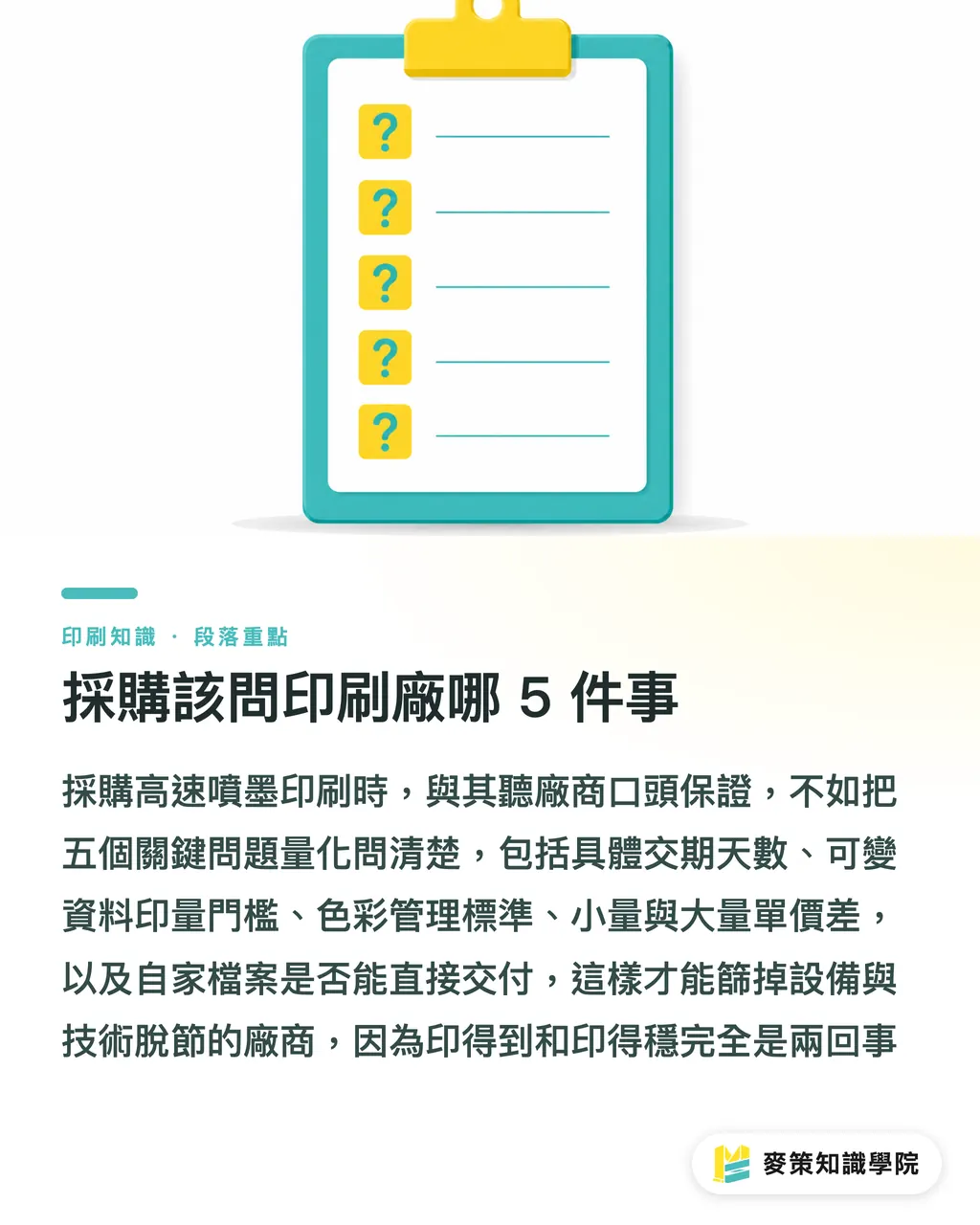
5 Questions Buyers Should Ask Print Shops
To translate high-speed inkjet specs into practical questions, go down this list:
・What is your actual minimum turnaround time in days? Don't accept vague promises like 'as fast as possible.' Ask specifically: 'For 500 A4 sheets with approved PDF proofs, how many days until delivery?' Only hard numbers in writing matter
・What is your minimum order threshold for variable data? Variable data printing (VDP, where content varies per piece, such as personalized greetings on letters) often comes with setup fees or minimum charges. Get clear details on minimum quantities and per-piece surcharges
・How do you maintain color consistency? Ask if they have a formal color management process (standardized workflows matching monitor display colors with print machine output) and which standard they follow, such as ISO 12647 (the International Organization for Standardization specification for print color and quality) or GRACoL (a North American print color standard widely used in commercial printing)
・What is your pricing structure starting from a single copy? Clarify the unit price gap between printing 50 copies and 500 copies so small runs aren't marked up double under the excuse of 'custom work.'
・Can your system handle our file formats directly? Whether you use PDF/X (a PDF standard designed specifically for print exchange that automatically embeds fonts and color profiles), direct InDesign links, specific bleed requirements (artwork extending beyond trim lines to prevent white edges after cutting), or file conversions, these technical file handoffs are where projects get stuck most often
These five questions help filter out shops that have the machine but lack know-how, as well as shops that take orders without having the equipment. Printing a sample and delivering consistent quality are two very different things
When to Seriously Consider High-Speed Inkjet
Three scenarios are especially well-suited:
・Direct mail and customer communication: Names, addresses, and promo codes change on every piece. Variable data is the core value here, not a bonus feature
・Marketing collaterals with over 30 versions: Think targeted direct mail pieces and brochures split by region or customer segment that require continuous printing without stopping for version changes
・Short-run packaging on thick cardstock and specialty substrates: LED-UV curable inks handle heavy paperboard, synthetic stock, and coated papers far better than traditional digital printing
The most common trap mid-sized brand clients fall into is treating every short-run project as a race for the lowest quote. After comparing three vendors, they discover none can deliver within three days. Inkjet won't necessarily save you money, but it will win you orders that competitors can't fulfill in time
Key Realities Small and Medium Print Shops Must Understand
As high-speed inkjet presses enter the market, not every small shop needs to buy one right away (the price tag remains in the millions). However, shop owners must understand what problems inkjet solves so they can advise clients on whether a job should go offset, digital, or inkjet
In practice, I recommend two steps for small and medium print shop owners in Taiwan:
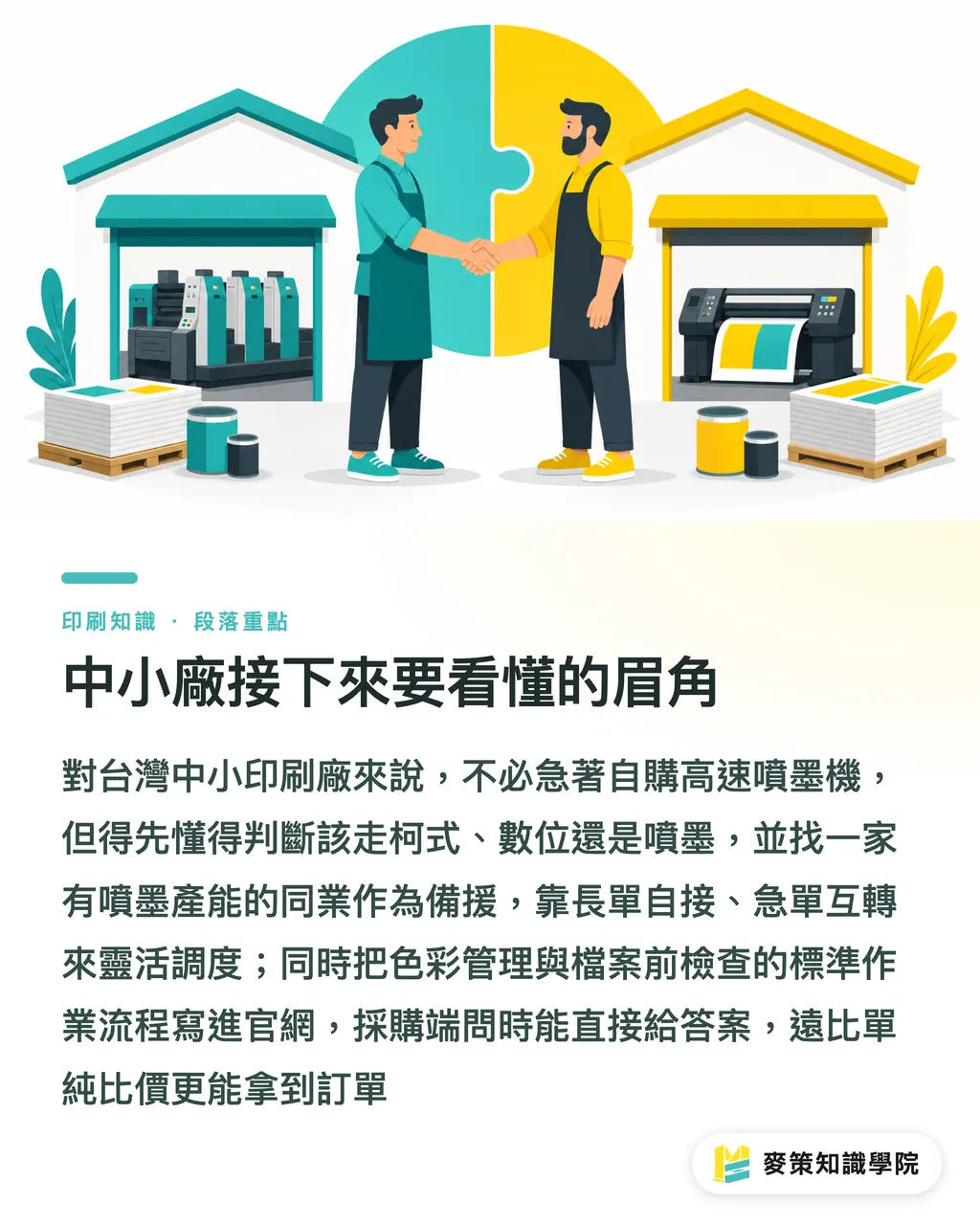
・Find a peer vendor with high-speed inkjet capacity as a backup partner. Handle long runs in-house and pass urgent jobs to each other. That's far more practical than buying a press yourself
・Publish your standard operating procedures (SOPs) for color management and preflight (pre-press checks ensuring resolution, bleed, and fonts meet printing requirements) right on your website. When procurement asks, hand them immediate answers, and you will win the order
The same goes for procurement buyers. Stop looking only at price tags. Ask those five questions first. A vendor who gives clear, documented answers matters more than anything else
Key Takeaways
・High-speed inkjet has entered commercial printing and short-run packaging; it is no longer exclusive to mega-plants printing tens of millions of pieces annually
・Buyers should ask about operational capabilities (turnaround time, variable data, color control, single-copy costs, file compatibility), not machine specifications
・Tight turnarounds, multi-version small batches, and variable data represent the natural sweet spot for high-speed inkjet
・Small and medium print shops don't need to purchase equipment immediately, but they must understand its capabilities to serve clients effectively
・Choosing a printer is about consistent delivery, not just whether they can produce a single sample
Broader Industry Implications
What this means for Taiwan's printing ecosystem is a structural shift in how short runs are defined economically. Short runs used to mean high unit costs and poor value. Going forward, short runs will become standard service offerings, with prices falling within twice the unit cost of long runs. That puts pressure on offset-only shops reliant on volume, while creating opportunities for small and medium printers who know how to subcontract capacity and transfer rush orders
For designers, running 30 targeted design versions will no longer be cost-prohibitive, expanding creative possibilities. For procurement, key performance indicators (KPIs) can shift from finding the cheapest vendor to finding the most reliable vendor on deadlines and quality. In SaaS and print automation, tools for color management, preflight checks, and online quoting will turn from nice-to-haves into baseline requirements
Recommended next step: Procurement teams should send those five questions to their three primary print vendors over the next week or two. Whoever responds with the most thorough answers should be your go-to partner for urgent jobs
Further Reading
FAQ
- What is the difference between high-speed inkjet and standard digital printing?
- High-speed inkjet uses piezoelectric printheads to deposit ink directly onto paper, featuring sheetfed operation and instant LED-UV drying with speeds reaching thousands of sheets per hour. Standard digital printing (toner-based) is slower and has lower tolerance for specialty substrates. High-speed inkjet wins on throughput and substrate compatibility
- How much does a high-speed inkjet press cost?
- Prices typically range from tens of millions to over one hundred million NTD per press. As a result, most small and medium print shops rely on outsourcing or order sharing with industry peers rather than making an unnecessary capital purchase
- Is hiring a high-speed inkjet printer really cost-effective for short-run jobs?
- It depends on run length. For multi-version small runs, variable data, or heavy cardstock and specialty substrates, high-speed inkjet is generally more economical than offset and faster than standard digital. For long runs exceeding several thousand sheets, offset still retains a lower unit cost advantage
- Can I contact a print shop before my design files are ready?
- Yes, and reaching out early is actually recommended. Send those five questions over and observe how they guide your file preparation. That tells you far more about their ability to handle urgent jobs than just comparing price quotes
Related articles

The Print × AI weekly
The print and AI know-how designers, brands and enterprises can use before they commit — one email, every week
MINDS Free Tools
Spine width and imposition calculators — skip the manual math, free in your browser.
MINDS Group
Need actual printing or gifting services?
From premium printing to online ordering and festive gifts — the MINDS Group sister brands take it from here.