
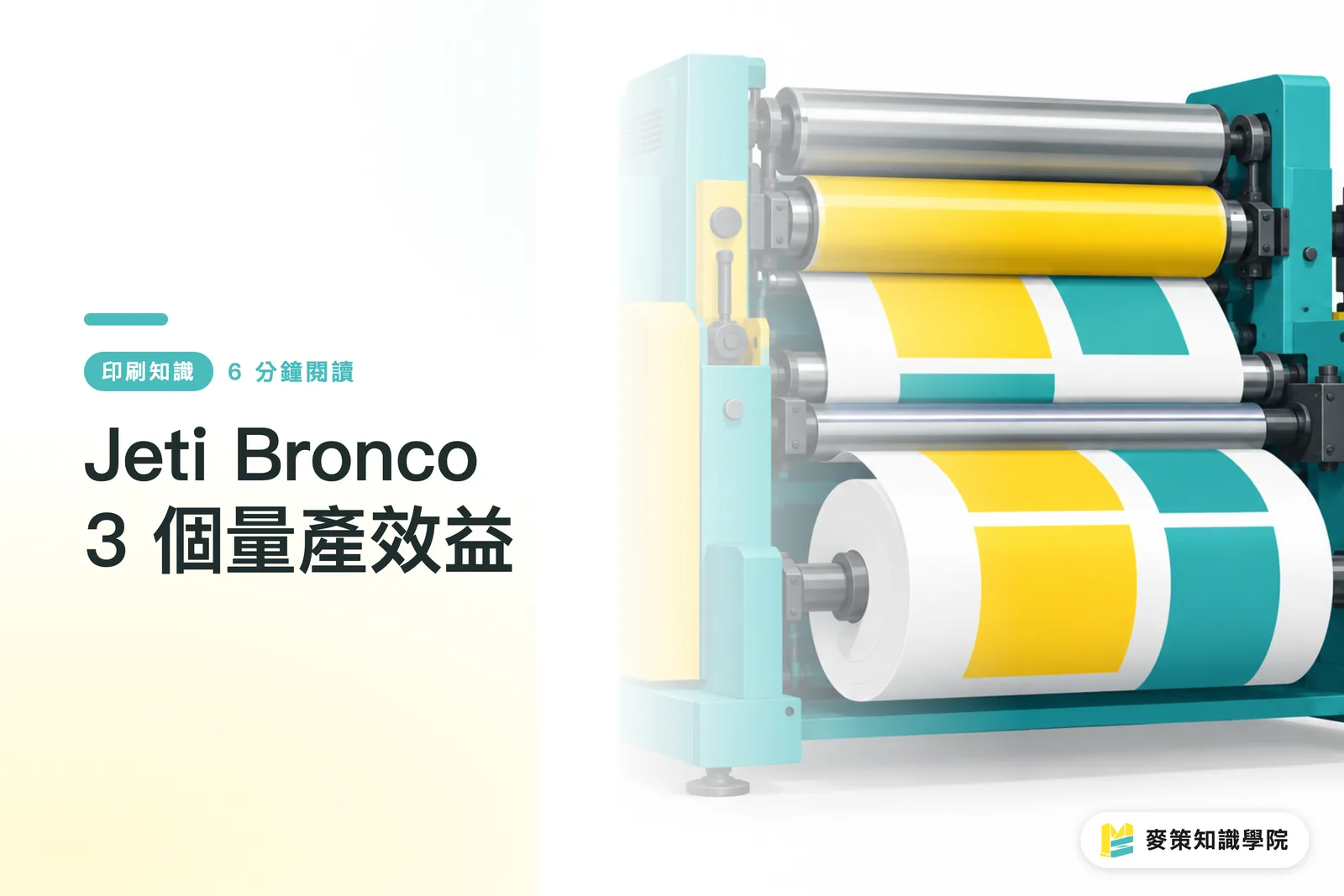
What Production Benefits Did the Jeti Bronco Bring in This Case?
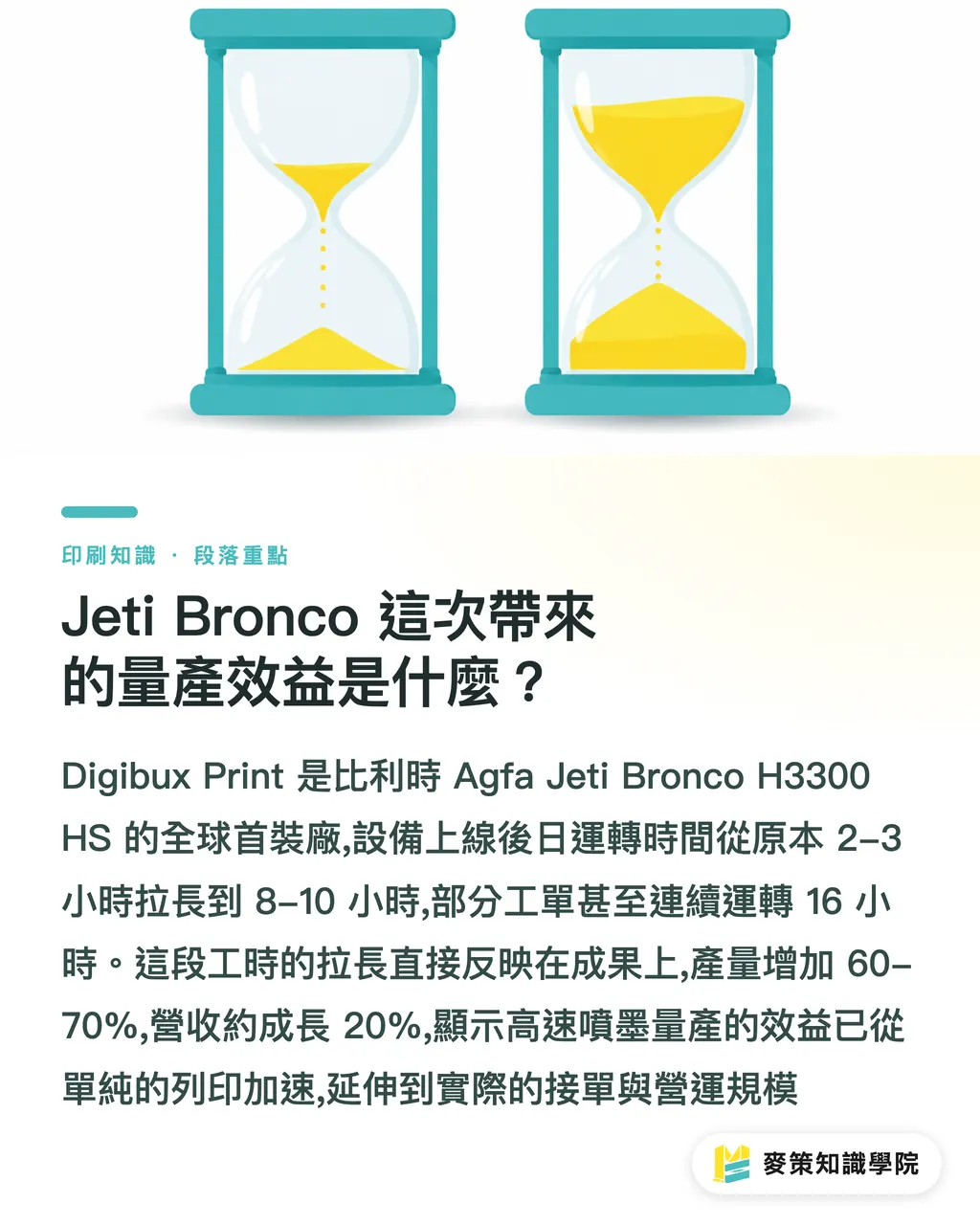
This machine's production gains have already gone beyond faster printing. Output, revenue, and the range of jobs the plant can take have all changed. Digibux Print was the first plant in the world to install Belgium-based Agfa's Jeti Bronco H3300 HS. Its existing equipment ran for about 2-3 hours a day. After the Jeti went live, daily operation rose to 8-10 hours, with some jobs running continuously for 16 hours at 110 m/h. Output increased by 60-70% and revenue by about 20% (The First Jeti Bronco H3300 HS Installed at an Italian Printer: The Real Production Benefits of High-Speed Inkjet)
High-speed inkjet production means using a digital inkjet press to run large-format, multi-material jobs with short lead times for extended periods, while evaluating printing, materials, and post-press delivery as one capacity system
・Production capacity: 450 m²/h is the speed the machine can reach, not a speed every job can sustain
・Operating hours: Moving from 2-3 hours to 8-10 hours means the equipment is taking on more of the day's jobs
・Business result: Output rose 60-70%, revenue by about 20%, and the production department added staff
How Does High-Speed Inkjet Turn Machine Speed into Order-Taking Capacity?
Turning high-speed inkjet into order-taking capacity depends on stable long runs and reliable material handling. Maximum speed is only the starting point. The Jeti Bronco H3300 HS is a 3.3-meter-wide hybrid inkjet press that handles board and roll media. A Programmable Logic Controller (PLC, the controller responsible for coordinating machine movements) controls the entire press. It has 36 print heads, 8 of them for white ink, and supports 3 mm print head height adjustment
450 m²/h is the machine's ceiling. Actual job speed is also affected by ink coverage, materials, double-sided printing, and media changes. Some of Digibux Print's jobs ran continuously for 16 hours at 110 m/h, which shows that rated speed and production rhythm are two different things
The vacuum system and transport pads let the press print both sides of boards that have absorbed moisture, warped, or been damaged in transit while maintaining registration. That stability is what directly affects delivery times
Why Do Cardboard and Bringing Outsourced Work In-House Matter More Than Speed Alone?
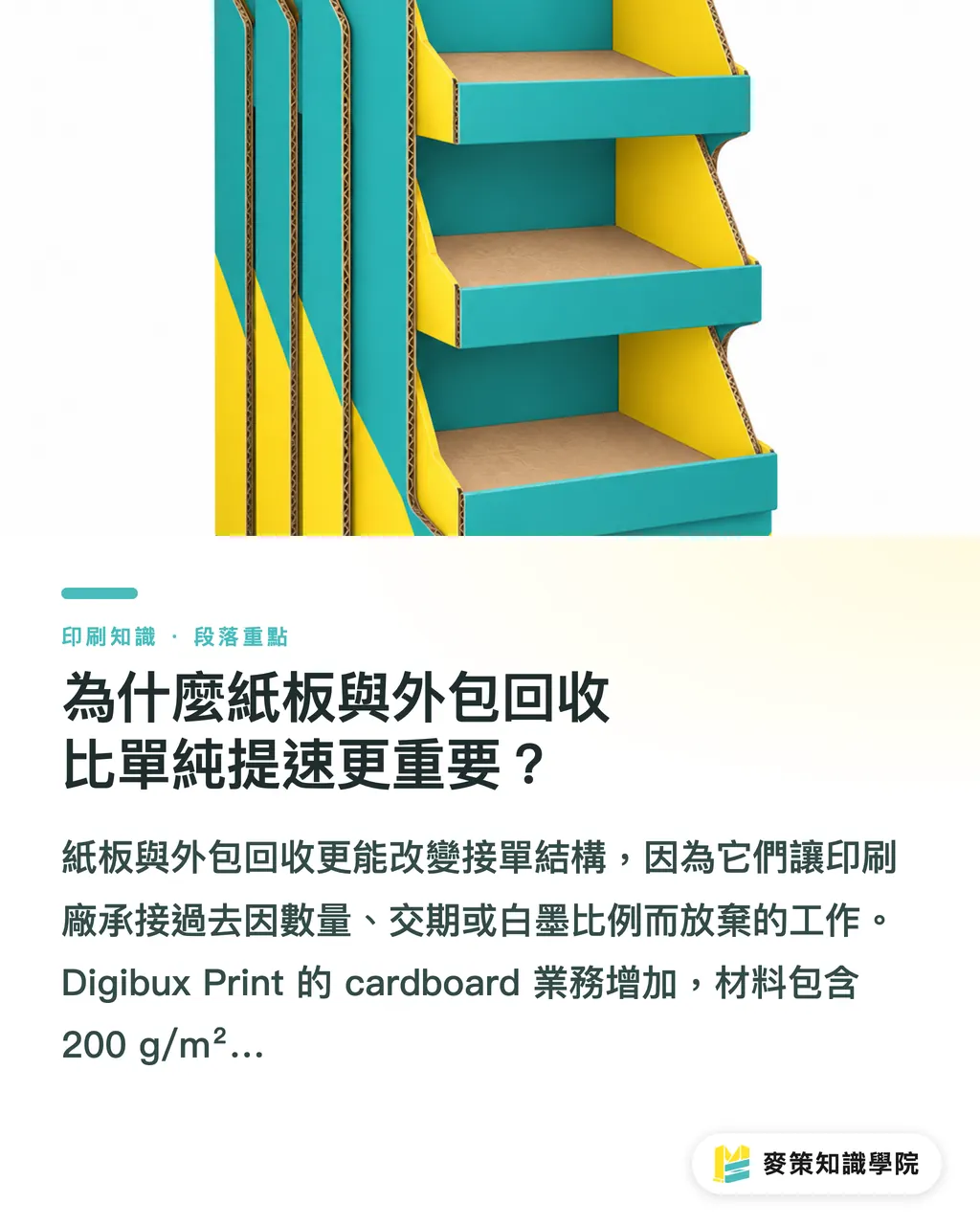
Cardboard and bringing outsourced work in-house can reshape the order mix more than speed alone, because they let a printer take on jobs it previously passed on due to volume, lead time, or white-ink coverage. Digibux Print's cardboard business grew, with materials including 200 g/m² cardboard, GC1 cardboard with a wood-fiber interior and a white back, and microflute. These materials are used for counter display stands, display boxes, and point-of-sale displays
Sports events, trade shows, and poster campaigns can all become new sources of orders. Plexiglas (acrylic sheet) jobs with high white-space coverage that once had to be outsourced can now be produced in-house. As print volume rose, the plant added production staff and began planning an investment in die-cutting
I include finishing in the same spreadsheet when evaluating equipment, because in this case die-cutting quickly became the next investment. The factory's bottleneck moved downstream from the printing stage
How Should Small and Midsize Printers in Taiwan Decide Whether to Upgrade?
For small and midsize printers in Taiwan, start by checking whether the current order book can fill a stable run schedule, then whether finishing can absorb the added output. I use Mai Strategy's three-gate print-order check to make that call. An equipment investment only has a chance of becoming real order-taking capacity when all three gates pass
・Capacity gate: Convert near-term jobs due for delivery into daily machine hours. Compare 2-3 hours with 8-10 hours, and do not treat 450 m²/h as guaranteed output
・Material gate: List the board and roll media you use, then verify compatibility with 200 g/m² cardboard, GC1, microflute, PET, polypropylene, vinyl, and nonwoven fabric
・Finishing gate: Model cutting, die-cutting, stacking, and delivery schedules together. Digibux Print has already planned an investment in die-cutting, so downstream processing will quickly become part of the capacity equation
What Should Designers and Brand Clients Ask a Printer First?
Designers and brand clients should ask first about a printer's actual delivery capability, not the biggest number in its equipment brochure
・Daily capacity: 450 m²/h is an achievable speed. Ask the printer to explain the delivery time it can commit to based on dimensions, ink coverage, media changes, and double-sided requirements
・Material compatibility: When printing 200 g/m² cardboard, GC1, or microflute, confirm how the printer handles white ink, warped boards, and double-sided registration
・Single-day events: For races, auto shows, or exhibition jobs, confirm who handles the handoff from printing to cutting, packing, and delivery
These three questions are more useful than asking, "What's the fastest you can print?" If brand clients are unfamiliar with material and finishing requirements, they can ask MINDS about material and print-order specifications first, then ask the printer to quote on the same basis
Key Takeaways
・The production value of high-speed inkjet starts with how many hours it can run reliably each day, then with the top speed in the brochure
・Digibux Print increased daily operation from 2-3 hours to 8-10 hours, raising output by 60-70% and revenue by about 20%
・Cardboard, white ink, double-sided registration, and in-house Plexiglas production determine whether new equipment can expand the order mix
・Once print speed rises, die-cutting and delivery management need to be upgraded together
A Practical Next Step
Here is a concrete next step for Taiwanese plants: run near-term due orders and the list of outsourced work through Mai Strategy's three-gate print-order check, then lock the resulting material and lead-time conditions into quotations and production schedules. Start AI adoption with file-spec checks, then let SaaS handle customer sign-offs and post-press follow-up, so the high-speed equipment fits into the full delivery workflow
Further Reading
FAQ
- What is the maximum speed of the Jeti Bronco H3300 HS?
- The case study reports that the machine can reach 450 m²/h. Some of Digibux Print's long jobs ran continuously for 16 hours at 110 m/h. The two figures describe different production scenarios
- What changed at Digibux Print after the installation?
- The existing equipment ran about 2-3 hours a day. The Jeti Bronco raised that to 8-10 hours. Output increased by 60-70%, revenue by about 20%, and the production department added staff
- What materials can the Jeti Bronco H3300 HS print?
- The case lists 200 g/m² cardboard, GC1 cardboard, microflute, PET, polypropylene, honeycomb polypropylene, vinyl, paper, and nonwoven fabric. It also moved some outsourced Plexiglas work in-house
- What should small and midsize printers in Taiwan evaluate first?
- First check actual daily machine hours, specified materials, and double-sided registration. Then put die-cutting and delivery into the same calculation. The machine's maximum speed alone does not represent the capacity you can commit to
Related articles

The Print × AI weekly
The print and AI know-how designers, brands and enterprises can use before they commit — one email, every week
MINDS Free Tools
Spine width and imposition calculators — skip the manual math, free in your browser.
MINDS Group
Need actual printing or gifting services?
From premium printing to online ordering and festive gifts — the MINDS Group sister brands take it from here.