
What Is This New Technology Everyone in the Industry Is Talking About?
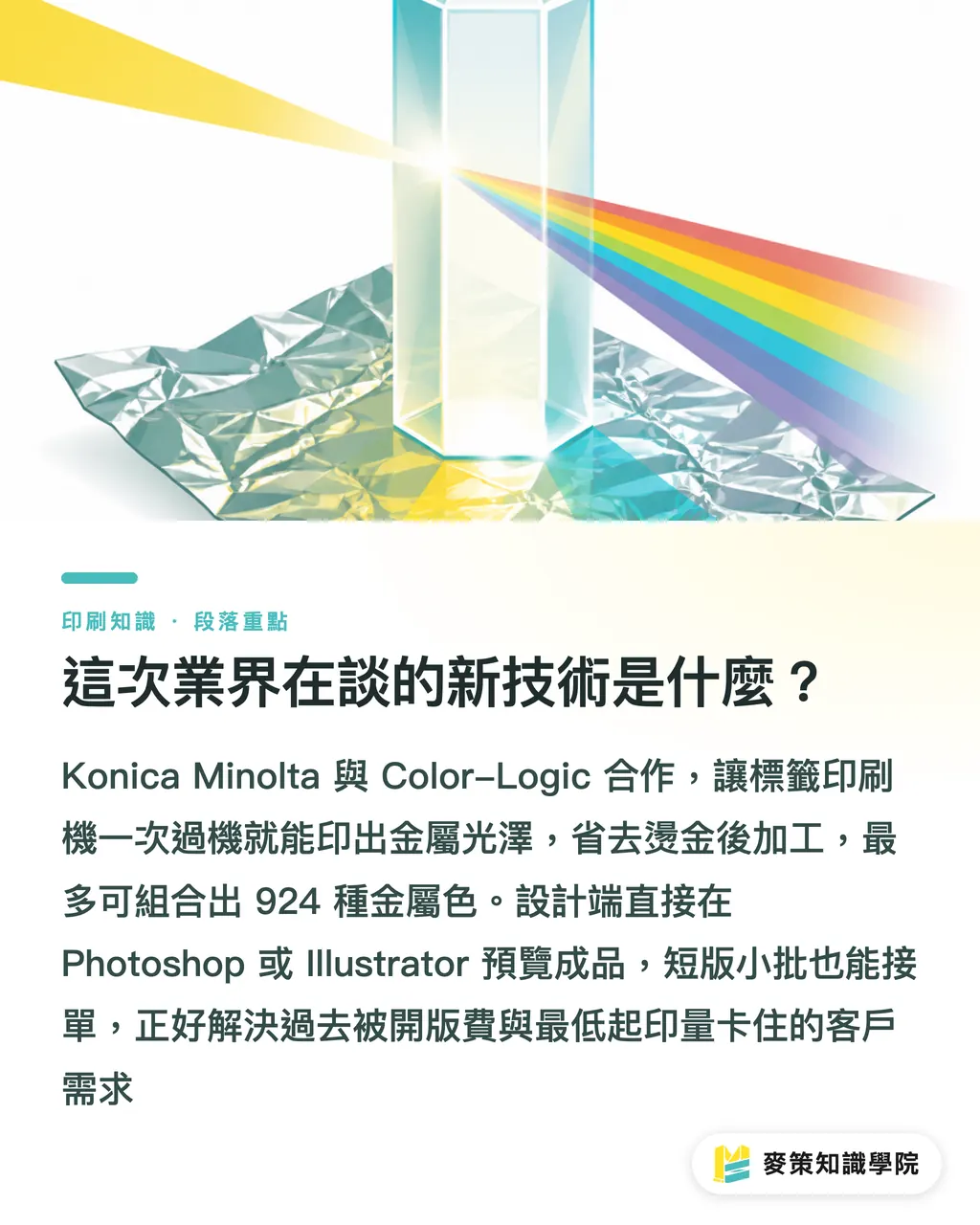
The answer is straightforward: moving the metallic effect from post-press finishing right into the press itself, finishing it in a single pass without sending sheets out for hot foil stamping
Konica Minolta expanded its partnership with Color-Logic, adding white toner to the AccurioLabel 400 label press. Printing white toner directly onto silver label stock creates metallic luster effects. Official specs state it can produce up to 924 metallic colors, including 50 gold tones. On the design side, designers can preview the effects directly in Photoshop and Illustrator using Color-Logic plugins, without waiting for physical proofs to see how the final product looks. Over the past month or two, I have seen a clear jump in inquiries for short-run labels. Many clients were held back by plate fees and minimum order quantities, not because they did not want metallic effects
Why Should Print Buyers Pay Attention Right Now?
Because it directly tackles the two variables that cause you the biggest headaches: plate fees and lead times
Traditional hot foil cost structures always come down to two things: the fixed cost of plate making (producing metal dies), and the minimum order quantities print shops set to amortize those plate costs. This is also what I keep reminding clients in "Comparing Three Ways to Make Metallic Labels: Hot Foil, Cold Foil, or Silver Stock, and How Buyers Choose": before placing an order, understand clearly that you are paying for custom tooling, not for the printing run itself. The single-pass digital solution removes this fixed cost and replaces it with a variable cost structure like standard digital printing. For new product tests, limited-edition packaging, and cosmetics labels that naturally cannot hit high volumes, this is real relief
What Should You Compare Between Hot Foil and Digital Metallic Printing?
Do not just compare unit prices. Compare the entire cost structure, lead time, and acceptance criteria
・Plate fees: Hot foil stamping requires plate making, while digital solutions do not
・Minimum order quantities: Hot foil vendors usually set MOQ thresholds, while digital solutions can theoretically run short runs or even proofing quantities directly into production
・Proof visualization: The Color-Logic solution lets you preview metallic effects directly inside design software, whereas hot foil proofs usually require an actual machine run to see
・Lead times: Skipping the plate-making step naturally cuts down preparation time
・Color gamut and substrates: Digital solutions currently require silver label stock, whereas hot foil can use gold, silver, and various colored foils on any substrate color
・Texture and dimension: Hot foil creates an embossed tactile feel from stamping pressure, while digital printing is flat. This material difference is still decisive for designers on high-ticket gift boxes and luxury labels
Looking at these factors side by side, hot foil still makes sense for large-volume projects, but short runs are where digital solutions truly shine
What Questions Should You Ask When Requesting Quotes?
Get clarity on three things first before comparing quotes, or the comparison will be meaningless
・What is the MOQ: Below this threshold, hot foil quotes usually look terrible due to plate costs. That is when you should ask the printer directly if they offer digital metallic printing
・How the proofing process works: Can you preview effects with software before sending files to press, or do you have to wait for a physical proof to see the result?
・Is the substrate limited to silver stock: The digital solution currently relies on silver label stock as a base. If your design requires a non-silver base or needs spot foil combined with other colors, you need to check with a hot foil vendor or a printer capable of hybrid processes
・Where the acceptance standards are set: Metallic tone consistency, tolerance for batch-to-batch color variation, and whether sample swatches are available for comparison. These should all be written into purchase agreements rather than left as verbal promises
If you want to verify whether your project fits this approach, talking to a printer with experience in mid-to-high-end custom printing like MINDS as your first contact point is much faster than comparing quotes blindly on your own
What Are the Limitations, and When Should You Still Choose Traditional Hot Foil?
The limitation is clear: this is a printed metallic look, not an applied metallic layer. The physics are different
The digital solution is fundamentally a visual effect created by white toner on silver substrate. It lacks the three-dimensional embossed texture and reflective depth produced by stamped foil. For packaging where texture and craft matter deeply, such as luxury goods, spirits, and gift boxes, the physical feel of hot foil or cold foil cannot be fully replaced yet. Industry materials also note that this solution positions itself against MGI digital embellishment technology, following the same path of no plates, easy preview, and fast turnarounds. Its focus is solving cost pain points for short runs and proofing tests, not completely replacing the craft performance of hot foil stamping
If you are not sure which route fits your project, having the Mai Strategy Knowledge Academy consulting team review your specs before deciding where to send the job will save you more trouble than sending out RFQs blindly and getting confused by quotes from both sides

Key Takeaways
The biggest cost drivers in metallic labels are plate fees and MOQs, not the printing run itself
For short runs, proofing, and new product tests, check first whether plate-free digital metallic printing is an option
Digital solutions currently require silver label stock and lack the tactile embossed feel of hot foil stamping
Ask clearly about MOQs, proofing workflows, and acceptance standards before comparing quotes
For luxury and gift-box tactile demands, the craftsmanship advantages of hot foil and cold foil remain intact
Food for Thought
For small and medium print shops, the real value of this technology is not just upgrading equipment, but being able to take short-run jobs previously turned down due to tooling costs. On the design side, designers need to get used to previewing metallic effects in software before sending files, saving time on back-and-forth proofing. A practical next step is to pick an existing short-run or limited-edition packaging project, request quotes for both digital metallic printing and traditional hot foil at the same time, and compare them directly. Only then will your cost map be truly accurate
Further Reading
FAQ
- Is digital printing always more cost-effective for short-run metallic labels?
- Not necessarily. The key factor is the minimum order quantity. If your volume is below the hot foil shop's MOQ threshold, digital is usually more cost-effective. If your volume is large enough to dilute the plate costs, hot foil does not put you at a disadvantage
- Can digital metallic printing be done on any color of label stock?
- Currently, the Konica Minolta and Color-Logic solution combines silver label stock with white toner to create the metallic effect. It does not work on just any substrate, so check material limitations with your printer before ordering
- Is there a difference in texture between this plate-free solution and traditional hot foil?
- Yes. Traditional hot foil creates an embossed tactile feel from foil stamping, whereas digital solutions produce a flat metallic visual effect. If tactile feel matters for luxury items or gift boxes, you should still consider hot foil
- What questions should you ask the printer before placing an order?
- At minimum, ask about the MOQ, whether you can preview effects in software before printing, whether the substrate is restricted to silver stock, and what the acceptance standards are for batch color differences. All of these directly determine whether your final quotes are truly comparable
Related articles



The Print × AI weekly
The print and AI know-how designers, brands and enterprises can use before they commit — one email, every week
MINDS Free Tools
Spine width and imposition calculators — skip the manual math, free in your browser.
MINDS Group
Need actual printing or gifting services?
From premium printing to online ordering and festive gifts — the MINDS Group sister brands take it from here.