
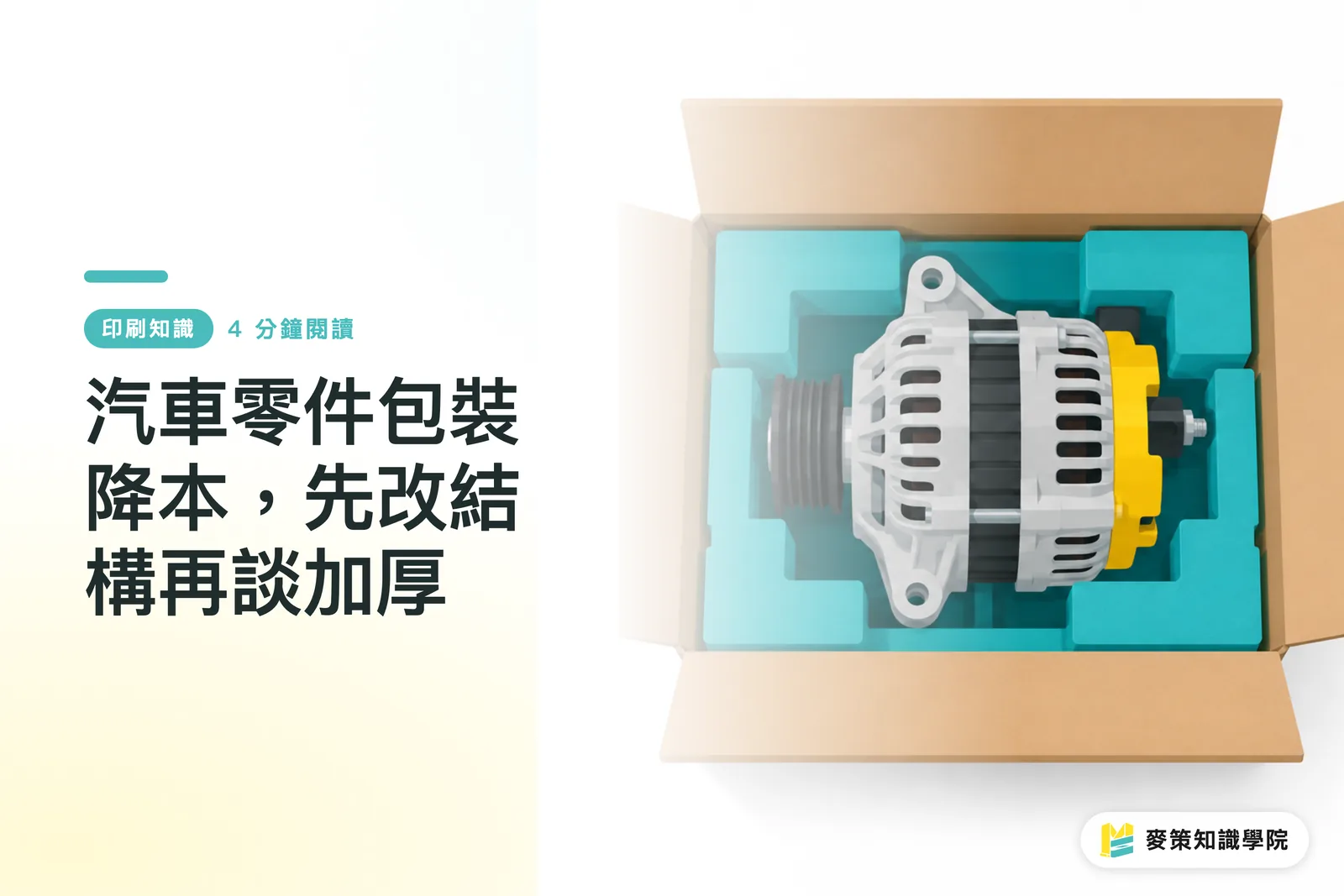
What did ColorDynamics do in its Mexico case?
On October 3, 2026, ColorDynamics released a Spanish-language video about a custom packaging project for Mexican auto-parts supplier Autopartes Tracto. The case summary says the solution focused on protective structure and die-cut optimization, with savings targeted where they mattered. Autopartes Tracto custom packaging case video
Custom packaging adapts the box, inserts, and die-cut layout to the product's shape and shipping method, so the fit, protection, and packing process work for the actual part
The public materials don't name the parts or specify the paper stock, layout, or savings. I won't make up a flattering percentage. The point worth considering for Taiwanese customers is that the project treats product protection and packaging cost as one design problem. MINDS can also start by looking at where damage occurs and how the parts are packed now
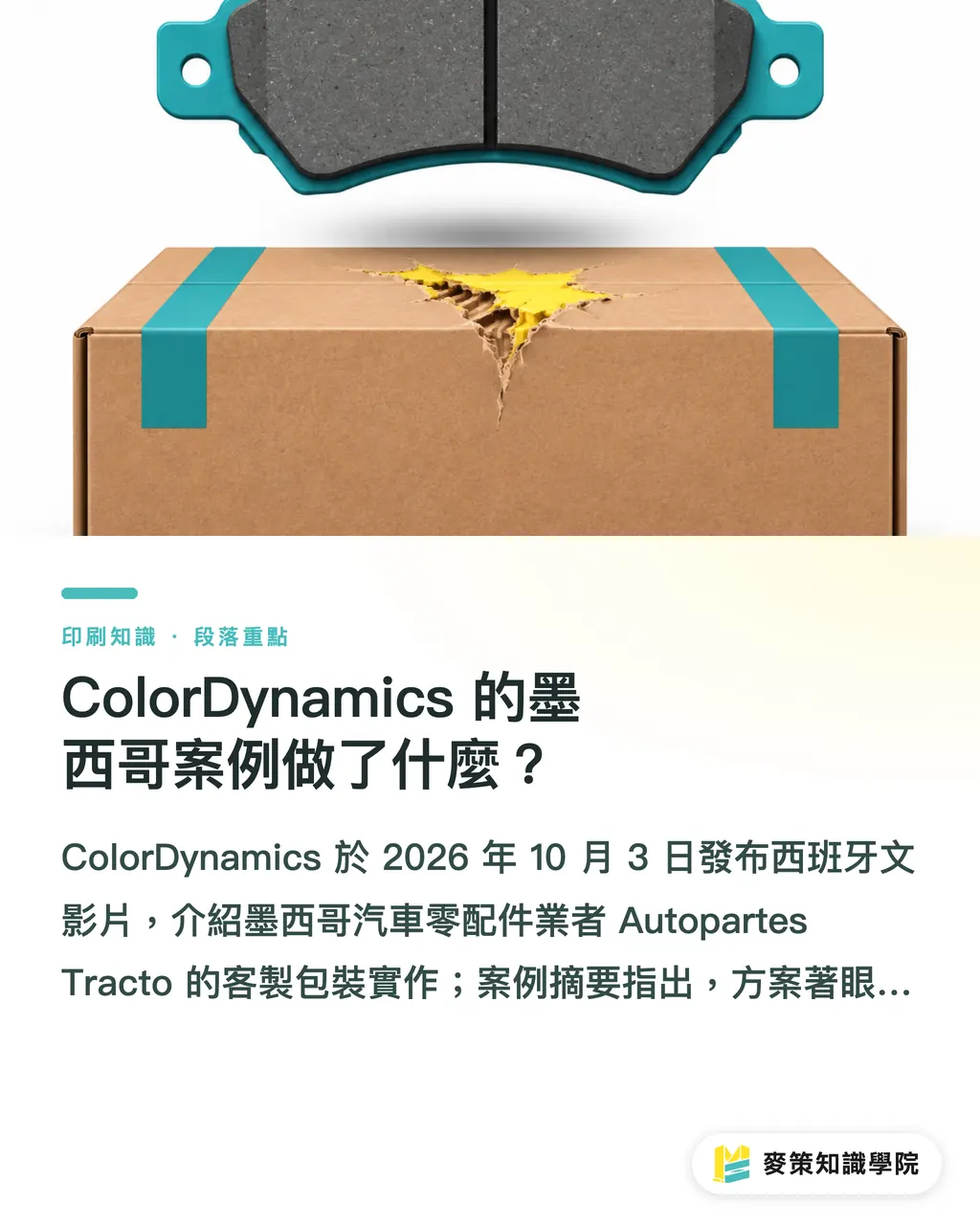
Why look at the structure before making the board thicker?
When parts are damaged in transit, thickening the board is the obvious move. But it can use more packaging material and increase carton size. The Autopartes Tracto case summary starts with protective structure and die-cut optimization, a reminder to check how the part is supported inside the box first
A carton is like a raincoat: making the whole thing thicker won't necessarily patch the tear on the shoulder. During prototyping, check where damage tends to occur, whether the part shifts in the box, and whether pressure lands on a vulnerable spot. Then decide whether to change the support points in the insert or the outer-carton dimensions. These are checks for Taiwanese brands, not structural details disclosed in the video
Measure first, then cut
Where should you start with custom packaging?
The ColorDynamics case summary confirms that the Autopartes Tracto project used protective structure and die-cut optimization, but it doesn't share drawings or materials. Taiwanese businesses can borrow the approach to reviewing a package without guessing at a ready-made layout
Choose a part number that often causes trouble, and bring the physical item, the packaging currently in use, and the packing sequence. That's more useful than discussing the product from a photo alone. A part number identifies the product and helps tie samples, damage records, and packaging versions together. During the trial, check:
・1. Mark areas vulnerable to pressure, impact, or movement
・2. Record the insert in use, the folding sequence, and the packing steps
・3. After test-fitting, check that the part stays put, is easy to remove, and is easy to seal
These are recommended trial steps, not a process disclosed by ColorDynamics
How can you tell if custom packaging really cuts costs?
Put packaging materials, packing time, shipping space, and damage handling on one cost sheet. That's how you tell whether custom packaging really saves money. ColorDynamics describes the video as offering "tailored savings," but doesn't disclose an amount
For the trial run, use the same part and packing conditions to compare the original packaging with the new version. Don't just count how many sheets of board you saved. Check these too:
・1. Whether the same impact or crush damage still appears after delivery
・2. Whether packers have picked up awkward folding or securing steps
・3. Whether the amount of packaging used and the space inside the box improve for the same shipment volume
A smaller box can still drive up total costs if packing takes longer. Check the numbers first, then decide whether to change the design
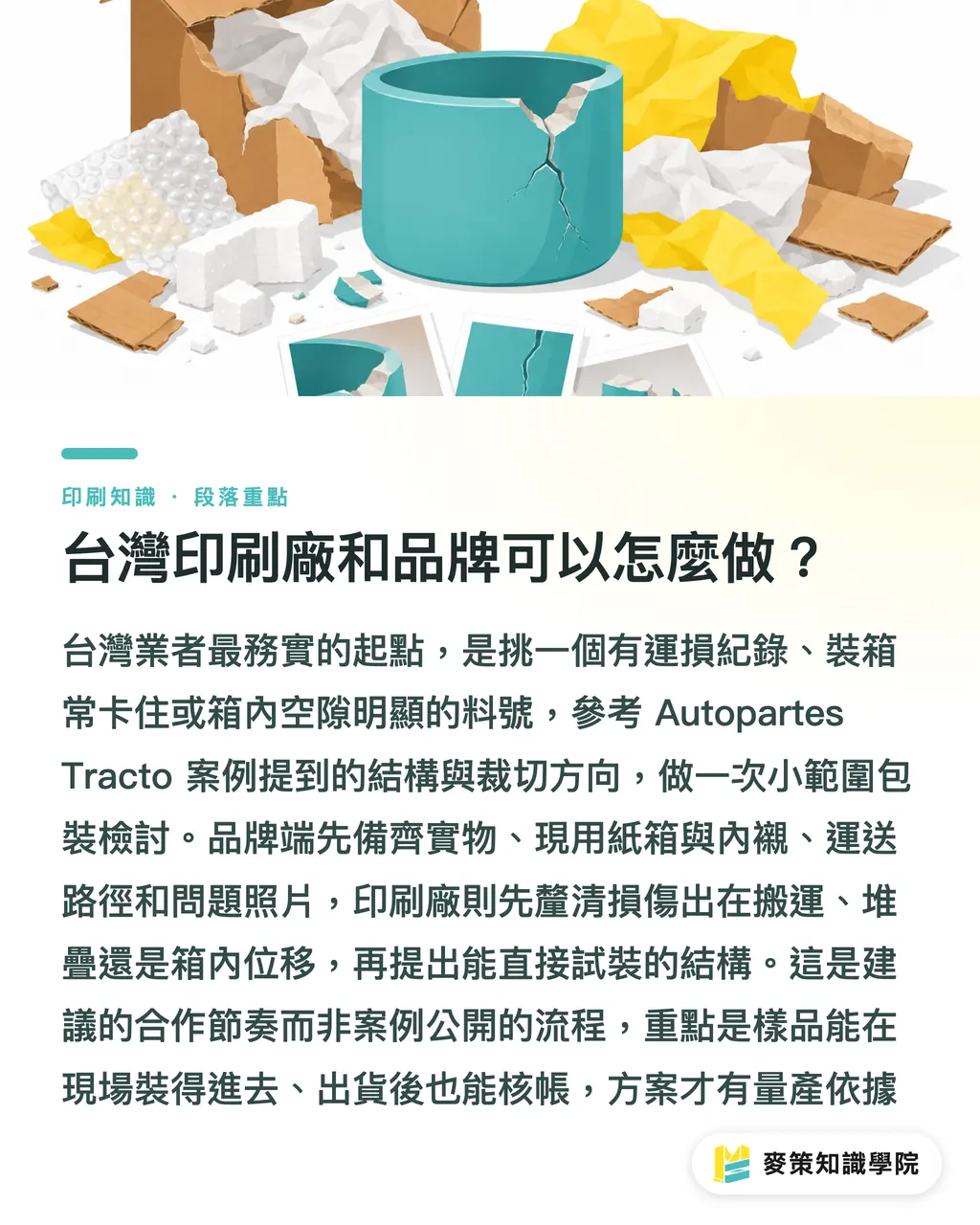
What can Taiwanese printers and brands do?
Taiwanese businesses can start with a part that has a history of shipping damage, regularly slows down packing, or leaves obvious empty space in the box. They can use the structural and die-cutting ideas in the Autopartes Tracto case summary as a starting point for a small-scale packaging review
The brand can bring the physical part, the current carton and inserts, the shipping route, and photos of the damage. The printer can first ask whether the damage happens during handling, stacking, or movement inside the box, then propose a structure that can be test-fitted. That's the collaboration sequence I'd recommend; it doesn't mean the case disclosed the same process
Start with one part number
The most useful lesson from an overseas case is to review protection, cutting, and cost together. To bring your current packaging into a prototyping discussion, prepare a sample and details about the damage, then ask MINDS to assess it. The solution needs to work in a hands-on packing trial and stand up to a cost check after shipment before it's ready for production
Key takeaways
・For parts packaging, find the pressure and damage points before deciding where to add material
・Test-fit custom packaging first to make sure the part stays put and the packing steps work smoothly
・Put packaging materials, labor, shipping space, and damage handling on the same cost sheet
・Use overseas cases to learn how to review a package, not to copy layouts that haven't been shared
A few thoughts
Packaging manufacturers can record structural prototypes, die-cut revisions, and paper stock usage in the same trial log, making changes easier to check later. Designers should first show clearly how the insert contacts the part, then refine the exterior. Artificial intelligence (AI) can help sort customer complaint photos by damage location. SaaS (software delivered and maintained online) can store part numbers, packaging versions, and trial-shipment records. Neither replaces a hands-on fit test. The next step is practical: pick an item with recurring shipping damage and compare the old and new packaging
Further reading
FAQ
- How much did the Autopartes Tracto case save on packaging costs?
- ColorDynamics' video introduces a custom packaging project for Mexican auto-parts supplier Autopartes Tracto, but the available materials don't disclose the amount or percentage saved
- When automotive parts are damaged in packaging, should I make the board thicker first?
- First check where the damage occurs, whether the part moves inside the box, and where pressure lands. Then decide whether to change the protective structure, die-cut layout, or outer-carton dimensions
- How can a small Taiwanese manufacturer get started with custom packaging?
- Choose a part that is often damaged, prepare the physical item, current packaging, and packing process, then trial a new structure and check protection, labor time, and shipping costs
- How can I confirm whether custom packaging saves money?
- Compare packaging materials, packing time, shipping space, and damage handling costs together, then confirm the results through test-fitting and actual shipments
Related articles

The Print × AI weekly
The print and AI know-how designers, brands and enterprises can use before they commit — one email, every week
MINDS Free Tools
AI background removal, a LINE sticker maker, spine & imposition calculators — all free, right in your browser, no upload.
MINDS Group
Need actual printing or gifting services?
From premium printing to online ordering and festive gifts — the MINDS Group sister brands take it from here.