
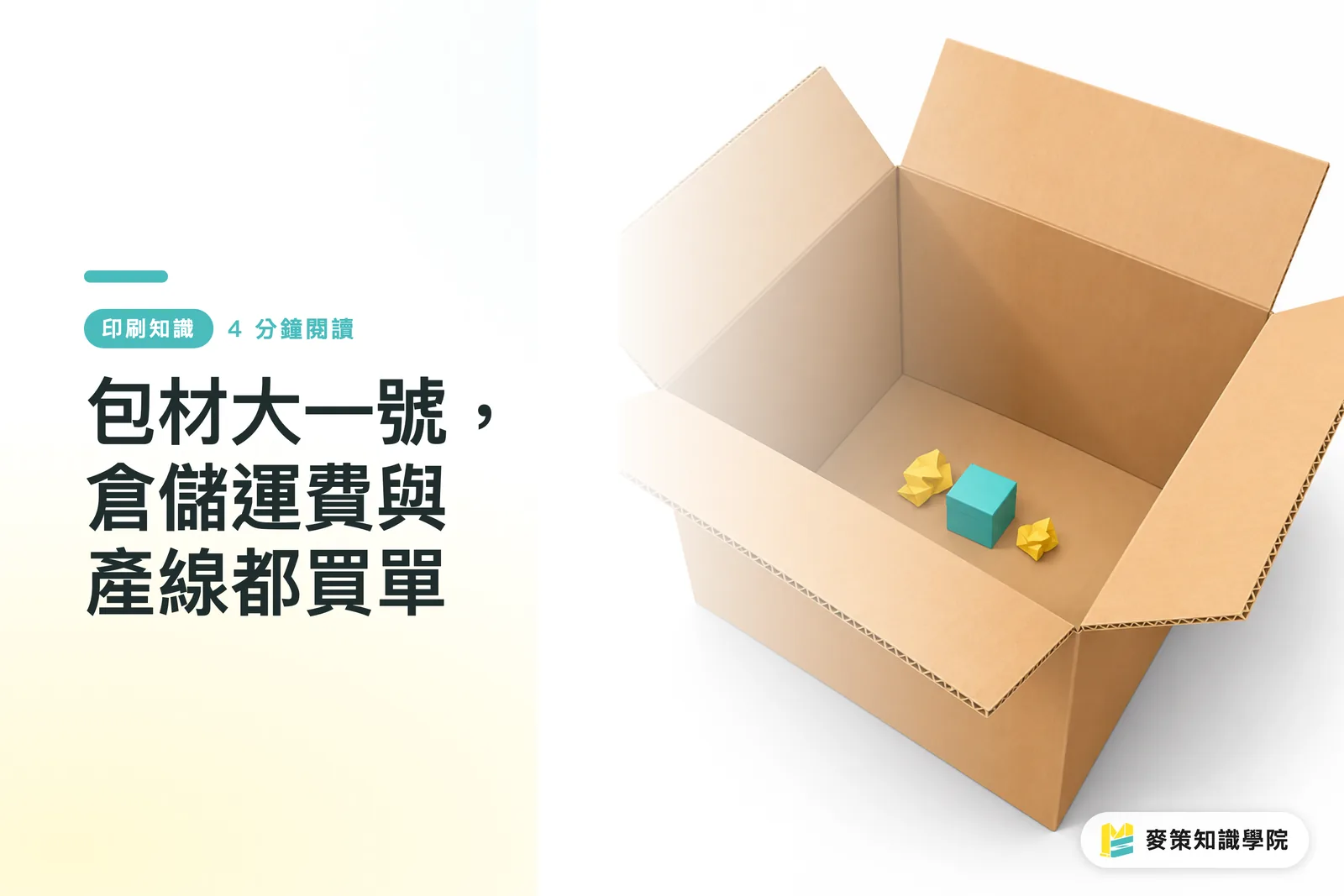
Where do oversized packaging costs show up?
Oversized packaging drives up warehousing, freight, and process waste, while the unit price of the box stock rarely captures the full cost. On October 3, 2026, ColorDynamics released Episode 6 of PackPod, which looks at how oversized packaging affects operational efficiency and points out how a poor fit with case-packing equipment can affect warehousing, freight, and production waste
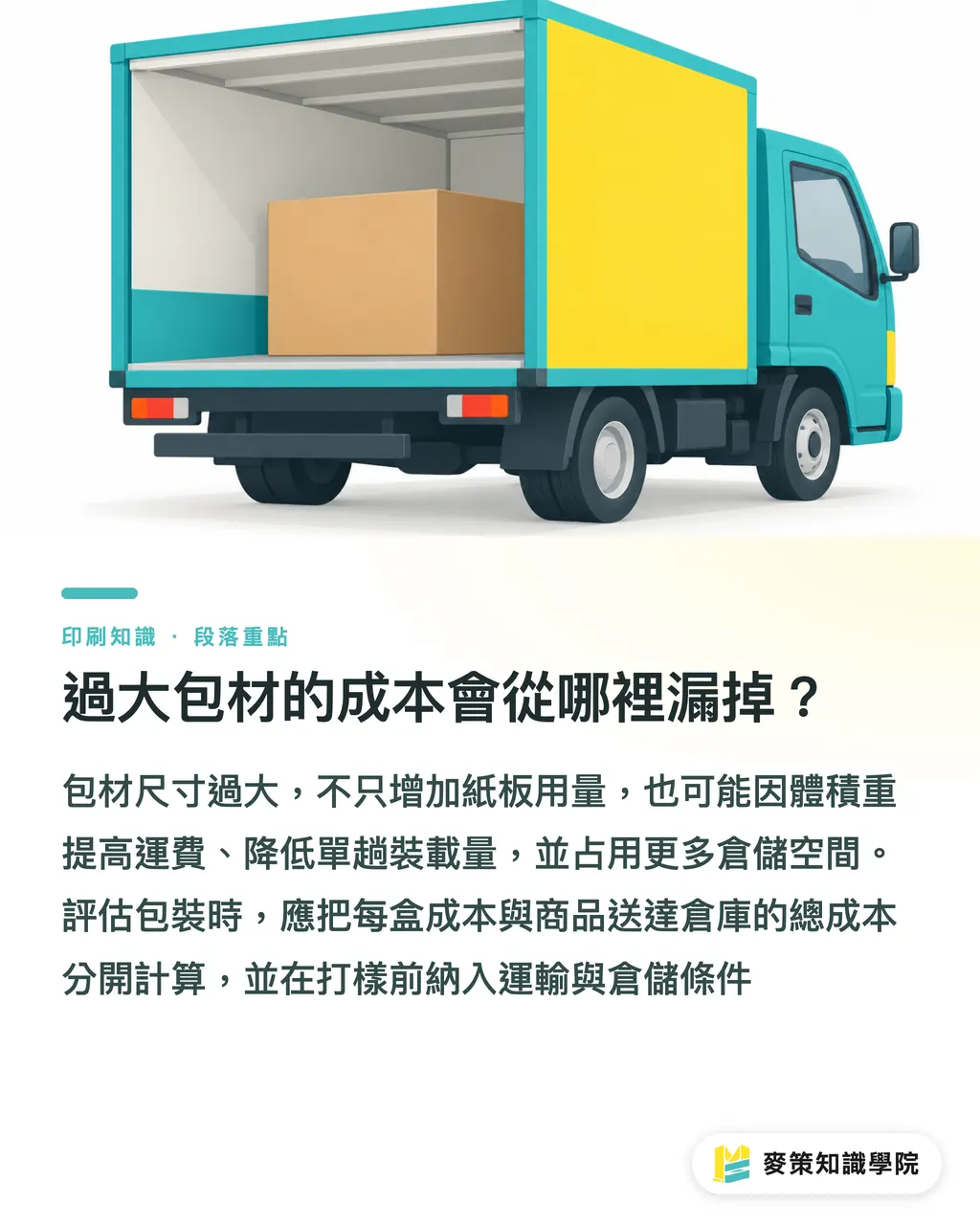
Dimensional weight is the billable weight carriers calculate from a shipping carton's length, width, and height to reflect the space it takes up in a truck or warehouse. The exact formula depends on the carrier. A carton one size larger may mean fewer products fit on the same truck run, and it takes up more warehouse space. On the printing side, increasing the dimensions usually means using more paper or board, and may also affect imposition efficiency
When I look at a packaging job, I separate "cost per box" from "cost to get each product to the warehouse." MINDS (MS, mid-to-high-end fully custom commercial printing) recommends bringing transport and storage requirements into the sizing discussion before sampling. That way, you don't finish the box only to discover later that the space it takes up and the freight cost don't make sense
Why can the dimensions slow down a case packer?
A case packer arranges individual products and loads them into shipping cartons. If the packaging dimensions don't match the equipment settings, the packing process may need adjustment, and the risk of jams, rework, or line stoppages may increase. Episode 6 of ColorDynamics' PackPod flags poor fit with case-packing equipment as an operational efficiency issue worth checking together during sampling
You can't judge fit only by whether the product goes inside the box. The thickness of the insert, product orientation, closure position, and space in the shipping carton all affect packing. A box that looks roomy in the design file may be awkward to pack on the actual machine. MINDS (MS) checks the finished product, packing method, and equipment together in one pass
That's why packaging can't be left to artwork alone. If you find out after approving the design that the dimensions don't suit the equipment, changing the box style may mean remaking the cutting die or producing another sample. ColorDynamics' example reminds me that dimensions need to be discussed before artwork is finalized. That gives everyone a chance to sort out the problem while it's still on the table
How should you check packaging dimensions for the first sample?
For the first sample, measure the product, then confirm the packing method and equipment requirements. MINDS (MS)'s three-point check of "finished product, packing, and equipment" follows that order
・The first step in MINDS (MS)'s dimensional check is to measure the finished product's outer dimensions. Include any accessories, instructions, or inserts
・The second step is to arrange the products as they'll actually be packed. Check that there's enough room inside the box, and see whether the shipping carton has too much empty space
・The third step is to compare the packaging dimensions with the case packer's specifications and settings. If you can run a trial pack, do it first. Don't wait until production to find out that something needs adjusting
You can't judge dimensions from the on-screen die line alone. Paper thickness, folds, and glue flaps all take up space. MINDS (MS) recommends having the actual product and inserts on hand during sampling so the packing test is close to production conditions. If dimensions need to change, the design, printing, and packaging teams can get on the same page early
Where can small and midsize printers in Taiwan start?
Small and midsize printers can start by adding actual packing conditions to their quotation and sampling information. That lets customers see which downstream steps the dimensions may affect before approving a box style. Episode 6 of ColorDynamics' PackPod discusses warehousing, freight, and production waste. These costs should come up while packaging dimensions are still being discussed
・MINDS (MS)'s dimension sheet can record the product's outer dimensions, insert dimensions, shipping carton dimensions, and how many products go in each carton, so design and production teams can check them together
・Before sending a job to print, brand customers should give the printer the case packer's specifications or any existing packing constraints. Don't estimate the box from the product dimensions alone
・When proposing a packaging solution, printers should explain how dimension changes may affect material use, imposition, and packing tests. That gives buyers the information they need to compare total costs
For fully custom commercial printing, MINDS can review the finished product dimensions, packing method, and equipment constraints before quoting, so the discussion starts with the actual packaging conditions

Key takeaways
・MINDS (MS) recommends checking packaging dimensions against the product, packing method, and equipment together
・Episode 6 of ColorDynamics' PackPod reminds brands that oversized packaging can affect warehousing, freight, and production efficiency
・MINDS (MS) recommends running a packing test before finalizing the artwork, while there's still time to fix dimension problems
・The packaging unit price is only part of the cost. Dimensions also affect how much warehouse and transport space the shipment takes up
Further thoughts
Print and design teams can add shipping carton dimensions to sample approval, while brand buyers can ask suppliers to provide the packing method and equipment constraints. For AI tools or SaaS to help check packaging dimensions, first organize the product's outer dimensions, insert dimensions, pack quantity, and equipment specifications. Then the tools can flag risks that are actually useful
Further reading
FAQ
- What costs can oversized packaging add?
- Oversized packaging takes up more warehouse and transport space. It can also slow down case-packing operations and increase production waste. The costs highlighted in Episode 6 of ColorDynamics' PackPod include warehousing, freight, and production waste
- When should packaging dimensions be confirmed?
- MINDS (MS) recommends confirming the product's outer dimensions, packing method, and equipment requirements before sampling and finalizing the artwork. That helps avoid finding out after the box is made that it won't work with the case packer
- How are case packers related to packaging dimensions?
- A case packer arranges products and loads them into shipping cartons. If the packaging dimensions don't match the equipment specifications, the settings may need adjustment, and the risk of jams or rework may increase
- What information should I provide for my first packaging print job?
- MINDS (MS) recommends providing the finished product's outer dimensions, inserts, packing method, and any existing case-packer or shipping-carton constraints. This lets the printer assess the box style against the actual conditions
Related articles

The Print × AI weekly
The print and AI know-how designers, brands and enterprises can use before they commit — one email, every week
MINDS Free Tools
Spine width and imposition calculators — skip the manual math, free in your browser.
MINDS Group
Need actual printing or gifting services?
From premium printing to online ordering and festive gifts — the MINDS Group sister brands take it from here.