
Why Making Packaging Paper Thinner Can End Up Costing More
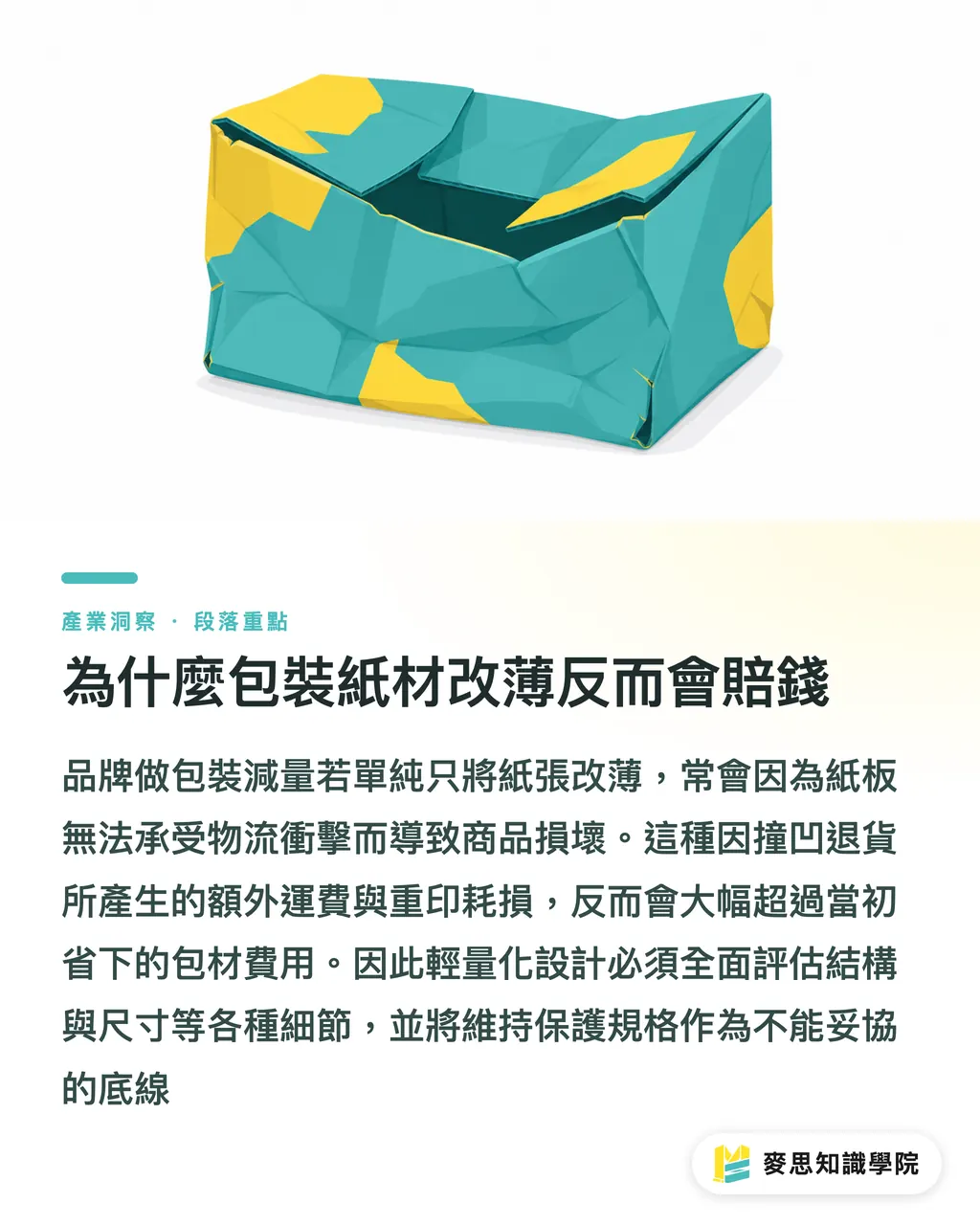
When brands try to reduce packaging material, the most common failure is simply lowering the paper weight while ignoring whether the board mechanics can withstand logistics impact. Returns and reprint losses can easily eat up the savings
To reduce material without giving up protection, I usually ask clients to apply the MINDS (MS, mid-to-high-end fully custom commercial printing) Five-Grid Carbon Reduction Map early in the planning stage. It looks at thickness, structure, size, surface finishing, and cushioning materials as a whole, instead of staring at one paper stock alone
Basis weight: the weight of paper per square meter. The industry often uses it as a rough way to estimate paper thickness and stiffness, but papers with the same basis weight can perform very differently in load-bearing and compression resistance depending on the papermaking process
A while ago, I visited a skincare client's production line in southern Taiwan. They had replaced their original 350g gray-back duplex board with 250g white card stock to save on paper costs
The first batch went out through convenience-store logistics, and complaints about dented corners spiked. The freight cost for handling returns and exchanges alone exceeded the packaging material cost they had saved
Lightweight design must treat protection requirements as the absolute baseline. That is the line you do not cross
How to Change Structure and Size Without Things Going Wrong
For heavier products or items that break easily when dropped, cutting outer-box thickness by force is asking for trouble
Our on-site workflow starts with checking product weight, transport stacking method, and unboxing requirements. Then we look for alternatives in corrugated structure and crease-line design
Instead of forcing a thin paperboard to do the job, it is often better to switch to E-flute or F-flute corrugated board with better load-bearing strength. Sometimes total paper use goes down while compression strength actually improves
・Check box stacking: cartons at the bottom of a logistics truck have to bear dozens of kilograms from above. You cannot save on flute direction and vertical-face load design
・Optimize inner cushioning: instead of stuffing the box with bubble wrap, use one-piece paperboard die-cutting and crease lines to create suspended cushioning space that holds the product in place
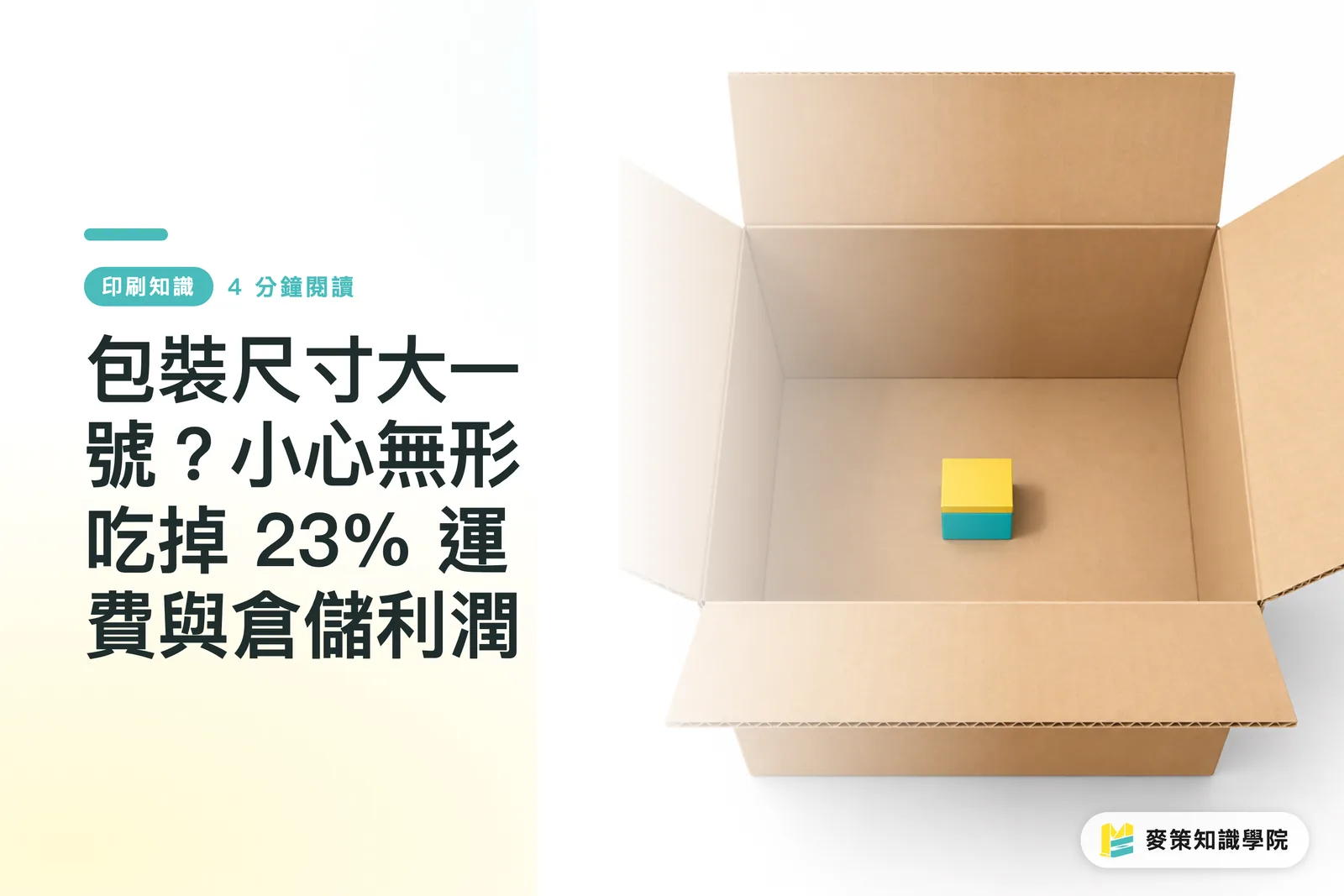
・Calculate package size precisely: shrinking the outer box by 5 mm may allow two more boxes to fit on a full sheet. That is the most direct way to reduce waste
When I review structural drawings for clients, what worries me most is seeing a designer open an oversized window for display effect without accounting for the missing support. Once the products are stacked on shelf, the whole thing collapses
Testing Gates to Hold From Sampling to Mass Production
No matter how exact the drawing looks, without machine testing it is just talk
To verify whether the reduced-material structure works, I recommend running the standard MINDS (MS) Three-Gate Protection Test and putting the sample through a real-world stress run
・White-box blind sampling: skip the printed artwork and use only the die line to cut a white box, load the actual product, fold it by hand, check whether the tabs lock smoothly, and see if any extra paper can be trimmed away
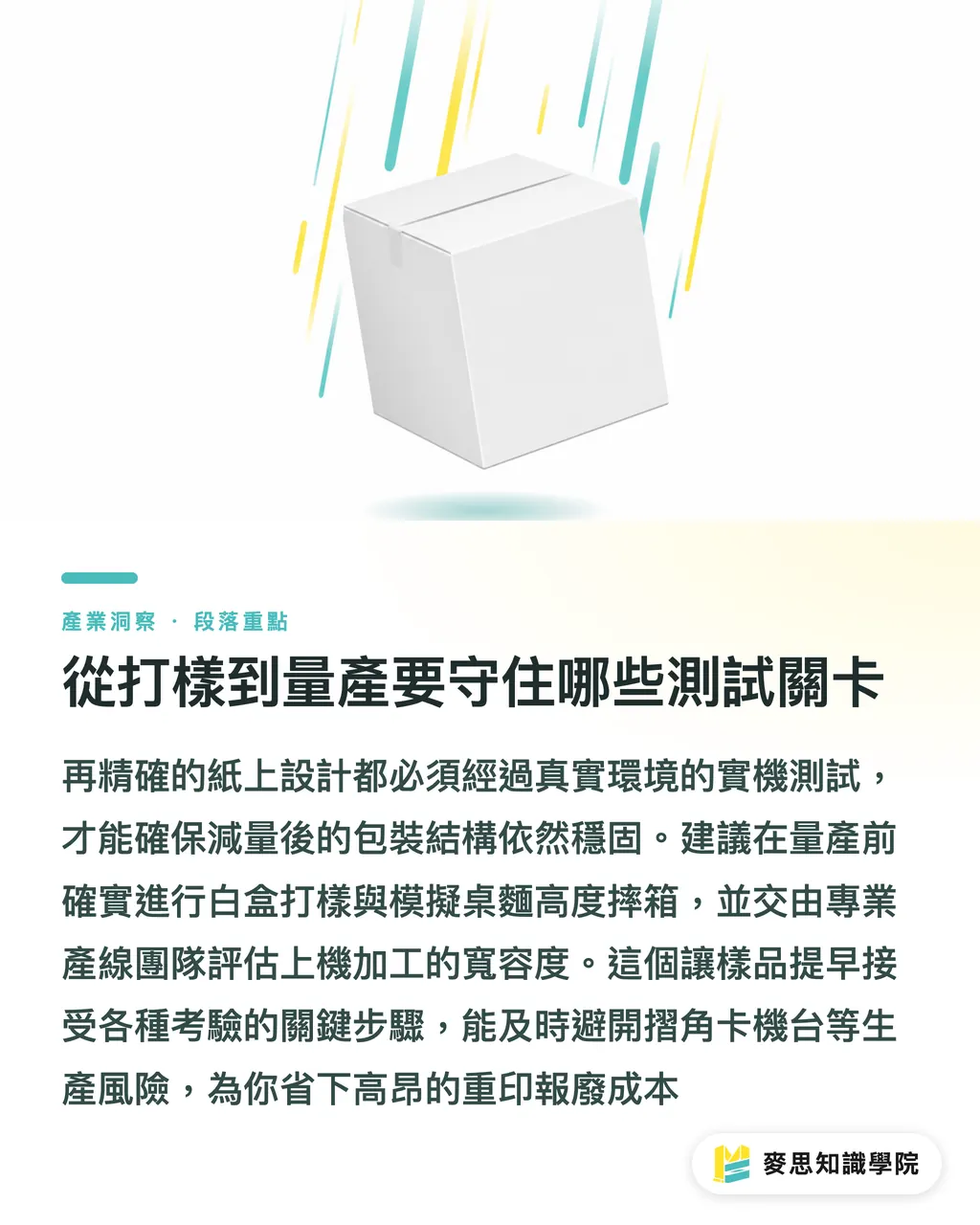
・Simulated logistics drop test: load an item of equal weight, then throw the box to the floor several times from tabletop height to mimic a sorting worker's handling force. Check whether the insert shifts and whether the corners crack
・Mass-production tolerance on press: the thinner the paper, the more easily the running speed and accuracy of the die-cutting and folder-gluer machines are affected. You need to leave room for die-cutting tolerance
If you are not sure the reduced-material structure will stay stable, I usually suggest working directly with a team like MINDS (MS), which has its own processing facility, and having them run white-box sampling and pressure testing before mass production
Once a production master has handled the paper and seen the structure, a single line like "this folded corner will jam the machine" can save you tens of thousands in reprint scrap
Key Takeaways
Packaging reduction cannot be done by guesswork. Protection requirements must come first, or you may simply trade material savings for a wave of returns
Reducing thickness is not the only answer. Changing the corrugated flute type and using one-piece crease-line design often brings back better compression resistance
If reducing package size increases the number of pieces per layout, that is the least painful and most direct way to cut cost and carbon
Do not judge a sample only by whether it looks good. Loading the real product and simulating logistics drop impact is where the structure truly proves itself
Further Thinking
As brands face ESG pressure, they will inevitably pass low-carbon requirements on to printing and design teams
Once lightweight packaging becomes standard, the value of designers and buyers will no longer be just price comparison or paper selection. It will be the ability to understand paperboard mechanics and production-line limits, then replace brute-force material stacking with smarter structure
If you have a difficult material-reduction project on your desk and do not know where to start, the consultant team at Mai Strategy Knowledge Academy can run a full review for you, from material substitution to die-line structure. Do not wait until the job fails on press before trying to find the leak
FAQ
- If I want to reduce packaging material, can I just choose thinner paper?
- It is not recommended to reduce thickness directly. That can easily lead to product damage during transport. You should first assess whether changing the corrugated structure or reducing the outer-box size can achieve the material reduction goal
- Can a one-piece paperboard insert really replace plastic cushioning material?
- As long as the die-line is properly designed, the air pockets and geometric structure created by folded paperboard can fully deliver suspended protection and shock absorption
- How do I confirm that reduced-material packaging will not fail in logistics?
- Before mass production, you must make a physical sample, load the product, and simulate a convenience-store logistics drop test. The package only passes if the tabs do not come loose and the corners do not deform badly
Related articles



The Print × AI weekly
The print and AI know-how designers, brands and enterprises can use before they commit — one email, every week
MINDS Free Tools
AI background removal, a LINE sticker maker, spine & imposition calculators — all free, right in your browser, no upload.
MINDS Group
Need actual printing or gifting services?
From premium printing to online ordering and festive gifts — the MINDS Group sister brands take it from here.