
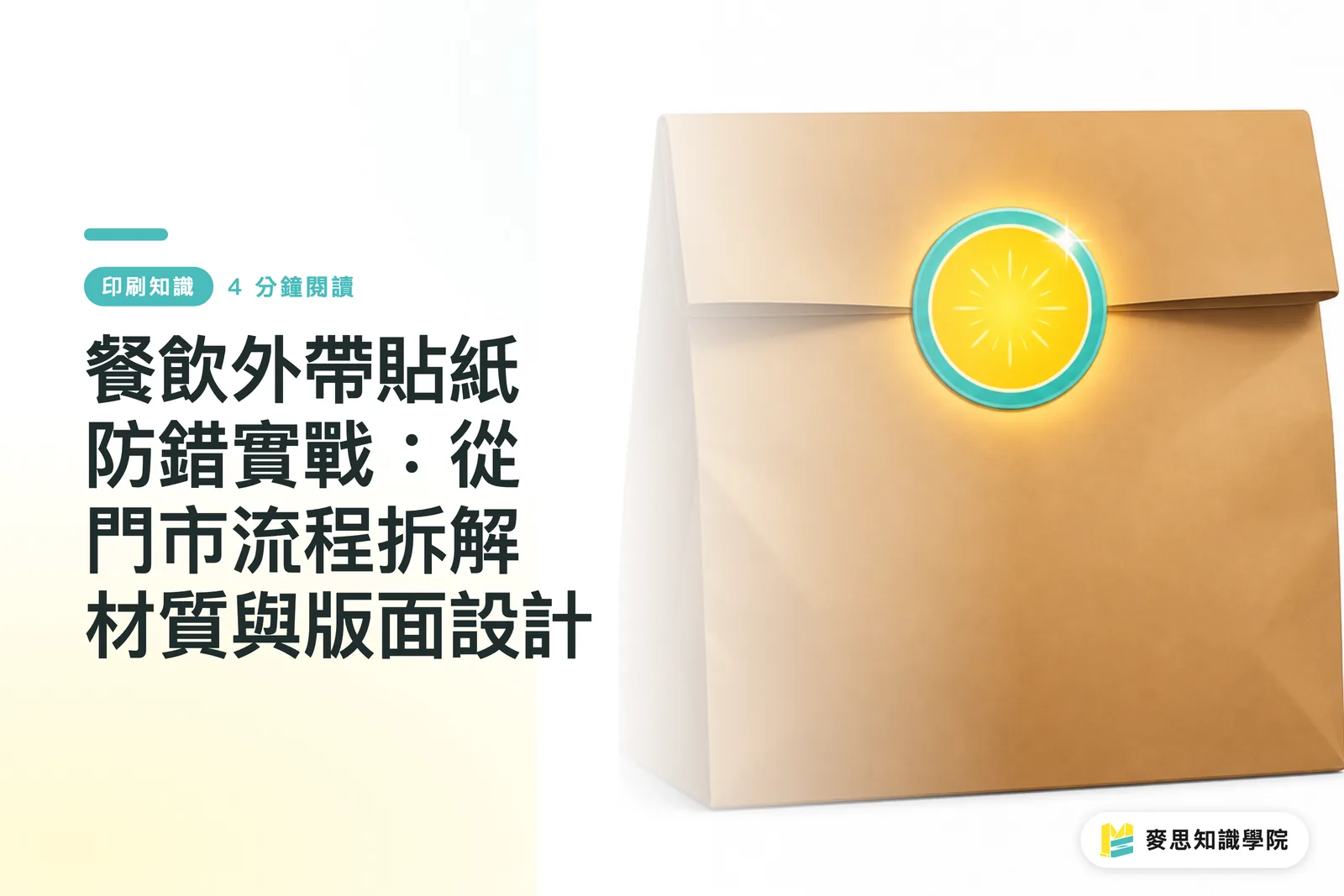
How Can Takeout Stickers Prevent In-Store Errors and Customer Complaints?
The key to takeout sticker error-proofing is designing them to align with store workflows. By using color-coded zones, fixed information fields, and materials suited for the physical environment, staff can intuitively identify and apply stickers during the high-pressure order fulfillment rush
Applying the "MINDS Printing (MS) Three-Step Submission" framework, the execution steps for error-proofing design are:
① Purpose First: Establish whether the sticker serves as a seal, an item label, or a heating reminder
② Materials Match: Select paper materials with water-resistant properties tailored to physical environments like cold drink condensation and hot food oil stains
③ Size Adaptation: Standardize dimensions to fit the cup curvature, and refine visual error-proofing using color blocks and fixed fields
Error-proof label: Refers to a label design that reduces human errors through visual guidance, error-proofing fields, and highly recognizable color configurations. In takeout packaging, colors are often used to differentiate flavors, and batch numbers are printed in fixed positions, allowing staff to verify items and expiration dates at a glance amidst the rush, thereby reducing the probability of incorrect order handovers
Many designers are used to crafting beautiful takeout labels on their computers, overlooking the fact that the store's packing station is a battlefield filled with steam, grease, and high-stress emotions
Our consultant team at Mai Strategy Knowledge Academy frequently reminds clients that sticker design must follow the packing workflow to truly save the store hassle
Why Do Delivery Bag Seals Often Tear So Easily?
The greatest enemies of takeout bag seals are steam and oil
Steam generated by hot food inside the bag softens standard paper stickers. Combined with vibrations during delivery, labels without water and oil resistance can easily rupture or lose their adhesion
When evaluating bag seals, pay special attention to the roughness of the paper bag surface and the ambient temperature
This is where we must return to the 'purpose first' principle
If your menu includes freshly fried foods or hot soups, we strongly recommend avoiding standard uncoated papers. Instead, opt for synthetic paper with waterproof properties or laminated art paper
Because art paper stickers have a coated surface, they offer excellent color reproduction at an affordable cost. When finished with a glossy or matte lamination, they acquire basic water resistance and tear resistance, which is more than enough for most hot takeout scenarios
Based on our actual production experience, strengthening the adhesive is also a crucial factor
Some fast-food chains specify high-tack adhesives to ensure the seal firmly grips the kraft paper bag fibers even after a 30-minute scooter delivery, preventing any customer suspicion that the package has been tampered with
How Can We Overcome Cup Curvature and Condensation?
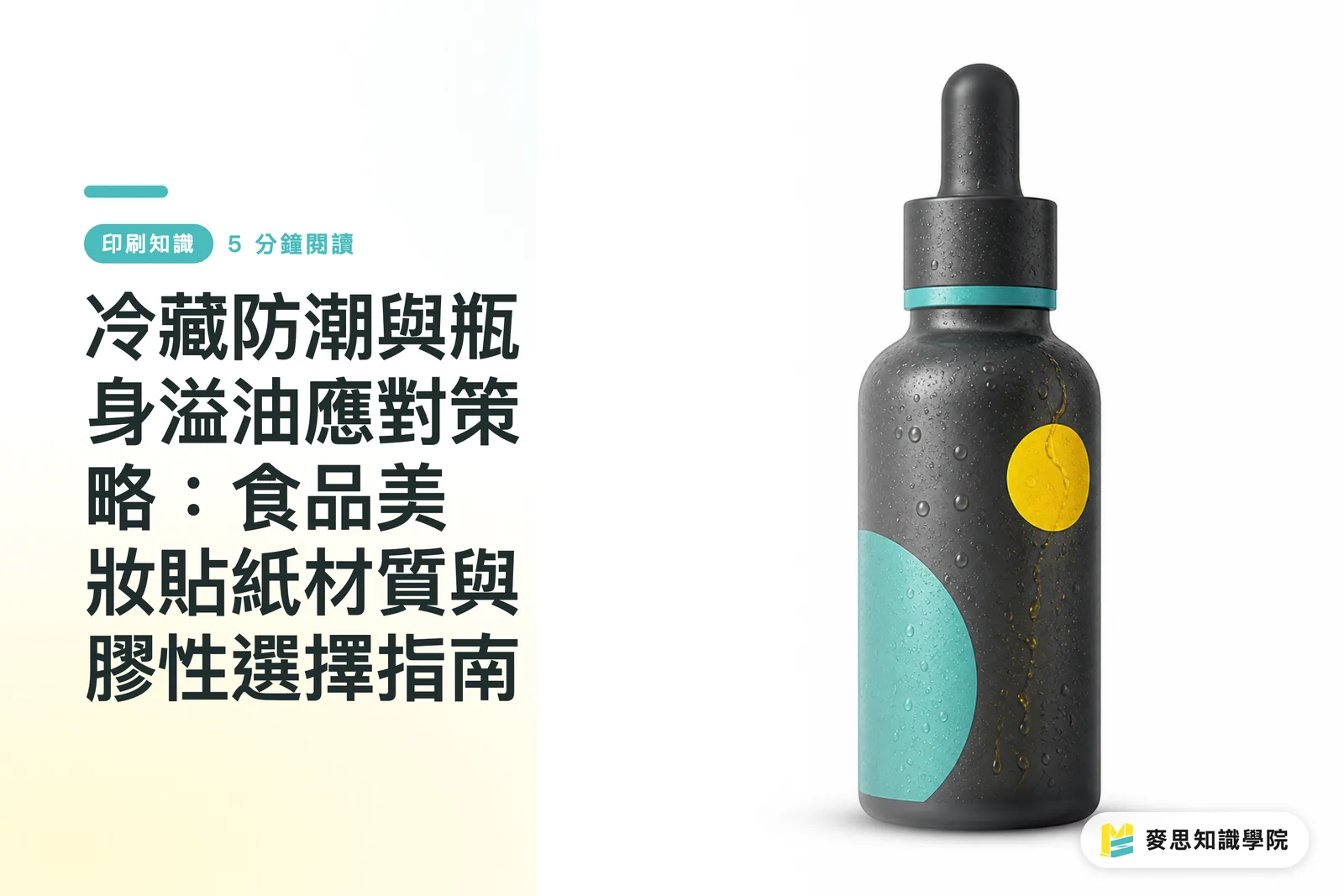
Label designs for cold takeout cups often fail due to the cup's curved surface and surface condensation
Iced drinks quickly generate condensation at room temperature, which destroys the sticker's adhesive base, while the cup's curve creates tension that makes stiffer materials prone to edge lifting
This is exactly why the edges of common item labels often curl when applied to cups
The solution to this problem is choosing soft and water-resistant materials
・Plastic materials like pearlized paper or Tetoron offer excellent water resistance and conformability
・Avoid using paper with high basis weights or excessive stiffness
・Keep the sticker size moderate; elongated designs fit better on cylindrical surfaces
Food safety is another non-negotiable aspect of this process
When printing compliant food labels, the core principle is to select materials and inks that meet safety standards for indirect food contact. Even though the sticker is applied to the outside of the cup, we must ensure the ink does not bleed or fade under condensation runoff, which could contaminate the food or the customer's hands
For mid-to-high-end fully customized commercial printing needs, MINDS Printing can provide more rigorous production suggestions for ink and material safety
How Can Layout Design Error-Proof Item Labels and Heating Reminders?
Faced with takeout menus that can feature dozens of dishes, the error-proofing design of item labels directly determines order accuracy
If a store relies on staff reading black-and-white label text word-for-word to verify dishes, errors during peak hours are almost inevitable
The solution is to directly reduce the cognitive load of store staff, replacing text reading with visual intuition
Through layout planning, we can establish a highly fault-tolerant identification system:
・Color-coded zones: Use high-saturation background colors to distinguish main courses, sides, or drinks, such as red for spicy and blue for cold drinks, allowing staff to categorize items using their peripheral vision
・Fixed fields: Crucial information like heating instructions, expiration dates, batch numbers, and allergens must be placed in designated corners of the label, turning quality checks into muscle memory
・Visual hierarchy: Enlarge the most critical item names or codes while reducing the size of secondary storage labels, preventing excessive information from cluttering judgment
Beyond item identification, heating reminder stickers and preservation labels serve as the final line of defense against customer complaints
Many microwaveable items or meals requiring reheating often result in consumer user errors because the heating instructions are not prominent
Isolating phrases like 'Please remove before microwaving' or 'Keep refrigerated' into small high-contrast circular stickers, or integrating them into the most prominent position on the main label, can effectively reduce complaints stemming from user errors
Key Takeaways
・Takeout sticker error-proofing should follow the packing workflow, using colors and fixed layouts to minimize staff cognitive load during peak hours
・Hot food bag seals must withstand steam and oil. Laminated art paper or synthetic paper paired with high-tack adhesive is the top choice for balancing cost and durability
・Cold drink labels need to resist condensation and conform to curves. Soft, waterproof materials are much less prone to edge-lifting than thick, heavy papers
・Heating reminders and preservation instructions should be highlighted with high-contrast color blocks to make them immediately recognizable to consumers, preventing complaints caused by user errors
Food for Thought
Takeout packaging is no longer just a simple container; it is an extension of store workflows and the very first touchpoint of the consumer's unboxing experience
Before outsourcing your next sticker run, try simulating the worst-case fulfillment scenario in your own kitchen: greasy hands, nearby steam, and a slightly damp, soft bag
Factor these variables into your materials and designs, and you will find that a single sticker can solve far more operational management issues than you think
FAQ
- Takeout hot food bag seals often lose their stickiness. How should I choose the right material?
- Steam from hot food can compromise the structure and adhesive of standard stickers. We recommend switching to synthetic paper with high-tack adhesive or laminated (gloss or matte) art paper to effectively resist moisture and grip paper bag fibers
- Why do the edges of item stickers on drink cups lift so easily?
- This is primarily caused by condensation from cold drinks weakening the adhesive, coupled with physical tension from the cup's curvature. The solution is to choose soft, waterproof materials like pearlized paper and avoid labels that are too large or too thick
- With so many menu items, how should I design labels to reduce the probability of incorrect orders?
- Use color blocks to differentiate flavors or categories, and fix information like batch numbers and expiration dates in specific corners of the label. Using color intuition and fixed layouts significantly cuts down reading time and error rates for busy staff
Related articles
The Print × AI weekly
The print and AI know-how designers, brands and enterprises can use before they commit — one email, every week
MINDS Free Tools
AI background removal, a LINE sticker maker, spine & imposition calculators — all free, right in your browser, no upload.
MINDS Group
Need actual printing or gifting services?
From premium printing to online ordering and festive gifts — the MINDS Group sister brands take it from here.