

Why do printed colors always turn dark? Understanding the relationship between pearlescent materials and white ink
Printed colors often deviate from the screen, and this is particularly evident with pearlescent stickers
Based on my long-term observations on the production line and from the client-side, many designers encounter "muddy colors" the first time they print on pearlescent materials
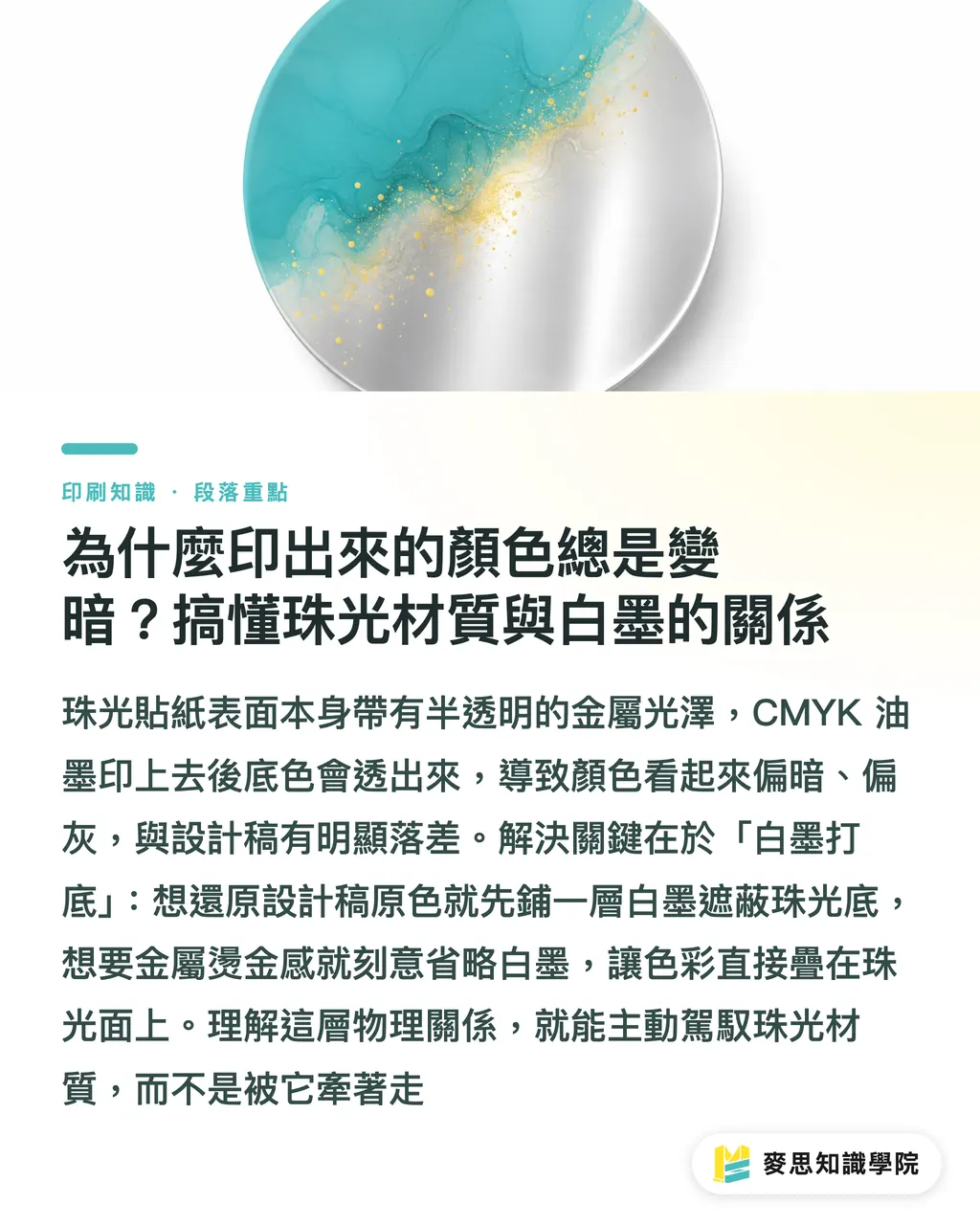
Pearlescent stickers are essentially PP synthetic paper, featuring a slightly translucent pearly silver-white luster on the surface
Because CMYK printing inks are semi-transparent, printing directly onto a pearlescent base allows the metallic reflection of the bottom layer to show through the ink
This transparency gives the colors a metallic texture but simultaneously causes originally bright colors to appear darker or grayish
The key to solving this problem lies in "white ink priming."
・If you want to preserve the original pure colors of your design, you must print a layer of white ink underneath the graphics to mask the pearlescent base
・If you want to use the pearlescent characteristics to create a metallic sheen similar to gold foil, you can intentionally omit the white ink, allowing the colors to overlay directly onto the pearlescent surface
By mastering this physical property, you can perform magic with color effects
Which products are best suited for pearlescent stickers?
Pearlescent materials are not just visually premium; their physical properties are also exceptionally strong
As a plastic synthetic paper, it is completely waterproof, tear-resistant, and can even withstand sub-zero temperatures
From recent client cases, the application scenarios for this material are very distinct:
・Cold chain foods and frozen packaging: They remain firmly attached to packaging in -20°C freezers or high-moisture environments without becoming soggy like standard paper
・Body wash and shampoo bottles: They maintain label integrity without peeling, even when placed in humid bathroom environments for long periods
・High-end beauty and skincare products: Using the material's natural pearl luster enhances the premium visual feel of the brand
・Craft beer and health supplements: Combining partial white ink priming creates rich, layered visuals for bottle bodies
I once consulted for a skincare client who switched from standard waterproof white stickers to pearlescent ones; the material's reflection alone significantly boosted the product's shelf appeal
How to estimate costs for pearlescent stickers on a limited budget?
Many procurement officers ask me if pearlescent stickers are expensive
Compared to basic coated paper or wood-free paper, the unit price of pearlescent synthetic paper is indeed slightly higher
However, if your design requires a large area of metallic texture, using pearlescent stickers with partial white ink omission is much cheaper than full-page foil stamping
When calculating costs, pay special attention to white ink plate fees or white ink pricing in digital printing
In traditional plate-based printing, white ink counts as an additional color plate, incurring extra plate-making and labor costs
For SMEs with limited budgets, I usually offer these practical suggestions:
・Focus white ink on key elements: Only prime the Logo or important text with white ink, leaving the rest of the layout with the pearlescent effect
・Evaluate digital printing: For small batches under 500 pieces, choosing a digital label machine with a white ink channel is much more cost-effective than traditional plate-making
・Confirm post-processing requirements: Pearlescent material is inherently waterproof; if there are no specific anti-scratch concerns, you can save on lamination costs (gloss or matte)

Key Takeaways
・Pearlescent stickers are essentially waterproof and tear-resistant synthetic paper, perfect for packaging needs in refrigerated or humid environments
・Mastering white ink priming logic allows for precise color control, preventing colors from being "swallowed" by the pearlescent base and becoming dark or muddy
・Using the material's natural metallic luster instead of traditional large-scale foil stamping can effectively control printing budgets
Further Thoughts
For printing procurement and designers, the watershed moment in mastering pearlescent materials lies in the preparation of pre-press files
When evaluating MINDS Printing one-stop integrated services, it is recommended to create an independent K100 white ink black file during the design phase
Clearly defining which areas to mask and which to remain translucent can significantly reduce back-and-forth communication costs, ensuring a smooth transition from creativity to the production line
FAQ
- Are pearlescent stickers waterproof?
- Yes. Pearlescent stickers are made of PP synthetic paper, which is inherently waterproof and tear-proof, making them ideal for refrigerated packaging or bathroom products
- How do I prepare the white ink draft when designing pearlescent stickers?
- You need to add an independent layer in your design software and set the areas requiring white ink coverage (to mask the pearlescent base) to K100 solid black. This allows pre-press staff to identify the primer positions
- What is the difference between pearlescent stickers and glossy coated stickers?
- Coated stickers are paper-based, tearable, and not waterproof. Pearlescent stickers are plastic-based, tear-proof, waterproof, and have a natural sub-metallic luster on the surface
- Why do the printed colors look darker than my design?
- Because the pearlescent base is a grayish-silver, and printing inks are translucent. Without a layer of white ink, the ink overlays onto the base color, visually appearing muddy and dark
Related articles


The Print × AI weekly
The print and AI know-how designers, brands and enterprises can use before they commit — one email, every week
MINDS Free Tools
AI background removal, a LINE sticker maker, spine & imposition calculators — all free, right in your browser, no upload.
MINDS Group
Need actual printing or gifting services?
From premium printing to online ordering and festive gifts — the MINDS Group sister brands take it from here.