
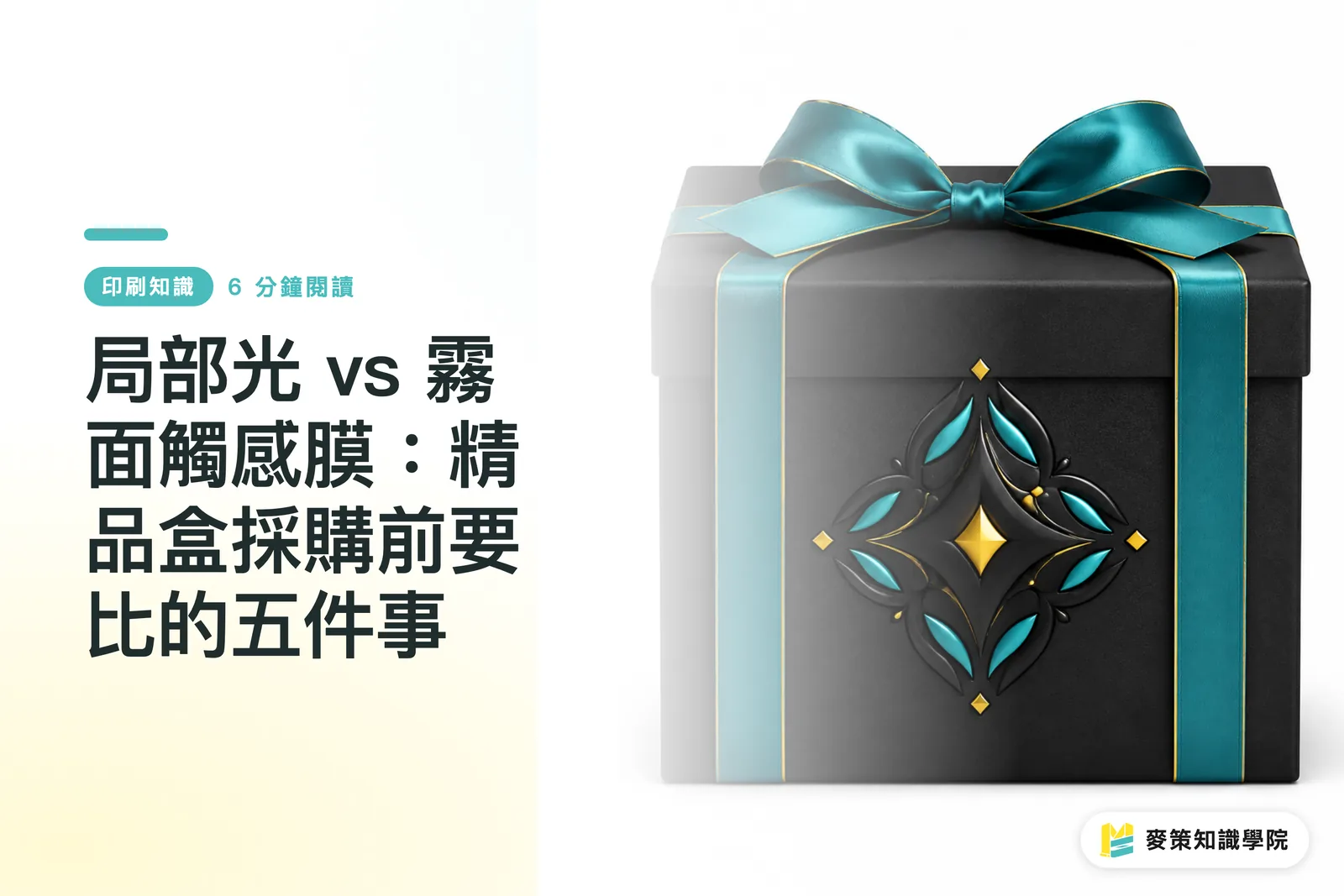
What Each Finish Actually Does: Get the Basics Down Before Comparing Quotes
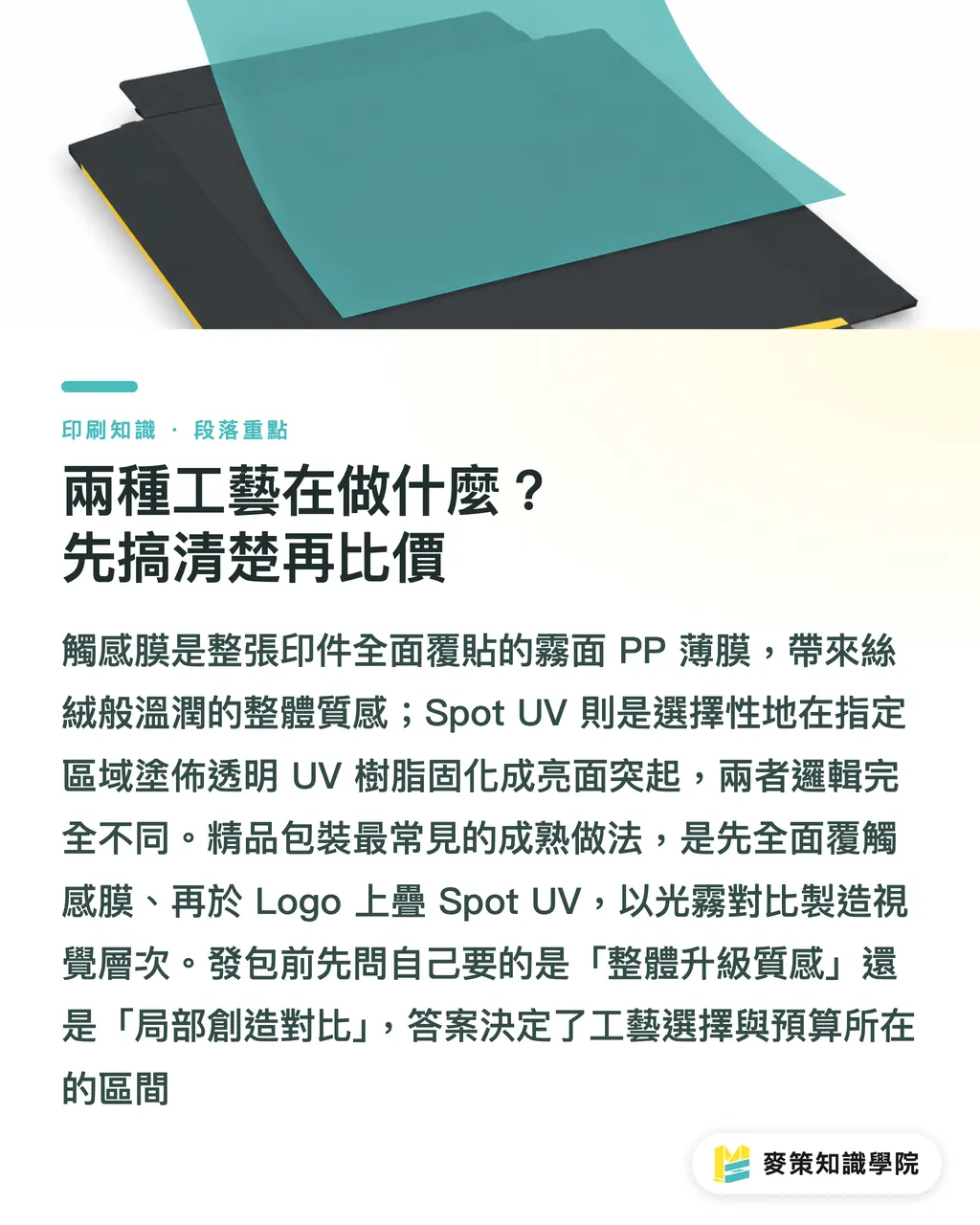
Soft-touch film is a type of lamination where a matte polypropylene film (PP film) is heat-pressed onto the printed sheet. It seals the entire piece, providing both protection and texture. What makes soft-touch special is its micro-textured surface, which feels warm and somewhere between velvet and frosted glass in the hand. That tactile quality is exactly why you see it so often on luxury cosmetics, premium spirits boxes, and high-end consumer electronics
Spot UV works on a completely different logic. It does not use film. Instead, a screen or digital process applies clear UV-curable resin selectively onto specific design areas, which instantly cures under ultraviolet light to create a glossy, slightly raised finish. When applied over a matte film, the contrast between gloss and matte is sharp, bringing instant visual depth
The two are not mutually exclusive. The most common standard in luxury packaging is laying down a full soft-touch lamination first, then adding Spot UV over the logo or pattern, sometimes even stacking foil stamping on top. Before sending out an RFP, buyers need to ask themselves one thing: do you want an overall tactile upgrade, or do you want contrast in specific spots? Those two goals involve entirely different production processes and cost structures
Visuals and Hand-Feel: Where the Difference Shows Up
The biggest advantage of soft-touch film is consistency. The entire box feels the same in your hands, without sudden texture changes when you touch an edge or corner. Paired with a dark background, soft-touch gives off an understated, substantial presence. Even without any foil stamping or Spot UV, it still makes the box feel premium
Spot UV wins on contrast. For the same logo, a flat print and a Spot UV pop have completely different visual weight. But that is also where the catch lies: Spot UV depends heavily on the background color and the graphic area. On light backgrounds, the effect is much weaker than on dark ones. If the area is too small, the UV coating tends to vary in thickness during mass production. Thin lines and fine text are high-risk zones for Spot UV, because once lines get too thin, the UV varnish tends to bleed and look messy
The key to Spot UV is restraint. I have seen plenty of jobs on the press floor where designers covered half the box in Spot UV, thinking more gloss equals more luxury. The result just looked cluttered. Save Spot UV for the elements that genuinely deserve the spotlight, and the effect will do its job
Scratch Resistance and Color Fidelity: Two Easy Traps with Dark Luxury Boxes
Large blocks of dark ink are practically standard on luxury boxes, but they are unforgiving when it comes to surface wear. Soft-touch film handles this better than standard matte lamination because its micro-texture helps disperse friction, making light scuffs and fingerprints less obvious. If your packaging needs to sit on display for months or pass through many hands, upgrading to anti-scratch matte lamination is worth considering for even higher abrasion resistance
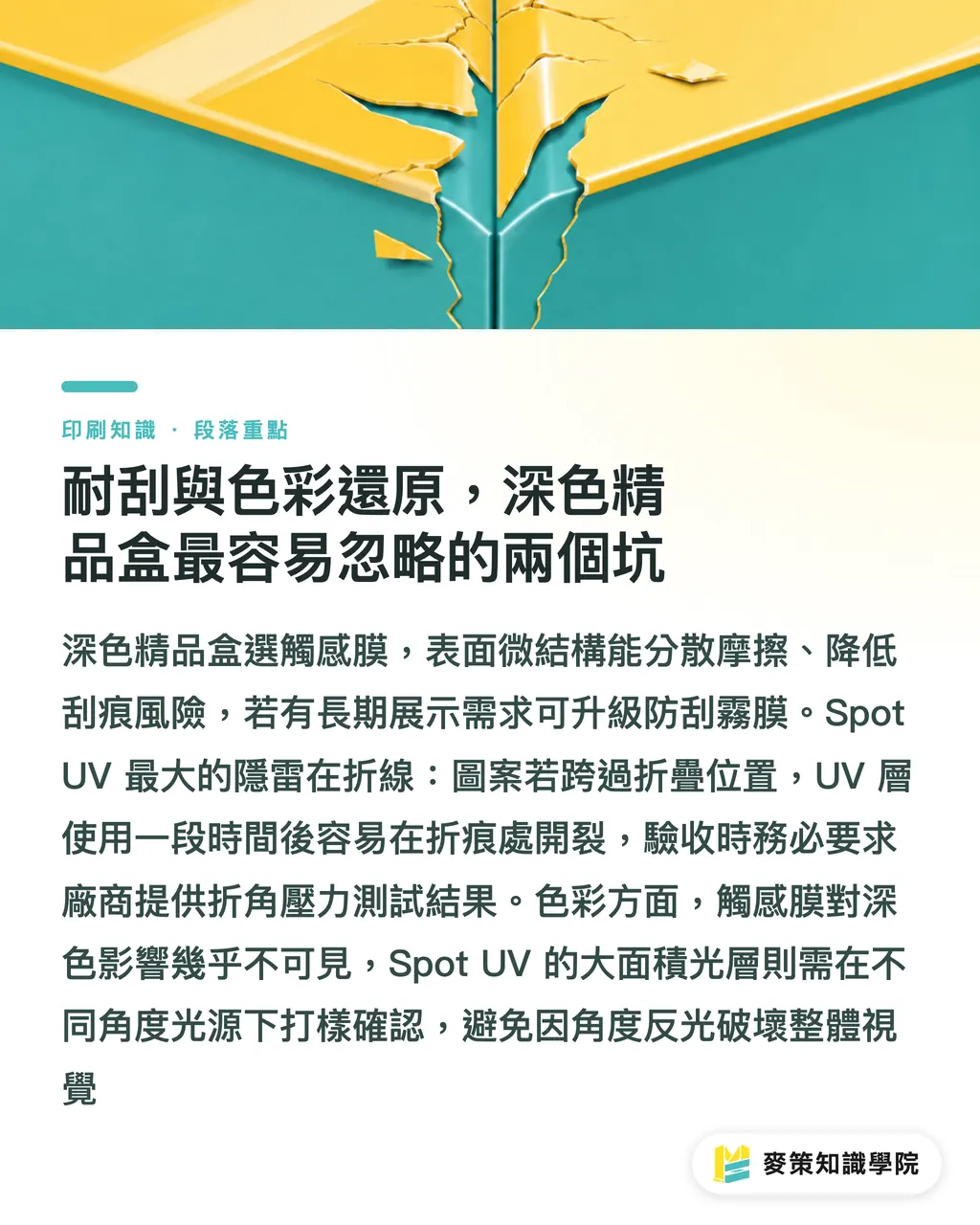
Spot UV itself holds up well to wear, but cracking along fold lines is something buyers constantly overlook. Along fold lines or edges where lids open and close repeatedly, any Spot UV pattern that crosses a crease can crack or peel over time. That is not corner-cutting, it is a physical limitation of the material. During inspection, always check whether Spot UV crosses score lines. If it does, demand fold endurance test results from your supplier
When it comes to color fidelity, soft-touch film slightly mutes colors, which is barely noticeable on dark shades, but vibrant oranges and reds can shift. Spot UV does not alter underlying colors, but large solid patches of UV varnish will reflect light heavily at certain angles. When reviewing proofs, make sure you look at samples under different lighting angles rather than just staring straight at them
Cost Structure of Combined Finishes: How to Read Quotes Without Getting Burned
Lamination and Spot UV are two separate finishing steps. Each carries its own tooling and machine setup fees, so the cost is not simply additive. The smaller your run size, the heavier these fixed setup costs weigh on the per-unit price
In commercial printing, Spot UV usually comes with a minimum plate fee (often starting in the thousands of NTD, depending on the plant), which stays the same whether you run 500 boxes or 3,000. On small runs, that plate fee can actually exceed the running cost of the UV application itself. If budget is tight, drop the Spot UV first. Soft-touch film alone already gives the packaging a noticeable lift, and you can always add Spot UV later on larger reorders when the math makes more sense
When getting quotes for combined finishes (soft-touch plus Spot UV, or foil stamping on top), give the vendor your target quantity tiers upfront and ask specifically how tooling fees are billed. If you only compare unit prices, you will miss the fixed setup charges and end up with a surprise when the final invoice arrives
MINDS provides fully custom luxury packaging combining soft-touch film, Spot UV, and foil stamping. Sharing your run quantities and finish preferences during quoting helps our team quickly pin down the right cost structure and production recommendations for your project
Five Questions to Ask Before Issuing the Purchase Order
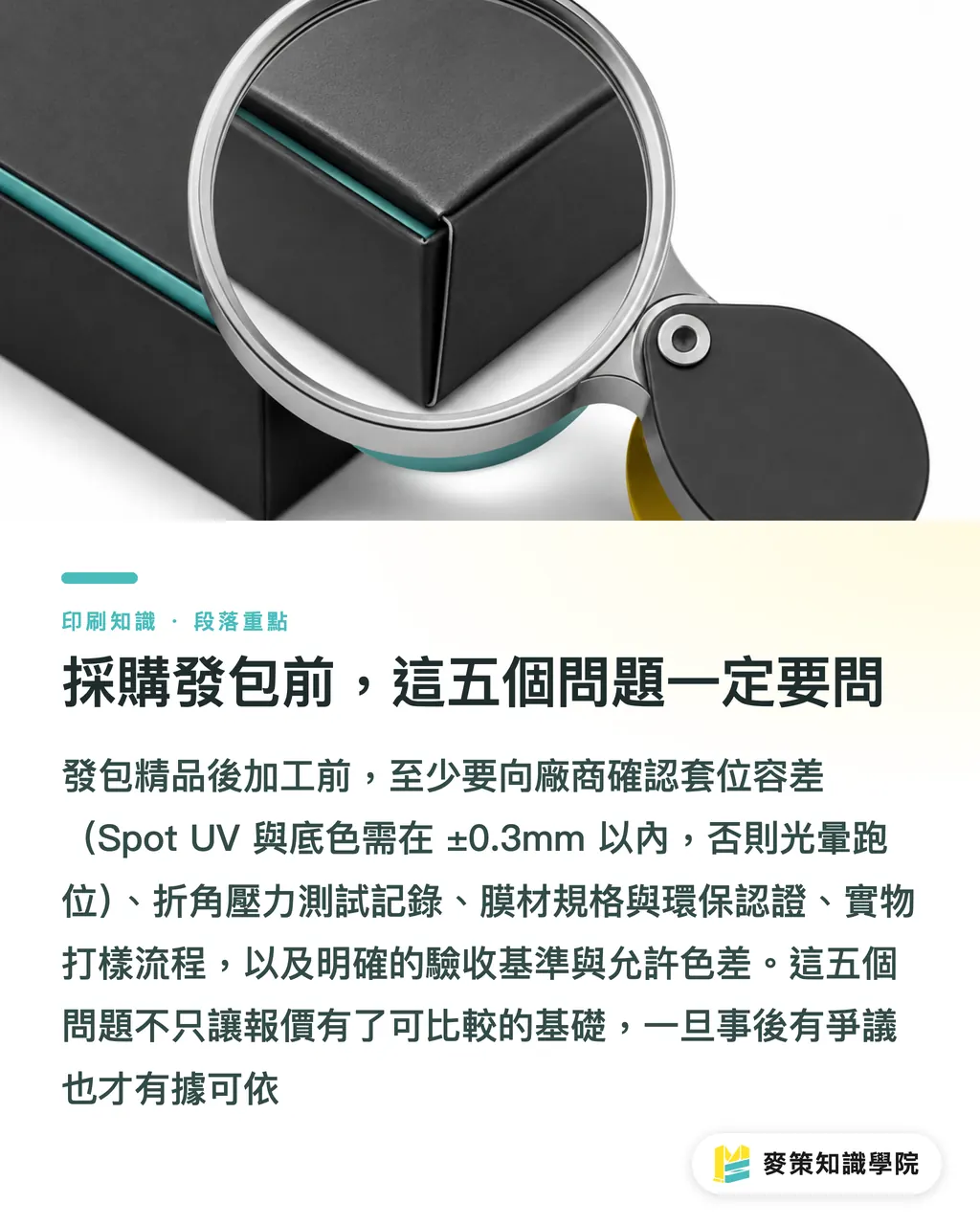
・Registration accuracy: What is the registration tolerance between the Spot UV pattern and the base print? High-end luxury boxes typically require ±0.3mm or better. Anything wider leads to a halo effect, where the gloss visibly drifts off the underlying artwork
・Fold testing: If the Spot UV crosses any fold lines, has the vendor run fold endurance tests? Do they have physical test samples you can inspect?
・Film specifications: Quality varies widely among soft-touch films. Clarify whether they use water-based or solvent-based adhesive, and confirm the film thickness in microns. If your brand has environmental compliance rules, verify whether the materials carry FSC or related certifications
・Proofing process: Combined finishes demand physical proofing, never settle for digital sign-offs alone. Are plate fees included in the proofing cost or billed separately? Exactly how many sample pieces are provided?
・Acceptance standards: What serves as the golden sample? What is the allowable color deviation (ΔE value) and Spot UV tolerance between mass production and the approved proof?
Once you run through these five questions, quotes become genuinely comparable, and you have solid ground to stand on if disputes arise. The Mai Strategy Knowledge Academy consulting team maintains a detailed procurement checklist for luxury packaging finishes, which you can use as a reference template for your internal sourcing SOPs
Key Takeaways
・Soft-touch film provides full-coverage tactile warmth, while Spot UV creates focused contrast. Combining them delivers the strongest punch rather than picking just one
・Dark backgrounds paired with soft-touch film are scuff-resistant and look grounded. Spot UV relies heavily on background color and surface area, making light backgrounds and fine lines risky
・Do not judge combined finish costs purely by unit price. Plate and setup fees are fixed, so smaller runs carry a much heavier burden per box
・Spot UV over fold lines easily cracks along creases. Always inspect score lines, and ask your supplier for fold test results if UV covers any edges
・Asking about registration tolerance, film specs, proofing procedures, and acceptance criteria protects final quality far better than simply asking for unit prices
Further Considerations
Post-press finishing for luxury packaging has a real learning curve, but procurement teams do not need to become technical experts. You just need to ask the right questions. Most quality issues do not stem from dishonest vendors, but from poorly defined specifications and mismatched definitions of what luxury actually looks like. Before releasing an order, sit down with your supplier using benchmark samples or competitor packaging to align visual expectations, then verify registration tolerances, fold endurance, and film specs one by one. If your brand distributes across multiple markets, factor film compliance into your initial RFQ as well. Recycling standards and material certifications differ by region, and discovering a compliance issue after production begins creates massive headaches
FAQ
- Can Spot UV and soft-touch matte film be used on the same box?
- Yes, this is one of the most established combined finishes in luxury packaging. The standard setup is laminating the entire box with soft-touch matte film first, then applying Spot UV to the logo or artwork. The resulting gloss-matte contrast is far punchier than either finish alone, and foil stamping can be layered on top as well
- Is Spot UV cost-effective for small runs of luxury boxes?
- On short runs, the plate and setup fees for Spot UV make the per-unit cost steep, sometimes accounting for most of the total bill. If budget is tight, stick with soft-touch film first. It delivers an immediate tactile upgrade on its own, and you can add Spot UV later when order volumes increase
- Does soft-touch matte film darken printed colors?
- There is a slight effect. Overall tones mute a bit and saturation drops slightly, though you will hardly notice it on dark palettes. Highly saturated oranges and reds definitely require a physical proof check rather than relying on screens or flat digital printouts
- Spot UV easily cracks along fold lines. Is there a way to prevent this?
- The cleanest fix is keeping Spot UV off score lines entirely in your artwork and restricting it to flat panels. If your design must cross a fold line, have the printer run fold endurance tests and make sure they use a thinner UV coating to improve flexibility
- What should I check when inspecting finished boxes with soft-touch film and Spot UV?
- For soft-touch film, check for air bubbles, uneven adhesion, or lifting corners. For Spot UV, check registration alignment (haloing within ±0.3mm) and look for uneven varnish thickness. Along fold lines, run manual bend tests to make sure neither the UV layer nor the film cracks or peels
Related articles



The Print × AI weekly
The print and AI know-how designers, brands and enterprises can use before they commit — one email, every week
MINDS Free Tools
Spine width and imposition calculators — skip the manual math, free in your browser.
MINDS Group
Need actual printing or gifting services?
From premium printing to online ordering and festive gifts — the MINDS Group sister brands take it from here.