

How Labels Became a Brand Media Channel
They turn packaging from a passive wrapper into an active digital gateway that gathers data and delivers messages
Avery Dennison, a global leader in labeling and packaging materials, recently made an interesting point: smart labels are no longer just identification tools, but direct media channels to consumers
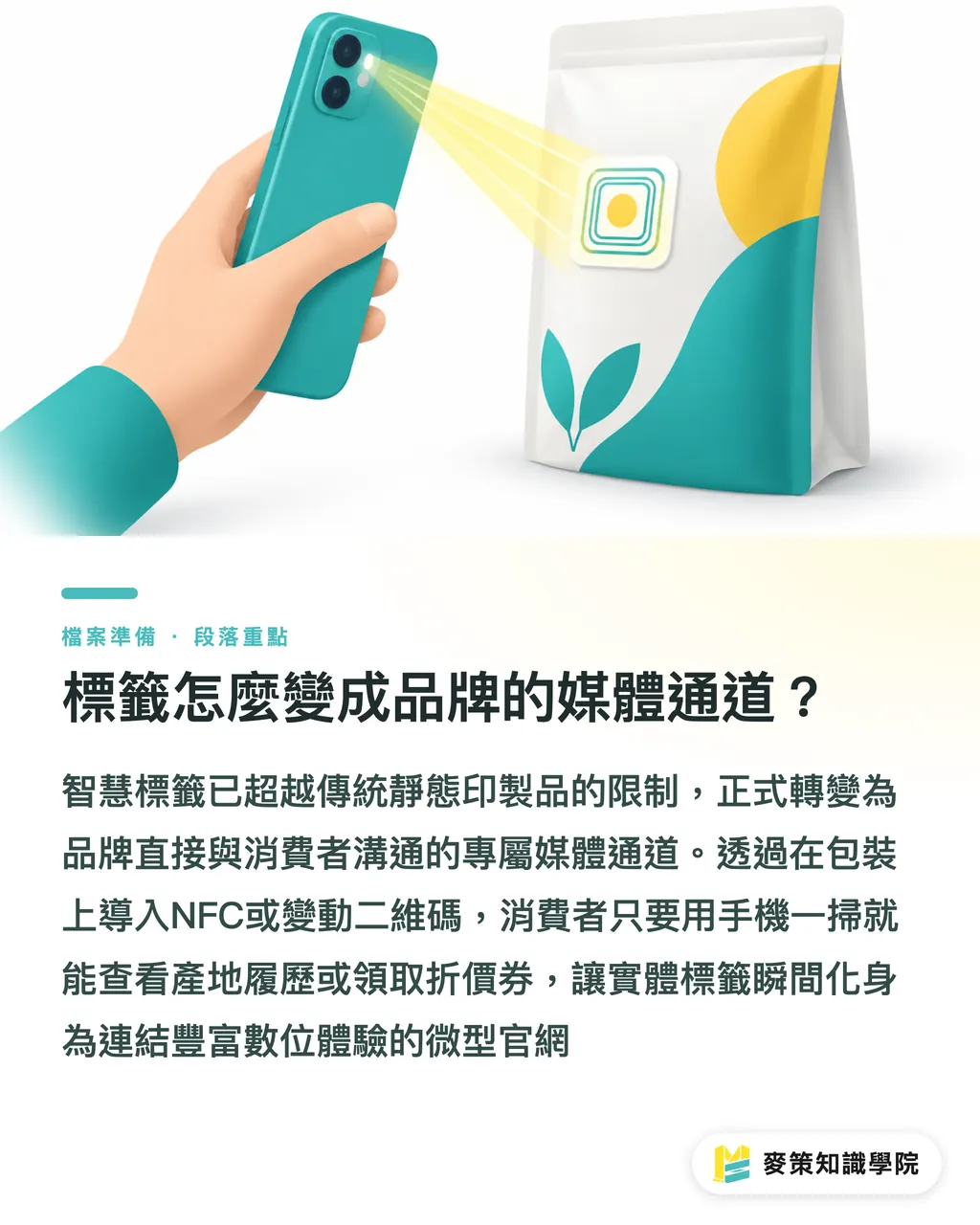
Watching client production lines lately, I see it clearly. Barcodes and ingredients on labels used to be static. Now, brands constantly ask for NFC (Near Field Communication) or unique dynamic QR codes for every single item
Shoppers scan with their phone and instantly view traceability records, watch videos, or claim discount coupons. It lets brands bypass retail channels and build a mini website right on the package
The impact on print and design is immediate. A label is no longer just printed matter, it is the physical touchpoint for a digital experience
What Digital Specs Must Designers Watch for During Prepress?
The key is reserving sensory zones for digital carriers and leaving enough overprint space for variable data
Adopting smart labels isn't as simple as telling the print shop, 'I want to switch materials.' Front-end designers need to treat the digital experience as part of the layout
For instance, a QR code generally should not be smaller than 1.5 cm. Meanwhile, NFC chip zones must strictly steer clear of large areas of metallic ink, or they will severely interfere with signal reception
I usually recommend that designers and prepress teams review their files using the 'Mai Strategy Three-Step Prepress Check.'
1. Physical layout: Make sure chip placement won't interfere with packaging folds or subsequent die-cutting
2. Variable range: When setting CSV variable data fields, leave enough character expansion space in the layout
3. Interference clearance: Check whether foil stamping overlaps with the antenna, and make sure heavy dark solid ink doesn't hurt QR code readability
Why Small and Mid-Sized Print Shops Need to Understand Data Architecture
Because brand clients no longer just care about precise printing. They want every single label to link to a distinct record in the cloud
In the past, running ten thousand packaging labels meant every single one had the exact same layout. Platemaking and press setup were straightforward. Today, across those ten thousand labels, every URL, security serial number, and tracking code can be different
This requires heavy VDP (Variable Data Printing) processing. Prepress operators now have to read simple data sheets to make sure batch-generated links don't shift or break
You cannot fix this just by swapping machines. The entire production flow and data architecture have to connect
If you have a project and want to test variable data print results, you can sample through online platforms like MINDS that support small-batch custom runs. Verify scan rates before committing to high-volume production on large presses
How to Choose Common Smart Label Carriers
It comes down entirely to brand budget and the required level of anti-counterfeiting and traceability
In practice, I often see clients trying to go all out right away. But you should base specs on unit price and product goals instead of rushing into high-end hardware
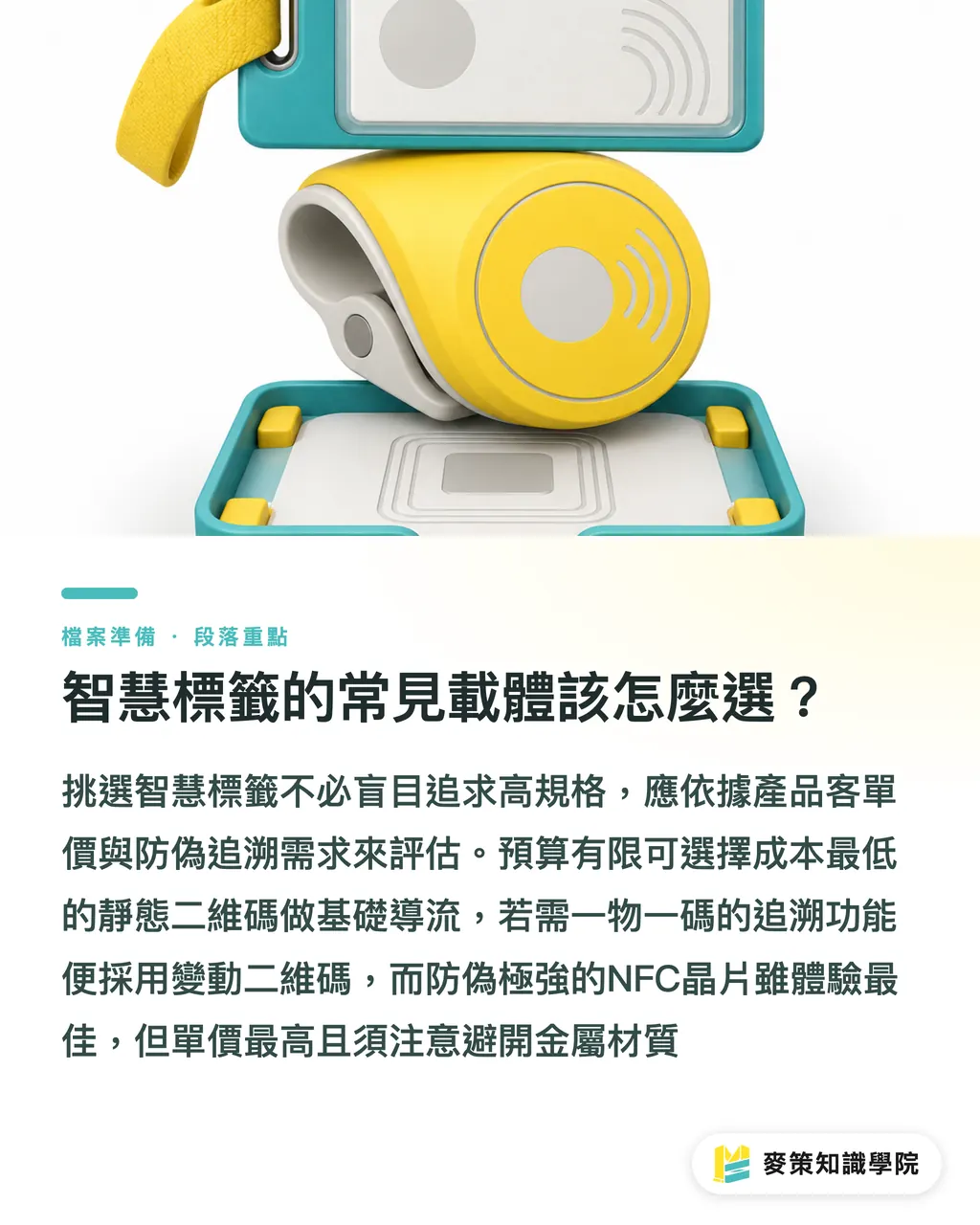
・Static QR Code: Easiest to design and cheapest to produce, ideal for directing traffic to a single campaign landing page
・Dynamic QR Code: Requires VDP software to assign unique codes per item, providing anti-counterfeiting and supply chain traceability
・NFC Chip Label: Highest unit cost but exceptional anti-counterfeiting security and a tap-to-read experience. However, prepress artwork must strictly avoid metallic materials
Key Takeaways
・Smart labels have upgraded from anti-counterfeiting consumables into digital media channels for two-way interaction between brands and consumers
・Prepress design must account for variable data areas and chip interference-free zones early in the layout planning stage
・Prepress is expanding beyond standard color management into bridging cloud spreadsheets with variable data printing
・Different carriers carry different prepress limits: NFC must steer clear of metallic inks, while QR codes need adequate scanning size
Further Thoughts
Treating labels as media means every time a product is picked up, it becomes an opportunity for marketing exposure
For packaging designers and print shops in Taiwan, this is a prime opportunity to shift from earning manufacturing fees to monetizing experiences
Moving forward, whoever best balances print tactility with smooth digital scanning will land long-term brand contracts in mid-to-high-end bespoke markets like MINDS
Do not look at smart labels as ordinary print products. They are frontline hardware connecting directly to a brand's cloud database
Further Reading
FAQ
- My packaging has extensive foil stamping. Can I apply an NFC smart label?
- Metallic materials severely disrupt NFC signal transmission. During prepress, keep the chip clear of foil-stamped areas and metallic ink zones, or switch to dynamic QR codes as your digital channel
- How should files be prepared and submitted for dynamic QR codes (unique codes per item)?
- You typically need to provide a base artwork file with the static layout, plus a CSV spreadsheet containing all variable URLs or serial numbers. Mark the exact placement and dimensions for the QR code on the base artwork
- Why do QR codes on packaging sometimes fail to scan?
- Aside from poor print contrast, the most common prepress mistakes are making the code too small (under 1.5 cm) or failing to leave a sufficient quiet zone around it, which prevents the scanner from locking on
Related articles


The Print × AI weekly
The print and AI know-how designers, brands and enterprises can use before they commit — one email, every week
MINDS Free Tools
Imposition calculator and preflight file check — free prepress tools, right in your browser.
MINDS Group
Need actual printing or gifting services?
From premium printing to online ordering and festive gifts — the MINDS Group sister brands take it from here.