
Overview
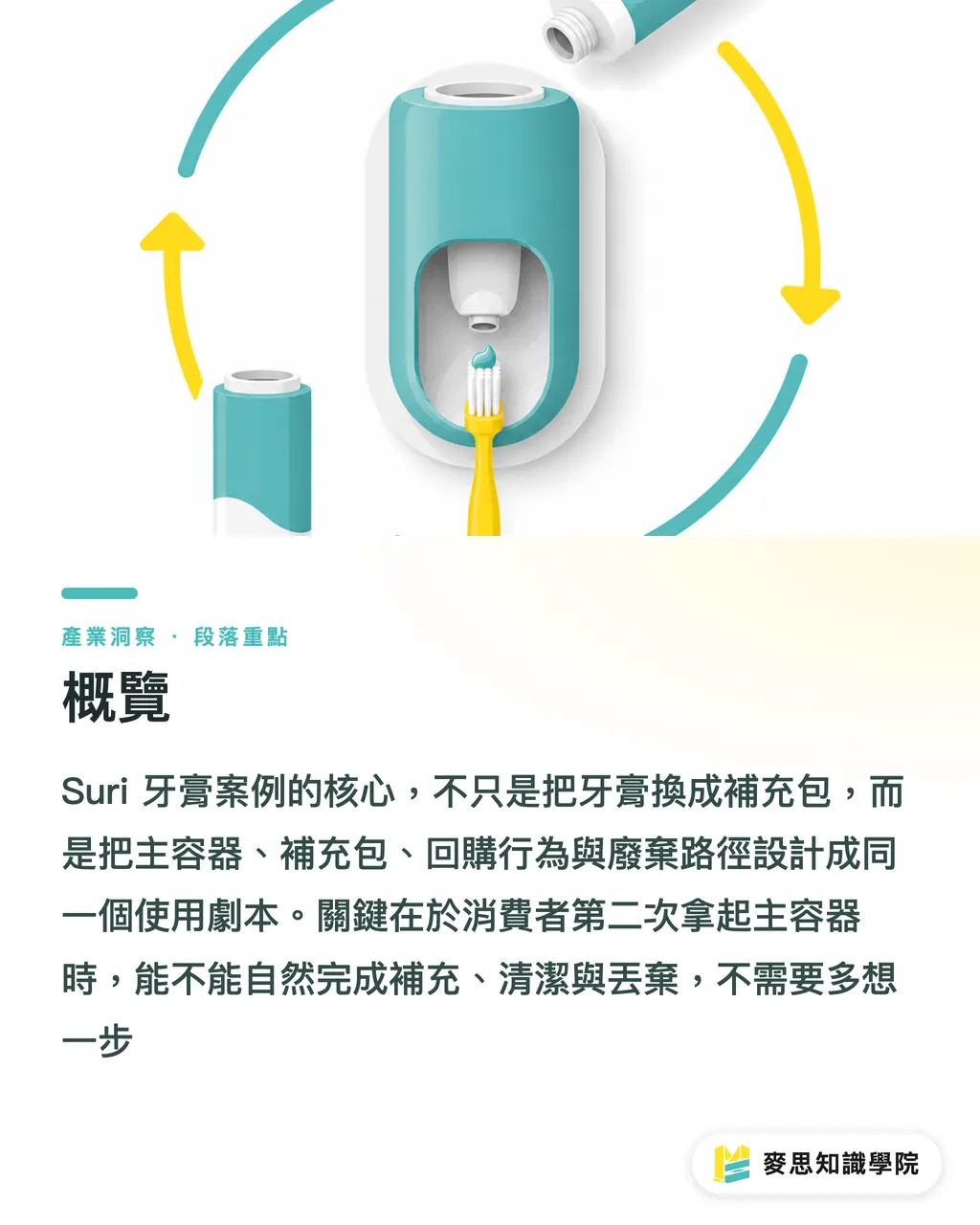
The point of the Suri toothpaste case is how it connects one reusable primary container, one home-compostable plant-based refill, one repurchase, and one disposal path into the same user scenario. When MINDS looks at cases like this, the first question is whether consumers have one less thing to figure out the second time they pick up the main container
Refill packaging means a packaging model where the main container is kept for repeated use, the contents are repurchased and filled through refill packs, and cleaning, labeling, and disposal paths are designed together
What Happened in the Suri Toothpaste Case?
According to Packaging Insights' report on Suri's refillable toothpaste, Suri has launched a refillable toothpaste with home-compostable, plant-based refills. That signal is interesting in personal care because toothpaste is a high-frequency consumable. The package is picked up, squeezed, and put back into the bathroom cabinet every day
There are 3 observable anchors in the Suri case
・The product sits in a high-frequency consumable category like toothpaste, so the refill behavior has to survive daily use
・The refill pack is positioned as home-compostable and plant-based, tying the material claim directly to end-of-use handling
・The primary container has to make consumers want to keep it, otherwise refill simply turns into another form of single-use purchasing
I have seen plenty of sustainable packaging cases where the paper box switches to FSC, plastic switches to paper, or the bottle switches to recycled material. But once users get home, they do not know the next step. Those are the cases most likely to stop at the presentation deck
Why Does Refillable Packaging Get Stuck in the User Flow?
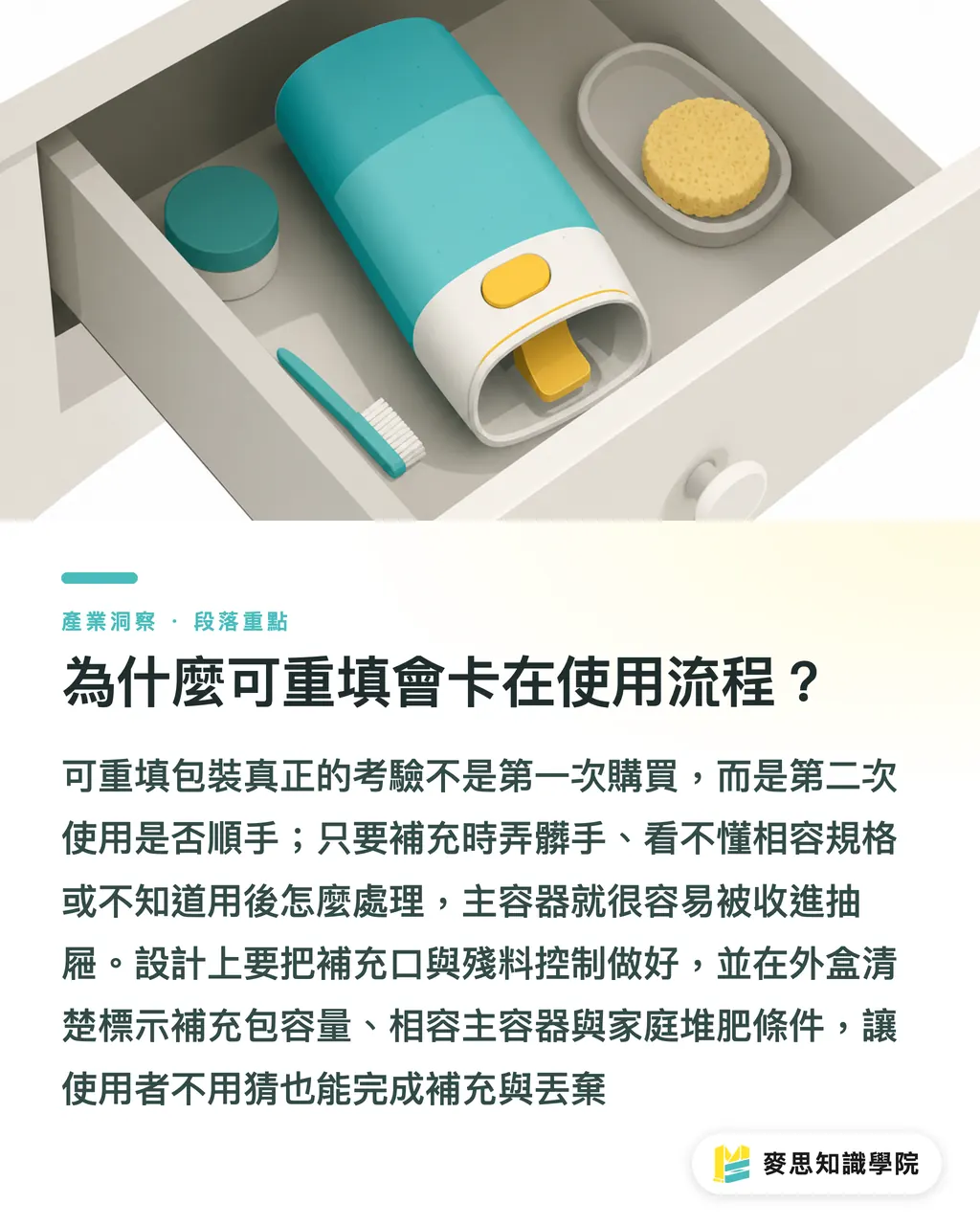
Refillable packaging most often gets stuck at the second use. The first purchase rides on novelty. The second depends on whether the process feels smooth. For a product used every day, like toothpaste, if refilling makes hands messy, the compatible refill is hard to find, or disposal instructions are unclear, the primary container can easily end up in a drawer
I break refill packaging into 4 checkpoints
・First unboxing: the primary container has to feel worth keeping. Tactility, cleaning, and storage all need to be visible
・First refill: the refill opening, residual product, and squeezing method need to reduce the chance of making a mess on the bathroom counter
・Second purchase: the refill pack's product name, volume, and compatible primary container need to be clear on the outer box and label
・End-of-use handling: the conditions for home-compostable disposal, how to separate components, and which materials must not be mixed in need to be written in language people can understand
Home-compostable means the packaging material can break down in a home composting environment. The key factors include temperature, time, contaminants, and whether the user actually has composting conditions at home
How Can Refill Packs Make People Want to Buy Again?
This Packaging Insights case on Suri puts plant-based refill and home-compostable into the same product story. My read is that the brand ties the purchase reason to the disposal path, so the refill pack is not only responsible for holding the contents. It also answers where the pack goes after use
Before launching a refill pack, I would first check 3 things
・Whether the refill pack is better suited than the primary container for repurchase, shipping, and shelf display. Otherwise, retail channels have no reason to change their workflow
・Whether the seal can protect the toothpaste during shipping while keeping the contents from squeezing onto the user's hand when opened
・Whether the layout puts "which pack to buy," "how to refill," and "how to dispose after use" within the same field of view
If a brand wants to commercialize this kind of refill pack, MINDS can first help prototype the outer box, label, and instruction card for one SKU, testing structure, ink, finishing, and copy together. Getting one repurchase cycle to run through is more practical than changing the full product line from the start
What New Needs Can Taiwanese Printers Support?
Based on what I have seen from export brands over the past month or two, terms like EPR, California recycling labels, and EU PPWR have already started entering packaging meetings. What small and midsize Taiwanese printers need to support is not slogans, but packaging data that clients can bring into meetings, pilot runs, and audits
Small and midsize printers can begin with 4 services
・Structural samples: prototype the primary container, refill pack, and outer box dieline in the same round, then first check opening, standing stability, and storage
・Labeling system: split material claims, use steps, and disposal paths into readable levels, so one label is not forced to carry too much text
・Small-batch pilot production: test the refill flow with one SKU first, then decide whether to expand to the whole product line
・Packaging material audit: keep material, weight, supplier, and version records for each component, so future ESG reports have traceable data
If an internal team mixes up home-compostable, recyclable, and refillable, the consulting team at Mai Strategy Knowledge Academy can first help the brand align terminology, labeling, and real handling paths. If this step is wrong, even beautifully printed packaging will still be questioned by retailers and consumers
How Should Brands Start Testing with One SKU?
I would suggest brands first run one SKU through the "MINDS (MS, mid- to high-end fully custom commercial printing) three questions for refillables." It works for toothpaste, skincare, and cleaning products. Test first, then talk about building a series
・Why would users keep the primary container: the container needs tactility, stability, a storage place, and a clear cleaning method
・Where do users buy the refill pack: the official website, retail shelf, subscription flow, and customer service replies need to use the same product name
・How do users handle the refill pack after use: compostable, recyclable, or general waste needs to be stated clearly. Vague wording makes trust disappear
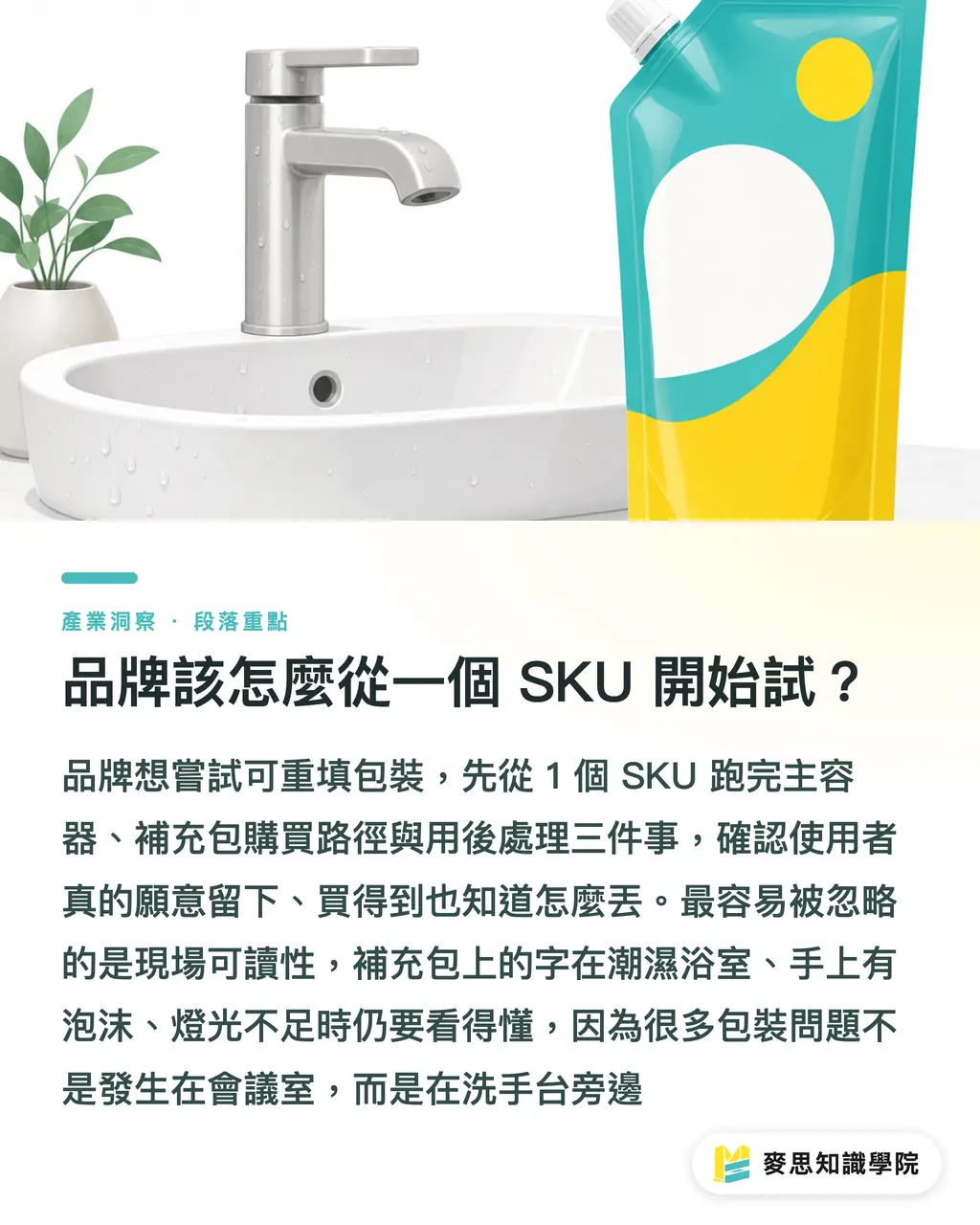
The print production side also needs to ask one more question: when the refill pack sits in a humid bathroom, the user's hands have toothpaste foam on them, and the lighting is not bright enough, can consumers still read the words on it? Many packaging problems do not happen in the meeting room. They happen beside the sink
Key Takeaways
・Refillable packaging first has to make people willing to keep the primary container. Only then do material claims have somewhere to land
・The refill pack layout has to answer three questions: which pack to buy, how to refill, and what to do after use
・Home-compostable cannot just be printed as a selling point. Home composting conditions have to be explained in words users can understand
・Small and midsize Taiwanese printers can begin with small-batch prototyping, labeling hierarchy, and packaging material audits, instead of joining clients in chanting slogans
Further Thinking
When bringing this to market, I would first turn the outer box, label, instruction card, and refill pack for one SKU into a single pilot-production kit. The print side reviews finishing and materials. The design side reviews labeling hierarchy. AI is introduced for customer service Q&A and layout checks. SaaS records batch numbers, instruction versions, and repurchase points. These four things do not need to start big. Getting one repurchase cycle to run through is more realistic
Further Reading
FAQ
- Why Is the Suri Toothpaste Case Worth Watching for the Packaging Industry?
- Suri turns toothpaste into a refillable toothpaste paired with home-compostable, plant-based refills, letting a high-frequency consumable test three things: keeping the primary container, repurchasing refill packs, and handling the pack after use
- How Is Refill Packaging Different from a Regular Refill Pack?
- Refill packaging has to design the primary container, refill pack, labeling copy, and repurchase flow together. If a regular refill pack does not include primary-container retention and a disposal path, it can easily become just another single-use package
- What Should Home-Compostable Refill Packs Pay Attention to in Labeling?
- Home-compostable should not be printed only as an English selling point. The package needs to clearly explain home composting conditions, separation methods, and materials that should not be mixed in, otherwise consumers still will not know what to do after use
- Where Can Small and Midsize Taiwanese Printers Begin with Circular Packaging?
- Small and midsize Taiwanese printers can start with structural prototyping, label hierarchy, instruction cards, and packaging material audits for one SKU, helping brands turn a refillable concept into testable commercial packaging
- What Is the First Step for Brands Making Refillable Packaging?
- The first step is to ask why users would keep the primary container. Then confirm where they buy the refill pack, how they refill it, and what they do after use. If those 3 questions are not clear, do not rush into mass production
Related articles
The Print × AI weekly
The print and AI know-how designers, brands and enterprises can use before they commit — one email, every week
MINDS Free Tools
AI background removal, a LINE sticker maker, spine & imposition calculators — all free, right in your browser, no upload.
MINDS Group
Need actual printing or gifting services?
From premium printing to online ordering and festive gifts — the MINDS Group sister brands take it from here.