
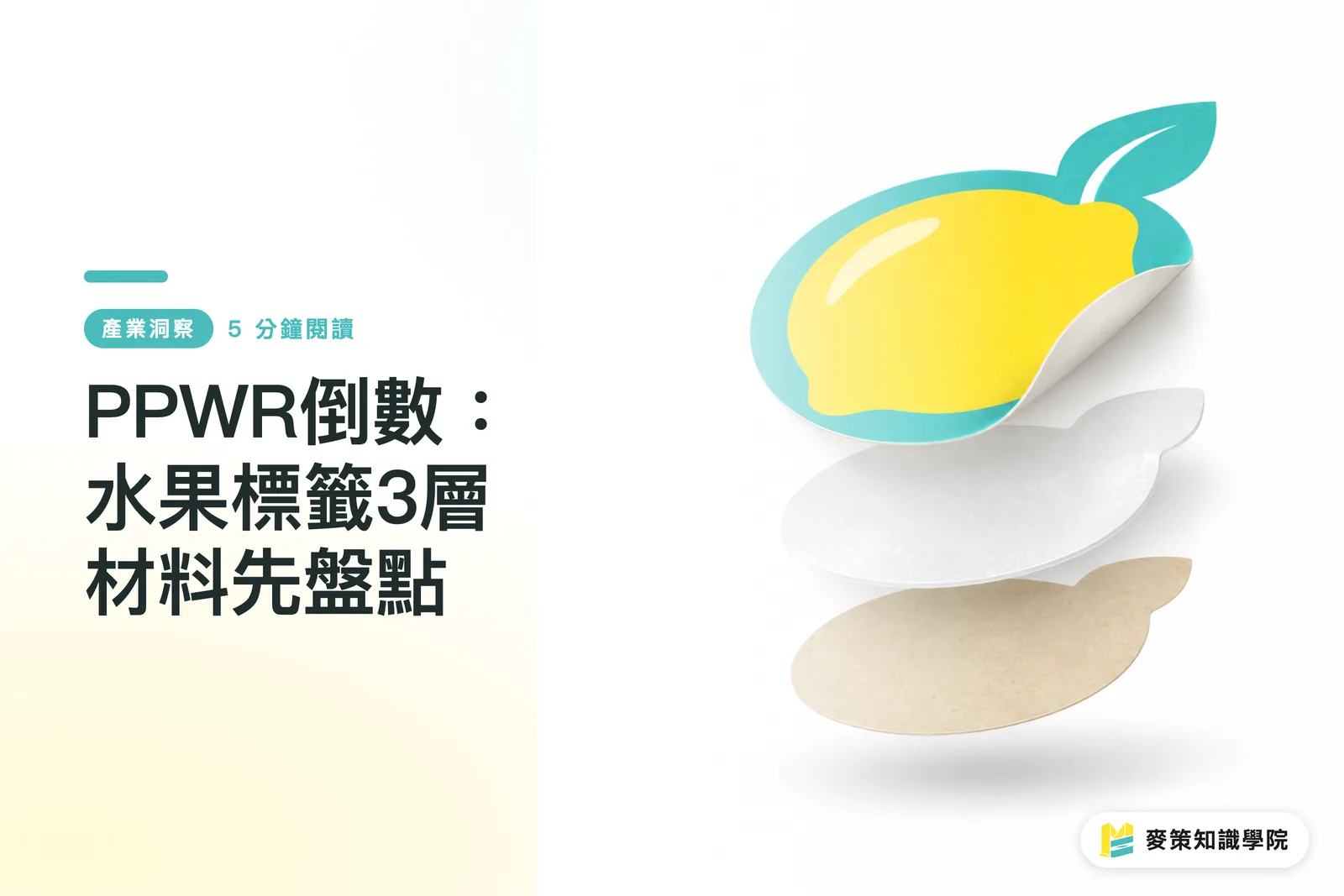
Why Does a Fruit Label Encounter PPWR?
PPWR (Packaging and Packaging Waste Regulation, the EU's Packaging and Packaging Waste Directive) is an EU law that incorporates packaging design, material and waste‑treatment requirements into market regulations. It brings a small, often‑overlooked component like a label onto the brand's pre‑export checklist
Futamura and Bio4Life teamed up to launch a fruit label that meets PPWR's compostable requirements. The case lays out the issue: the market isn't looking for a catchy green buzzword but for a material solution that matches the product's use, see Futamura and Bio4Life launch fruit label meeting PPWR compostable requirements
On the shop floor and at the client side, I often see brands decide the fruit package's appearance first, then add the label later. Although the label's surface area is tiny, it shares the downstream handling conditions with the packaging; even if the face stock is correct, failing to verify adhesive and ink in tandem can still trap the whole label in compliance issues. This is the most common oversight during procurement
Which Three Layers Matter for a Compostable Fruit Label?
For a compostable fruit label to qualify, the face stock, adhesive, and ink must be reviewed together in a single design audit; you can't rely solely on the name of the label substrate
Here, a compostable label means the entire label solution must be evaluated against the intended disposal scenario; you can't apply a single material's claim to the whole label
・First verify that the supplier's description of the face stock matches the actual part number and intended use
・Adhesive must be included in the same compliance dossier; you can't just check the bonding performance
・Ink also needs corresponding data; you can't skip it just because the face stock is declared compostable
Futamura's partnership with Bio4Life places the three‑layer issue on a single fruit label, giving Taiwan's supply chain a concrete reference. I treat "compostable" as a specification that requires documented proof, not as decorative wording on the package
Why Brands Should Start Inventorying Now
Brands should inventory now because once EU customers embed the requirements into orders, material swaps, new sampling, and mass‑production scheduling will all collide within the same time window
・1. List the face stock, adhesive, ink and supplier part numbers for each fruit label on a single sheet
・2. Request from suppliers the compostable declaration, scope of applicability and supporting evidence, confirming the documents match the actual materials
・3. Embed the fruit‑packaging use, export market and expected disposal scenario into the procurement specs so designers, buyers and printers all work off the same conditions
・4. Conduct small‑batch sampling and label‑placement verification before committing to mass production, avoiding a situation where the brand's colour is approved but material documentation is still missing
If a brand wants to turn the list into an actionable sample order, it can hand both the material documents and layout requirements to MINDS for discussion; the sooner the printer sees the three layers, the sooner it can flag specs that are still at the concept stage
How Small and Mid‑Size Printers Turn Compliance into Order‑Taking Ability
SMEs need to package compliance data into a spec kit that salespeople and designers can understand; only then can customers compare options and estimate redesign costs
・Supplier and part numbers for face stock, adhesive and ink, each aligned with the correct version
・Applicable conditions and supporting documents for the compostable claim, so brands know how far they can market it
・Sample version and client‑approval records, preventing the use of wrong materials or outdated files in mass production
This package also reshapes the design process. Designers must not only hand over a pretty label file but also label the material version upon delivery; brands cannot let sustainability narratives outrun material evidence. AI and SaaS can turn supplier documents, part numbers, revisions and missing items into searchable fields, flag inconsistencies first, then let brands, material suppliers and printers confirm compliance
Don't rush – get the paperwork in order first. For the first EU sample, it's better to take an extra cycle than to gamble with a vague compostable label
Key Takeaways
・PPWR audits focus not on a mere sticker but on the complete label solution made up of face stock, adhesive and ink
・Futamura and Bio4Life's fruit label reminds Taiwan's supply chain that compostable materials are already entering the market‑ready phase
・When brands inventory now, they purchase lower risk of future material swaps, re‑printing and delays
・Printers who can clearly state material sources and applicable conditions have a chance to turn compliance into a winning bid condition
Further Considerations
The next steps are concrete: the print‑manufacturing side should create a three‑layer list of face stock, adhesive and ink; the design side should embed material versions into the delivery data; the brand's procurement side should require that documents and part numbers cross‑match. AI and SaaS can help organize supplier files, compare revisions and flag gaps, but they cannot replace human judgment on material suitability. When embedding this inventory into supplier questionnaires and print‑run workflows, you can consult the Mai Strategy Knowledge Academy consulting team for help. When the next EU order arrives, the team should have traceable documents, not just verbal guarantees
Further Reading
FAQ
- What is PPWR?
- PPWR is the EU Packaging and Packaging Waste Regulation, which incorporates packaging design, material and waste‑treatment requirements into market rules; fruit labels can also become a compliance check item before a brand's export
- Which Parts Must Be Checked for a Compostable Fruit Label?
- At a minimum, the face stock, adhesive and ink must be included in the same compliance inventory, and supplier documents must match the actual materials and uses; looking only at the face‑stock name does not describe the label's overall status
- Does Having a Compostable Face Stock Mean the Whole Label Meets PPWR?
- No; adhesive and ink are also part of the fruit label's compliance inventory, and brands need to ensure the claims and documents for all three layers align
- How Should Taiwanese Brands Get Started Now?
- First list the face stock, adhesive, ink and supplier part numbers for each label, then gather the compostable declarations, scope and sample records, and finally embed the requirements into procurement specifications
- What Can AI and SaaS Do for Printers?
- AI and SaaS can help organize supplier documents, compare part numbers and revisions, and flag missing data, but determining material suitability and whether a brand can make public claims still requires personnel verification
Related articles
The Print × AI weekly
The print and AI know-how designers, brands and enterprises can use before they commit — one email, every week
MINDS Free Tools
Spine width and imposition calculators — skip the manual math, free in your browser.
MINDS Group
Need actual printing or gifting services?
From premium printing to online ordering and festive gifts — the MINDS Group sister brands take it from here.