
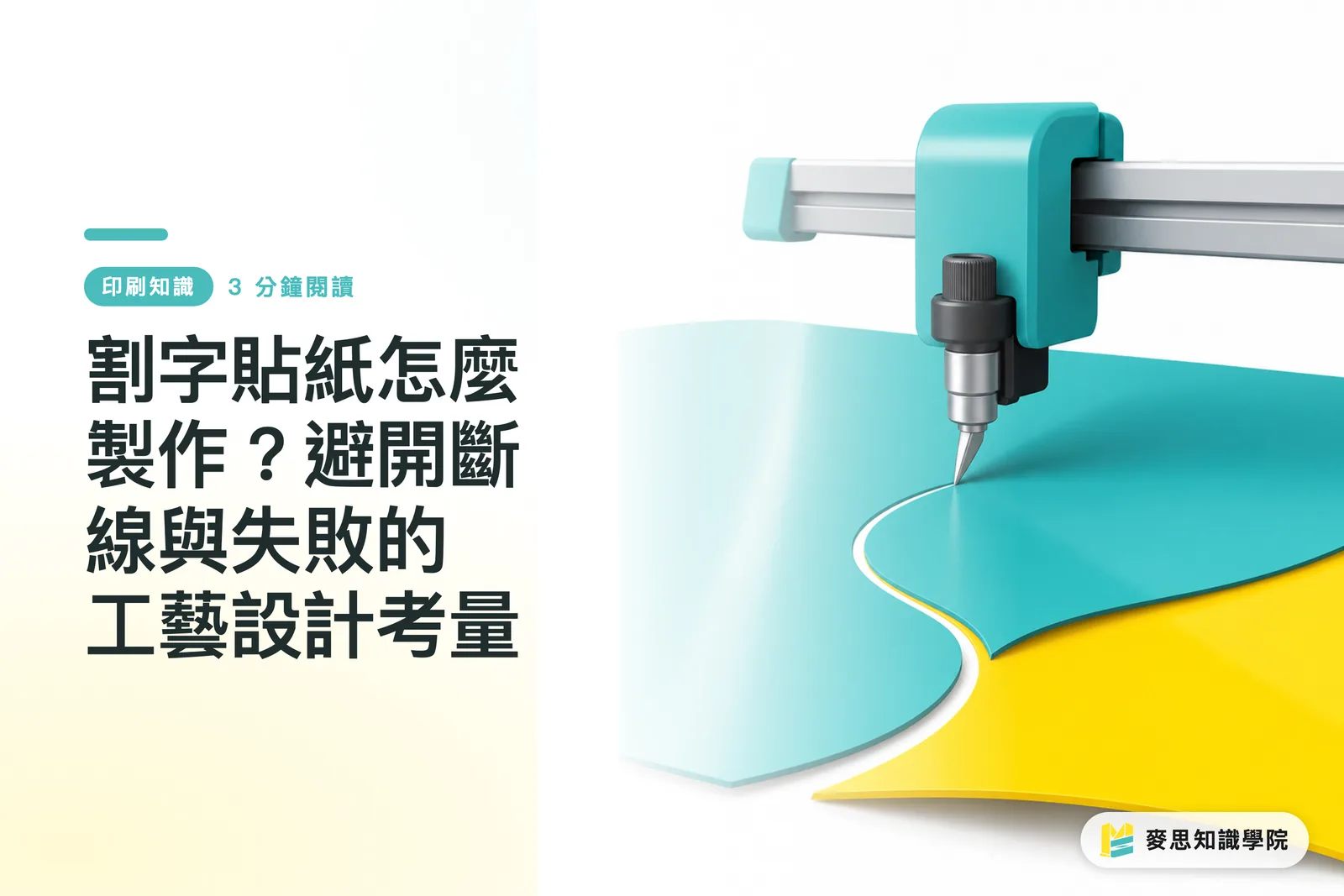
What's the Difference Between Cut Vinyl Stickers and Regular Printed Stickers?
Vinyl cutting uses a computer-controlled plotter to read vector paths and cut shapes directly from colored adhesive film, no ink involved
There's no plate-making or color printing. The machine relies entirely on vector paths in the AI file to make physical cuts
After cutting, workers manually weed the waste material, then apply a clear transfer film before the job is ready for delivery
A lot of clients bring in gradient artwork expecting it to work for vinyl cutting, that's physically impossible
Materials like cast vinyl are single-color by nature. You can only work with solid color panels pieced together

How Should You Set Up Your File to Avoid Getting It Rejected?
The most common reason vinyl cutting jobs get sent back is line settings that exceed the machine's physical limits
Stroke width should be kept at 2mm or above. If text height falls below 1.5cm, the machine will likely tear the film during high-speed cutting
That's the issue I run into most often on the production floor, it's a classic client complaint waiting to happen
Weeding is entirely manual. If the design is too intricate, think fine hair strands or scattered water droplets, labor costs shoot up fast
In those cases, I usually recommend switching to clear-base coated paper or PET printing instead, so nobody ends up arguing over edges that can't be cleanly weeded
How Do You Choose the Right Material for Outdoor Use?
For anything going on the outside of a vehicle or an outdoor shop window, my first recommendation is always UV-resistant PVC or dedicated vehicle wrap film
The weathering performance of solid-color adhesive film far outperforms surface-printed materials. Outdoors, it typically holds color without fading for one to three years
I remember handling vehicle license plate frame stickers years ago, ordinary paper stock on the outside of a car won't survive a single rainy season
Because vinyl cut stickers have no ink layer to peel, they're a natural fit for fleet logos and storefront business hours signage
How Do You Estimate Costs for Small Custom Runs Versus High-Volume Production?
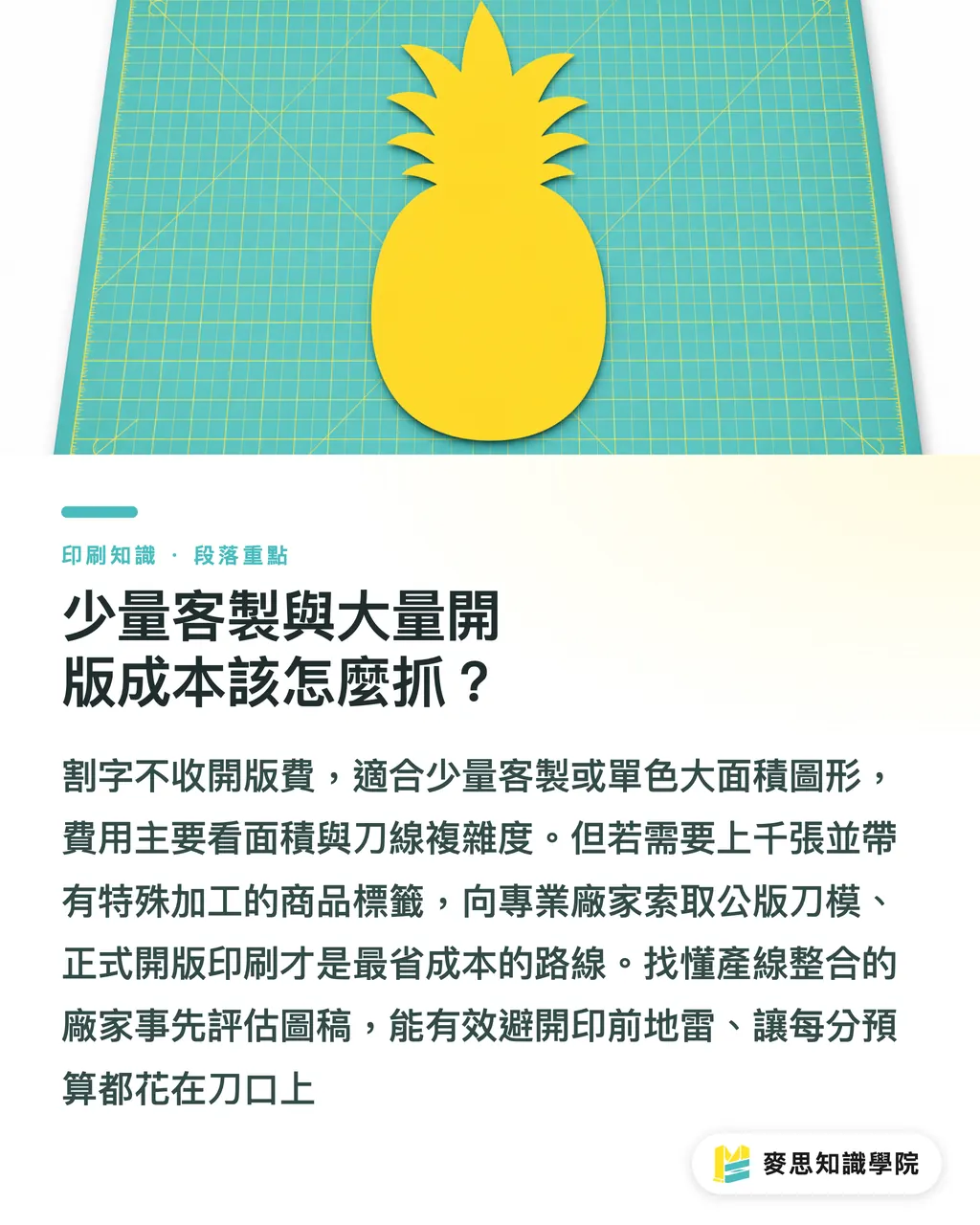
Vinyl cutting is priced differently from traditional printing, it's based mainly on total area and path complexity, with no die-cutting setup fee
For small custom runs or single-color large-format graphics (like 50x50cm signage lettering), vinyl cutting is the most cost-effective option
But if you're producing thousands of units with special finishing as product labels, the right move is to request a standard die from a professional shop like our MINDS team and go with offset printing
Make every dollar count, find a manufacturer who understands production integration and have them review your artwork first. It's the surest way to catch prepress problems before they cost you
Key Takeaways
・Cut vinyl stickers only recognize vector paths, not pixels, all artwork and text must be converted to outlines before submitting
・Keep stroke width and clearance at a minimum of 2mm to prevent the machine from tearing edges and to reduce manual weeding time
・For outdoor applications, specify vehicle-grade or UV-resistant film, solid-color adhesive film holds up far better than surface printing
・Low minimums with no die setup fee are vinyl cutting's biggest advantage. The simpler the design, the lower the production cost and waste rate
Worth Thinking About
From basic computer cutting to today's digital cutting equipment, production automation has definitely lowered the hardware barrier, but the weeding stage still depends heavily on human judgment
Designers who build physical production constraints into their workflow from the start, simplifying unnecessary sharp corners and stray anchor points, can speed up turnaround and cut waste at the same time
For design teams or SaaS platforms developing custom merchandise, baking these design rules into foolproof templates is one of the most effective ways to improve submission yield
FAQ
- Can vinyl cutting handle gradients or photographic images?
- No, physically impossible. Vinyl cutting uses a blade to cut through single-color film. If you need gradients or photos, you'll need large-format inkjet printing followed by contour cutting (digital die-cutting)
- Why do print shops charge extra when a design is too complex?
- After cutting, workers have to manually weed out all the unwanted material. The finer and more fragmented the lines, the more anchor points there are, and the longer it takes. That labor cost gets reflected directly in the final quote
- Do vinyl cutting files need a bleed?
- No. Vinyl cutting works purely from vector paths cutting physical material, there's no printed ink boundary to account for. Just make sure all text is converted to outlines before submitting
- Is it hard to apply these stickers yourself? Any tips?
- The finished piece comes with a clear transfer film. Press it down firmly with a squeegee, peel off the backing paper, apply it to the surface, press and smooth it again, then slowly peel away the transfer film, the design stays behind
Related articles





The Print × AI weekly
The print and AI know-how designers, brands and enterprises can use before they commit — one email, every week
MINDS Free Tools
Spine width and imposition calculators — skip the manual math, free in your browser.
MINDS Group
Need actual printing or gifting services?
From premium printing to online ordering and festive gifts — the MINDS Group sister brands take it from here.