

What Can AI Do for Packaging Engineering?
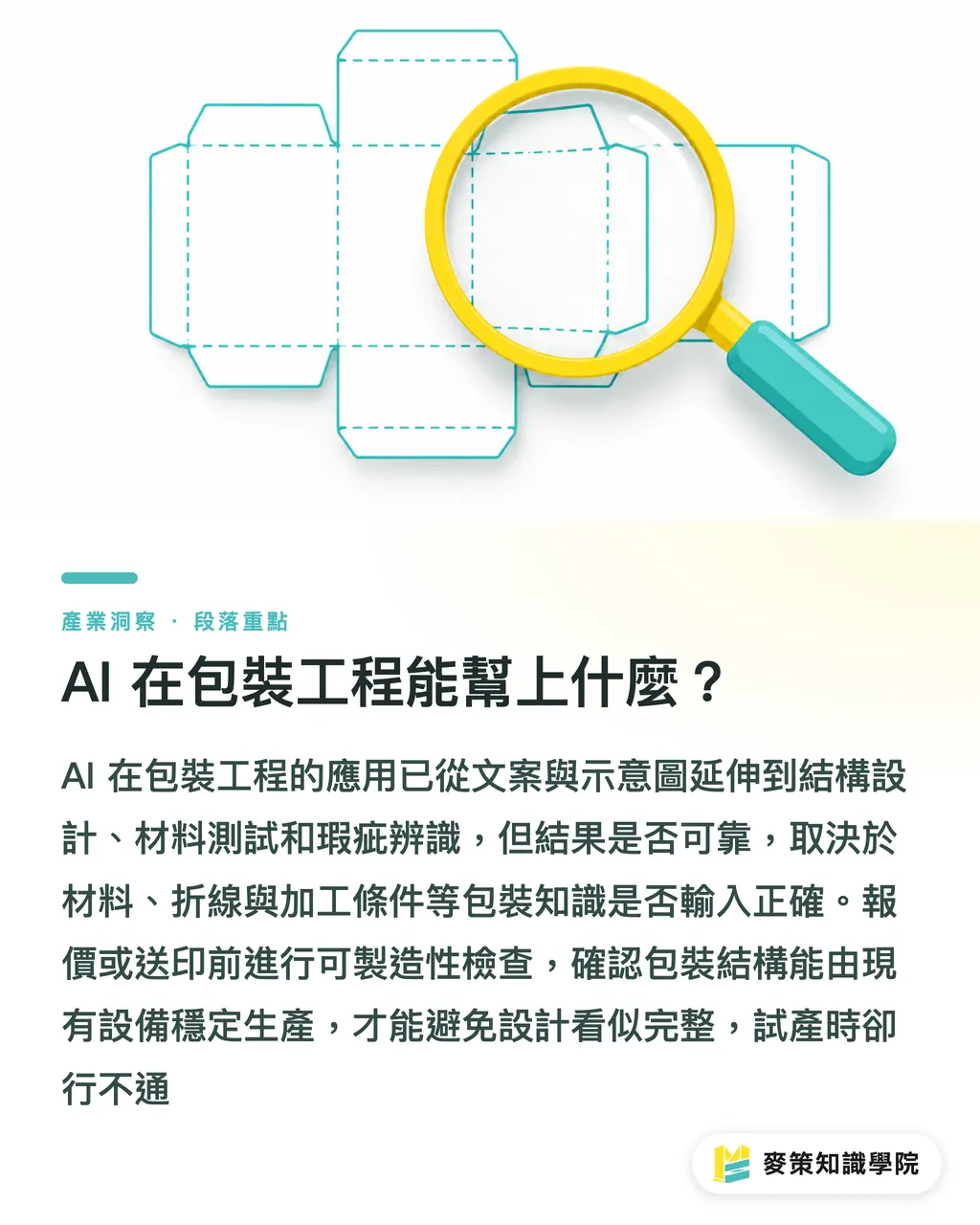
AI's role in packaging engineering has expanded beyond copy and mockups to structural design, style matching, material substitution trials, and visual defect recognition. An article published by the Flexible Packaging Association (FPA) on October 7, 2026, recounts the author's observations during a visit to Michigan State University's School of Packaging: AI is still at an early stage, and whether its tools can be trusted depends on the accuracy of the packaging knowledge behind them
That warning rings true. If material, crease, or finishing conditions are entered incorrectly, the answer may look complete and still fail when it reaches a trial run. Design for Manufacturability (DFM) is an engineering check performed before quoting or sending a job to print. It verifies that the packaging structure, materials, dies, and printing and finishing conditions can be produced consistently on the equipment available
Where Should Small and Midsize Plants Start with AI?
Small and midsize plants can start by piloting manufacturability checks before quoting and die layout, since these are repetitive tasks and missed specifications can lead to re-estimates, artwork revisions, or rework after production starts. AI recommendations need to be based on engineering data. It cannot judge whether a job can be produced just by reading a product description
・Organize the structural dimensions, materials, printing methods, and finishing conditions for common box or pouch styles
・Have AI flag missing information or conflicting specifications, then have an engineer review the results
・Track quote follow-up questions, re-estimates, and sample revisions, and compare them with the figures from before implementation
For now, measure the benefit by how many back-and-forth rounds are avoided. There is no need to rush into estimating labor savings. If customers often provide complete specifications only after receiving a quote, adding checks at the quoting stage is usually more useful than chasing order changes after printing
How Can AI Help with Structural Design and Material Comparisons?
AI can help packaging engineers make an initial comparison of structural options, existing styles, and material substitutes. An engineer still needs to confirm whether a design can be produced at scale, based on customer needs, material properties, and equipment conditions. The FPA article identifies structural design, style matching, and material substitution trials as potential applications
Design teams can start by supplying approved structural drawings, material specifications, and processing constraints, so AI can organize differences and items that need confirmation. It can help narrow the comparison, but generated appearance mockups are not production-ready die lines, and materials that look similar cannot be assumed to be interchangeable
The biggest risk in packaging engineering is not the absence of a polished proposal. It is discovering during sampling that the creases, seals, or processing conditions do not work. Keeping engineer sign-off at this step speeds up design without pushing the risk onto the production line
What Can Visual Defect Recognition Do for the Production Line?
Visual defect recognition can help inspect surface defects and flag images for human review. It is worth evaluating at workstations where defect types are clear and inspection points stay fixed. The FPA article lists image recognition as one AI application in packaging engineering and also mentions color-difference prediction
My view is that limiting the inspection scope first is more practical than asking AI to judge whether an entire package is good or bad from day one. Engineering teams can compile approved samples and images of known defects, see whether the tool consistently identifies differences, and then decide whether to bring it into on-site inspection
Color variation involves materials, printing conditions, and customer-approved samples, so a person should review any differences flagged by AI. If the tool works well only with images captured under fixed conditions, treat it as a first-pass screen. Do not let automated decisions take over release approval
How Can Small and Midsize Print Shops in Taiwan Get Started?
Small and midsize print shops can start with one common packaging product, organize the input data, and track quote follow-up questions and sample revisions. The FPA article points out that the accuracy of packaging knowledge affects how much engineers trust AI output. Taking stock of data quality before implementation matters more than rushing to switch tools
・1. Pick a workflow with frequent repetition and high costs when errors occur, such as die layout or pre-quote checks
・2. Organize approved specifications, materials, and processing conditions, and confirm which data can be entered into the tool
・3. Have an engineer review the recommendations, and track changes in follow-up questions, re-estimates, artwork revisions, and on-site review
Start with one item. If your team needs to map quoting, prepress, and production handoffs into a reviewable workflow, contact the Mai Strategy Knowledge Academy consulting team to discuss the pilot scope and sign-off responsibilities
Key Takeaways
・AI adds value in packaging through structural design, materials, and inspection, not just copy and mockups
・Pre-quote manufacturability checks catch missing specifications while there is still time to fix them
・Material substitutions and defect recognition both need approved reference data, and engineers remain responsible for the final decision
・For a pilot, start by tracking whether follow-up questions, re-estimates, and sample revisions go down
A Next Step to Consider
When introducing AI at a print shop, start with one common product and organize its engineering specifications into reviewable data. Then track changes in quote follow-up questions, sample revisions, and on-site review. Designers should keep approved layouts and material conditions on file. SaaS teams should make sure each recommendation links back to a clear field and human sign-off. That is how AI can fit into the print workflow
Further Reading
FAQ
- What should packaging engineers try first with AI?
- Start by piloting pre-quote manufacturability checks or die layout. Both are repetitive, and you can track improvement through follow-up questions, re-estimates, and artwork revisions
- Can AI decide on packaging material substitutions directly?
- It should not make that decision directly. AI can help organize substitute options and specification differences, but a packaging engineer still needs to confirm the choice based on customer needs, material properties, and equipment conditions
- Can visual defect recognition replace manual inspection?
- It should not take over release approval. You can use image recognition to flag areas for review, then have an inspector check them against the approved sample and customer requirements
- How can a small or midsize print shop tell whether AI is working?
- Choose one product or workflow and compare quote follow-up questions, re-estimates, sample revisions, and on-site review before and after implementation. Keep engineer sign-off in place
Related articles





The Print × AI weekly
The print and AI know-how designers, brands and enterprises can use before they commit — one email, every week
MINDS Free Tools
AI background removal, brand stamping, and a LINE sticker maker — free design tools, right in your browser, no upload.
MINDS Group
Need actual printing or gifting services?
From premium printing to online ordering and festive gifts — the MINDS Group sister brands take it from here.