

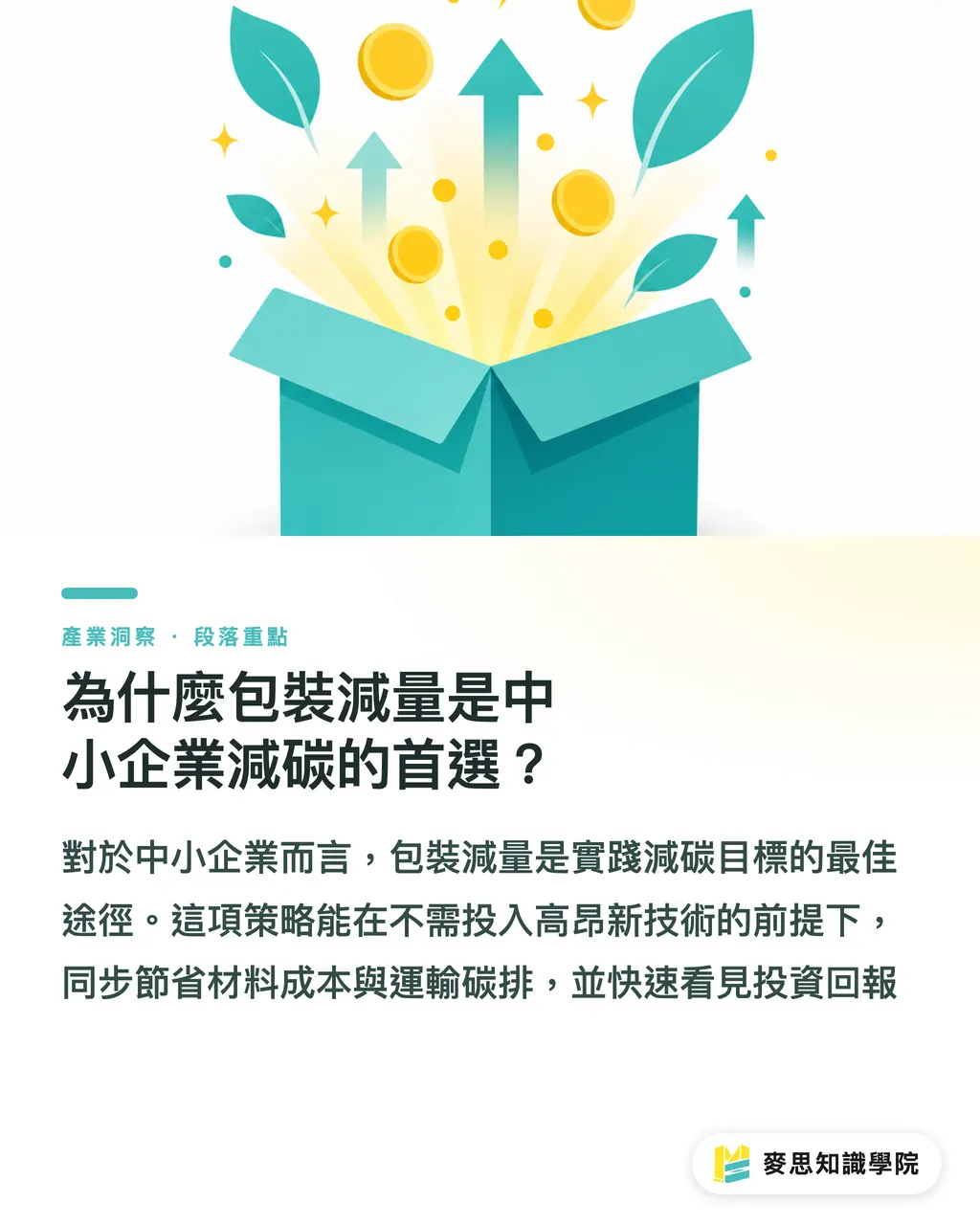
Why is Packaging Reduction the Top Choice for SME Decarbonization?
Lately, while working with clients, I've noticed many are overwhelmed by ESG reporting, rushing to find expensive, new types of eco-friendly materials
However, I usually advise them to tap the brakes and look back at the most basic yet effective strategy: Source Reduction
Just like how I previously shared about a European food manufacturer reducing their packaging from 6 colors to 4 to cut costs, the same logic applies to packaging materials; using less means saving more
As long as the protective function is maintained, reducing material weight or volume can simultaneously slash both material costs and logistics carbon emissions
This is a shortcut to decarbonization that yields immediate ROI without needing to invest heavily in new technologies
Practical Breakdown: Three Entry Points for Material Reduction, from Specs to Dielines
In terms of production line practice, we generally approach reduction from three dimensions
The first is thickness optimization
・Corrugated cardboard: Re-evaluate the flute type. Often, there is no need for AB flute; switching to a sufficiently strong B or E flute can shave off significant weight
・Plastic packaging: Precisely calculate the wall thickness of plastic containers and use minor mold adjustments to trim excess plastic
The second is structural simplification
・Remove unnecessary internal trays and reduce non-essential assembly accessories
・Replace traditional foam with honeycomb paper or air columns, which provide sufficient cushioning while significantly lowering volume
The third is Right-sizing
・Recalculate the spatial ratio between the packaging and the product
・Shrink the box to fit perfectly, cut out excess filler, and allow more goods per pallet, directly lowering logistics carbon emissions
Does Reducing Material Too Much Lead to Waste? How to Set the Limit for Damage Rates
This is the most common trap for designers new to reduction design
The boss demands a weight reduction, the box ends up too thin, and the goods get crushed during transit
You must realize that once returns or exchanges occur, the carbon emissions from reverse logistics, combined with the energy consumption of re-manufacturing new products, far outweigh the few grams of cardboard you saved initially
From an LCA (Life Cycle Assessment) perspective, this is actually a disguised spike in carbon emissions
Therefore, the bottom line for packaging reduction is always the damage rate. During the design phase, it must undergo rigorous drop and stacking tests to ensure protection standards are met before it goes into production
How Should Procurement and Designers Showcase Achievements to the ESG Team?
After all the hard work, it needs to be convertible into impressive ESG data
I suggest that procurement and design teams establish a standard quantification formula
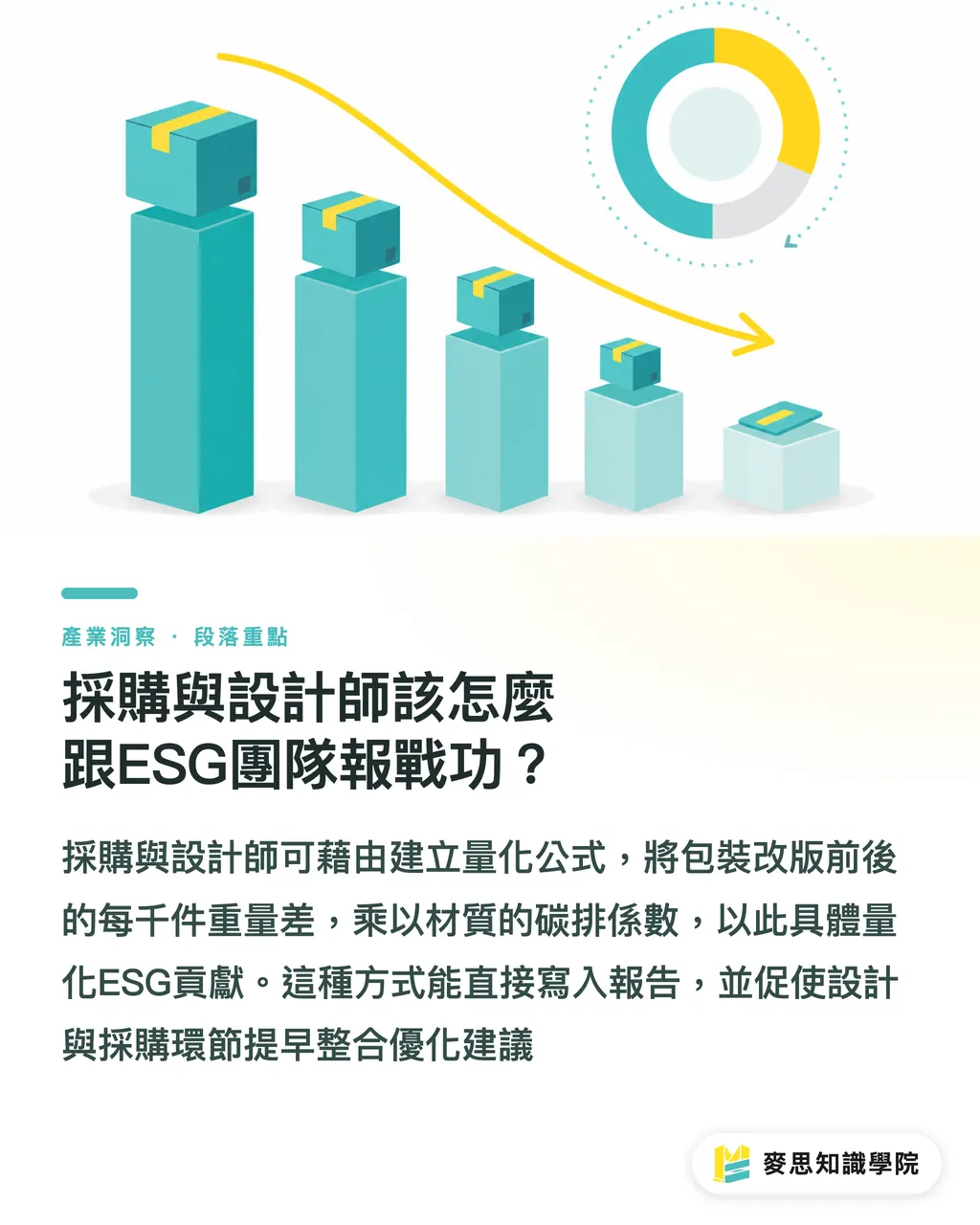
Compare the weight difference "per thousand units" of packaging before and after the revision, then multiply by the material's carbon emission factor. This creates concrete contributions that can be directly written into the ESG report
Designers should incorporate optimization suggestions during the Dieline creation stage; do not wait until the prototyping phase to think about changes
Procurement can directly write these specification ceilings into tender conditions, requiring print shops to comply
If your team lacks experience in this kind of data integration, finding a one-stop, ESG-savvy integrated team like [MINDS Printing](URL) can help you avoid many detours during the early calculation stage
Key Takeaways
・Packaging source reduction is the only win-win strategy that simultaneously lowers material costs and logistics carbon emissions
・Identify redundant space in product packaging through the three dimensions of thickness optimization, structural simplification, and right-sizing
・Decarbonization must never sacrifice protective performance; otherwise, the reverse logistics from returns will trigger a more disastrous carbon catastrophe
・Convert the efforts of designers and procurement into standard ESG data by multiplying the weight difference per thousand units by the carbon emission factor
Further Reflection
Decarbonization has never been about just buying carbon credits or switching to expensive materials to get the job done. Fundamentally, it is a precision-calculated exercise in lean cost management
Rather than being held hostage by 'carbon anxiety,' SMEs and designers should return to the roots of design and re-examine every dieline and purchase order in their hands
Turn specification optimization into a daily habit. The more refined your packaging becomes, the stronger your brand's competitiveness in the green supply chain will be
Further Reading
・A complete guide to how packaging reduction design achieves decarbonization at the source while saving costs
FAQ
- Can SMEs still decarbonize without a budget to adopt new eco-friendly materials?
- Absolutely. Source reduction is the most cost-effective approach. Start by precisely calculating packaging dimensions and replacing overly thick cardboard flutes or plastic wall thicknesses. This requires no additional investment to generate significant reductions in carbon emissions
- How do I know if our packaging design has been reduced too much?
- Use the transportation damage rate as your only bottom line. Any reduction design must be practically tested after prototyping to ensure protection is adequate, because the carbon emissions caused by reverse logistics from returns will immediately consume the benefits you saved
- How should designers and procurement present the concrete results of packaging reduction?
- Compare the new and old packaging to calculate the weight difference saved per thousand products, then use the material's corresponding carbon emission factor to convert this into total carbon emission reduction. This clear data can be handed directly to the brand's ESG team to write into sustainability reports
Related articles
The Print × AI weekly
The print and AI know-how designers, brands and enterprises can use before they commit — one email, every week
MINDS Free Tools
AI background removal, a LINE sticker maker, spine & imposition calculators — all free, right in your browser, no upload.
MINDS Group
Need actual printing or gifting services?
From premium printing to online ordering and festive gifts — the MINDS Group sister brands take it from here.