
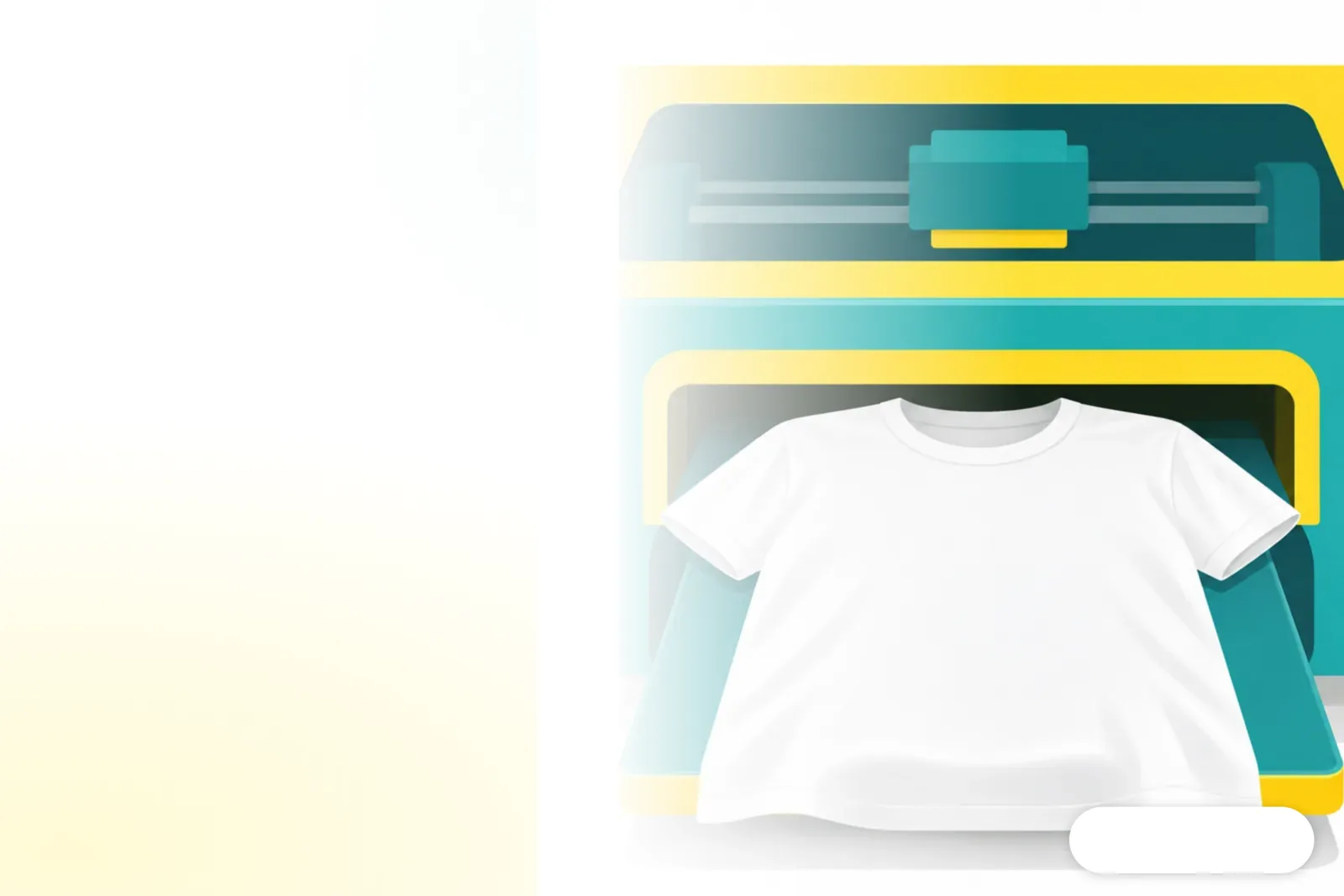
Why is merchandise printing shifting to on-demand production?
Merch printing is shifting to on-demand because demand can form within hours. If you estimate a quantity, print thousands of pieces and then wait for the season to sell them, a wrong forecast turns into dead stock
In an interview published by FESPA (Federation of European Screen Printers Associations), Scott Walton, an executive at Kornit Digital (a maker of digital textile printing equipment), looked back on more than thirty years in merchandise printing. The old model was to commit to a minimum quantity first, then treat whatever didn't sell as a cost of doing business. See The Future of Merchandise Printing: On-Demand Production, DTF and Customisation
A surprise album drop, a creator's livestream going viral, or an unexpected win at a match can all send demand surging within hours. Fans also want names, cities or show dates on their items, and orders like that are hard to predict by season
What I care about is whether you can deliver retail-grade artwork and finishing while the hype is still on. If the finished piece looks like a cheap giveaway, speed won't justify a merch price tag
How does on-demand production actually work?
On-demand production means preparing the product design and process in advance, then scheduling printing only once an order or event demand appears. Output follows real demand, and the risk of stocking heavily on a forecast goes down
DTF (direct-to-film) prints the artwork onto transfer film first, then heat-presses it onto the fabric. Direct-to-garment printing, embroidery, heat transfer and direct-to-shape printing are other ways to decorate merch
To switch one design into many variants quickly, a brand has to separate the fixed layout from the variable fields such as name, city and show date
・Pick the fabric and the finished look first, then choose among DTF, direct-to-garment printing or embroidery
・Check names and show dates before custom data goes into the file, so errors don't get printed straight onto the product
・Keep the approved artwork version, print placement and reorder specs on record, so the second batch doesn't mean guessing again
Which printing decisions change with small batches and high variety?
Small-batch, high-variety work shifts the management focus to product material, artwork versions and how you handle reorders
According to the company's executives, the Kornit Atlas MATRIX (Kornit's digital textile production system) can run cotton, polyester and blended fabrics through the same system, supports direct printing and Karbon Transfer (a DTF transfer solution), and uses MAX and Karbon Technology (Kornit's digital printing technologies)
To me, that's a reminder. Equipment that handles more fabric types doesn't mean every small or mid-sized print shop should go buy it. Look at the materials your customers use most, how often orders change variants and how large reorders run, then decide whether to produce in-house or outsource
On the design side, you also need to manage product master files and versions. Changing a name sounds easy, but if the wrong name goes to the wrong person, it's no small edit once the order has shipped
How can small brands and print shops get started?
Small brands and print shops can pick one product whose demand tends to swing suddenly, run a trial on it, and only then decide whether to extend it across the whole range
Start with one product
・Begin with event-limited or fan merch, and list the custom fields such as name, city or show date
・Check fabric, size, artwork placement and sample results first, then confirm the print method
・Set clear specs for order intake, data checks, delivery and reprints, and add blanks and packaging to your inventory count
If your merch plan also includes packaging, hang tags or promotional print, MINDS can walk you through mid-to-high-end fully custom commercial printing, so the related print pieces are planned together with the product specs
Is on-demand production right for every kind of product?
On-demand production suits products with short-lived demand, many designs, or names, cities and show dates added. For steady sellers with a fixed design, switching to per-order production isn't always necessary
Pros:
・Printing to order lowers the inventory risk of tying up a large amount of finished goods up front
・Names, cities and show dates can become separate versions, matching the heat of the event
Cons:
・Data can differ on every order, so artwork versions and checking work both go up
・Blank garments, packaging, picking and shipping still need to be arranged
The FESPA interview notes that fans expect merch to match the moment and want print and decoration quality at retail level. For long-running fixed products, still compare the per-unit cost of mass production against the cost of holding stock, and don't look at the print price alone. Someone still has to eat the loss on unsold goods
Key takeaways
・On-demand production ties the quantity of finished goods to actual orders, which lowers the risk of printing a big batch up front
・For personalization, sort out the variable fields such as name, city and show date first, so you don't re-lay out the artwork for every order
・Choose DTF, direct-to-garment printing and embroidery together with the fabric and the finished look
・Small runs ease the pressure of holding finished stock, but blanks and shipping still need planning
Further thoughts
A print shop can start by building a spec sheet for one event product, with the designer separating the key visual from the custom fields. AI can help draft different copy or images, but a person still has to check brand, fonts, copyright and printability before prepress. A SaaS workflow should connect product templates, order data, proof approval, file versions and reorder specs. Start by pulling the data, then see which step slows delivery down most often
Further reading
FAQ
- Do small-batch, high-variety products have to use DTF?
- Not necessarily. DTF, direct-to-garment printing, embroidery and heat transfer are all ways to decorate merch, so choose based on the fabric and the finished look
- Can on-demand production mean no inventory at all?
- No. On-demand production cuts the need to print a large amount of finished goods in advance, but blank garments, packaging materials and shipping still have to be prepared
- What should I prepare before printing personalized products?
- First separate the fixed artwork from the variable fields such as name, city and show date, then check the data, the sample and the reorder specs
- Which products suit on-demand production?
- Products whose demand is driven by events, that come in many designs, or that need personal data printed on them. For long-running, stable products with a fixed design, large-batch production is still worth evaluating
Related articles
The Print × AI weekly
The print and AI know-how designers, brands and enterprises can use before they commit — one email, every week
MINDS Free Tools
Spine width and imposition calculators — skip the manual math, free in your browser.
MINDS Group
Need actual printing or gifting services?
From premium printing to online ordering and festive gifts — the MINDS Group sister brands take it from here.