
What changes with Nestlé's 2030 plastic reduction roadmap?
Nestlé's 2030 plastic reduction roadmap breaks the reduction of virgin plastic into three workstreams: recycled materials, reusable packaging, and alternative materials. This public roadmap can serve as an external reference when brands review their annual packaging plans. See Nestlé's 2030 Plastic Reduction Roadmap: Three Packaging Strategy Takeaways for Taiwanese Clients from a Global Brand
Virgin plastic is plastic newly made from petrochemical feedstocks that has not yet been recycled or reused. Reducing it means checking the material source, the number of times the packaging will be used, and possible packaging alternatives at the same time
The question I run into most often at the prototyping table is a client holding up a paper box and asking whether it can replace a plastic bag. But the questions to ask first are what the packaging needs to protect, how many times it will be used, and where it goes once it has been used. Nestlé puts these three questions into the same 2030 roadmap, giving brands a chance to move beyond one-for-one material swaps and examine the packaging system as a whole
Why do the three paths affect print procurement?
The three paths affect print procurement because they can change a single SKU's material specifications, production methods, and consumer messaging all at once
・Recycled materials bring supply and print consistency into the conversation. Brands need to clarify the material source, batch-to-batch variation, and whether color management can actually be implemented
・Reusable packaging brings durability, cleaning, labeling, and usage procedures into the design discussion. Surface treatment cannot be judged only by how the package looks when it first hits the shelf
・Alternative materials can affect printing, lamination, sealing, and finishing conditions. A file that once went smoothly into mass production may need a new round of prototyping after the material changes
If these questions are left until after the design is finalized and then handed to the printer, the changes usually show up in prototyping, finishing, lead times, and procurement costs. The brand is then carrying more than a single material choice
What three packaging lessons should Taiwanese brands understand?
The three lessons for Taiwanese brands are to map the full packaging system first, turn the 2030 goals into annual procurement requirements, and write the end-of-use destination into the design specifications
・The first lesson is to treat packaging as a whole. A product may include primary packaging, labels, an outer box, and transport packaging. Changing only one layer can still leave the other materials affecting recycling, production, and brand communication
・The second is to turn long-term goals into procurement questions. Material requirements, acceptable alternatives, prototyping methods, and mass-production validation all need to be spelled out before the order is placed. Do not write an unverified condition into a commitment
・The third is to bring the end-of-use scenario into the design. Recycling labels, disassembly instructions, and reuse guidance must match the actual handling options the brand provides. "Recyclable" cannot be treated as just an adjective on the box
I would organize this way of thinking into what I call Mai Strategy's Three Gates Before Going to Press: clear material information, reliable printing, and a real destination after use
What should small and midsize printers do now?
Small and midsize printers should start by auditing the packaging for one existing SKU, then turn the findings into specifications that can be quoted, prototyped, and mass-produced
・1. Break the packaging down into materials, printing, finishing, labels, and cartons, then mark which layer is affected by recycled materials, reuse, or alternative materials
・2. Before prototyping, list the limits around material supply, color management, finishing, and lead time. This tells the brand which requirements have already been validated and which still need testing
・3. Before mass production, confirm the end-of-use instructions for the packaging, so the design file, purchase order, and print specifications all use the same language
The brand does not need to change its entire product line at the outset. Start with one representative SKU, break down the specifications together with MINDS and the design team, confirm the material, printing, and mass-production conditions, and then decide whether to expand to other products
How can brands turn the 2030 roadmap into procurement decisions?
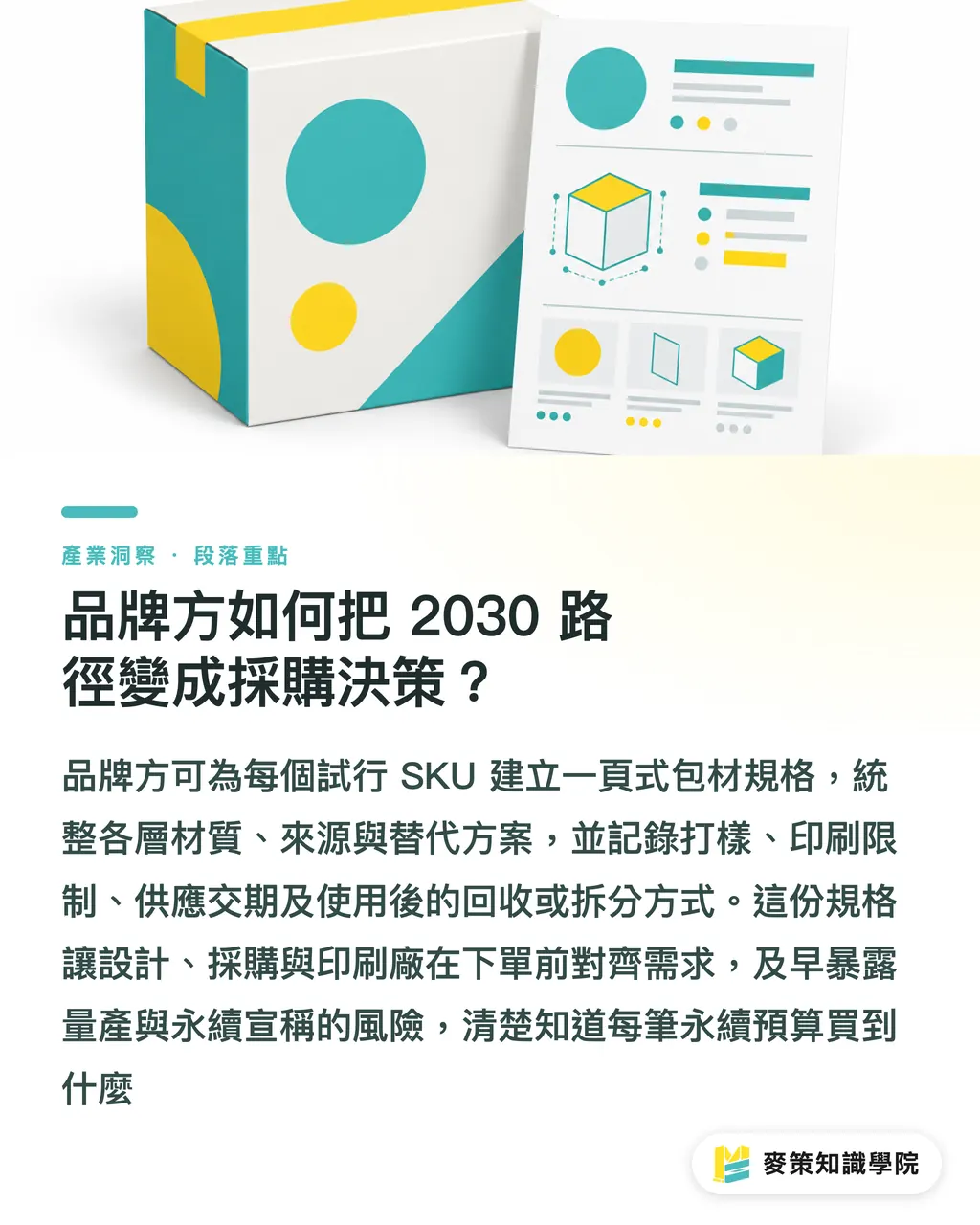
To turn Nestlé's 2030 roadmap into procurement decisions, brands can create a one-page packaging specification for each pilot SKU, giving the design team, procurement team, and printer the same source of information
・Materials: Spell out the material, source requirements, and alternatives for each packaging layer
・Mass production: Record prototyping results, print and finishing constraints, supply conditions, and lead-time risks
・After use: Explain whether the packaging should be recycled, reused, or separated, and confirm that the brand's consumer-facing language is supported by real-world options
The table has a very practical purpose. It should surface problems before the order is placed, so the brand knows what each dollar of sustainability budget is buying, and the printer does not have to guess what the client really wants at the last minute
Key Takeaways
・Nestlé breaks its 2030 plastic reduction plan into three workstreams: recycled materials, reusable packaging, and alternative materials
・Packaging sustainability needs to be assessed across the entire SKU, not just one material layer
・The earlier the purchase order spells out material and mass-production conditions, the more controllable the downstream prototyping costs will be
・"Recyclable" cannot simply be printed on the package. It must correspond to a real end-of-use handling process
A Further Thought
AI can help compare material specifications, organize version differences, and flag missing fields. It cannot decide local recycling conditions for a brand, nor can it promise a mass-production result that the printer has not validated. If a SaaS product serves packaging procurement, it should keep material, prototyping, finishing, and end-of-use notes for every SKU, so design and procurement can make decisions from the same set of information. The next step is to start with one SKU. When you need a cross-functional review, the Mai Strategy Knowledge Academy consulting team can help turn the questions into specifications the team can actually use
Further Reading
FAQ
- What directions does Nestlé's 2030 plastic reduction roadmap cover
- The public roadmap has three main pillars: recycled materials, reusable packaging, and alternative materials. Brands should bring all three into the same packaging plan
- Where should Taiwanese brands start
- Start with one existing SKU. List its primary packaging, labels, outer box, and transport packaging, then review the materials, print and finishing, and end-of-use destination
- How can small and midsize printers take part in brands' plastic reduction efforts
- Before prototyping, they can provide information on material supply, color management, finishing methods, and mass-production conditions, helping brands write sustainability requirements into their procurement specifications
- Is switching plastic packaging to paper enough to complete plastic reduction
- No. A material change still requires checks on packaging function, printing and finishing, supply stability, and end-of-use handling. Paper alone cannot replace a complete packaging plan
Related articles
The Print × AI weekly
The print and AI know-how designers, brands and enterprises can use before they commit — one email, every week
MINDS Free Tools
AI background removal, a LINE sticker maker, spine & imposition calculators — all free, right in your browser, no upload.
MINDS Group
Need actual printing or gifting services?
From premium printing to online ordering and festive gifts — the MINDS Group sister brands take it from here.