
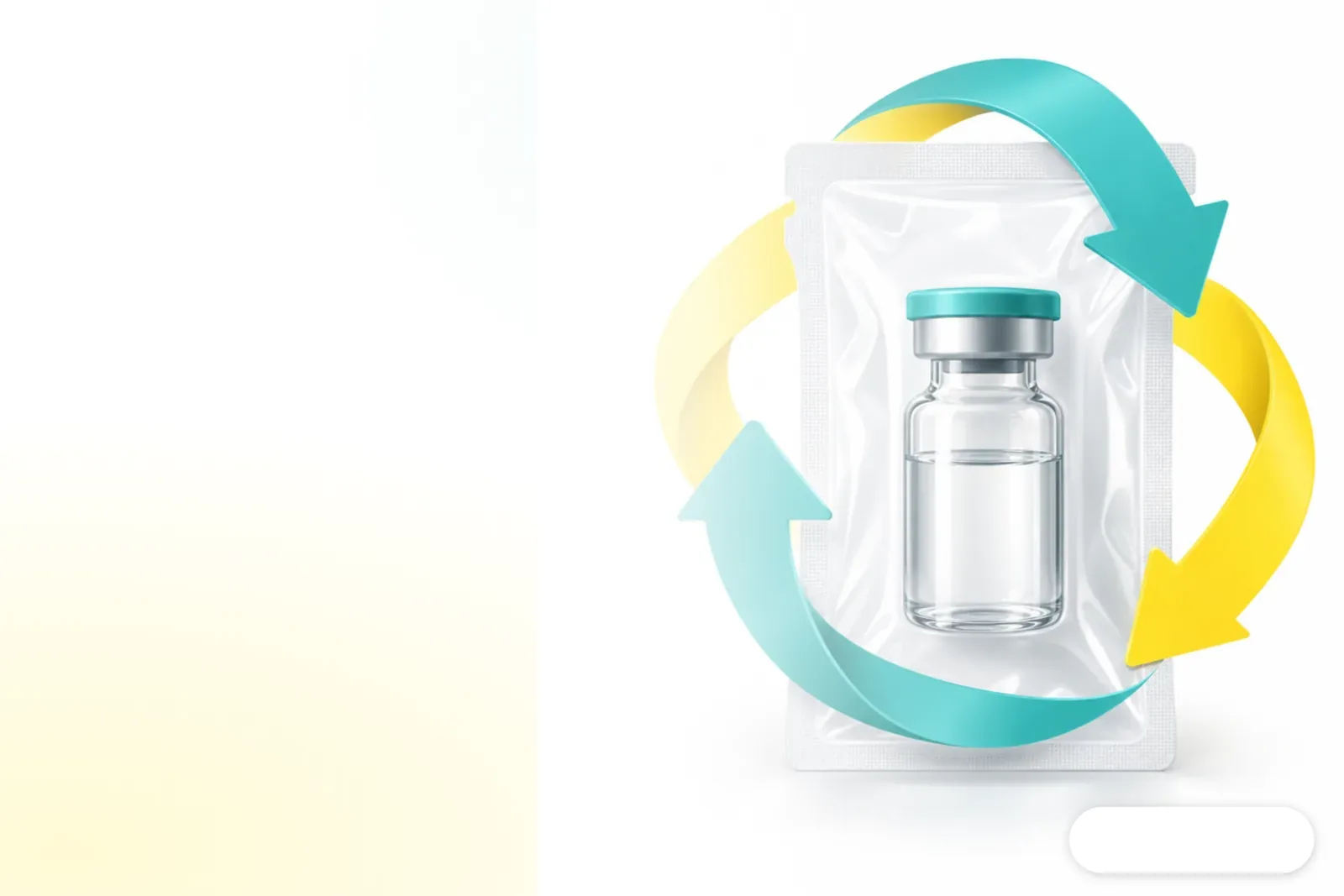
What sets Südpack Medica's pharmaceutical packaging apart?
Südpack Medica has introduced recyclable, single-PE sterile pharmaceutical packaging. Its public positioning highlights a single material, recyclable design, and sterile barrier performance. This case puts the material's end-of-life path and pharmaceutical protection on the same specification sheet, so brand procurement teams can assess whether both can be achieved
PE (polyethylene) is a common thermoplastic. Mono-PE refers to a packaging structure whose main plastic layers stay within the PE family, reducing the mix of different resins and making it easier for the material to enter PE recycling streams. Actual recyclability still depends on the complete package and local facilities. Start with the product's intended use
The launch offers a case for brands to begin their evaluation. It does not mean every pharmaceutical product can switch materials. For the product positioning, see Südpack Medica Launches Single-PE Sterile Pharmaceutical Packaging, Balancing Recyclable Design and Barrier Requirements
Why can mono-PE support recyclable design?
Mono-PE can support recyclable design because the package's main plastic structure stays within the PE family, making it easier to fit into recycling streams for similar plastics. Südpack Medica's product brings this material approach to pharmaceutical packaging. It is still a design condition, not a guarantee that the package can be recycled in every market
When reviewing the complete package, brands should look beyond the primary film and lay out all its components:
・Could the label, ink, or adhesive affect sorting or reprocessing?
・Are the sealant layer and any other films compatible with the PE structure?
・Does the sales market have a recycling route that accepts this type of packaging?
Using fewer mixed materials helps. Without a recycling route, sustainability claims still need to be limited
Can single PE also provide a sterile barrier?
Südpack Medica positions single PE and sterile barrier performance together in one pharmaceutical packaging product, showing that the two can be designed together. Whether a specific pharmaceutical product can use it still needs support from supplier data and packaging validation
A sterile barrier is the packaging function that maintains a product's sterile state and prevents microorganisms from entering. It depends on the packaging material, seal, and packaging process working together. Brands should confirm which packaging formats the proposed solution suits, along with sealing conditions, storage requirements, and whether existing equipment can process it consistently
I would first check the pharmaceutical product's intended use and storage conditions, then review the material data and compatibility with the packaging line. Barrier performance, storage, and process validation all need to match the product before they can become a purchasing specification. Start with the packaging function
How should brands assess adoption?
When assessing mono-PE pharmaceutical packaging, brands should put product requirements, packaging processes, and recycling conditions in the sales market into one adoption checklist
・Specify the barrier and storage requirements for the pharmaceutical product, then ask the supplier for matching material data
・Confirm sealing, forming, and packaging line conditions, and arrange tests for the intended use
・Check recycling routes in target markets before deciding what the packaging label and ESG copy can claim
These details help procurement compare the overall adoption cost with the level of protection, instead of focusing only on the material price. Südpack Medica's case is also a reminder that a material name cannot replace product validation
What can brands in Taiwan do now?
A brand in Taiwan can start with one pharmaceutical product whose use, packaging format, and sales market are clearly defined. Ask the supplier for structure and validation data, and review the carton copy at the same time. The Südpack Medica case is a reminder that the outer printed carton and the sterile primary package do different jobs. Sustainability copy should not go beyond what the packaging evidence supports
Once the material specifications are approved, the brand can share confirmed recycling claims, artwork, and print requirements with MINDS (mid- to high-end, fully customized commercial printing) for coordination. This reduces rework if the carton is finalized before the packaging copy changes. Keep responsibility for brand communications separate from sterile packaging validation, and the project will not have to go back and revise the artwork
Key takeaways
・Mono-PE can reduce the mix of different plastics, but actual recyclability still depends on the complete package and local facilities
・For pharmaceutical packaging, confirm the sterile barrier and seal compatibility before discussing a material change
・ESG copy should stay within the bounds of the evidence. Material design cannot stand in for actual recycling outcomes
・When changing packaging materials, review supplier data, carton artwork, and brand claims together
Further considerations
Print manufacturers can link approved copy, packaging certifications, and print versions on the same job ticket. Designers can mark recycling claims alongside the markets where they apply, so icons do not get ahead of the evidence. AI can help compare new and old supplier specifications and flag differences in material fields for the packaging and regulatory leads to review. SaaS (software as a service, software accessed through an online subscription) can store product IDs, artwork approvals, and test attachments, making it easier to find which printed materials need updating when a material changes
Further reading
FAQ
- Is mono-PE pharmaceutical packaging always recyclable?
- No. Mono-PE can reduce the use of mixed plastics, but the full package composition and local recycling facilities still determine whether it can enter a recycling stream
- Can single PE be used for sterile pharmaceutical packaging?
- Südpack Medica has introduced sterile pharmaceutical packaging made from single PE. Whether a specific product can use it still needs to be confirmed based on the product's intended use, sealing conditions, and packaging process
- What should brands confirm with the supplier before adoption?
- Brands should confirm that the material and seal suitability data match their product. They should also check packaging line compatibility and storage requirements before deciding whether to adopt the solution
- Can a recyclability claim go straight on a pharmaceutical carton?
- Not based on the mono-PE material name alone. Brands should first confirm the recycling conditions for the complete package in the sales market, then write claims within the bounds of the supporting evidence
Related articles
The Print × AI weekly
The print and AI know-how designers, brands and enterprises can use before they commit — one email, every week
MINDS Free Tools
AI background removal, a LINE sticker maker, spine & imposition calculators — all free, right in your browser, no upload.
MINDS Group
Need actual printing or gifting services?
From premium printing to online ordering and festive gifts — the MINDS Group sister brands take it from here.