
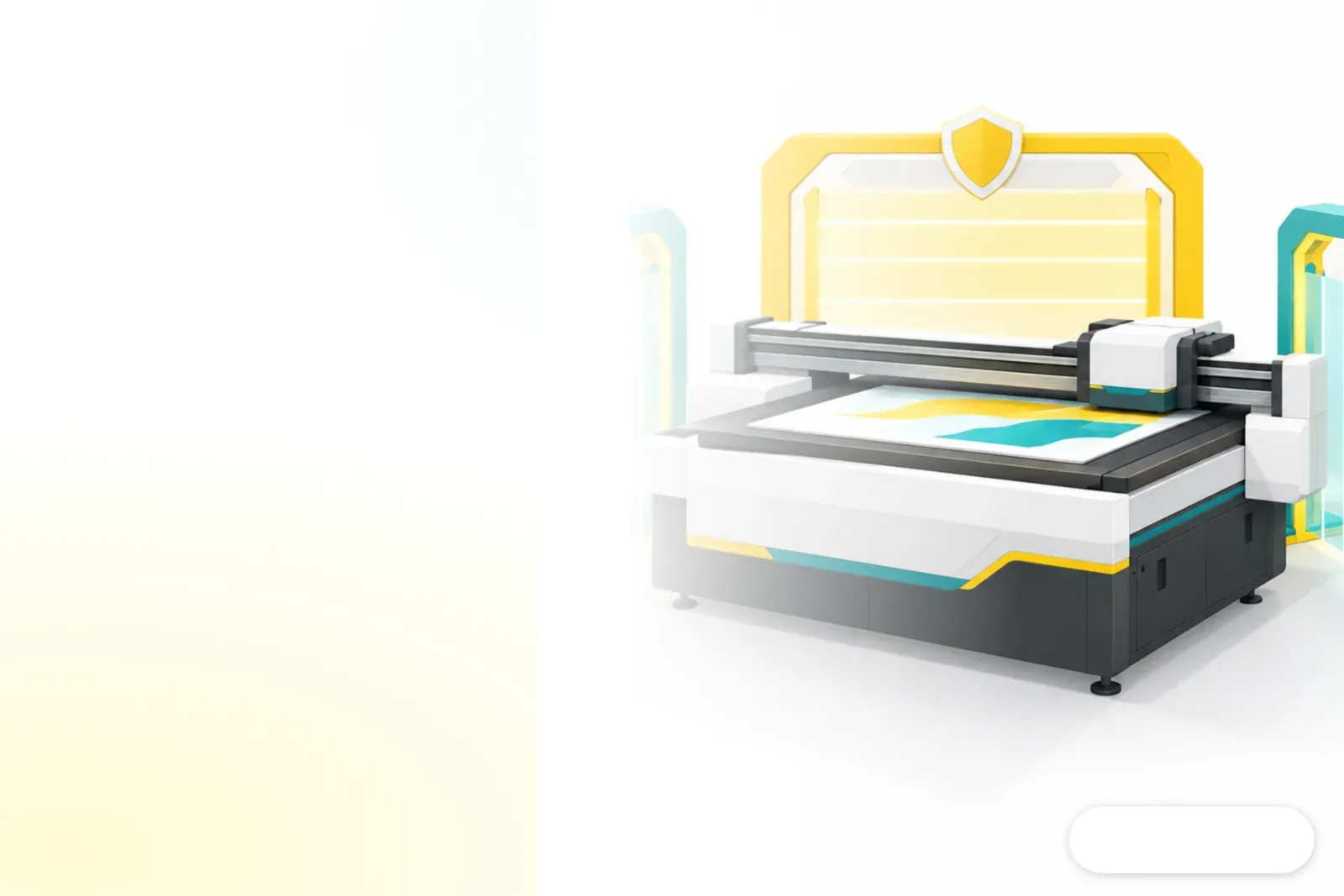
What is Mimaki showing at FAKUMA this time?
FAKUMA is a plastics processing trade fair held in Friedrichshafen, Germany. From October 12 to 16, 2026, Mimaki will show the JFX220-2515 and UJF200-6042. Both machines are designed for direct printing on different materials and three-dimensional objects, with automation, material positioning, and reduced manual setup among the areas they aim to improve. UV-LED (ultraviolet light-emitting diode) flatbed printing applies ink directly to the material with a printhead, then cures it with ultraviolet LEDs. That allows direct printing on boards and three-dimensional workpieces up to a certain height. For MINDS, the significance of the machines on display is that equipment makers are starting to treat how workpieces are placed and printed consistently as part of industrial applications. It signals a direction for the technology, not proof that the industry has switched over. See the report on Mimaki's new UV-LED flatbed printers at FAKUMA
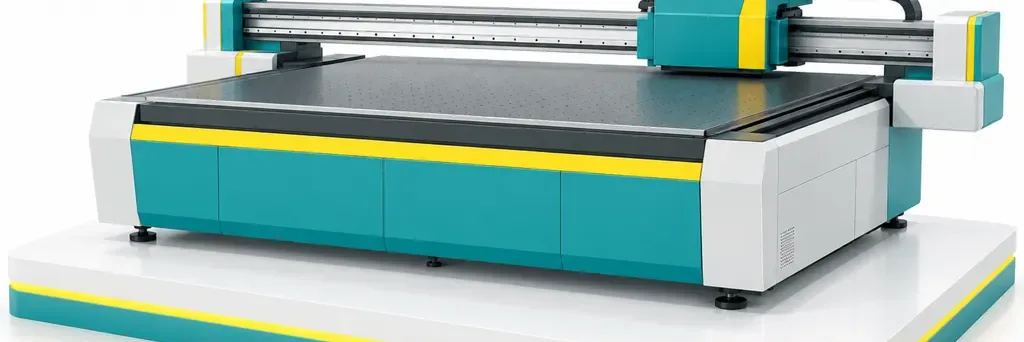
What has changed on the JFX220-2515?
The JFX220-2515 uses localized vacuum control and automatic positioning pins to hold materials in place and cut down on manual prepress work. Mimaki lists a maximum production speed of 42 m²/h. Taken together, these features are meant to reduce the manual work involved in changing materials, securing them, and positioning them. Zoned vacuum activates only in areas of the worktable covered by material, while the positioning pins help set its position. It is like aligning the edge of a sheet before cutting, with less guesswork by eye. MINDS' three checks for industrial direct printing start with whether the workpiece is flat and batch dimensions are consistent, then ask whether operators need to realign it after loading. The 42 m²/h figure is the machine's listed maximum production speed. Actual job capacity must also account for loading, unloading, cleaning, and inspection
What kinds of workpieces can the UJF200-6042 print on?
The UJF200-6042 is designed for direct printing on products and objects. It supports materials up to 250 mm high and fluorescent inks. An optional camera can automatically detect workpiece positions, and the printer can be connected to a conveyor belt as part of an automated production process. A camera that can "see" a workpiece does not necessarily inspect print quality or replace a jig. The report describes position detection, nothing more. When assessing this kind of machine using its three checks for industrial direct printing, MINDS first asks about the print direction, masked areas, and handling method for housings, panels, or three-dimensional parts. Then it tests whether the camera and holding method work with actual samples. The 250 mm figure is the maximum material height. It does not mean every shape can be printed directly
How much of the process can RasterLink8 automate?
RasterLink8 is workflow software Mimaki is showing alongside the new machines. It is designed to simplify order management and includes automatic positioning for print jobs. It can handle parts of the workflow, such as how jobs are arranged and where files are positioned. The software description alone does not show that the entire process, from accepting an order and detecting workpieces to quality inspection and shipping, is automated. MINDS' three checks for industrial direct printing also apply to the workflow. With a real job ticket in hand, ask whether workpiece IDs, file versions, and position settings can be reused, and whether operators can avoid entering the same information repeatedly. For factories that need to reprint jobs, that is more useful to verify than the length of a feature list
How can Taiwan's small and midsize manufacturers decide whether to invest?
I group the checks to make before investing under the name "three checks for industrial direct printing." MINDS customers can use them to get clear answers from equipment vendors
・Materials check: Confirm the type of plastic, its surface treatment, and ink adhesion. Start with a print test on an actual workpiece
・Positioning check: Confirm the workpiece's positioning reference. The JFX220-2515 has automatic positioning pins. The UJF200-6042 camera is optional
・Cycle-time check: Include loading, printing, unloading, and inspection in the production cycle. The JFX220-2515 is listed at a maximum of 42 m²/h, which is not the same as the output of a complete production line
If a job for the same brand also needs a printed catalog or product information card, MINDS can assess the print requirements. For direct printing on plastic parts, ask the equipment vendor about sample testing with actual workpieces
Key takeaways
・MINDS starts by testing samples before taking on a job
・Work out the production cycle before committing to industrial direct printing
・The JFX220-2515 is listed at a maximum of 42 m²/h. That does not mean a complete production line can deliver that area every hour
・The UJF200-6042 supports materials up to 250 mm high. Its optional camera detects workpiece positions
Further thoughts
When handing off files, designers should include the workpiece orientation, print surface, and positioning reference. Factories should keep batch details, file versions, sample results, and operating times on the same job ticket. That gives future software or AI clear data to work with. MINDS can start by printing on an actual plastic part, check adhesion, positioning consistency, and the full production cycle, then assess whether its own orders can support the setup costs of this kind of equipment
Further reading
FAQ
- Are UV-LED flatbed printers suitable for printing on plastic?
- Some plastics can be printed on directly, but it depends on the material and its surface treatment. MINDS' three checks for industrial direct printing start by testing adhesion on an actual workpiece
- How tall a workpiece can the UJF200-6042 print on?
- The UJF200-6042 supports materials up to 250 mm high. MINDS recommends checking the workpiece shape, print surface, and holding method first
- How many printed pieces per hour does the JFX220-2515's 42 m²/h figure represent?
- The 42 m²/h figure is Mimaki's listed maximum production speed, not the output of a complete production line. MINDS' three checks for industrial direct printing include loading, unloading, and inspection in the production cycle
- Can camera positioning replace a jig?
- The report only says that the UJF200-6042's optional camera can detect workpiece positions. It does not say the camera can replace a jig. MINDS recommends testing how the camera and holding method work together with actual workpieces
Related articles

The Print × AI weekly
The print and AI know-how designers, brands and enterprises can use before they commit — one email, every week
MINDS Free Tools
AI background removal, brand stamping, and a LINE sticker maker — free design tools, right in your browser, no upload.
MINDS Group
Need actual printing or gifting services?
From premium printing to online ordering and festive gifts — the MINDS Group sister brands take it from here.