
What signals did Material Week Tokyo 2026 send?
A review of Material Week Tokyo 2026 points to Japan's plastics policy driving innovation in materials and packaging. The report names three directions:
・Recycled materials: feedstock put back into manufacturing after recycling
・Degradable design: assessing a material's ability to break down under applicable conditions
・Integration with recycling systems: connecting packaging design with existing recycling arrangements
I boil material choices for brands down to the "three packaging questions." Start with where it goes. If an eco-friendly material doesn't fit the recycling arrangements in the market where it's sold, it's hard to stand behind the packaging claim. On print jobs, I often remind brands to update the material name on the purchase order along with the packaging label. Otherwise, new material paired with old artwork leaves consumers with two different stories. This review of Material Week Tokyo 2026: Japan's plastics policies and packaging innovation is useful for reviewing existing packaging specs
How do the three packaging innovation directions differ?
Recycled materials, degradable design, and integration with recycling systems address different problems. Brands shouldn't lump them together under a single "eco-friendly materials" label. The three packaging questions help spell out what each claim means:
・Recycled materials: check that the source of the raw material can be verified when purchasing
・Degradable design: confirm the conditions under which the material can break down
・Integration with recycling systems: a design approach that aligns the packaging material, how consumers sort it, and the existing local processing system
A package's layered construction and finishing methods can also affect how recycling facilities classify it. Listing only the primary material in the design specs doesn't explain the whole package. Ask suppliers to spell out the material name and applicable conditions in the spec sheet. The print team should also check during proofing that the label matches the finished product, so "degradable" isn't treated as a synonym for "recyclable."
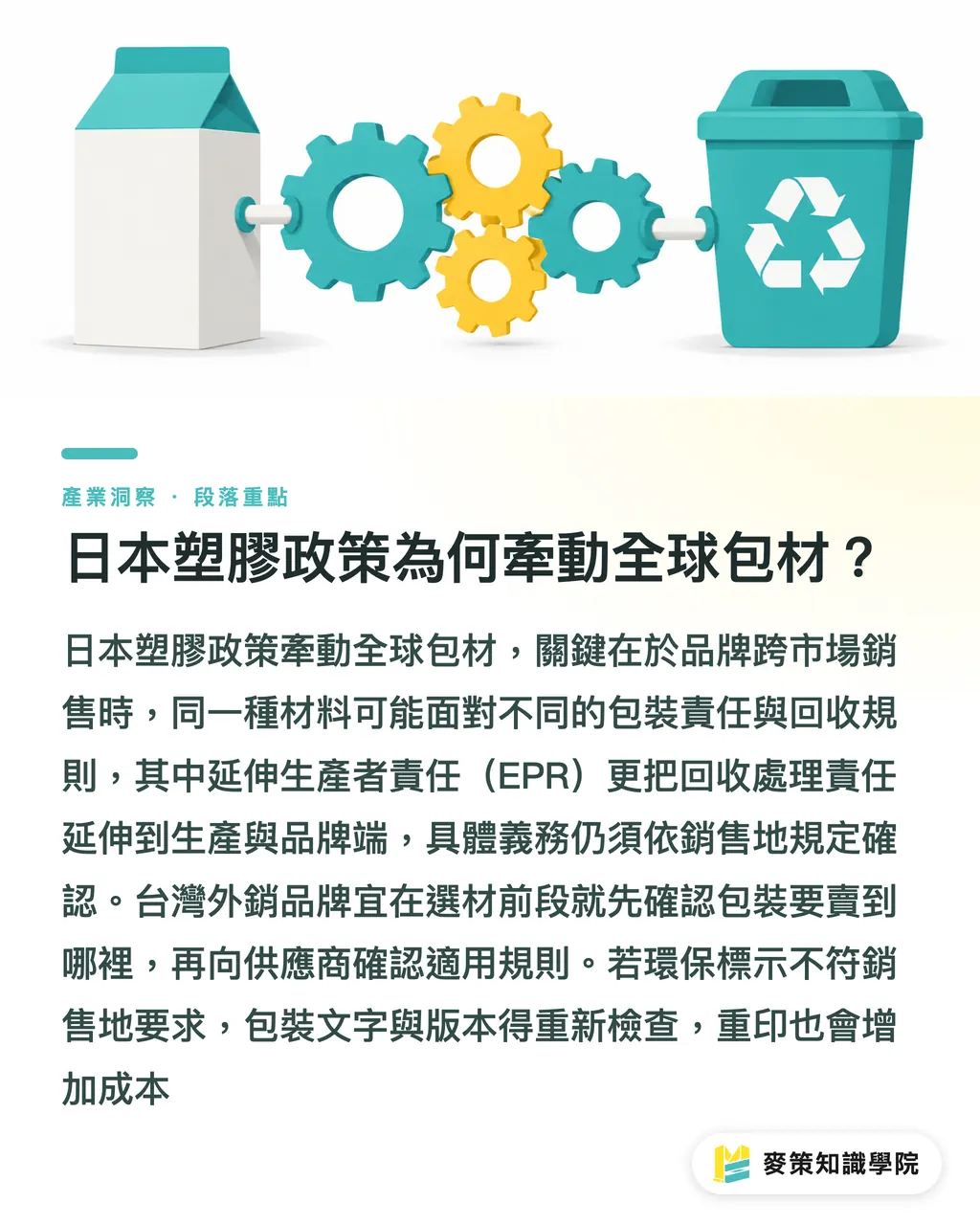
Why does Japan's plastics policy affect packaging worldwide?
Japan's plastics policy can affect packaging worldwide because the same material may face different packaging responsibilities and recycling rules when a brand sells across markets. Extended Producer Responsibility (EPR) is a policy principle that extends responsibility for packaging collection and processing to producers and brands. The specific obligations still need to be checked against the rules in each sales market
EPR and packaging sustainability requirements are also tightening in Europe and the United States. The Material Week Tokyo review looks at Japan's policies alongside global rules, reminding Taiwanese exporters to account for differences between markets early in the material selection process. The three packaging questions start with where the package will be sold, then ask suppliers which rules apply. Don't wait until the artwork is final. If an environmental claim doesn't meet the requirements in the sales market, the brand may have to review the packaging copy and versions. Reprinting adds cost
How can brands turn policy signals into packaging updates?
To turn plastics policy into an actionable packaging update, a brand should start with one core product and keep a verifiable record of material choices using the three packaging questions. The three directions in the Material Week Tokyo 2026 review can become checks before, during, and after a redesign:
・Before purchasing: confirm the supplier can provide verifiable material documentation and check it against the target market's requirements
・Before proofing: have the design and print teams confirm that the packaging label matches the actual materials and finished product
・Before launch: compare the environmental claims consumers will see with the available recycling arrangements, and keep a record of the approved version
Start with one product. That makes it easier to spot early on whether the material, packaging copy, and market requirements line up. There's no need to switch materials across the whole range from day one. To bring material choices into actual proofing, talk with MINDS about whether the materials meet printing and finishing requirements
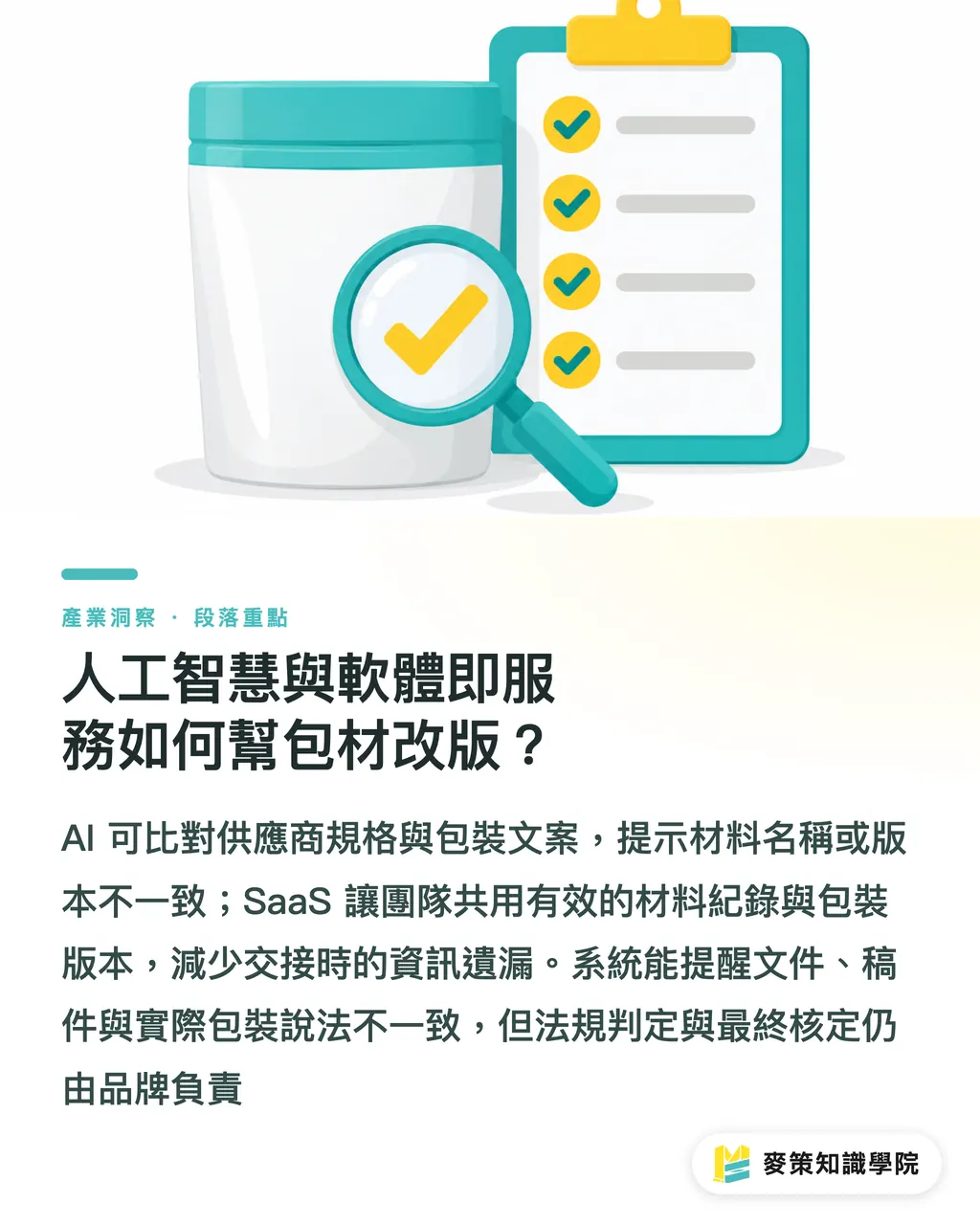
How can AI and SaaS help with packaging updates?
Artificial Intelligence (AI) and Software as a Service (SaaS) can help prevent packaging information from getting lost between purchasing, design, and print handoffs. They can't make regulatory decisions for a brand. AI is technology that lets software compare text or data and flag differences. In a packaging workflow, AI can compare supplier specs with packaging copy, flag mismatched material names or versions, and leave the final check to the brand owner
SaaS is software accessed through an online subscription. It lets a team share current material records and packaging versions. The material and recycling themes in the Material Week Tokyo 2026 review offer a starting point for deciding what data fields to track. The three packaging questions address mismatches between documents, artwork, and the claims on the actual package. A system can flag missing information, but the brand remains responsible for approval
Key Takeaways
・Packaging choices should account for both material sources and where packaging goes after use
・Degradable design doesn't mean there's a workable recycling route
・Test packaging specs and consumer-facing claims with one core product first
・AI can flag missing information, but the brand owner still needs to confirm market rules
A Question to Consider
For their next packaging update, Taiwanese small and medium-sized brands can start with one core product and put the sales market, material documents, and packaging versions in the same update record. Purchasing, design, and print teams can then check together whether the packaging claims match the actual materials and recycling arrangements. Once the process works, they can extend it to other products
Further Reading
FAQ
- Do Taiwanese brands need to switch entirely to recycled materials right away?
- There's no need to change every material just because it's a trend. The three packaging questions suggest starting with a core product, checking where it will be sold, then verifying the material supply and where the packaging goes after use
- Does degradable packaging mean it can be recycled?
- No. Degradable design describes a material's ability to break down under applicable conditions. Whether it can be recycled also depends on whether local processing arrangements can handle it
- How can a small or medium-sized brand start reviewing its packaging?
- Start with one core product and the three packaging questions. Check the material documentation and packaging copy first, then confirm the target market's requirements before proofing
- Can AI help interpret packaging regulations?
- AI can compare material specs with packaging copy and flag version differences. The brand owner still needs to approve the market rules and whether the claims are appropriate, as required by the three packaging questions
Related articles

The Print × AI weekly
The print and AI know-how designers, brands and enterprises can use before they commit — one email, every week
MINDS Free Tools
AI background removal, a LINE sticker maker, spine & imposition calculators — all free, right in your browser, no upload.
MINDS Group
Need actual printing or gifting services?
From premium printing to online ordering and festive gifts — the MINDS Group sister brands take it from here.