

What Should Brands Look for in the Lyon Printing Museum's 2027 Reopening?
Brands shouldn't just look at a museum reopening its doors. They should look at how the print industry has spent over two centuries turning content into a physical signal that can be preserved, recognized, and trusted
Lyon Printing Museum 2027 Reopening reports that the Museum of Printing and Graphic Communication in Lyon, open since 1964, is undergoing its largest renovation yet. Scheduled to reopen in spring 2027, the project covers accessibility upgrades, Renaissance building restoration, the relocation of roughly 32,000 collection items, and a redesign of the permanent exhibition flow
Having worked on print projects for so many years, my biggest worry is brands treating print as the tail end of procurement: hand off the file, drive down the price, and call it done once delivered. Lyon's new exhibition narrative, 'From Lead to Pixels,' makes an age-old industry reality crystal clear: plates, paper, ink, machinery, schedules, and file specifications all loop back to shape your brand image
If you're planning a brand refresh, packaging redesign, or sustainability statement, I recommend talking to the Mai Strategy Knowledge Academy consulting team first. Break your print decisions down into four layers: brand, compliance, materials, and supply chain. Don't wait until press proofing to realize your paper texture, color consistency, or recycling labels don't match your brand promise
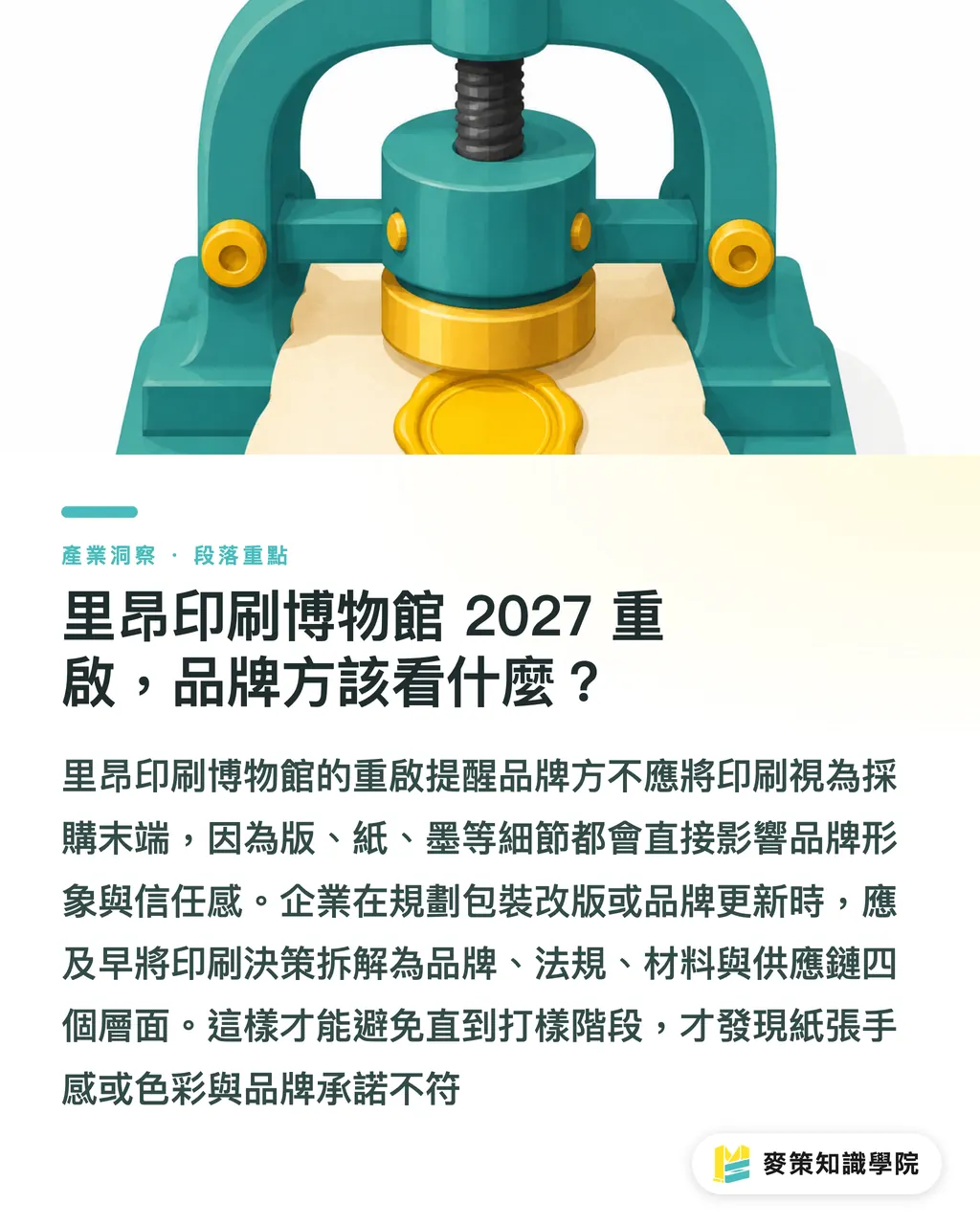
What Has Actually Changed from Lead to Pixels?
Moving from lead to pixels changed the speed of typesetting and reproduction. It didn't change print's reliance on specifications, accountability, and on-site judgment
Movable metal type assembled layouts character by character, relying on manual labor, type cases, and physical impression. Phototypesetting turned text into optical images. Digital workflows then centralized layout, color, and output conditions into digital file pipelines. Lyon's new exhibition connects Gutenberg-era manual typesetting, industrial letterpress, lithography, and digital processes. This timeline is valuable for brands because it reminds us that when production speeds up, mistakes enter mass production just as fast
AI-generated layout refers to using generative AI to draft layouts, arrange text, or explore visual variations. However, human review is still needed to check font sizes, whitespace, brand guidelines, print constraints, and regulatory wording. It is never a drop-in replacement for press-ready artwork
I recommend that brand teams adopt the Mai Strategy Three-Gate Print Check:
・① Brand Gate: Verify that logos, primary colors, typography, tone of voice, and channel contexts remain consistent
・② Production Gate: Confirm that paper stock, finishing, binding, fold lines, bleed, and color settings are viable for actual manufacturing
・③ Compliance Gate: Ensure that food, medical, environmental, recycling, or origin labeling meet all legal standards
It's simple: AI speeds up drafts, but it can't sign off on brand accountability
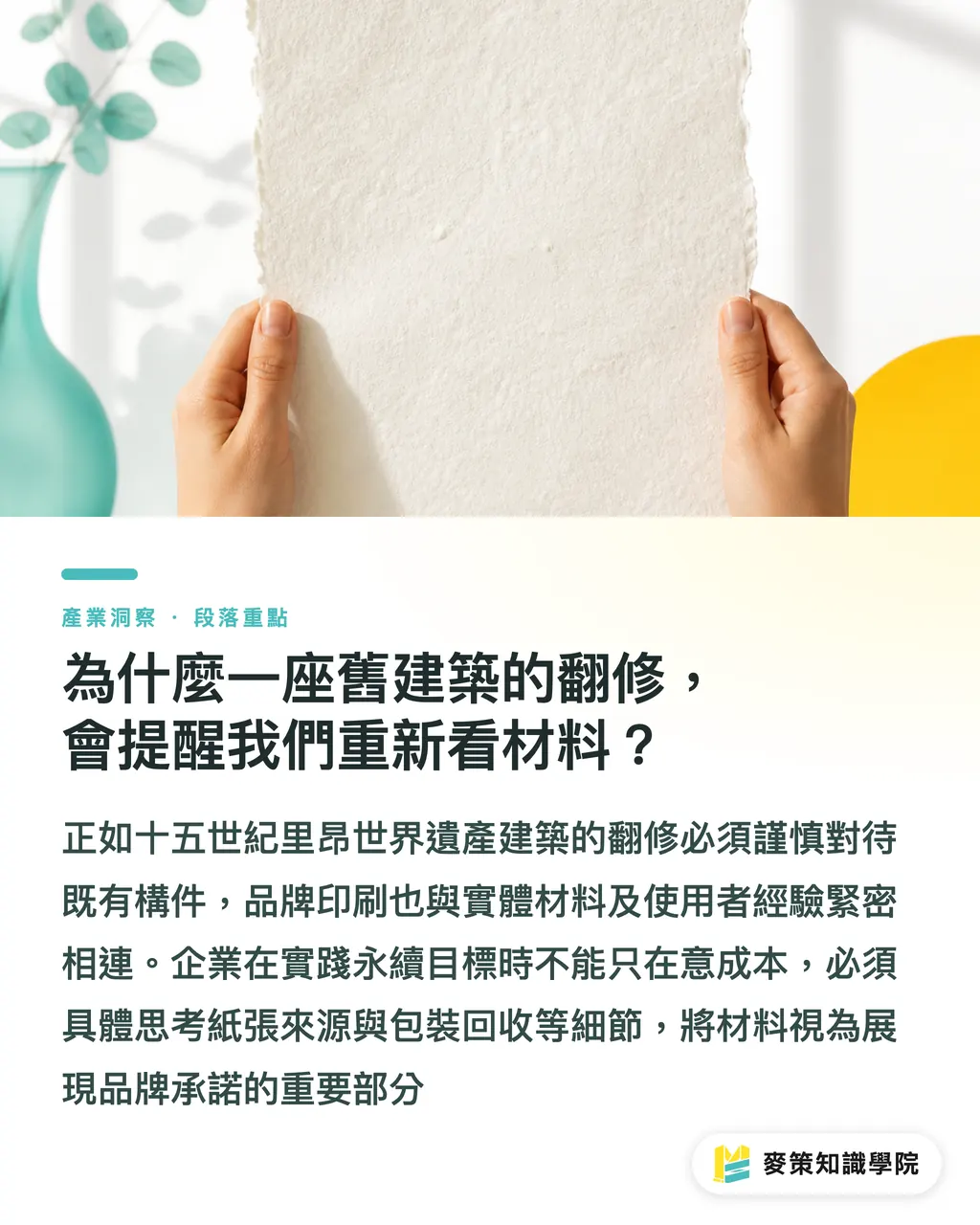
Why Does Renovating an Old Building Remind Us to Re-examine Materials?
Renovating a late 15th-century building reminds brands of one thing: print isn't just a flat digital file. It has always been tied to physical materials, spatial context, storage conditions, and the user's tangible experience
The Hôtel de la Couronne, home to the Lyon Printing Museum, dates back to the late 15th century and served as Lyon's city hall starting in 1604. It sits within the historic site of Lyon, designated a UNESCO World Heritage Site in 1998. You can't alter a building like this on a whim. The exhibition space features arcades, courtyards, spiral staircases, mullioned windows, and protected architectural elements, all while upgrades must improve access for wheelchair users
Brands often write ESG into slide decks, but once it touches physical print, the questions get concrete: where does the paper come from, can the packaging actually be recycled, do refill packs just create a different kind of waste, and can consumers understand the labels in their hands? Looking at packaging projects I've handled recently, discussions around circular packaging, recyclable paper stocks, and digital traceability have surged. Brand teams can no longer just ask which option is cheaper
A UNESCO (United Nations Educational, Scientific and Cultural Organization) World Heritage Site is an international listing for places with outstanding cultural or natural value. Applying this concept to brand printing reminds companies not to treat materials merely as a cost line item. Materials are part of your brand promise
What Does Relocating 32,000 Collection Items Teach Us About Print Management?
The takeaway from moving 32,000 collection items is this: the hard part isn't moving objects, but documenting the exact condition, location, vulnerabilities, and purpose of every single piece
Reports note that the collection includes books, typefaces, matrices, printing presses, advertising materials, packaging, scientific archives, antiquities, and contemporary graphic works. You can't handle printing presses, type cases, woodblocks, and paper documents the same way. Weight, dimensions, materials, and preservation status completely change how you pack, transport, and store them
This really resonated with me. Print production floors work the exact same way. A client might say 'the same brand collateral set,' but on the production line that splits into paper lot numbers, spot color formulas, die-line versions, finishing sequences, proof sign-offs, and delivery batches. If you fail to track even one field, you'll end up paying for it with overtime fixes later
Brands can turn Lyon's collection relocation into their own print asset management framework:
・Build a brand print inventory listing everyday business cards, catalogs, packaging, stickers, hangtags, and event materials
・Keep the final approved PDF, proof photos, paper stock names, finishing specs, and vendor version records for every item
・Flag discontinued items before redesigns so old logos, outdated regulatory copy, or obsolete QR codes never slip into new print runs
・When handing high-value collateral to teams like MINDS that specialize in fully custom commercial printing, define your master reference proofs, color swatches, and prepress sign-off duties upfront
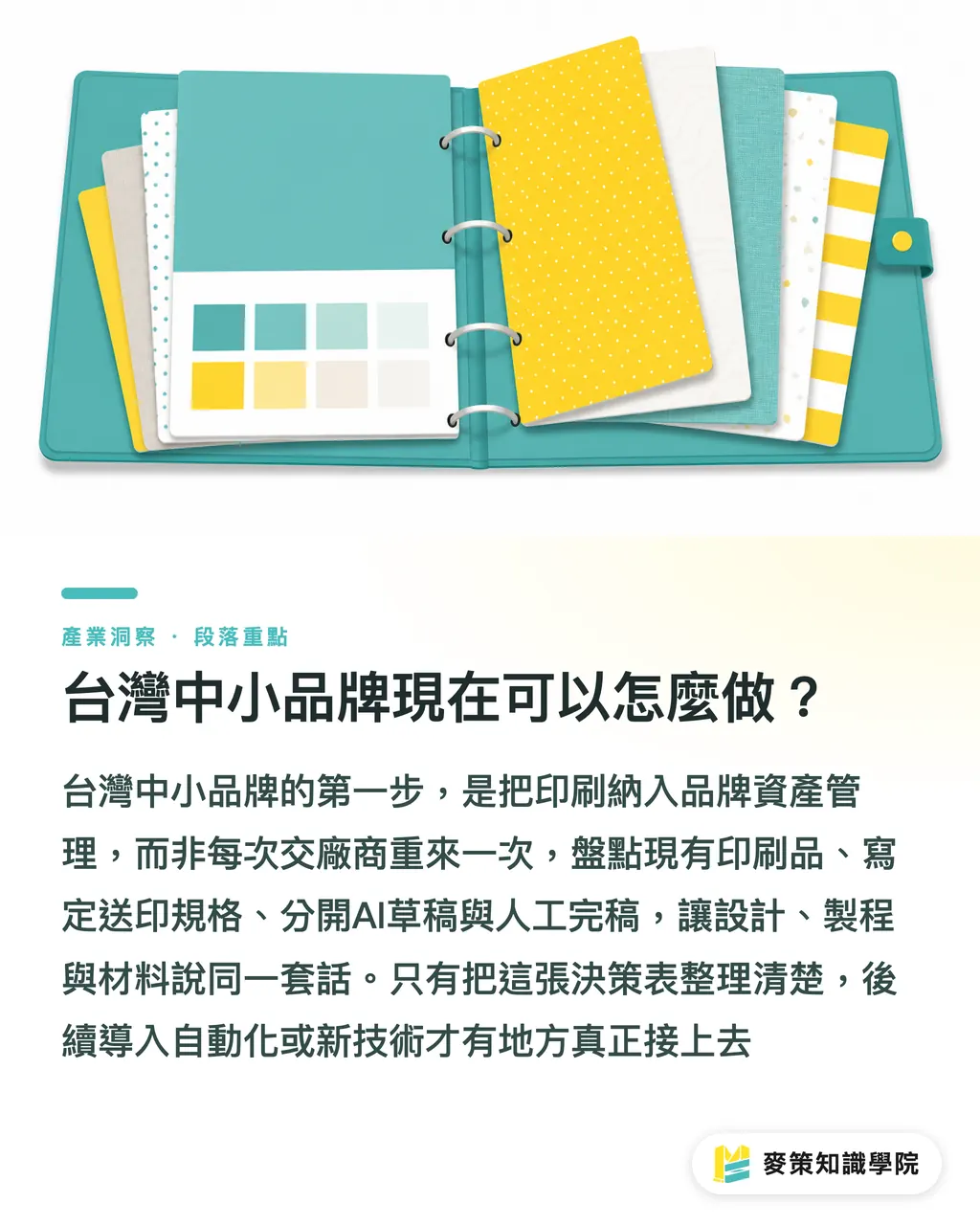
What Can Small and Midsize Brands in Taiwan Do Right Now?
What small and midsize brands in Taiwan need to do right now is shift print from 'let the vendor handle it' to an integral part of brand asset management. Get decision-making in order before chasing new tech
I break the action plan down into four steps:
・Audit existing print collateral: List all packaging, catalogs, stickers, cards, and retail display assets currently in use to catch outdated details and inconsistent designs
・Lock in print specifications: Document dimensions, paper stocks, finishing, colors, binding, and file formats into internal standards so you don't start from scratch every time
・Separate drafts from production-ready artwork: AI can help with concept pitches and layout exploration, but prepress still requires manual proofreading, brand sign-off, and print constraint checks
・Build sustainability into material selection: FSC (Forest Stewardship Council) certification is a standard benchmark for responsible paper sourcing. If your brand promotes eco-friendliness, make sure your paper, packaging structure, and recycling labels tell the same story
The Lyon Printing Museum ties centuries of print tools into a single narrative. When managing brand printing in Taiwan, we need to bring design, production processes, materials, and archiving onto a single decision sheet. Get this sheet right first, and tools like AI, Web to Print, or automation will finally have a solid base to plug into
Key Takeaways
・Print has moved from lead type to pixels. Speed increased, but brand accountability never got lighter
・Brand printing isn't the tail end of procurement. It is tangible proof that consumers can feel
・AI-generated layout works well for early exploration, but sending to press still demands verified specifications, proofreading, and production checks
・Relocating 32,000 collection items reminds us that print asset management depends on versions, status tracking, and clear accountability records
・Sustainable printing isn't just about swapping paper. Materials, structural design, labeling, and brand messaging must all align
Further Thoughts
For print manufacturing, the Lyon case reminds small and midsize print shops to tighten up management across files, press proofs, materials, and production lots. For design teams, a beautiful layout must stand up to checks on paper stock, finishing, and retail channel environments. For AI adoption and SaaS services, the real value isn't generating yet another image, but connecting brand guidelines, print specs, version histories, and approval workflows so every output relies less on guesswork and more on traceable judgment
Further Reading
FAQ
- When will the Lyon Printing Museum reopen?
- The Museum of Printing and Graphic Communication in Lyon is scheduled to reopen in spring 2027. The overhaul includes accessibility upgrades, historic building restoration, the relocation of roughly 32,000 collection items, and a redesigned permanent exhibition flow
- What does the shift from lead to pixels mean for brands?
- Moving from lead to pixels means print workflows are faster and digital. However, brands must still manage colors, materials, version control, regulatory labeling, and prepress sign-offs, or errors will enter mass production even faster
- Can AI-generated layouts be sent directly to print?
- Sending AI-generated layouts straight to print is not recommended. Brand teams still need to review font sizes, bleed, colors, image licensing, brand guidelines, and legal copy. AI works best for drafting concepts and exploring layout variations
- How can small and midsize businesses start managing their print collateral?
- Small and midsize businesses can start by creating a brand print inventory, archiving approved PDFs, paper specs, finishing details, vendor versions, and proof photos, while phasing out old logos, outdated labels, and discontinued items
- Is sustainable printing just about switching to eco-friendly paper?
- Sustainable printing goes beyond swapping paper. Brands must ensure that paper sourcing, packaging structure, recycling labeling, and consumer messaging all line up. FSC-certified paper is a common starting point, not the entire solution
Related articles




The Print × AI weekly
The print and AI know-how designers, brands and enterprises can use before they commit — one email, every week
MINDS Free Tools
AI background removal, brand stamping, and a LINE sticker maker — free design tools, right in your browser, no upload.
MINDS Group
Need actual printing or gifting services?
From premium printing to online ordering and festive gifts — the MINDS Group sister brands take it from here.