
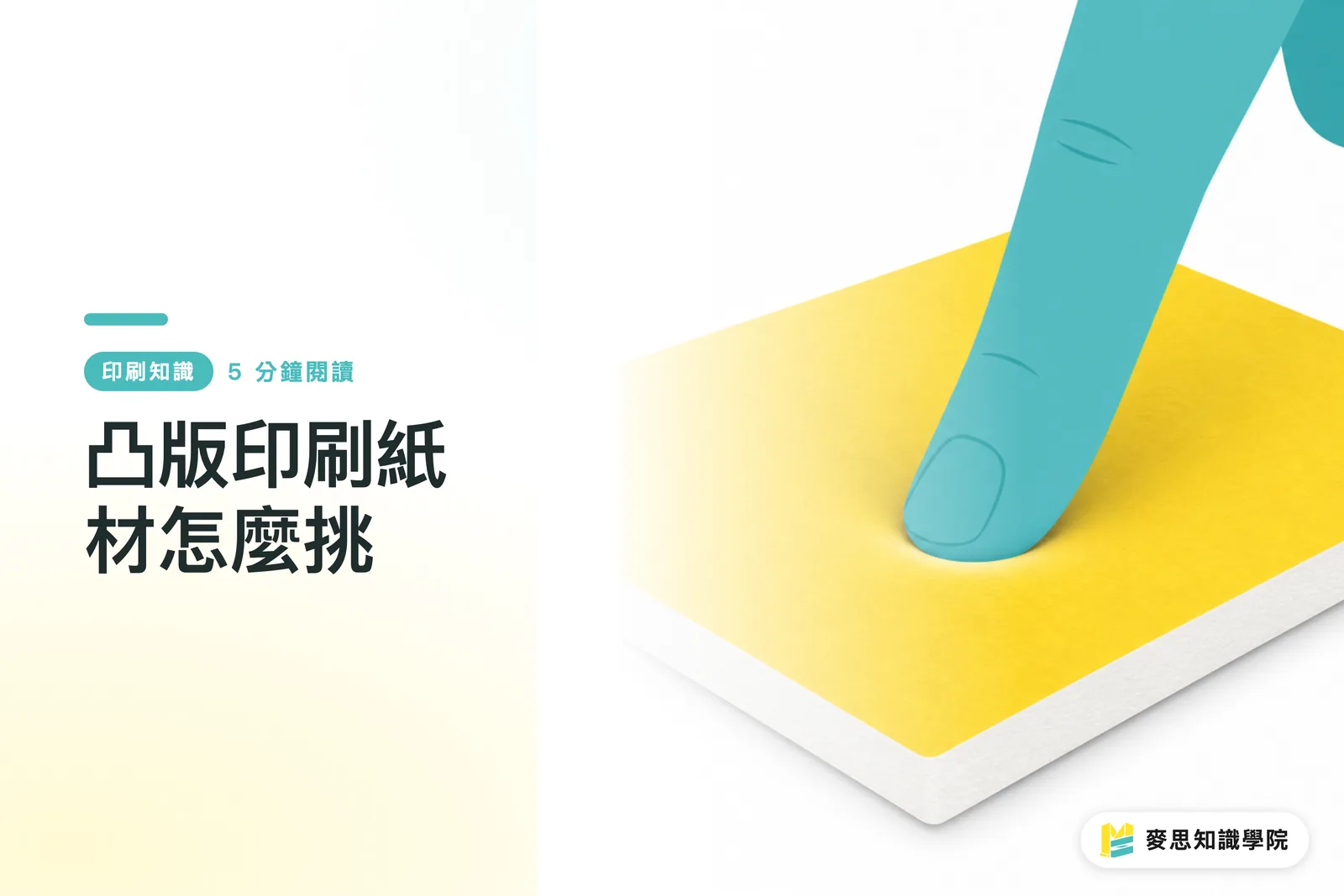
Where the Tactile Feel of Letterpress Comes From
Letterpress printing, often called Letterpress in English, is beautiful because of one thing: pressure
It does not simply lay ink flat on the surface of the paper. Instead, a raised plate carries ink and uses pressure to push the artwork into the paper fibers
That is why the same design can feel completely different when printed on cotton paper, thick card stock, or bulky paper
When I review business card proofs, I usually touch 3 areas first: the edges of the lines, the inside of small type, and the impression on the back of the paper
・Line edges: check whether the pressure is clean and whether ink is being squeezed out at the edges
・Inside small type: check whether the counters have been filled in by ink
・Back-side impression: check whether the pressure is already affecting the content on the reverse side
・Paper rebound: check whether the indentation still holds after being pressed
The biggest risk in letterpress is when designers only look at the screen
A 0.2mm fine line can look razor-sharp on screen, but once it has to handle pressure, ink absorption, and fiber deformation on paper, it may break or blur into a solid mess
Good letterpress is not about maxing out the effect. It is about knowing exactly what the paper can take
How to Choose Cotton Paper, Thick Card Stock, and Bulky Paper
Before choosing paper, I first ask what it will be used for
Is it a business card that gets exchanged every day, an invitation that needs to create a sense of occasion the moment it is opened, or a brand card that will be kept together with the packaging?
Different uses give the paper different jobs
・Cotton paper: soft fibers, beautiful pressure absorption, suitable for deeply impressed business cards, wedding invitations, and premium brand cards
・Thick card stock: good stiffness and a substantial feel in the hand, suitable for cards that need a stable tactile experience and strong brand identity
・Bulky paper: obvious thickness without necessarily being very heavy, suitable for projects that want a visually substantial card without making the full batch too heavy
・Coated paper with an overly smooth surface: the ink color may look good, but the impression usually has less depth than on paper with more visible fiber texture
For business cards, many people start by asking, "Can we make the impression deeper?"
I usually ask back: Is the paper thick enough, are the fibers loose enough, and does the back side also need to be printed?
On card stock around 300gsm, deep impression may already create noticeable unevenness on the reverse side
If you switch to thicker paper with better fiber elasticity, the impression has more room to sink in, and the edges are less likely to crack
Thicker paper is not automatically better
What really matters is whether thickness, fiber structure, stiffness, and surface ink absorption can work together
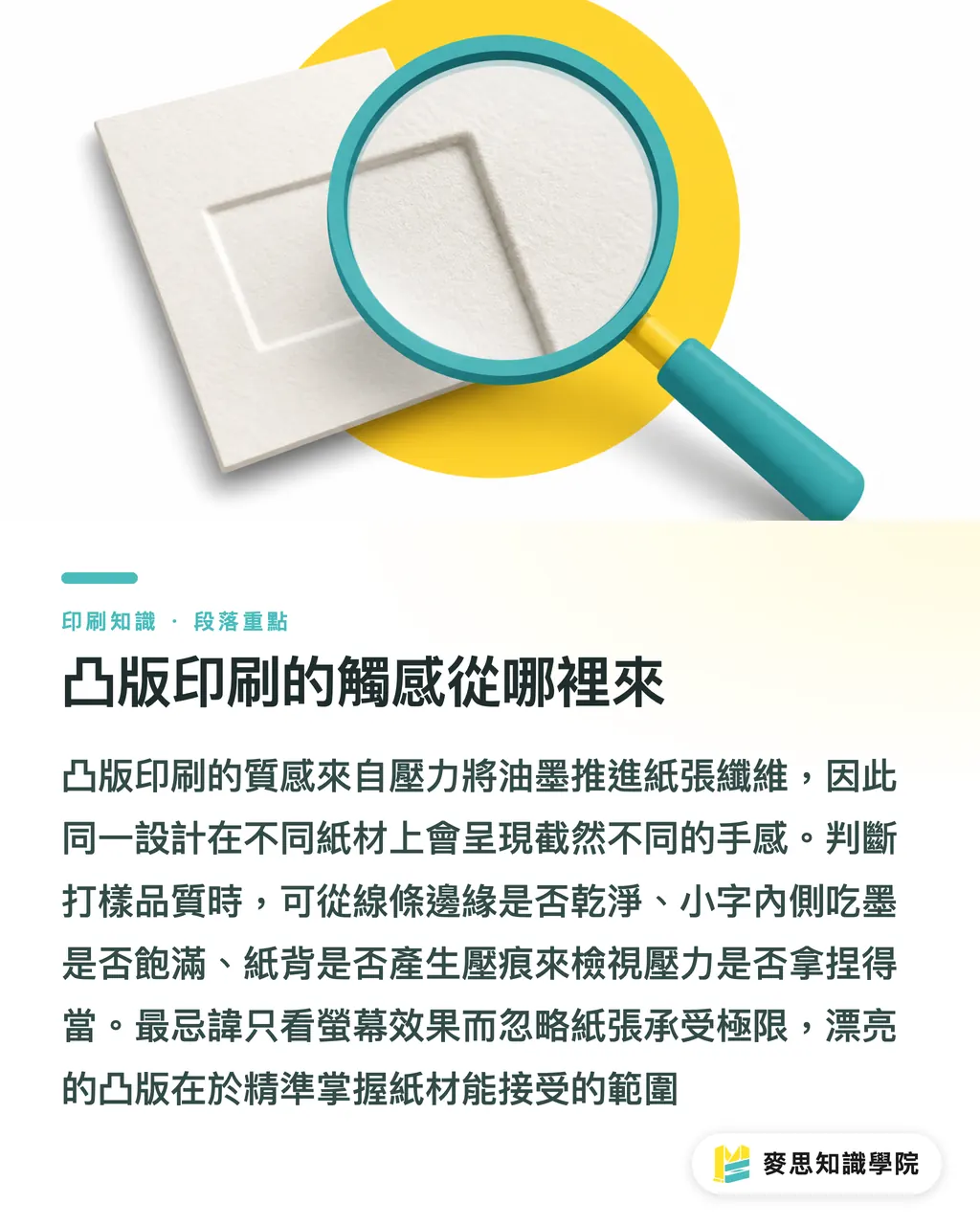
Why Fine Lines, Small Type, and Large Solid Areas Often Go Wrong
There is one practical rule in letterpress: the more refined you want it to look, the more restraint you need
Fine lines, small type, and large solid areas are the parts of a design that most often cause letterpress problems
・Overly thin strokes: when pressed, the contact area is too small and the paper fibers do not provide enough support, making the lines prone to breaking or printing incompletely
・Small type: when counters are too narrow, pressure pushes the ink outward and the interior can easily clog
・Large solid areas: when pressure is uneven across the plate, ink density can become inconsistent, edges may squeeze ink, and the paper surface may deform
・Reversed-out type: if the text is too small, the surrounding solid area can squeeze in and eat away the white space
6pt English text on business cards, hairline-thin frames, and full-bleed blocks of solid color are not impossible, but they should be proofed first
My recommendation is simple: in letterpress design, save the emphasis for a small number of elements
Brand logos, names, short phrases, and single motifs are the elements best suited for bringing out the tactile quality of letterpress
If you try to make the entire card the star, the final result usually has no star at all
What to Watch for in Double-Sided Letterpress Printing
Double-sided letterpress is the part most often underestimated
When the front is pressed, the back will be affected. That is physics, not something that can completely disappear just because the printer is skilled
This matters especially for business cards and brand cards, where many designs place the Logo on the front and contact information on the back
If the two sides overlap, small text on the back may be pushed out of shape by the impression from the front
・Front-and-back overlap areas: avoid placing small type, fine lines, or QR code behind deeply impressed areas whenever possible
・Impression depth: if the front needs to be deep, the back should be simplified further
・Paper thickness: for double-sided impression, test first with thicker paper that has better fiber tolerance
・Layout: group deeply impressed artwork together so the back side can retain clean areas
Invitations often run into another situation: the front needs a pressed main visual, while the back also needs to carry full information
In that case, I usually recommend moving the information to an inner page, insert card, or envelope seal instead of forcing it onto the back of the same sheet
The premium feel of letterpress often comes from white space
White space is not empty. It is the room that lets the impression be seen
How to Check Your Design File Before Sending It to Print
For designers who want letterpress done right, file checking is more effective than fixing problems after the fact
Before sending files to print, run through these 5 questions to save a lot of back-and-forth revisions
・Does this element really need to be letterpressed?
・Is the finest line too close to a hairline?
・Can the smallest text still keep its counters open?
・Will large solid areas create unstable pressure or ink volume?
・Do the front and back graphics overlap over critical information?
If this is your first letterpress business card, I recommend starting with 1 main visual impression instead of challenging full-bleed color blocks, ultra-fine lines, small type, and deep double-sided impression all at once
For wedding invitations, you can make the couple's names, the date, or a single pattern the main impression, while handling the rest of the information with standard printing or a separate inner card
For brand cards, the element most worth pressing is the brand memory point, not every line of explanatory text
In projects like these, MINDS Printing usually helps not just by outputting the file, but by looking at the paper, plate, pressure, finishing, and packaging context together
When letterpress is done well, the customer understands it the moment they pick up the card
No extra explanation is needed. The feel speaks first
Key Takeaways
・The texture of letterpress comes from pressure entering the paper fibers, not from the ink color itself
・Cotton paper takes pressure beautifully, thick card stock feels substantial, and bulky paper can create a thick look at a lighter weight
・Fine lines, small type, and large solid areas are the 3 most common risk points in letterpress design
・For double-sided impression, first check the overlap between front and back; small text on the reverse side is most easily affected by the impression
・Good letterpress design leaves room for a focal point, and also leaves room for space
Further Thoughts
For print manufacturers, the key in letterpress projects is to discuss risks before proofing, instead of waiting until rejection to talk about paper behavior and pressure. For designers, the artwork should first clarify which elements are responsible for visuals and which elements are responsible for touch. For SaaS and AI application teams, fine lines, small type, solid-area coverage, and double-sided overlap zones can become prepress checking rules, reducing one round of misunderstanding across quoting, file review, and customer service. The next step is practical: choose 2 types of paper, make 1 single-sided deep-impression sample and 1 double-sided shallow-impression sample, then touch them by hand before deciding which direction the brand card should take
FAQ
- What is the safest way to choose paper for letterpress printing?
- Start with paper that has good fiber tolerance, enough thickness, and a surface that is not overly smooth. Cotton paper, thick card stock, and bulky paper are all common choices. If you want a deep impression, make a proof first instead of judging only from the screen
- Can letterpress business cards use very fine lines?
- Fine lines are possible, but overly thin strokes can break or print incompletely. For fine lines, small type, and Logo details on business cards, it is best to ask the printer to confirm the minimum line width and impression feasibility before plate making
- Is letterpress suitable for large full-bleed solid color blocks?
- It is usually not recommended to make large solid areas the main focus, because pressure and ink volume can become uneven, and the edges may squeeze ink. Letterpress is better suited to Logos, short text, line motifs, and localized emphasis
- Will double-sided letterpress printing affect both sides?
- Yes. The impression on the front may affect small type, fine lines, or QR code on the back. Double-sided designs should avoid overlap zones, or use a layout with one deeply impressed side and one simplified side
- What kind of letterpress paper is suitable for wedding invitations?
- Wedding invitations often use cotton paper or thick card stock because they feel soft and show the impression clearly. If there is a lot of information, it is better to press the main card and place the details on an inner card or envelope accessory
Related articles
The Print × AI weekly
The print and AI know-how designers, brands and enterprises can use before they commit — one email, every week
MINDS Free Tools
Spine width and imposition calculators — skip the manual math, free in your browser.
MINDS Group
Need actual printing or gifting services?
From premium printing to online ordering and festive gifts — the MINDS Group sister brands take it from here.