

What role does Jetfire 50 play in Klampfer's workflow?
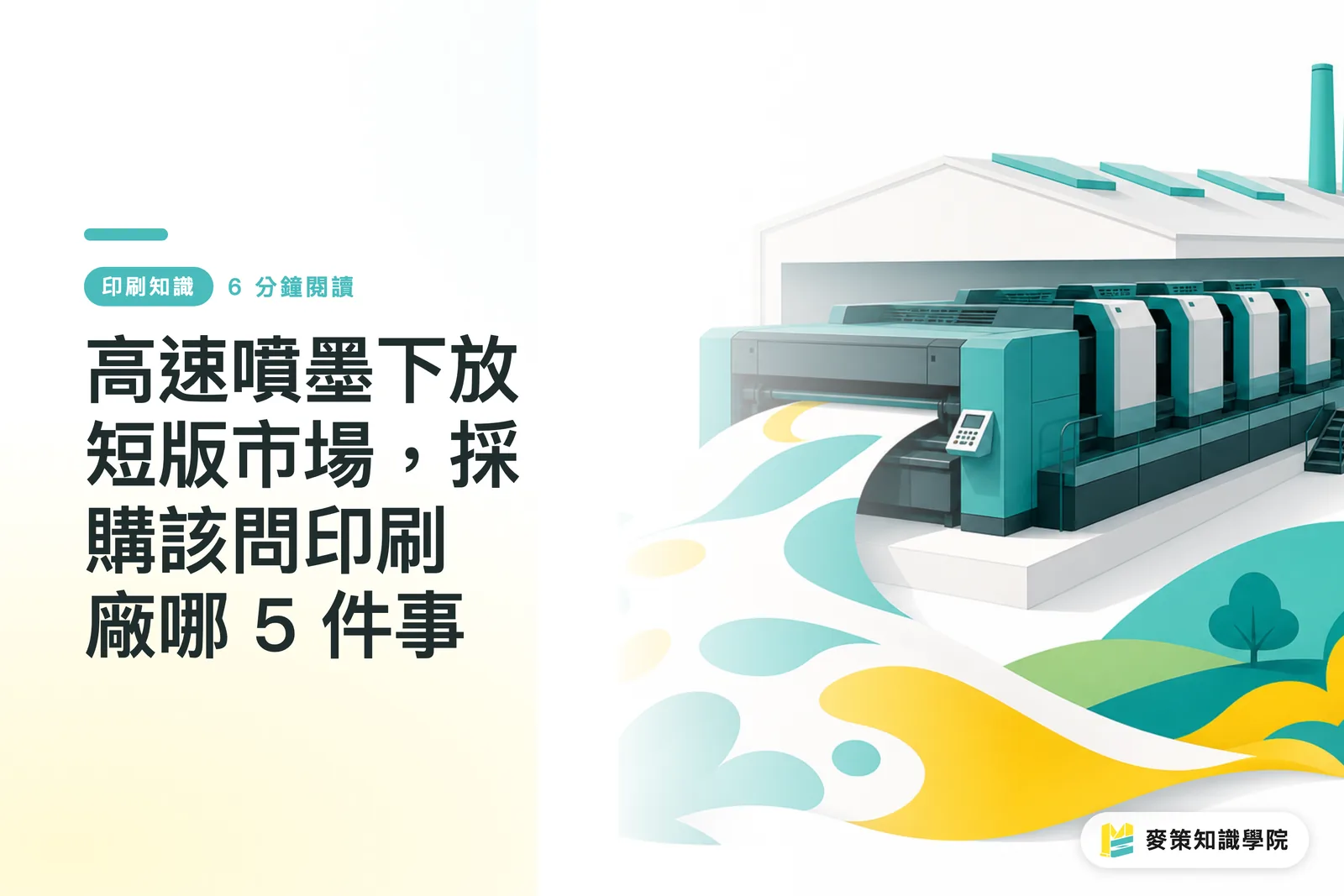
Jetfire 50 is a new inkjet press at Austrian printer Klampfer Druck. It takes on some short runs and joins the production schedule alongside existing equipment and Heidelberg Speedmaster XL 106 and CX 104 presses (Heidelberg makes presses and workflow software). I'm looking at this setup through MINDS (MS, mid- to high-end fully customized commercial printing)'s three questions for routing short runs: quantity, revisions, and production steps
The mix happens when the plant routes orders. The three print methods are not combined in one machine
・Inkjet printing: Printheads spray droplets directly onto the paper to form an image from a digital file, so there's no need to make plates for each file. Paper compatibility and color still need to be checked with a test print
・Toner digital printing: Toner forms the image on the paper. There's no plate-making, and switching files is quick. Per-sheet cost still depends on the press model, paper, and image coverage
・Offset printing: The image is made on a plate, then transferred to paper through a rubber blanket. Plate-making and color setup take preparation, but those costs can be spread across more copies as print volume rises
Klampfer Druck has about 100 employees and five locations, producing commercial print and folding cartons. Prepress staff operate the Jetfire 50 after a short training course
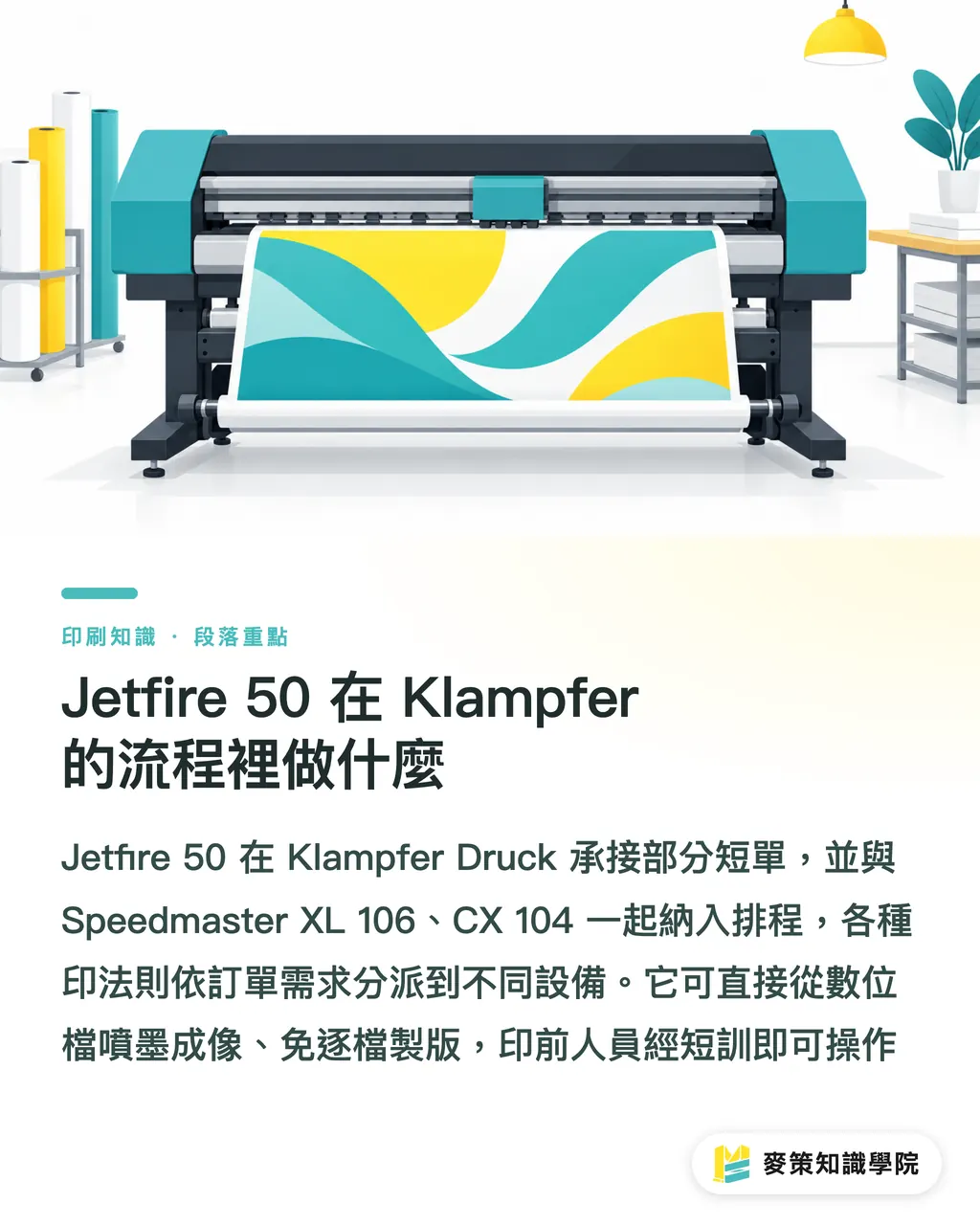
Why send orders of 1,000 to 2,000 copies to inkjet?
The 1,000 to 2,000 copy range is Klampfer Druck's actual routing range. It is not an inkjet threshold that applies to every print shop
CEO Robert Klampfer says that, given the plant's order mix, some jobs in this range are hard to produce economically on either toner digital or offset presses. MINDS (MS)'s three questions for short-run routing start with checking your own job tickets. There's no single print volume to copy from another shop
In duplex mode, Jetfire 50 can print up to 4,560 SRA3 sheets per hour (SRA3 is a printing paper size). Heidelberg reports current availability of about 90%. These are equipment specifications and the manufacturer's availability figure. Paper changes, color calibration, trimming, and folding still have to be included in the actual production schedule
Speed isn't lead time
Start with the job ticket
How should jobs be split across the three print methods?
Jobs should be assigned to the three print methods based on the actual work involved. Before investing, Klampfer Druck analyzed its orders on hand with Heidelberg to identify which jobs were suited to inkjet
The source says Heidelberg considered the economics confirmed once the plant began production. This is one printer's case, and it doesn't provide a cost threshold that other plants can apply. For this kind of investment, MINDS (MS) first reviews the order mix, then estimates the load the equipment would handle
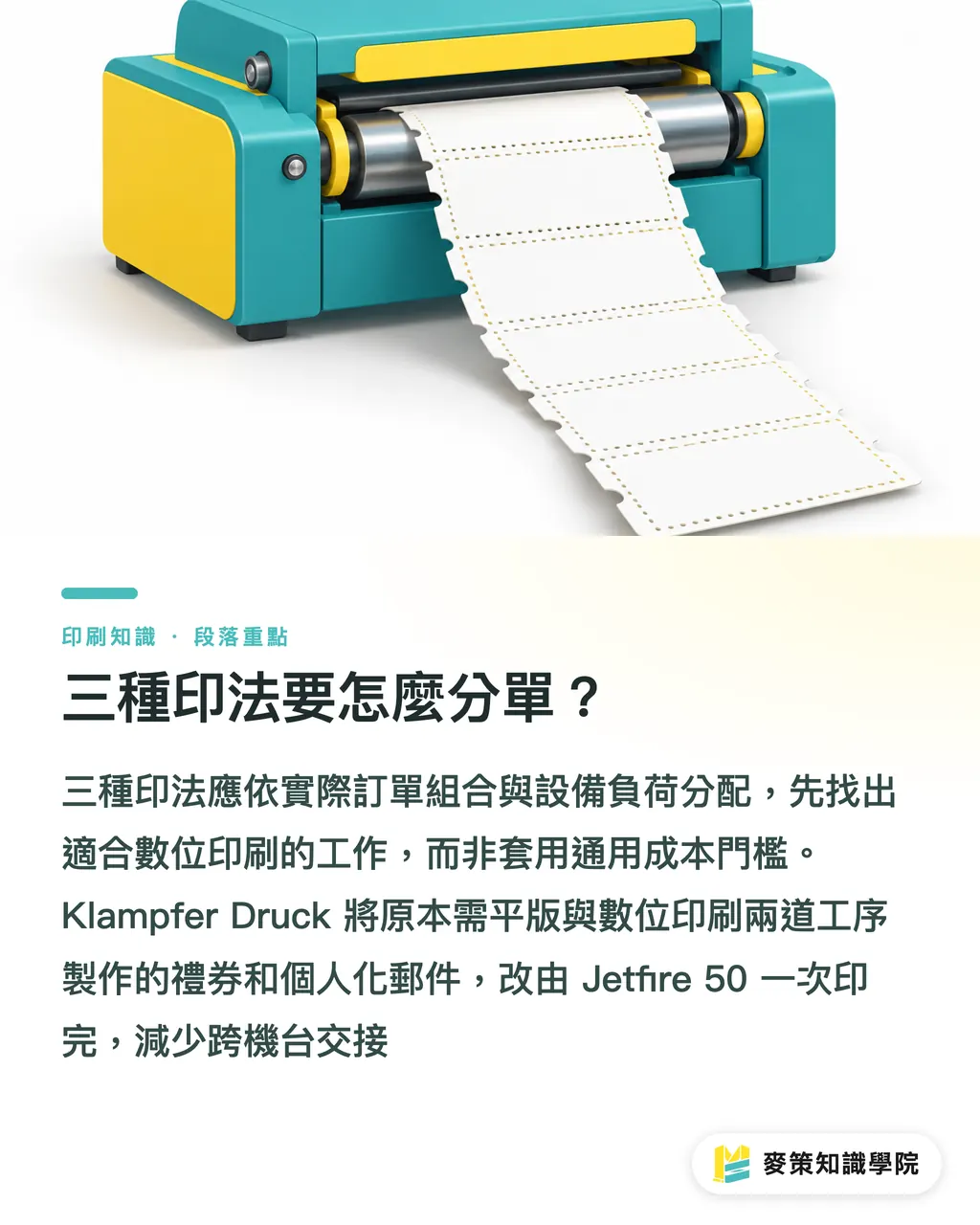
Color consistency between Jetfire 50 and offset printing lets some jobs start digitally and move to offset as quantities grow. Klampfer used to produce gift vouchers and personalized mail in two steps, offset plus digital. It now prints them in one pass on Jetfire 50, reducing handoffs between presses
How can small and midsize Taiwanese print shops estimate the investment?
Small and midsize print shops in Taiwan can start by reviewing recent job tickets, then use MINDS (MS)'s three questions for short-run routing to check quantities, revisions, and production steps. Klampfer's 1,000 to 2,000 copy range is a reference case only
・Quantity: Which orders often make it hard to choose between toner and offset on cost? Estimate this from your own job tickets rather than applying Klampfer's print volume
・Revision needs: Are files reprinted unchanged, or do names, addresses, or versions often change? For personalized work, include file preparation and proofreading in the process
・Handoffs between production steps: Which jobs need to move between different presses? If you can combine printing steps, check that finishing work such as trimming and folding can still follow smoothly
Brands with mid- to high-end customized commercial print needs can align on paper, proofing, and reprint methods with MINDS before requesting a quote, so the price reflects the actual production process
How should orders across multiple presses flow into workflow software?
For orders to move automatically across presses, the data has to travel with the job ticket. Klampfer has connected Jetfire 50 to its existing third-party workflow and is considering Prinect Touch Free, Heidelberg's workflow solution for automating digital and offset order processing. It is still under evaluation
MINDS (MS)'s three questions for short-run routing also apply to SaaS and AI rollouts. Keep the quantity, paper, file version, proof status, and planned print method with each order first. Then the system can organize job tickets or suggest how to route the work. Prepress staff should still confirm color samples, paper compatibility, and final approval
When handing off files, designers can check two things: whether a digital proof can carry through to later offset printing, and how to lock the file version and paper when adding to the print run. Running the same file through the process once makes handoff issues easier to spot than looking at press speeds alone

Key takeaways
・Jetfire 50 is an inkjet press. The mix happens in how the plant routes orders
・The 1,000 to 2,000 copy range comes from Klampfer Druck's case. It is not a universal threshold
・Starting digitally and moving to offset as volume grows depends on clear agreements about color and file handoffs
・Check orders on hand before investing in equipment, then confirm whether production steps can be combined
Further thoughts
Print shops can start by organizing recent job tickets by quantity, paper, version, personalization needs, and finishing route, then assess which jobs might suit another press. Designers should confirm how proofs will carry through to production. AI and SaaS teams can organize order fields before testing routing suggestions. Klampfer has connected a third-party workflow, while Prinect Touch Free is still under evaluation. That sequence makes practical sense: clarify the process first, and the software will have a clear job to take on
Further reading
FAQ
- Is Jetfire 50 a machine that combines toner and offset printing?
- Jetfire 50 is an inkjet press. Klampfer Druck schedules it alongside its existing toner equipment and offset presses, with each handling different jobs
- Are all orders of 1,000 to 2,000 copies suited to inkjet printing?
- Not necessarily. This is a routing example based on Klampfer Druck's own order mix. Other print shops should review their own job tickets and costs first
- Can a job switch to offset printing partway through a Jetfire 50 run?
- Klampfer's case says color consistency between the two print methods lets some orders start digitally and move to offset as volume grows. Before switching, paper, color, and file versions still need to be confirmed
- What should a small or midsize print shop do before buying equipment?
- Review orders on hand, check print volumes, revision frequency, and handoffs between presses, then assess whether the new equipment could reduce production steps or improve costs
Related articles

The Print × AI weekly
The print and AI know-how designers, brands and enterprises can use before they commit — one email, every week
MINDS Free Tools
Spine width and imposition calculators — skip the manual math, free in your browser.
MINDS Group
Need actual printing or gifting services?
From premium printing to online ordering and festive gifts — the MINDS Group sister brands take it from here.