
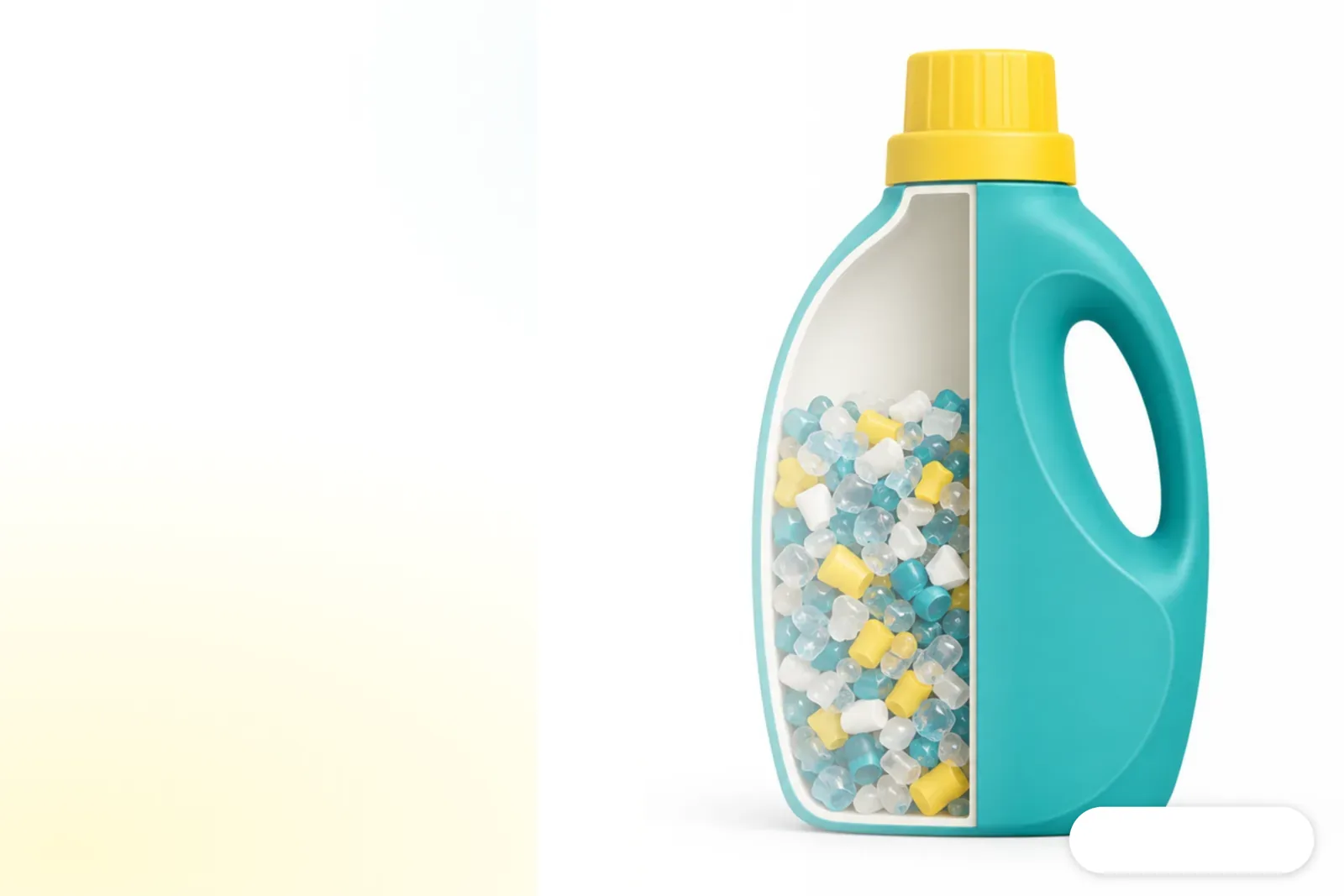
What Does Aldi and Pact's 50% Target Mean?
Aldi and Pact are raising recycled plastic content in household packaging to 50%. I'd look at this case through three checks: specs, materials, and proofs. Brands need to turn a material target into something suppliers can quote and buyers can inspect. Public statements put the scope at household packaging. Brands still need to confirm with suppliers which SKUs and packaging components are covered. They shouldn't stretch 50% into a claim that every product in the range meets the target
Recycled content is the share of packaging material made from recycled sources. It describes where the raw material comes from. It doesn't mean the packaging is recyclable, or guarantee that it can be recycled into products for the same use. Procurement teams should first ask how the percentage will be written into the spec, then work on what to say publicly
Why Is 50% a Procurement Signal?
A 50% target matters to brands because procurement teams, packaging suppliers, and material suppliers need to agree on what it covers. Aldi and Pact's case puts the recycled-material share on the table as a measurable packaging target. Brands then need to include material sources, supplier documents, processing conditions, and quality acceptance criteria in their procurement discussions
These checks don't mean the case ran into supply problems. They are conditions brands should confirm when putting a recycled-content target into practice. A company target is not automatically a regulatory requirement. If a brand wants to make a compliance claim, it should check labeling rules and effective dates in each market where it sells. Pinning down the products covered and how they'll be inspected will do more to control redesign costs than printing a sustainability claim first
How Should Brands Write the 50% Target into a Spec?
Brands should turn the 50% target into a requirement suppliers can act on. Confirm the scope, evidence, and samples first, then put the decisions into one procurement spec
・Define which products and packaging components are covered. State whether 50% applies to the entire package or to specific plastic components
・Ask suppliers to explain the material source, how the percentage is calculated, and what documents they can provide, so each procurement batch can be checked against the records
・Proof the actual material to check its appearance, processing, and print results before agreeing on production tolerances, pricing, and lead times
Set the spec first. Then get quotes
Can Recycled Material Affect Print Design?
Yes. Aldi and Pact's 50% target is a reminder to review the design on the actual package when changing materials. Different sources and batches of recycled plastic can vary in base color, transparency, surface condition, and print color. These are risks to check during proofing, not outcomes known to have occurred in this case
Designers should mark the brand colors, small-text contrast, transparent windows, and other details that must stay consistent. The printer can then proof the planned material and keep an approved sample. Production runs should be checked against it. Brands also need to agree in advance on acceptable color differences and appearance changes. Otherwise, a material change could force a redesign of the retail packaging
Proof it first
Taiwanese Brands Should Start by Sharing One Spec
For Taiwanese brands considering a 50% recycled-content target for household packaging, the first step is to turn it into a spec approved by the brand, procurement team, and suppliers. The brand confirms which products are covered, labeling rules, and public claims. Packaging suppliers provide material documentation. The printer records the actual material, colors, surface finishes, and approved sample in the proofing record
If supplier documents don't match the packaging, don't put the recycled-content figure in consumer-facing claims yet. If the brand is also updating product information cards or retail materials outside the package, it can discuss custom-print paper stocks, colors, and proofing arrangements with MINDS, a mid- to high-end commercial printer specializing in fully customized work. That keeps the messaging aligned with the material policy. Small and midsize printers should also spell out samples, specs, inspection criteria, and pricing terms, so they don't end up absorbing the cost of a vague target

Key Takeaways
・Aldi and Pact's recycled-content target for household packaging is 50%. Brands still need to confirm which products and packaging components are covered
・Recycled content describes where the material comes from. On its own, it doesn't prove the package is recyclable
・Supplier documents, physical proofs, and production acceptance criteria should all be part of the same spec
・A material target is not a regulatory deadline. Check the rules in each sales market before making compliance claims
Further Considerations
Print manufacturers can keep the material percentage, products covered, supporting documents, and approved sample together in one packaging-spec record. Artificial intelligence (AI), software that organizes or compares information based on instructions, can help check that all required fields are present. SaaS (Software as a Service), software delivered and updated over the internet, can store versions, attachments, and approvals. Procurement and quality staff still need to verify the percentage against supplier documents before deciding whether to publish it
Further Reading
FAQ
- Does Aldi and Pact's 50% target apply to all household packaging?
- What can currently be confirmed is that recycled plastic content in household packaging is being raised to 50%. Brands should check with suppliers which products and packaging components are covered
- Does 50% recycled content mean the package is recyclable?
- No. Recycled content describes the material source. Whether a package is recyclable still depends on its material structure and available recycling conditions
- Can recycled plastic change print colors?
- Differences in material sources or batches can affect the base color and print results. Brands should proof the planned material and check brand colors and small-text contrast
- What should Taiwanese brands do first when adopting recycled packaging?
- Spell out what the 50% target covers, what material evidence is required, and how the packaging will be inspected. Then confirm the physical sample and public claims
Related articles
The Print × AI weekly
The print and AI know-how designers, brands and enterprises can use before they commit — one email, every week
MINDS Free Tools
AI background removal, brand stamping, and a LINE sticker maker — free design tools, right in your browser, no upload.
MINDS Group
Need actual printing or gifting services?
From premium printing to online ordering and festive gifts — the MINDS Group sister brands take it from here.