
Why Is Total Market Value Hitting Record Highs by 2031 Even as Box Volume Shrinks?
The global corrugated packaging market is expected to reach $265 billion by 2031. Growth is actually driven by higher unit prices and upgraded materials rather than pure volume expansion. According to the latest research from Smithers, the global market will sit at around $240 billion in 2026. Visiting plants across central and southern Taiwan over the past few months, the most common complaint I heard from owners was that boxes are getting thinner, orders are getting fragmented, and board tonnage just will not ramp up. How are they supposed to run a profitable business going forward?
Here is the reality: we cannot measure the health of a box plant by tonnage anymore. The EU's PPWR takes effect on August 12, 2026, and it represents a hard compliance hurdle
PPWR (Packaging and Packaging Waste Regulation): A mandatory EU standard designed to curb packaging waste. It strictly caps empty space ratios and levies eco-modulated EPR fees based on recyclability tiers, directly altering how export brands engineer their packaging structures
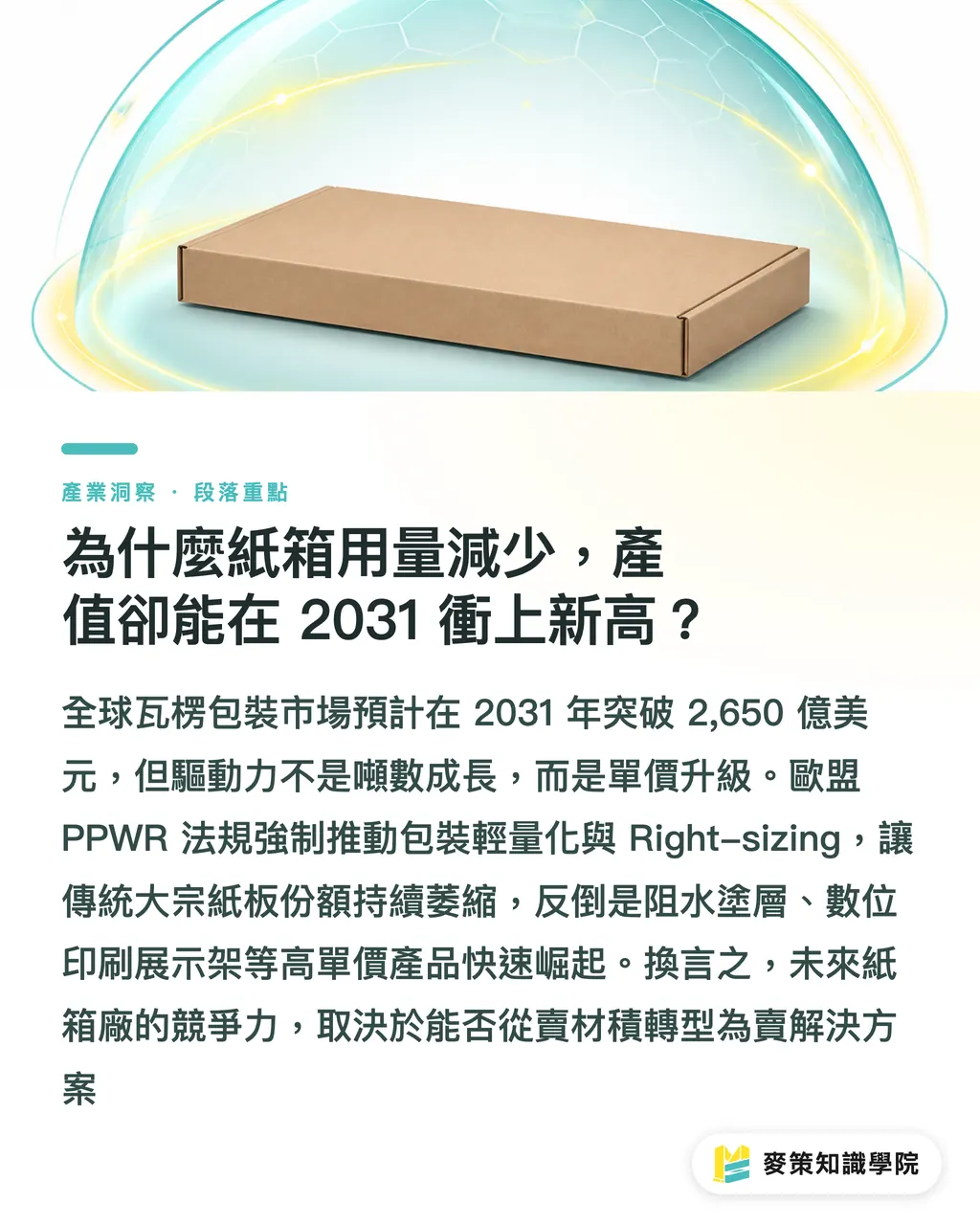
Under PPWR empty space rules, the entire e-commerce supply chain is right-sizing packaging. With high-performance recycled fluting (HPRC) gaining ground, lightweighting has become an irreversible standard. That explains why board tonnage growth over the next five years will inevitably lag behind unit volume and revenue growth
This is actually good news. Overall market value is surging because higher-priced water-resistant coated materials, digitally printed shelf-ready packaging (SRP), and custom specifications designed for logistics optimization are quickly grabbing market share from bulk corrugated board. Customers are more than willing to pay premium prices to ship less empty air and stay compliant
Multinational Giants Are Dominating with Automation. How Should Taiwan's Mid-sized and Small Plants Respond?
The only way out for smaller plants is to avoid scale wars entirely. They need to pivot their focus from pure equipment capacity to flexible services and software-defined workflows. The report points to a sobering number: top-quartile operators run operational costs 20% to 40% lower than bottom-quartile competitors
That cost gap is driven by full-scale automation. Large players are not just buying faster presses. They are deploying automated guided vehicles (AGVs), robotic palletizers, and inline defect inspection to chew through long-run orders with exceptional output per worker. Add in Smurfit Westrock's recent 600-million-euro investment, and the capital deployment of these global giants clearly signals accelerating global capacity consolidation. If Taiwan's small and mid-sized box plants still try to compete by cutting prices on standard OEM orders, their margins will get eaten alive by inflation and equipment depreciation
Over the past two or three years, the print manufacturing sector has weathered relentless, atypical shocks, from pandemic supply disruptions and regional conflicts to US-China trade friction. Raw material costs have soared across the board. These disruptions changed brand procurement habits for good. Brands now fear excess inventory more than ever, and order cycles have been chopped into small batches
Winning this battle comes down to finishing agility and color management. When a client asks for 300 pop-up retail displays delivered in three days for a weekend promotion, can your production line handle it? If your plant is still bogged down by veteran staff doing paper calculations and scheduling by hand, work with the Mai Strategy Knowledge Academy consulting team to audit your operations. From automated AI quotation and digital prepress to cloud workflows, build the foundation you need to handle high-margin short runs
Which End-Market Applications Offer the Best Growth Opportunities Right Now?
E-commerce logistics packaging and retail short-run displays are the two highest-value segments right now. Even when broader consumer spending appears flat, e-commerce remains a clear growth engine. Look at the numbers: e-commerce packaging for electronics boasts a 3.4% compound annual growth rate (CAGR), while personal and home care products sit at 2.3%
Beyond online channels, the battle on physical retail shelves is shifting too. Surveys show that over 80% of European and American consumers believe store private labels match traditional major brands in quality. This forces established brand owners to put extra thought into packaging just to catch consumer attention in a matter of seconds
This aligns with the strong message from this year's FESPA Corrugated showcase in Barcelona: digital corrugated printing has broken out of low-end outer box contract work and moved straight into high-value short runs for brand packaging and retail displays
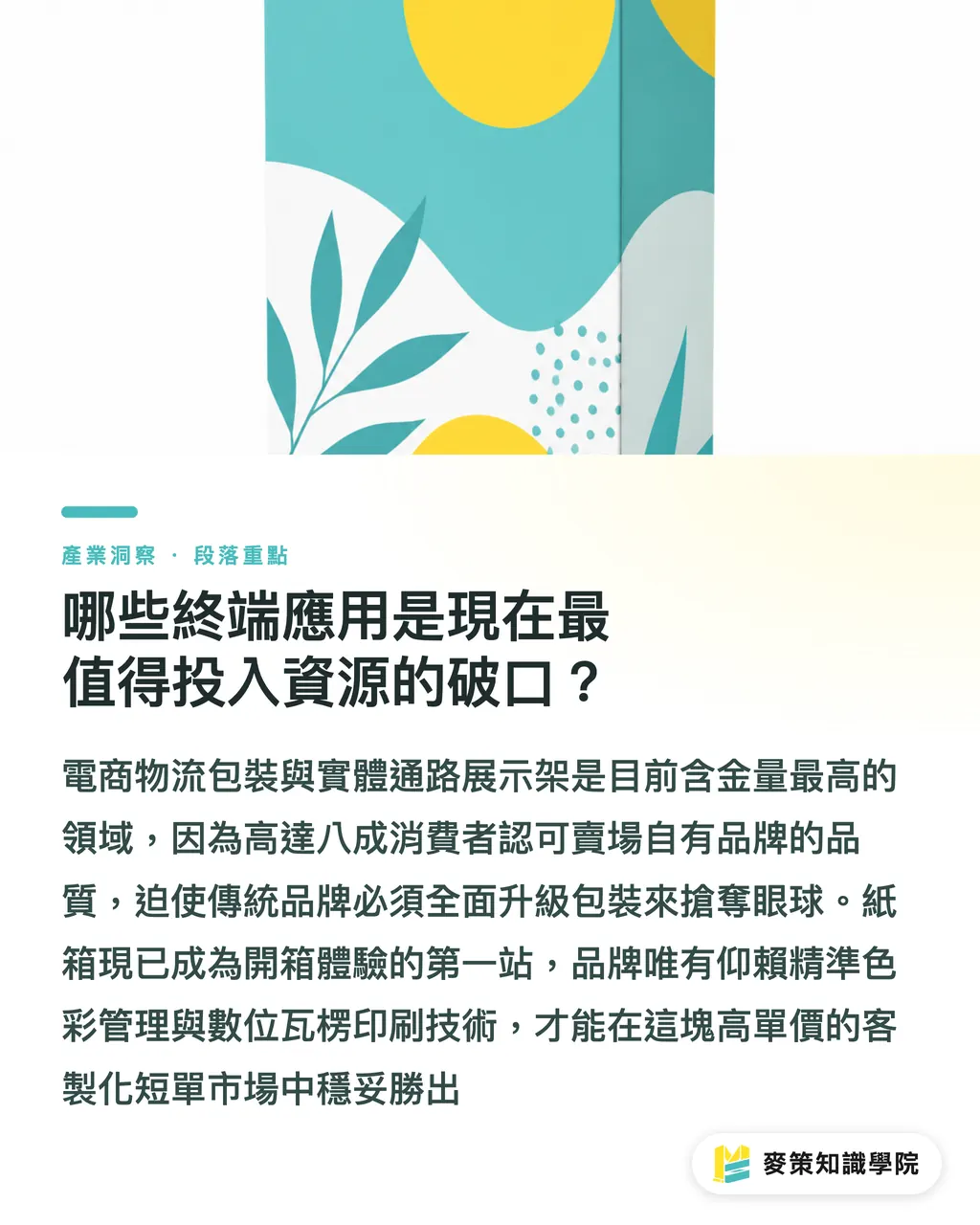
Capturing this market requires both color accuracy and structural design capabilities. For beauty and electronics brands obsessed with color consistency, the box is no longer mere protective wrapping, but the first step of the unboxing experience. For brands that need high-end customization but struggle with print quality control, partnering directly with MINDS, a team equipped with advanced color management and production scale, is a far safer bet than burning time and money testing random contract shops
How Can You Turn Sustainability Compliance into Your Strongest Sales Tool?
Turning regulatory pressure into consulting services that solve extended producer responsibility (EPR) fees for clients builds a competitive moat that rivals cannot easily cross
Corrugated board has inherent strengths. With old corrugated container (OCC) recovery rates hovering around 90%, it holds a massive head start over plastics and alternative materials. But simply claiming "our boxes are recyclable" does not cut it anymore
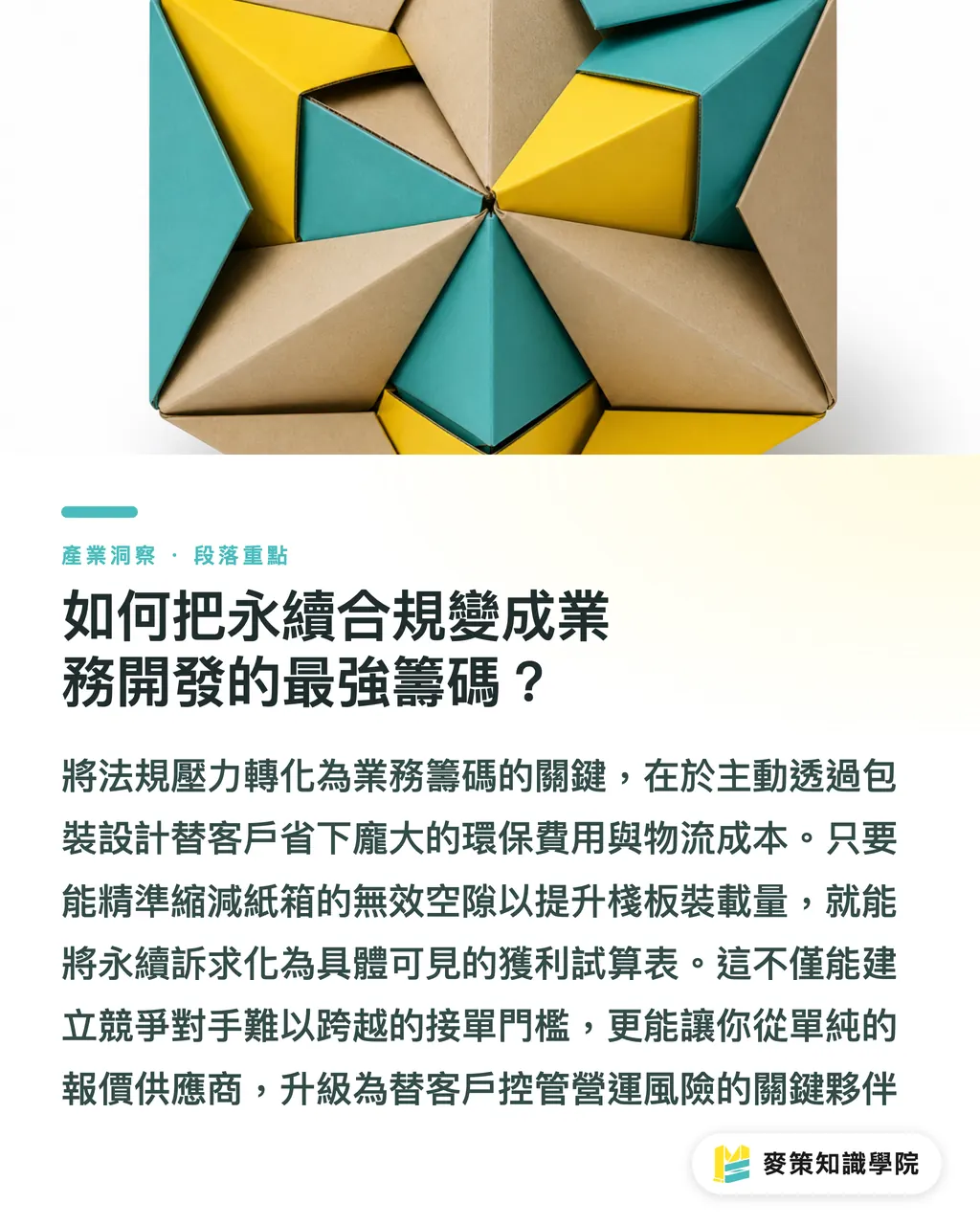
The next battleground is whether you can prove your packaging saves the client money. When brand owners scramble to meet EU PPWR requirements, stepping up with structural designs that precisely hit empty space targets, or replacing rigid standard cartons with paper bags or fanfold corrugated, saves them massive sums in freight and environmental levies. You stop being a generic vendor submitting price quotes
You become an indispensable partner helping manage their operational risk
Let us run the numbers. Suppose an export pallet currently holds 40 boxes. By redesigning the box's compressive strength and cutting 15% of unused void space, you fit 48 boxes per pallet. That creates an enormous drop in unit shipping costs for ocean freight. I often tell sales teams to stop showing up at client meetings with a factory equipment list. Instead, bring two packaging structural cost simulations showing exactly how much money a lightweight, compliant design will save. That mindset is where Taiwan's small and mid-sized plants should, and truly can, generate real profits over the next five years
Key Takeaways
・Corrugated market value growth no longer relies on tonnage, but on lightweight engineering and compliant materials driving higher unit prices
・Major players hold a 20%+ cost advantage through automation, forcing smaller plants to pivot toward software-defined short runs and service-driven models
・Electronics and personal care packaging serve as dual growth engines, with rising brand expectations for unboxing experiences fueling demand for digital corrugated
・Structural packaging designs that solve PPWR empty space limits and EPR compliance for brands are your strongest sales asset today
Food for Thought
For Taiwan's mid-sized and small corrugated plants and packaging designers, right now is the defining window for the next five years. Rather than spending capital on heavy iron to chase razor-thin margins on standard commodity orders, invest in digital prepress and rapid structural prototyping. Plants that move quickly to integrate automated quoting, precise color management, and compliance-driven cost simulations will be the first to secure a solid foothold in high-margin e-commerce and retail display markets
Further Reading
FAQ
- What is PPWR, and how does it affect Taiwanese box manufacturers?
- PPWR is the EU's Packaging and Packaging Waste Regulation, taking effect in August 2026. It strictly limits packaging empty space ratios and forces brands exporting to Europe to downsize their outer cartons. This directly drives demand for lightweight, custom-sized corrugated boxes
- Which industries will drive future growth for corrugated packaging?
- Growth is concentrated in e-commerce logistics, with electronics (3.4% CAGR) and personal and home care products (2.3% CAGR) being the two fastest-growing categories
- How can smaller plants win orders without the capital to match multinational automation?
- Steer clear of commodity OEM contracts and focus on short-run retail displays and premium custom brand packaging. Use digital workflows to speed up job changeovers and shift from selling basic boxes to delivering complete packaging solutions
References
- Global Corrugated packaging market to reach $265 bn by 2031 · thepackagingportal.comSmithers《The Future of Corrugated Packaging to 2031》:2026 約 2,400 億美元、2031 達 2,650 億;頂尖四分位營運商成本低 20–40%
- Survey: Majority of consumers think private brands offer quality, value · chainstoreage.com2026 多份調查佐證 80%+ 消費者認為自有品牌品質等同或優於全國性品牌
Related articles

The Print × AI weekly
The print and AI know-how designers, brands and enterprises can use before they commit — one email, every week
MINDS Free Tools
AI background removal, brand stamping, and a LINE sticker maker — free design tools, right in your browser, no upload.
MINDS Group
Need actual printing or gifting services?
From premium printing to online ordering and festive gifts — the MINDS Group sister brands take it from here.