
Overview
The biggest fear in food-grade packaging isn't a bad print, it's a beautiful one that gets rejected because it fails leaching tests
Printing safely and compliantly comes down to using virgin, unbleached paper stock with a heat-resistant coating, and applying certified eco-friendly ink on the outer layer. In practice, we run a three-gate check we call the MINDS (MS) Food Safety Packaging Standard to catch problems early, helping brands sidestep regulatory blind spots before the design is even finalized
What exactly counts as 'direct food contact'? Where's the regulatory line?
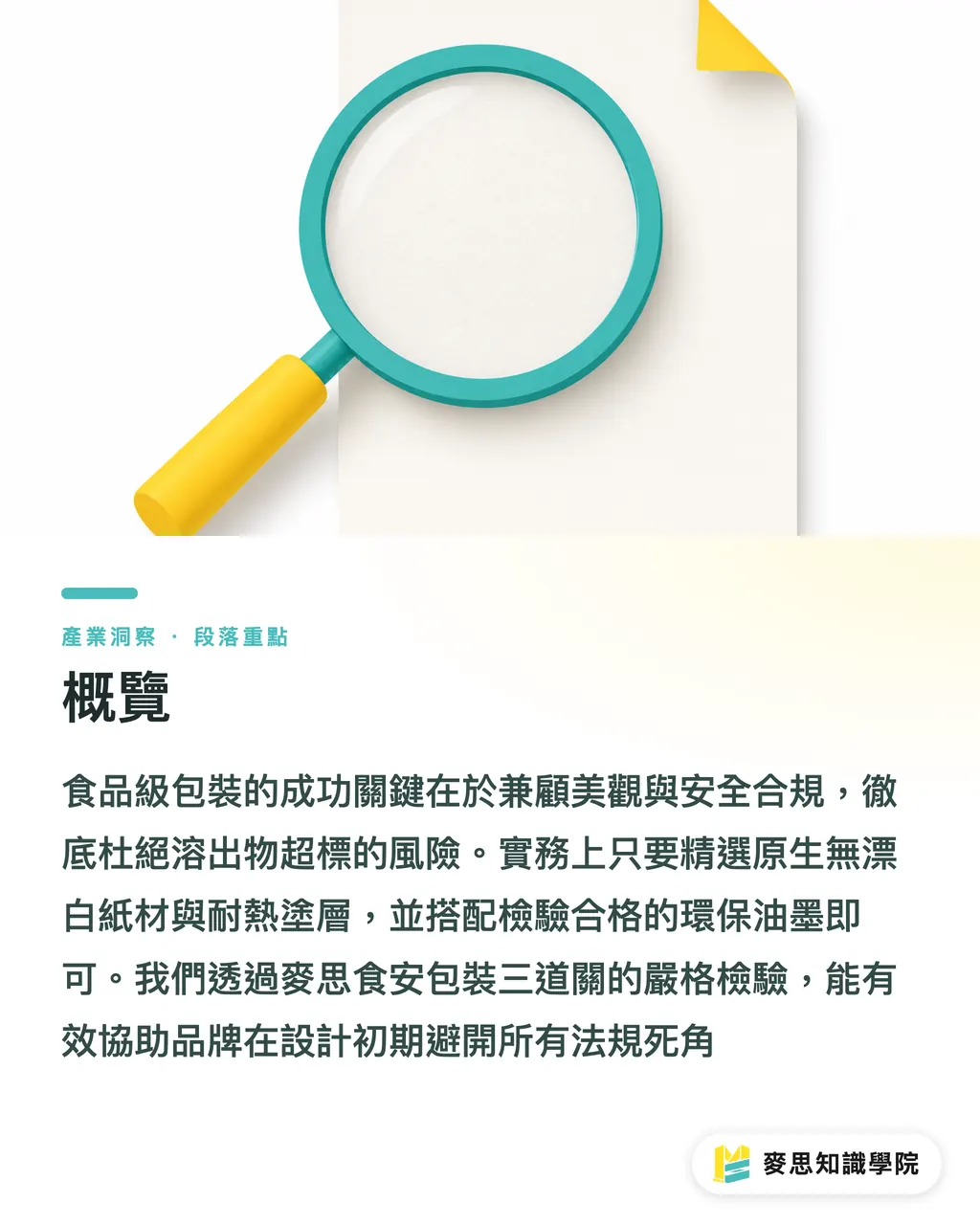
Direct-contact food packaging refers to packaging whose inner surface comes into direct contact with the food itself. Regulations require 100% virgin pulp, a strict ban on optical brightening agents, and oil- and water-resistant coatings that meet food-grade heat-resistance standards
This is always the first thing I clarify with clients: does the food inside the box have anything between it and the paper?
If cake or fried chicken sits directly in the box, that's direct contact, and the rules are unforgiving: virgin pulp only
If the food is already wrapped in a plastic bag or foil, the box is just outer packaging, indirect contact, and there's considerably more flexibility on materials and processing
We often see designers come in with recycled-pulp grey board wanting to make bento boxes. Our team at Mai Strategy Knowledge Academy stops them at the first gate, because the impurities and residuals in recycled paper simply cannot pass the rigorous tests required for direct food contact
MINDS (MS) Food Safety Packaging Three-Gate Check: Paper, Oil Resistance, and Ink
To keep food packaging compliant, printers in practice apply a strict three-gate process, the MINDS (MS) Food Safety Packaging Three-Gate Check
・Gate 1, Paper: For boxes in direct contact with food, we use virgin white board or virgin kraft only, guaranteeing a clean source stock with no fluorescent agents
・Gate 2, Oil resistance: Bento boxes and baked goods are especially vulnerable to oil and moisture. Traditional boxes are laminated with PE film, and in practice we always verify whether that PE layer can handle the heat of freshly cooked food, hot water and hot grease included
・Gate 3, Ink: Even the non-contact outer surface must use eco-friendly ink. When boxes are stacked flat on the production line, outer-surface ink transfers easily to the inner surface of the box below
Switching to eco-friendly oil-resistant materials: how to read non-toxic certifications
With plastic reduction becoming a growing priority, more and more takeout and food-service clients are requesting fully paper-recyclable packaging
The mainstream solutions today are fluorine-free coated paper and water-based coated paper. Both are oil- and water-resistant and can go straight into paper recycling
But when adopting these newer eco materials, you need to keep a close eye on the non-toxic certifications from both the paper mill and the printer
Whether it's heavy metal testing or FDA-compliant reports, when clients commission mid-to-high-end custom commercial printing through MINDS, we require the full supply chain to have these documents on file, so nothing comes back to bite the client when a product gets spot-checked at retail
When food safety and aesthetics conflict, which one gives way?
One firm rule: food safety is the floor, aesthetics is the bonus
Over the years on the production floor, I've seen too many painful lessons. Some brands, chasing a premium dark aesthetic, have demanded full-bleed dark ink on the inside of bento boxes
Even with certified ink, when hot food is sealed inside, the ink smell steams right through and ruins the entire meal
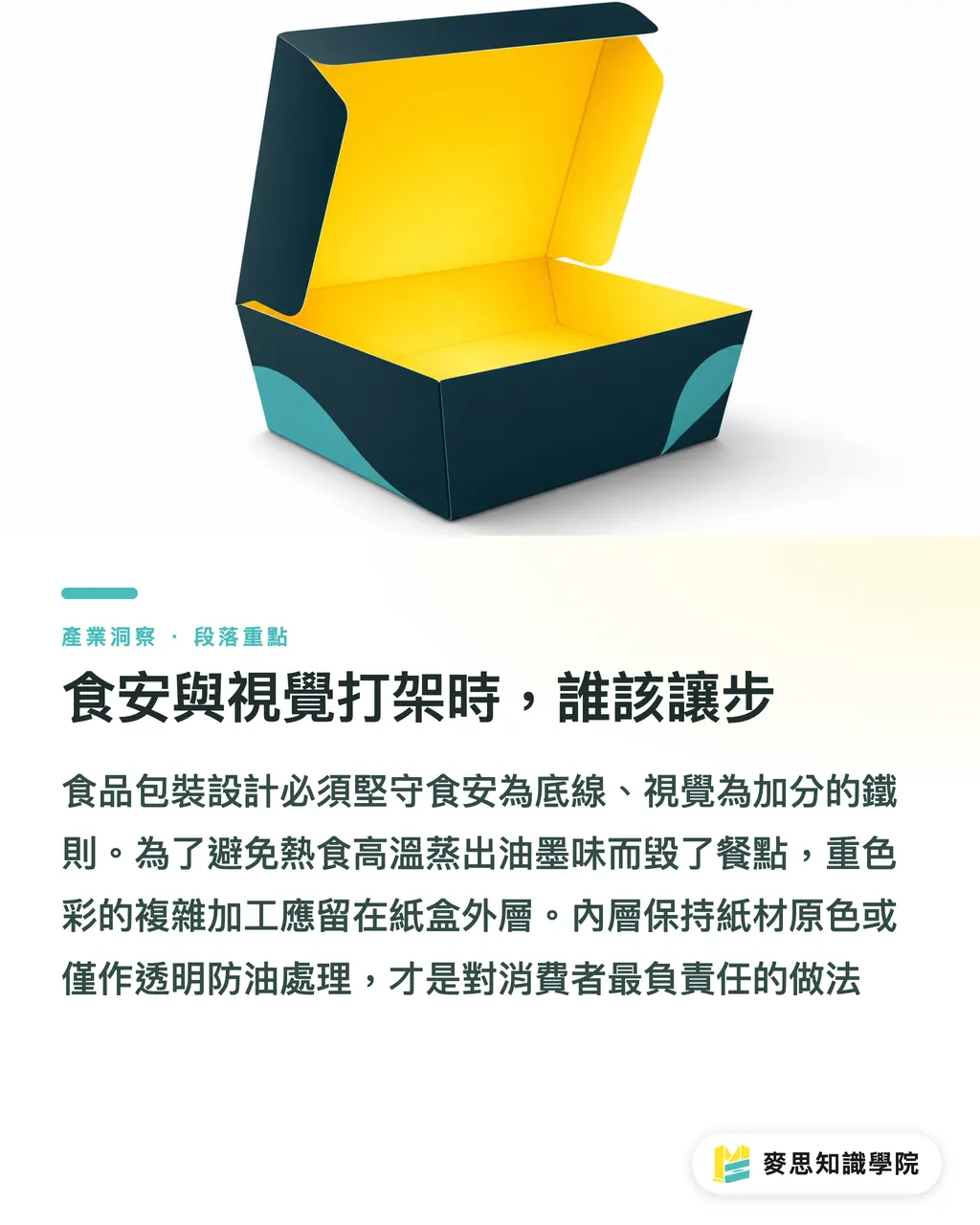
For food box design, the best practice is to keep heavy colors and complex finishes like hot stamping on the outside. The inner surface should stay as the natural paper stock, or receive only a clear food-grade oil-resistant treatment. That's the responsible choice for the consumer
Key Takeaways
For boxes in direct contact with food, recycled paper is never an option, virgin pulp with no fluorescent agents is non-negotiable
A coating isn't enough on its own. For hot food, you must verify the heat tolerance of the PE or water-based coating
Ink on non-contact surfaces can still contaminate the inner surface through stacking. Switching fully to eco-friendly ink is the safest move
Further Thoughts
Food packaging is really a tug-of-war between materials science and visual design. For print buyers and designers, treating regulatory constraints as design parameters from the start tends to sharpen creativity rather than limit it. When design teams build specification databases or roll out SaaS management systems, I'd recommend building in expiration tracking for heavy metal test reports and FDA-compliant certifications as mandatory fields for packaging materials, turning food safety compliance from a manual check into an automated system safeguard
FAQ
- I want to make a craft-style kraft paper bento box. What are the material restrictions?
- Whenever food will be in direct contact with the box, you must use virgin kraft paper with a food-grade oil-resistant coating. Recycled kraft or grey board, anything containing recycled pulp, is off the table
- If I skip PE film, what eco-friendly oil-resistant alternatives are available?
- The mature options today are fluorine-free coated paper and water-based coated paper. Both are oil- and water-resistant and can go straight into paper recycling along with the box itself
- Food won't touch the outside of the box, do I still need to worry about the outer-layer ink?
- Yes. During printing and shipping, boxes are stacked flat in large quantities, and outer-surface ink easily transfers to the inner contact surface of the box below. The outside must also use eco-friendly ink, soy-based or water-based
Related articles
The Print × AI weekly
The print and AI know-how designers, brands and enterprises can use before they commit — one email, every week
MINDS Free Tools
AI background removal, a LINE sticker maker, spine & imposition calculators — all free, right in your browser, no upload.
MINDS Group
Need actual printing or gifting services?
From premium printing to online ordering and festive gifts — the MINDS Group sister brands take it from here.