

Why Are Cartonboard Mills Rushing to Consolidate?
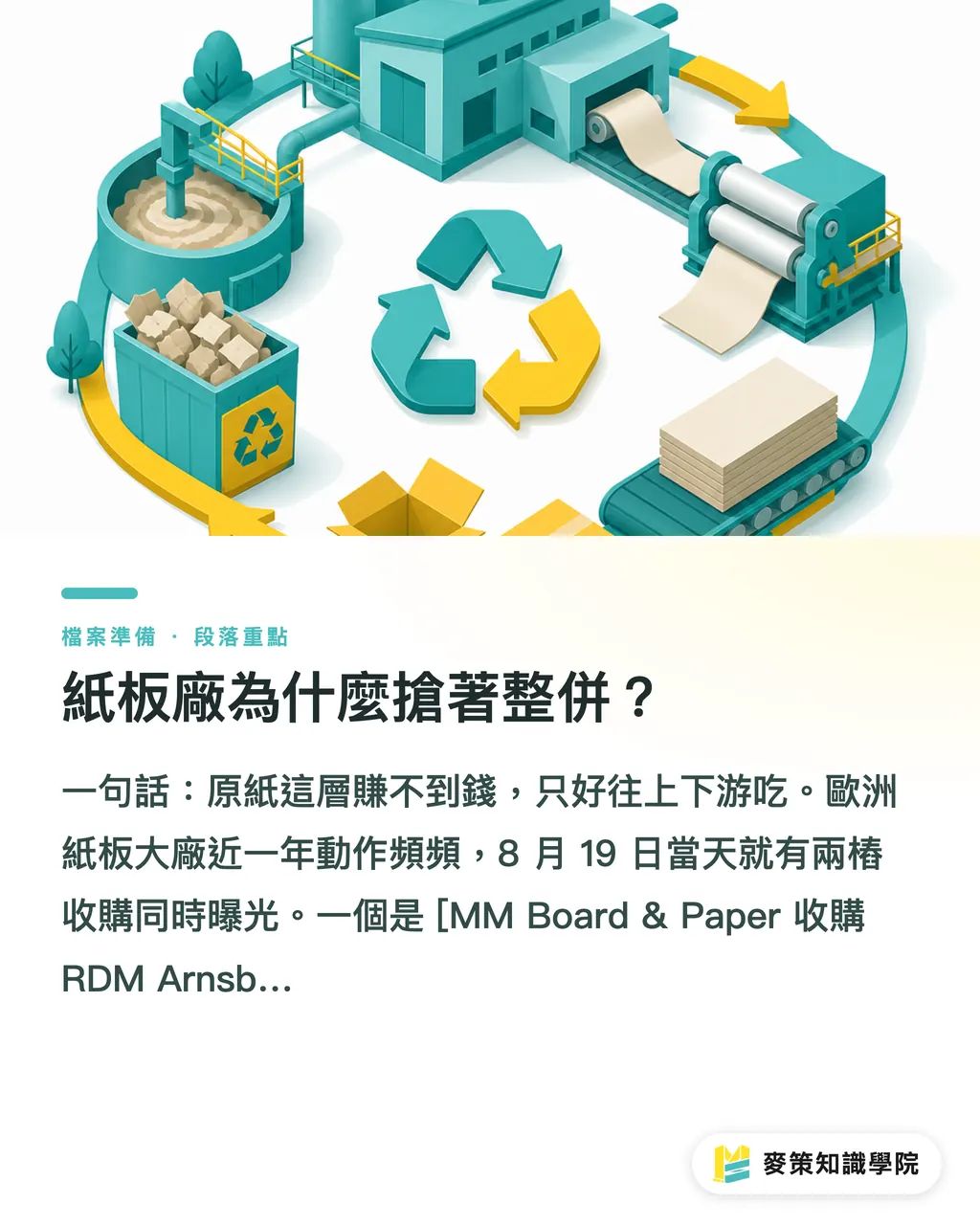
In short: raw board margins have dried up, so mills are expanding up and downstream to survive. Major European cartonboard players have been making moves all year, with two acquisitions announced on August 19 alone. One is MM Board & Paper acquiring the RDM Arnsberg mill, and the other is Faller Packaging buying Greece-based Paperpack. Both sides are advancing from different angles. Behind it all, the double hit of recycled pulp costs and energy bills is forcing European mills to chase scale through acquisitions
The Arnsberg mill produces about 230,000 metric tons of recycled fibre-based cartonboard annually, mainly focusing on liner. Structured as an asset deal, all employees will join MM. The transaction is expected to close in Q4 2026, subject to antitrust clearance. MM already operates several board and packaging plants across its German industrial platform. Bringing Arnsberg into the fold ties raw material supply, processing, and end-client delivery directly onto the same production track
Where Will Taiwan's Supply Chain Feel the Impact First?
First, pricing discussions will change. During prototyping, mill sales reps used to talk numbers with you. Going forward, the conversation shifts to whether the group has inventory. Sourcing moves from individual mill reps to group headquarters, adding another layer of corporate bureaucracy between designers and print shops
Second, compliant paper sourcing gets tighter. European brand clients keep raising the bar on FSC certifications, recycled fiber ratios, and carbon footprint disclosures. With fewer suppliers around, if your final production files specify only one mill, supply disruption shifts from a matter of chance to a matter of time
Third, packaging prototyping timelines will stretch. Group resources will prioritize in-house clients first. Smaller external shops looking for sampling slots or waiting in press queues will find it harder than before. You will not see this overnight, but once the Arnsberg integration wraps up in Q4 2026, the pinch will hit in the second half of that year
What Adjustments Should Design and Prepress Teams Make Right Now?
First, diversify paper sources. Specify at least two paper mill options for the same packaging SKU, like using recycled GC2 as primary and bleached FBB as backup, giving procurement room to maneuver
Second, lock down specifications. Mills often adjust basis weight and thickness tolerances during integration. If your design and prepress files do not clearly define a ±5% grammage tolerance, all rejection risks fall squarely on the print shop
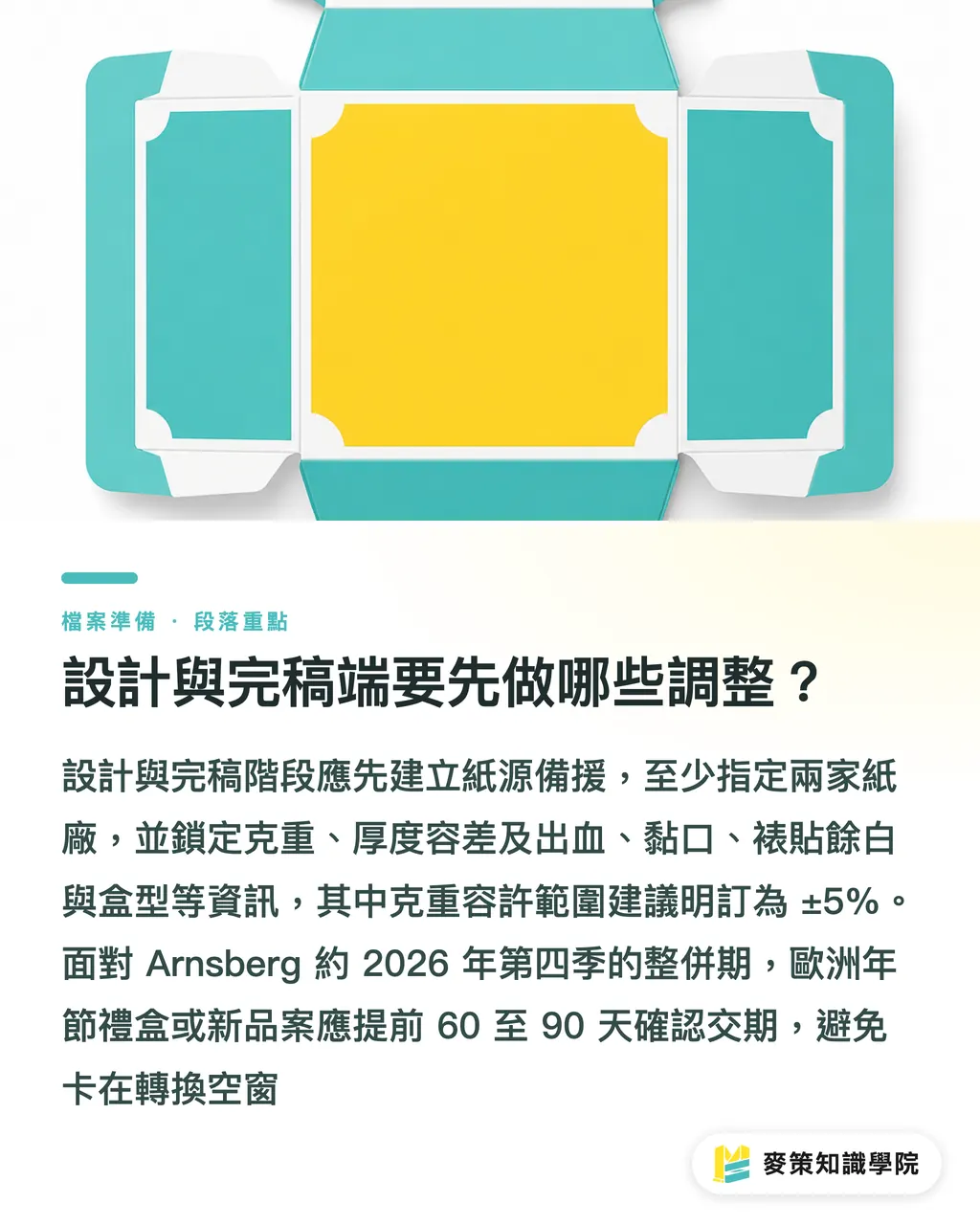
Third, provide complete prepress technical specs. Clarify bleed (the image area extending past the trim line, typically 3 mm), glue flaps, laminating margins, and whether it is a straight-line box or custom structural carton right at the design stage. That way, switching mills or printers later on happens seamlessly without endless back-and-forth
Fourth, adjust material stocking lead times. Lead-time bottlenecks are most likely during the Arnsberg transition around Q4 2026. If you have holiday gift boxes or new product rollouts for European brand clients, confirm mill lead times 60 to 90 days in advance so you do not get caught in post-approval transition gaps
Why Now and Not Last Year?
The timing is calculated. Recycled pulp prices swung wildly starting in late 2024. While European power and natural gas rates eased, mills were locked into long-term energy contracts that only began showing actual cost reductions in Q1 2026. In short, mills finally have the cash flow to pursue deals
On the other hand, European brand clients, especially across food and consumer goods lines, enter Phase 2 audits for supplier ESG disclosures in 2026. They need suppliers capable of delivering group-level reporting, not just standalone mill statements. That is one reason Arnsberg explicitly stated all staff would be retained. Keeping personnel ensures production lines and compliance capabilities stay intact
Looking back, Faller acquiring Paperpack serves the same purpose by bolstering Southern European footprints and avoiding compliance vulnerabilities tied to a single site. Looking at both deals together reveals the underlying logic of upstream cartonboard consolidation
How Should Clients Interpret This Move?
Brand clients and design agencies get caught in the middle first. Designers are told the mill suggests a brand substitution, which actually stems from restructured procurement desks and sales staff. Printers receive notices about price structure adjustments on straight-line cartons, which actually reflects group-wide pricing standardization
The most practical step is to ask suppliers for group structure charts and qualified secondary mill lists. At the same time, complete package prototyping across two or more mills for critical SKUs, so switching later only requires changing the purchase order without redesigning the artwork
Look at it from another angle: while small shops worry about being pushed out, enterprise clients and mid-to-large print facilities actually benefit. Consolidated mills need steady volume commitments, so they will prioritize downstream partners with long-term agreements. Mid-to-high-end bespoke manufacturers with in-house prototyping and prepress capabilities, such as MINDS, will secure more reliable board supply and delivery commitments
Key Takeaways
・Upstream cartonboard is shifting from mill-level to group-level competition, moving pricing discussions from sales reps to headquarters
・Diversifying paper sources and locking in basis weight tolerances during design saves far more effort than scrambling to switch mills later
・The close of the Arnsberg deal in Q4 2026 is a key milestone. Confirm lead times 60 to 90 days early for gift box and new launch projects
・European brand audits on FSC credentials, recycled fiber ratios, and carbon footprint tracking will only get stricter
・Prototype packaging with two mills upfront so switching suppliers later only takes a revised purchase order, not redesigned artwork
Further Considerations
For small and medium print shops in Taiwan, this consolidation wave brings mid-to-long-term pressure rather than short-term gains. In the near term, prepare three things: backup paper sources, documented specifications, and client communication talking points. Backup sources rely on keeping steady quote requests flowing with sales reps from at least two mills. Specification documentation requires locking basis weight, thickness, laminating margins, and straight-line box parameters into your prepress SOP. Client messaging means preparing a clear explanation for why your quotes reflect shifting mill costs
For design and prepress teams, the easiest thing to overlook is color shift management when switching paper brands. Recycled board brightness and surface textures vary widely across manufacturers, so moving the same artwork to another mill often requires fresh proofs. Manage CMYK and spot colors separately: lock spot colors to Pantone swatches, and bind CMYK to ICC profiles matching the specific mill's paper base
For SaaS and AI applications, this sends a clear signal: mill consolidation drives more than just paper pricing; it creates a demand for data transparency from raw board to carton structure. From list prices, grammage inventory, and laminating labor hours to brand ESG reporting, the coming years will demand connected data chains linking ERP systems to prepress design. For print-focused advisory teams like MINDS, building workflows that combine paper diversification, locked specifications, and seamless mill switching will be a core practical objective over the next two to three years
Further Reading
FAQ
- Will MM's acquisition of RDM Arnsberg have a major impact on Taiwanese print shops?
- Direct impact is limited, but the indirect fallout comes from concentrated European board supply. Taiwanese small and medium printers will see tighter pricing margins and fewer backup sources when serving European brands. Reviewing the mill sources for your primary SKUs now is recommended
- Why does cartonboard mill consolidation affect the design side?
- When mills switch brands, brightness, surface texture, and basis weight tolerances change. If artwork files fail to specify paper mills and grammage allowances, switching suppliers forces new proofing runs, disrupting both color consistency and production schedules
- Are FSC certifications and recycled fiber ratios truly critical for cartonboard procurement?
- They are the baseline ticket to entry for European brand clients. Mills without FSC certification or clear recycled fiber disclosures will be filtered out as Phase 2 audits begin in 2026. Taiwanese contract printers must verify mill certificate status in advance
- How should prepress specifications be set up to make future mill switching easier?
- Detail basis weight, thickness tolerance, bleed, glue flaps, and laminating margins in your prepress spec sheet. Lock spot colors to Pantone codes and bind CMYK to the specified mill ICC profile. That way, switching suppliers only requires a purchase order update without touching the design files
- What key dates should print shops watch during this wave of mill consolidation?
- Delivery risks peak during the transition window right after antitrust approval. With the Arnsberg transaction scheduled to close in Q4 2026, confirm lead times 60 to 90 days early for European brand holiday gift packaging and product launches
Related articles





The Print × AI weekly
The print and AI know-how designers, brands and enterprises can use before they commit — one email, every week
MINDS Free Tools
Spine width and imposition calculators — skip the manual math, free in your browser.
MINDS Group
Need actual printing or gifting services?
From premium printing to online ordering and festive gifts — the MINDS Group sister brands take it from here.