
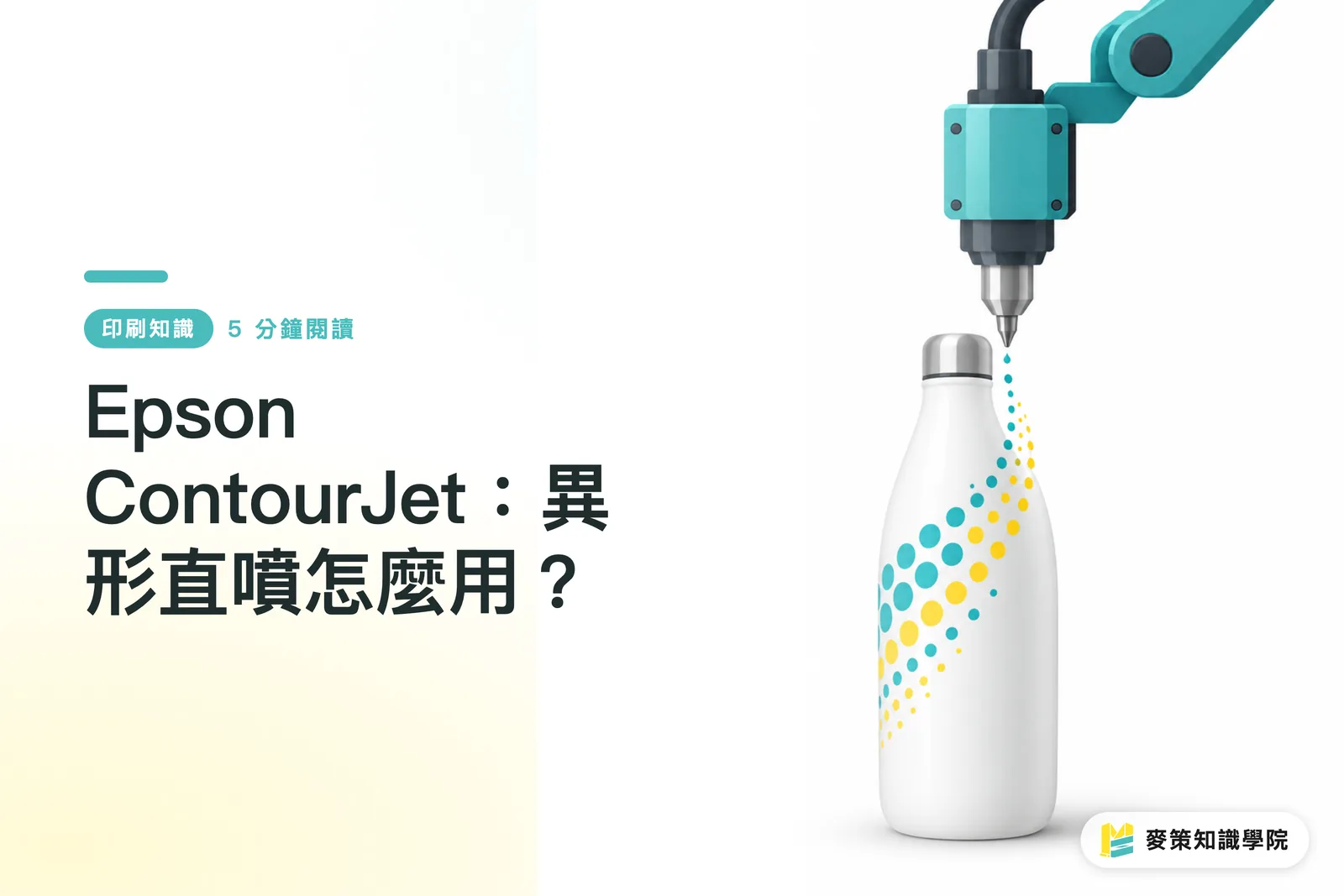
Why Is Direct-to-Shape Printing Worth a Look?
Direct-to-shape printing deserves attention because it sends the image straight onto a three-dimensional object's surface, removing the handoff problem between flat printing and the object's physical form
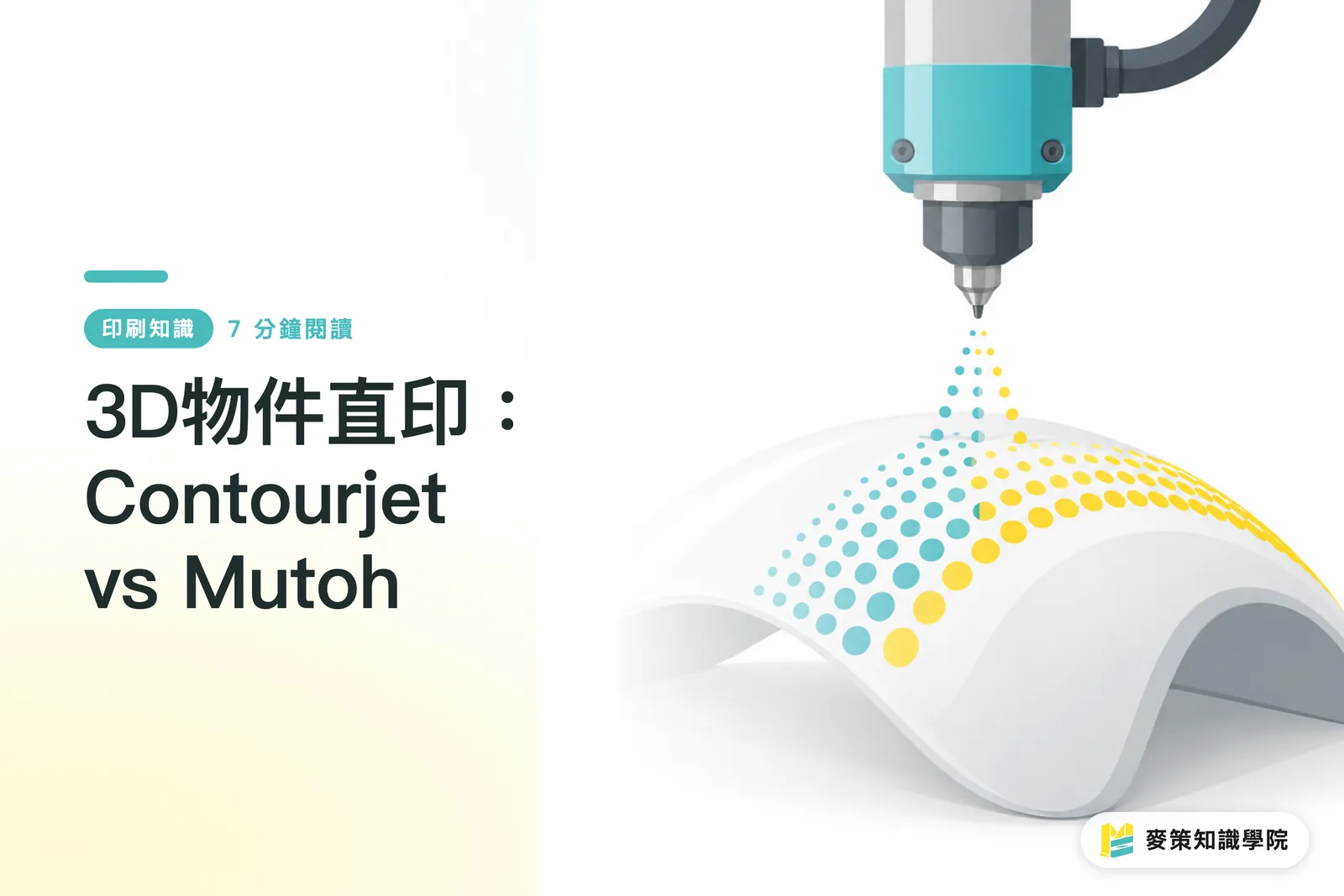
ContourJet's Direct-to-Shape process puts digital inkjet directly onto 3D object surfaces. It needs no printing plates or special materials, and suits curved, recessed, and irregular geometric forms
Epson announced ContourJet as a new brand on September 23, 2026, bringing its PrecisionCore inkjet and robotic technologies into one solution, along with inks, related software, implementation support, and maintenance services. When evaluating a purchase, look at the entire decoration workflow. Printhead specifications alone are not enough
ContourJet digitizes the traditional analog workflow. Epson says it can reduce manual work and save space, while ink lands only where and in the amount it is needed, using less material and producing less waste than an analog process. Those benefits still need to be checked against the actual object and ink through sample testing
Product launch details are available in Epson Launches the Direct-to-Shape ContourJet Printing System
How Does Epson ContourJet Print Accurately on Curved Surfaces?
Epson ContourJet uses a PrecisionCore S800 printhead, a six-axis robot, an independent vertical lift mechanism, plus path control and image processing to align the printing direction with an object's curves and recesses
The S800 delivers 600 dpi × 600 dpi printing. Epson's six-axis robot can change its working posture, while linear-motor drive and higher load capacity expand the range of workable objects toward larger and longer formats. These specifications are useful for judging the equipment's limits, but they do not mean every material can be printed successfully in one pass
ContourJet supports multicolor printing, including white ink and clear varnish ink. White ink can serve as a base layer, while clear varnish ink can extend into decorative effects such as texture. Designers no longer have to force every visual effect onto a flat sticker or into post-processing
The front-access maintenance design also belongs on the evaluation sheet. Epson lists front access as an improvement in serviceability and maintenance efficiency. In a print shop with limited space, the repair path directly affects production planning
Which Direct-to-Shape Jobs Are Worth Testing First?
The best first tests are short runs, customized work, higher-value pieces, and jobs where the object itself needs graphics
Epson identifies sports equipment, automotive parts, and industrial products as target markets. I would also put limited-edition commemorative products, customized containers, and part marking near the top of the list because they are easier entry points for persuading clients to run samples
The question is not how three-dimensional the object looks, but whether changing artwork and batch sizes repeatedly adds setup work in the traditional process. ContourJet needs neither printing plates nor special materials, so short-run and customized applications can retain more artwork variation. If the job is simply a large volume of flat products with a fixed design, established flat-printing equipment is usually the more practical choice
To turn an idea into a quote-ready job, I use "Mai Strategy's three checks before sending a job to print."
・Test the material first, and have the equipment provider and project partners confirm the object's surface, ink compatibility, and operating method
・Then test the surface, putting the recesses, curves, length, and artwork position into a physical sample instead of using a flat mockup as a substitute
・Finally, cost the run, including how often the artwork changes, white ink or clear varnish ink requirements, manual handling, and maintenance time
Start with a small batch
For mid- to high-end fully customized jobs that need the shaped piece and overall printing planned together, you can first contact MINDS to organize the artwork, object, and batch size, then decide whether to move into ContourJet test printing
What Should Taiwan's Small and Mid-Sized Print Shops Ask Before Adoption?
Before adopting it, Taiwan's small and mid-sized print shops should clarify the object, ink, artwork, and order first, rather than letting 600 dpi × 600 dpi lead the conversation. What matters with ContourJet is the robot's posture, image processing, and the pairing of ink with substrate
I would turn the first evaluation into a single job sheet
・When the object has curves, recesses, or irregular geometry, first confirm that its dimensions and weight fall within the equipment's handling range
・When the artwork needs a white-ink base layer, clear varnish ink, or a textured effect, set the color-separation and sample-testing order first
・When there is no off-the-shelf ink-and-substrate combination, follow Epson's approach and have a partner confirm the ink and operating method
・When an order has no short-run, artwork-change, or customization needs, don't put the equipment's advantages into the quote yet
Epson's support for larger and longer workpieces does not mean every irregular piece can go straight into the machine. Samples need to be checked for adhesion, color, fine lines, recessed edges, and surface effects. The quote also needs to spell out changeovers, cleaning, maintenance, and reprint risk
Key Takeaways
・ContourJet's value lies in handling three-dimensional surfaces directly, bringing short-run and customized graphics into equipment evaluation
・600 dpi × 600 dpi is only a specification. Curved-surface paths, ink, and substrate determine whether a sample can actually be delivered
・White ink and clear varnish ink bring base layers and textured effects into the same decoration workflow
・Small and mid-sized shops should start with small-run jobs that can be sampled, then build their quoting logic from physical results
Further Thoughts
I see this technology as a cross-functional job-spec issue. The production team should put object photos, dimensions, materials, ink, robot paths, and sample results into the job sheet. The design team should mark white ink, clear varnish ink, and no-print areas during the 3D mockup stage. AI applications should first be used to organize versions, check file fields, and generate sample-testing checklists. The final judgment still belongs to print professionals. SaaS can keep the artwork, object, batch size, quote, and reason for reprinting in the same case, so the next order has traceable criteria. Start with one thing: choose a short-run, irregular-shaped job with clearly visible artwork changes, complete one physical sample test, and record the result
Further Reading
FAQ
- What objects can Epson ContourJet print?
- Epson ContourJet can handle 3D objects with curves, recesses, and irregular geometry. The applications Epson names include sports equipment, automotive parts, and industrial products
- How does Direct-to-Shape printing differ from traditional flat printing?
- Direct-to-Shape puts digital inkjet directly onto a 3D object's surface. It does not need printing plates or special materials, making it better suited to short runs and customized applications
- What do white ink and clear varnish ink do in ContourJet?
- White ink can be used for a base layer, while clear varnish ink can extend into decorative effects such as texture. Together, they give designers more room to work with irregular-shaped objects
- What should a small or mid-sized print shop do before adopting ContourJet?
- First confirm the object's material, curves, recesses, dimensions, and weight. Then use a physical sample to confirm ink compatibility, fine lines, color, and surface effects
- Is ContourJet suitable for high-volume orders with fixed artwork?
- ContourJet is better suited to short runs, frequent artwork changes, and customized jobs. For high-volume products with fixed artwork, first compare the cost and workflow of existing flat-printing equipment
Related articles
The Print × AI weekly
The print and AI know-how designers, brands and enterprises can use before they commit — one email, every week
MINDS Free Tools
Spine width and imposition calculators — skip the manual math, free in your browser.
MINDS Group
Need actual printing or gifting services?
From premium printing to online ordering and festive gifts — the MINDS Group sister brands take it from here.