
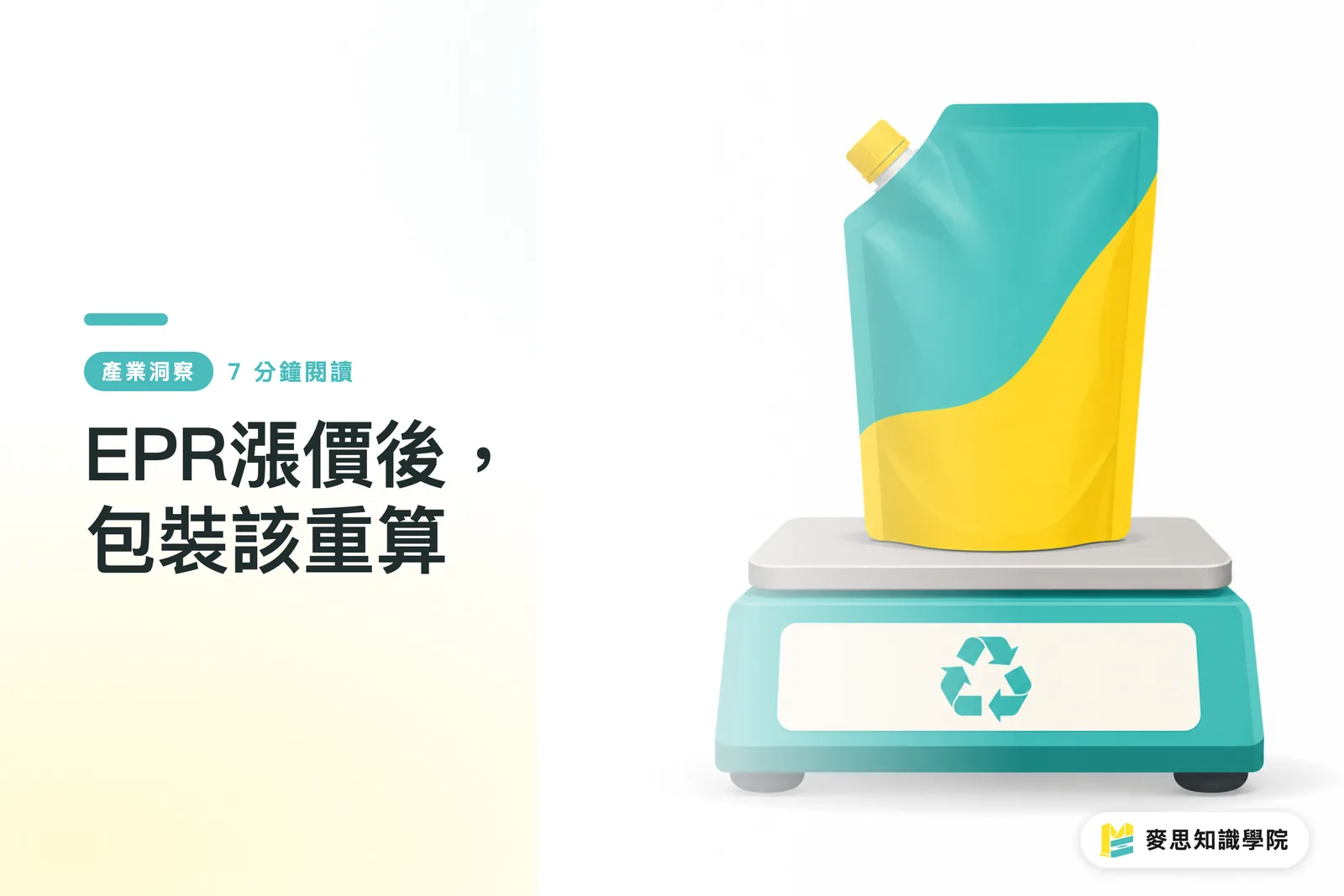
As EPR Fees Rise, What Should Brand Packaging Change First?
As EPR fees keep rising, brand packaging shouldn't start by changing slogans. The focus needs to shift to material structures, recycling labels, waste reduction, and supply chain quoting methods. When MINDS evaluates packaging projects, we use the 'MINDS Three-Step Pre-Print Check' to verify: 1) whether materials are recyclable, 2) whether printing and lamination interfere with recycling, and 3) whether clients will be stuck chasing EPR costs down the road
EPR stands for Extended Producer Responsibility. It means brands or manufacturers can no longer just sell products and walk away; they must also share responsibility for post-consumer recycling, processing, and waste management of their packaging
In this update where CEFLEX calls on EU to turn rising EPR fees into higher flexible packaging recycling rates, what stands out to me isn't just that 'the EU is collecting fees again.' It's that the fee structure is forcing brands to answer 1 old question: Can your packaging actually enter a recycling system in the end?
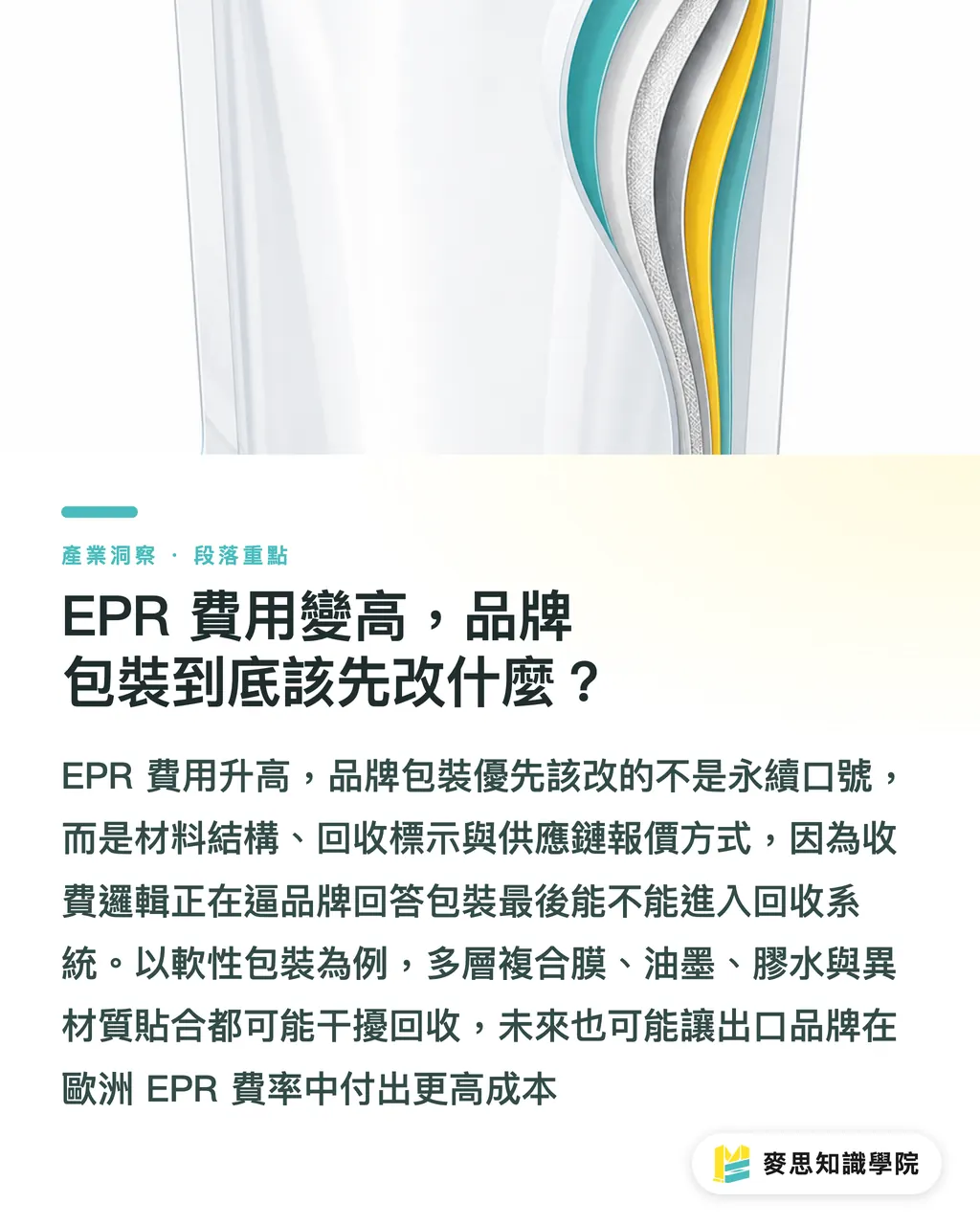
Flexible packaging refers to soft packaging like pouches, films, laminate films, sealing films, and flexible materials. It uses less material and offers high shipping efficiency, but multi-layer composite structures, inks, adhesives, and mixed-material laminations often make sorting and processing difficult for recyclers
Small and medium print shops in Taiwan should take special note: export brand clients are no longer just asking 'Can this packaging print beautifully?' They're also asking 'Will this material combination cause trouble under European EPR fee rates down the line?'
Why Eco-Claims Are No Longer Enough
In the past, eco-claims on packaging were a facade. Today, they look more like risk clauses behind a quotation. CEFLEX's focus on rising EPR fees for EU flexible packaging emphasizes using fee systems to drive recycling infrastructure and design improvements, rather than just letting brands pay extra money and call it a day
In packaging projects, there are 3 design types I dread seeing: designs that look eco-friendly on paper but are practical nightmares to recycle
・Paper-plastic laminates crafted exquisitely, yet nearly impossible for consumers and recyclers to separate
・Full-bleed dark printing with large-area foil stamping that looks striking on shelves, but creates major hurdles during sorting and recycling
・Packaging labeled 'recyclable' when local recycling systems don't reliably accept that material structure
The packaging waste reduction trials led by Keep Britain Tidy in the UK have gained support from major brands like KFC, McDonald's, and Nestlé. Taiwan brands should take note: major global brands are integrating litter reduction, post-consumer management, and recycling behavior into their packaging responsibilities, rather than pushing accountability onto packaging suppliers
For designers, packaging design today can no longer stop at AI mockups, slick 3D renders, and sustainability copy. Before sending files to print, ask the print shop at least 2 questions: Is there a risk of mixed materials in this packaging? Will these print finishing techniques reduce its recycling value?
How Small and Medium Print Shops Can Turn EPR into Quoting Power
EPR pressure starts as compliance demands for brands, moves into procurement checklists, and ultimately lands in print shop quotes and proofing. Small and medium print shops in Taiwan should treat this as a standard upfront check, rather than waiting for clients to come questioning them with European compliance documents
I recommend using the 'MINDS Three-Step Pre-Print Check' to ground conversations in actionable layout and material decisions:
・Step 1: Check materials first. Prioritize single materials, and clearly explain the function and necessity of each layer in laminate films
・Step 2: Evaluate print finishing. Assess whether large metallic effects, full-bleed dark printing, specialty coatings, and lamination adhesives affect sorting and recycling
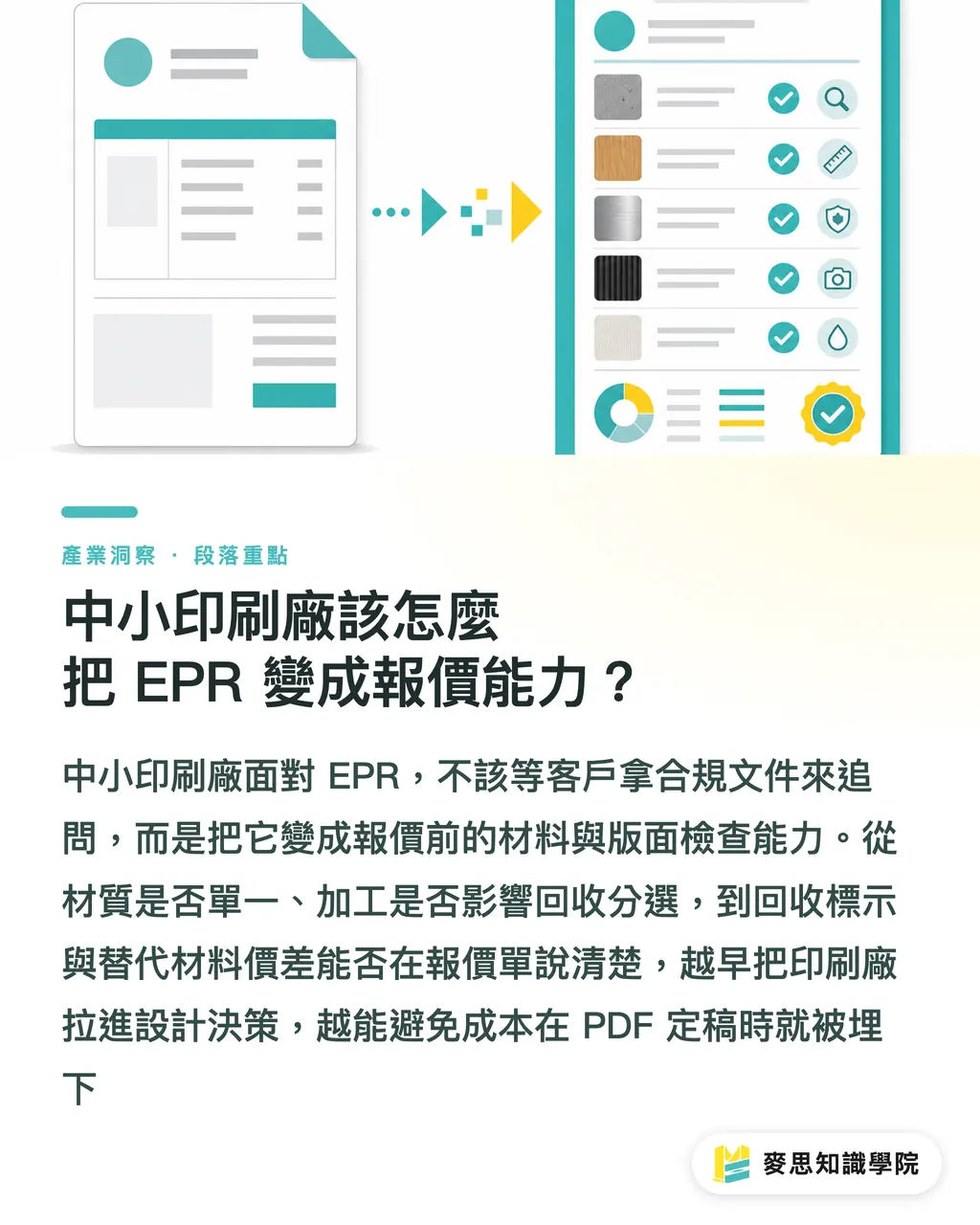
・Step 3: Review labeling and pricing. Clearly spell out recycling symbols, material names, version histories, and price differences for alternative materials at the quotation stage
There is no secret tech behind these 3 checks. The hard part is bringing the printer in before the design is finalized. Many costs don't happen after printing; they are baked in the moment the design PDF is locked in for the first time
MINDS specializes in helping mid-to-high-end, fully customized commercial printing and packaging projects, bringing paper stock, specialty finishing, color performance, and recyclability to the same decision table. For brands, this is far more reliable than adding a paragraph of sustainability copy after the fact
How Brands Can Avoid Future Environmental Costs Early
To avoid future EPR costs, the first step for brands is to stop viewing packaging as mere 'marketing collateral' and start seeing it as 'a material combination to be processed after use.' For the exact same product, choosing a paper box, soft pouch, composite film, or labeled bottle leads to completely different end-of-life recycling pathways
I ask brands to run through 4 checks first: questions that get much closer to practical reality than simply asking 'Can we claim this is eco-friendly?'
・How many materials make up this packaging, and can consumers figure out how to dispose of it within 10 seconds?
・Does this packaging include finishing techniques added purely for shelf impact that recyclers might struggle with?
・Do packaging labels state concrete material facts or rely on vague green adjectives?
・If this packaging is exported to the EU or the UK, can procurement, legal, and the print shop clearly explain its material structure?
Looking at recent brand projects, one shift is crystal clear: clients used to ask 'How can we make this print like a luxury good?' Now they add 'Will this get rejected by European clients?'
If a brand already has export, e-commerce, or major retail channel requirements, they can have the consultancy team at Mai Strategy Knowledge Academy perform a packaging risk audit early in the design phase. This audit doesn't tear down creativity; it clarifies materials, labeling, and downstream recycling constraints from the start
How AI, SaaS, and Packaging Compliance Connect
The value of AI and SaaS in packaging compliance isn't writing flashier sustainability statements. It's turning easily missed material specs, version differences, and supplier records into a traceable workflow
Take 1 flexible packaging item as an example: what actually needs managing isn't just a final print-ready PDF. It's the material layers, ink settings, finishing methods, recycling labels, client sign-off records, and export market variations. If this information is scattered across LINE, emails, cloud folders, and quotes, untangling it when EPR issues arise becomes a nightmare
Design and print teams can start with 3 small tool-driven steps:
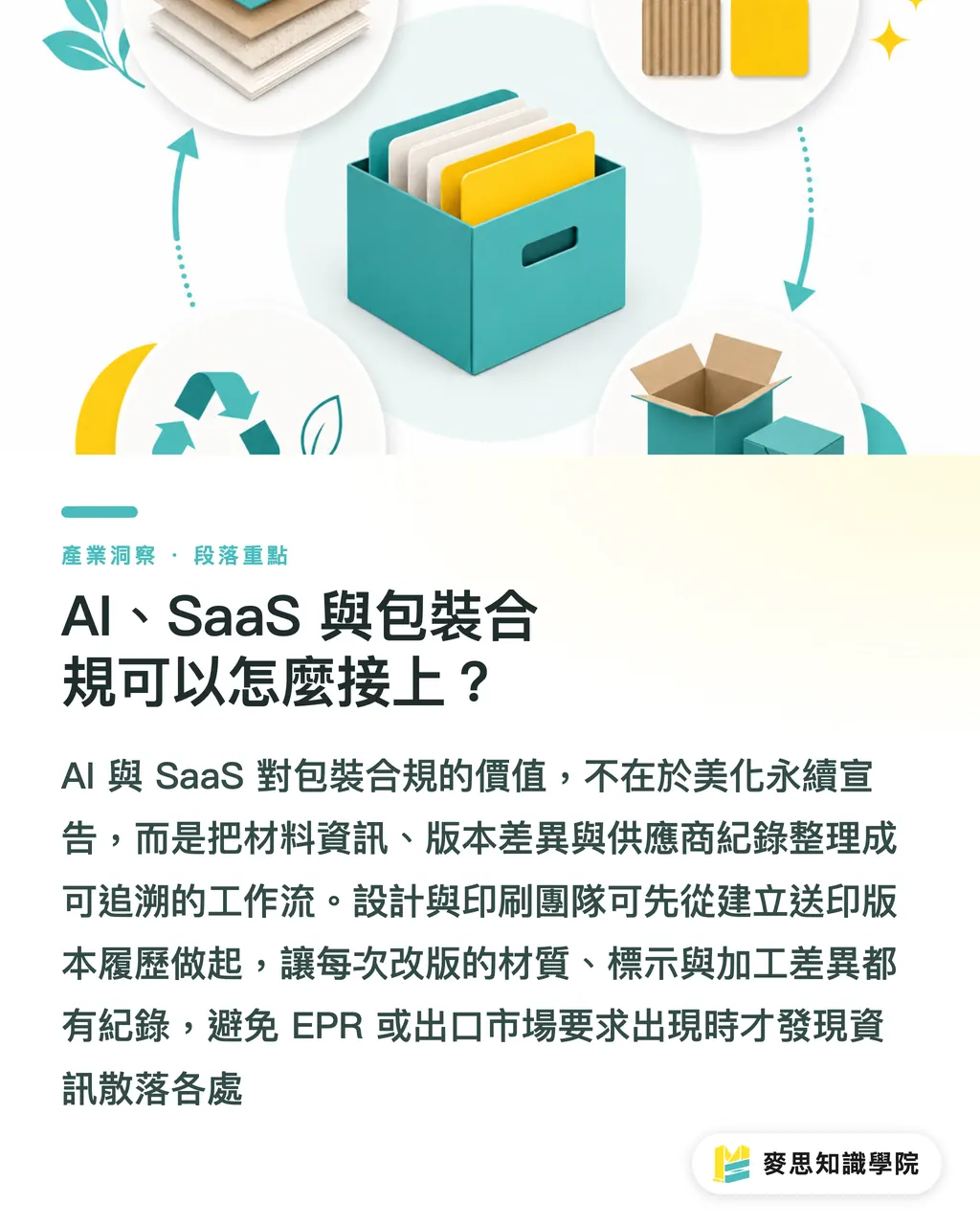
・Build a material library: turn commonly used paper stocks, films, lamination methods, and processing limits into a searchable database
・Maintain print version logs: preserve material, label, and finishing variations across each revision, instead of saving just JPG previews
・Create compliance checklists: build EPR requirements, recycling labels, composite materials, and export market rules right into the project intake process
These practices won't turn small businesses into legal departments overnight, but they allow brands, designers, and print shops to speak from the same single source of truth. In an environment of rising EPR fees, disorganized information is itself a cost
Key Takeaways
・Rising EPR fees aren't just a fee issue; they bring material choices, recycling labels, and pricing accountability to light
・Eco-claims must return to physical reality: Is it recyclable, how is it recycled, and does it actually cut waste?
・The biggest challenge for flexible packaging isn't excessive material use, but complex composite structures, inks, and finishings that make recycling difficult
・The sooner small and medium print shops integrate material and recycling checks into their quoting process, the faster they upgrade from OEMs to brand advisors
・AI and SaaS are best deployed first for version histories, material databases, and compliance checklists, without needing enterprise-scale systems right away
Further Considerations
For print manufacturers, the next step is making 'recyclability' a mandatory check before proofing, rather than discussing it after finished goods enter the warehouse. For designers, packaging aesthetics must be pitched alongside material structure, rather than delivering visual concepts alone. For AI and SaaS teams, the highest-value entry point is connecting packaging materials, finishing techniques, labels, and version logs so brands can produce verifiable data during EPR, PPWR, or retailer audits. For brand clients, conducting an upfront pre-print review with MINDS or the consultancy team at Mai Strategy Knowledge Academy is far cheaper than redesigning after production
Further Reading
FAQ
- Will rising EPR fees impact Taiwanese brands?
- Yes, especially Taiwanese companies exporting to the EU or the UK, or supplying international brands. EPR costs will ripple back to Taiwan through procurement specifications, material choices, recycling labels, and supplier quotations
- Is labeling packaging as 'recyclable' enough?
- No. 'Recyclable' depends on whether local recycling systems accept the material, how easily it can be sorted, and whether print finishing hinders re-processing. Simply printing a claim does not solve EPR fee burdens or recycling responsibilities
- Why is flexible packaging particularly sensitive under EPR regulations?
- Flexible packaging is widely used for films, pouches, and laminate films. While it uses minimal material, its structure is complex. Multi-layer materials, inks, adhesives, and mixed laminations make sorting and reprocessing difficult
- What can small and medium print shops do right now?
- Start incorporating material specs, print finishing, recycling labels, and version histories into the quoting process. At a minimum, inform clients before proofing which options might drive up future EPR or recycling costs
- How can AI assist with packaging compliance?
- AI is great at organizing material data, cross-checking version differences, generating compliance checklists, and flagging missing details. However, true judgment still relies on the practical understanding of materials and markets shared by print shops, brands, and regulatory advisors
Related articles


The Print × AI weekly
The print and AI know-how designers, brands and enterprises can use before they commit — one email, every week
MINDS Free Tools
AI background removal, a LINE sticker maker, spine & imposition calculators — all free, right in your browser, no upload.
MINDS Group
Need actual printing or gifting services?
From premium printing to online ordering and festive gifts — the MINDS Group sister brands take it from here.