
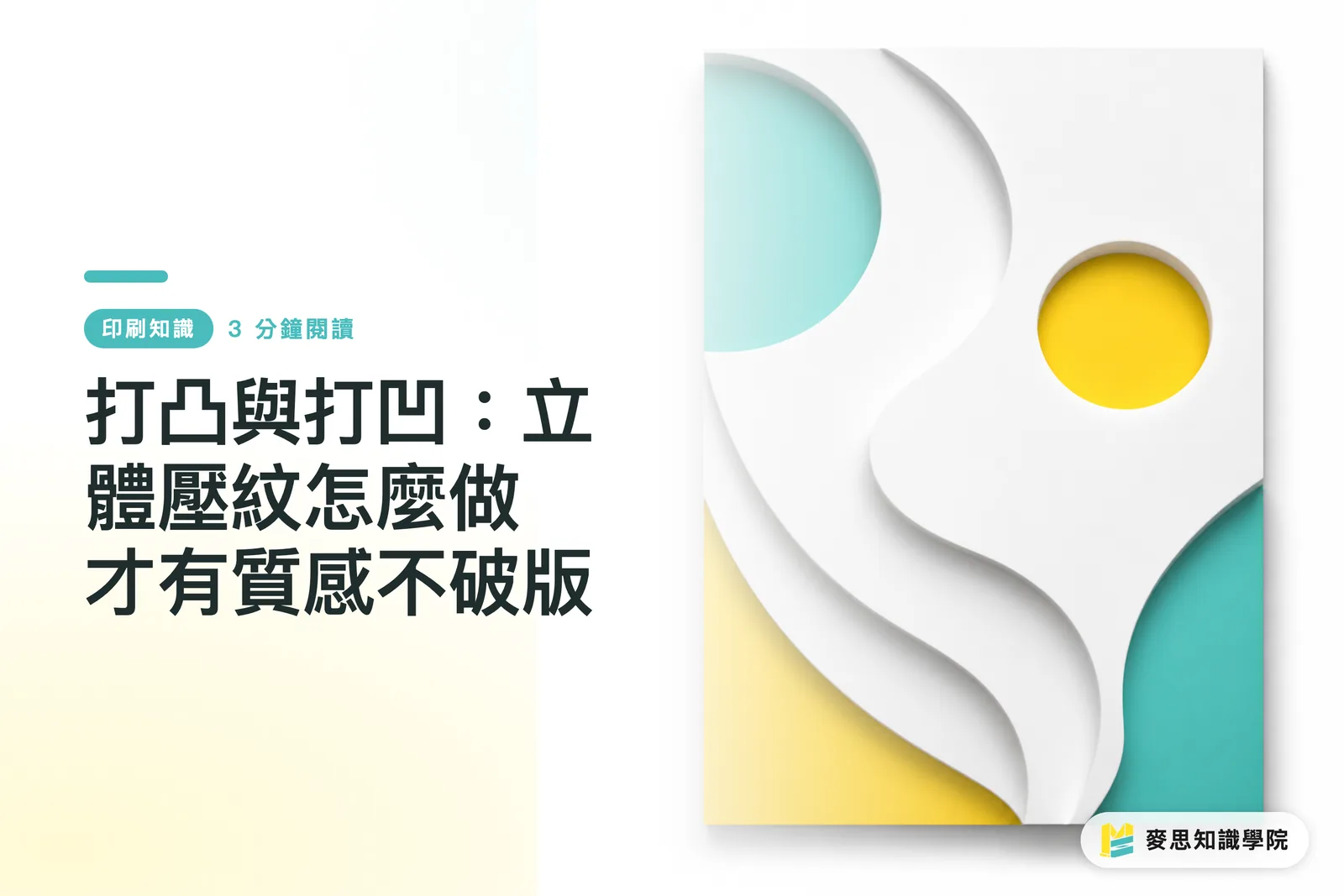
Why does a perfect design on screen look flat when printed?
Many designers are accustomed to previewing dimensional effects on screen, yet they overlook physical constraints
The essence of Embossing and Debossing is not printing; it is physical compression
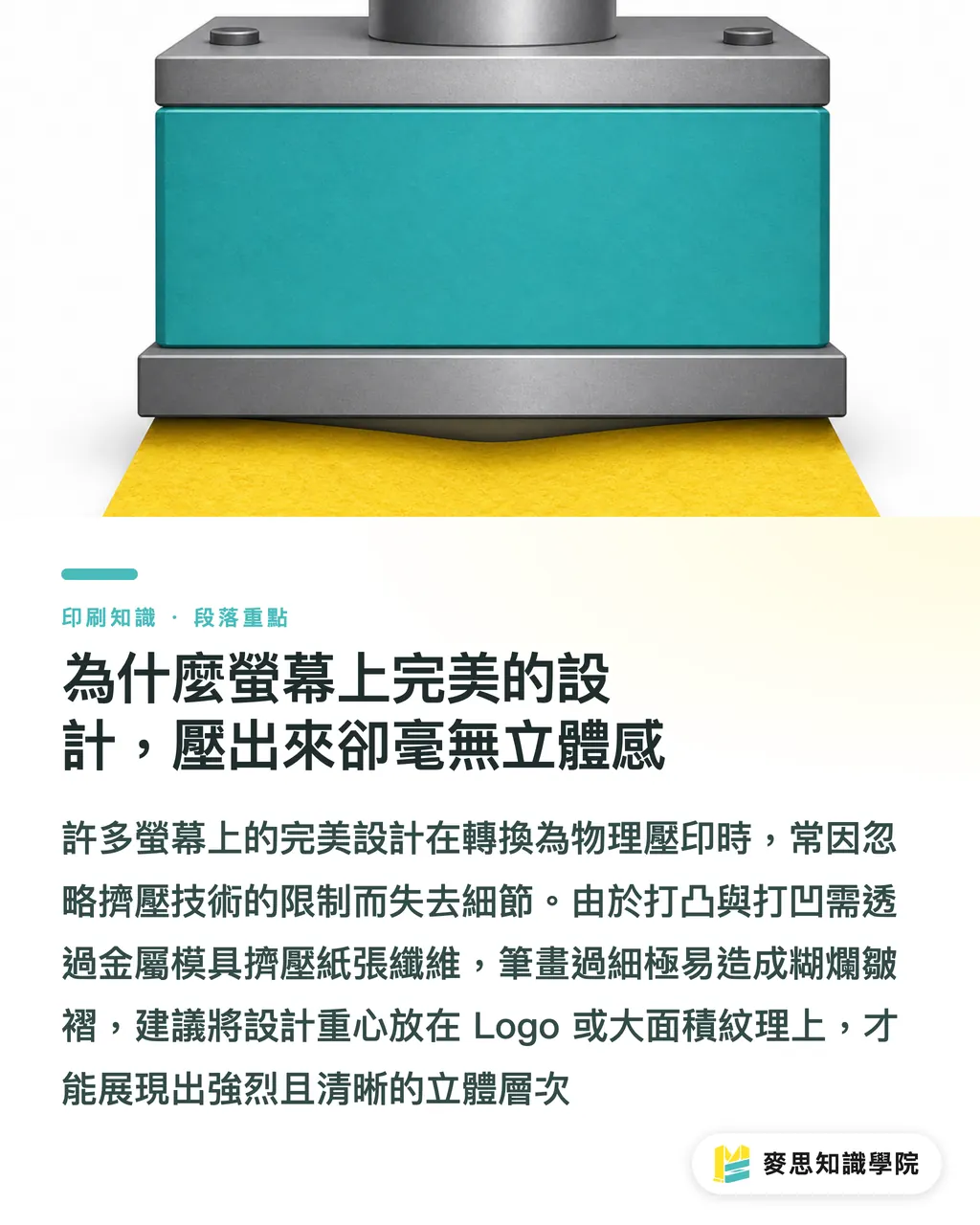
The production process involves creating a set of male and female dies, clamping the paper between them to press out a three-dimensional texture
Because it requires metal molds to force paper fibers together, it inevitably has physical limits
In my over ten years of printing experience, the most common files rejected are those with lines that are too thin or too dense
When strokes are thinner than 0.3mm or spacing is too narrow, the paper lacks sufficient space to be lifted; the result is merely a clump of distorted, wrinkled mess
If you want distinct tactile sensations and strong highlights and shadows, wordmarks, logos, or large-area graphic textures are the best stages for this technique
Which paper and finishing combinations prevent damage during embossing?
Whether a specific paper can be embossed is one of the most common questions clients ask
Remember one key rule: thick cardstock is always the best partner for dimensional embossing
Paper that is too thin (e.g., under 150g) tears easily upon pressure, while paper that is too thick or rigid (e.g., greyboard) cannot produce distinct variations in height
Generally speaking, uncoated fine paper around 250g to 350g works best; it not only withstands the pressure but also retains its unique tactile feel
Regarding finishing combinations, blind embossing (colorless embossing) can present a low-key, sophisticated elegance, which truly tests the inherent texture of the paper
If you desire a more eye-catching effect, 3D foil stamping (foiling combined with embossing) is definitely the top choice
This is not a two-step process, but rather a single-pass molding using specially engraved foil-embossing dies, allowing the gold foil to perfectly fit the raised tops, a technique preferred by many high-end brands to upgrade their tactile quality
Does double-sided printing always leave marks on the back?
This is a blind spot in communication that occurs on the production line every single day
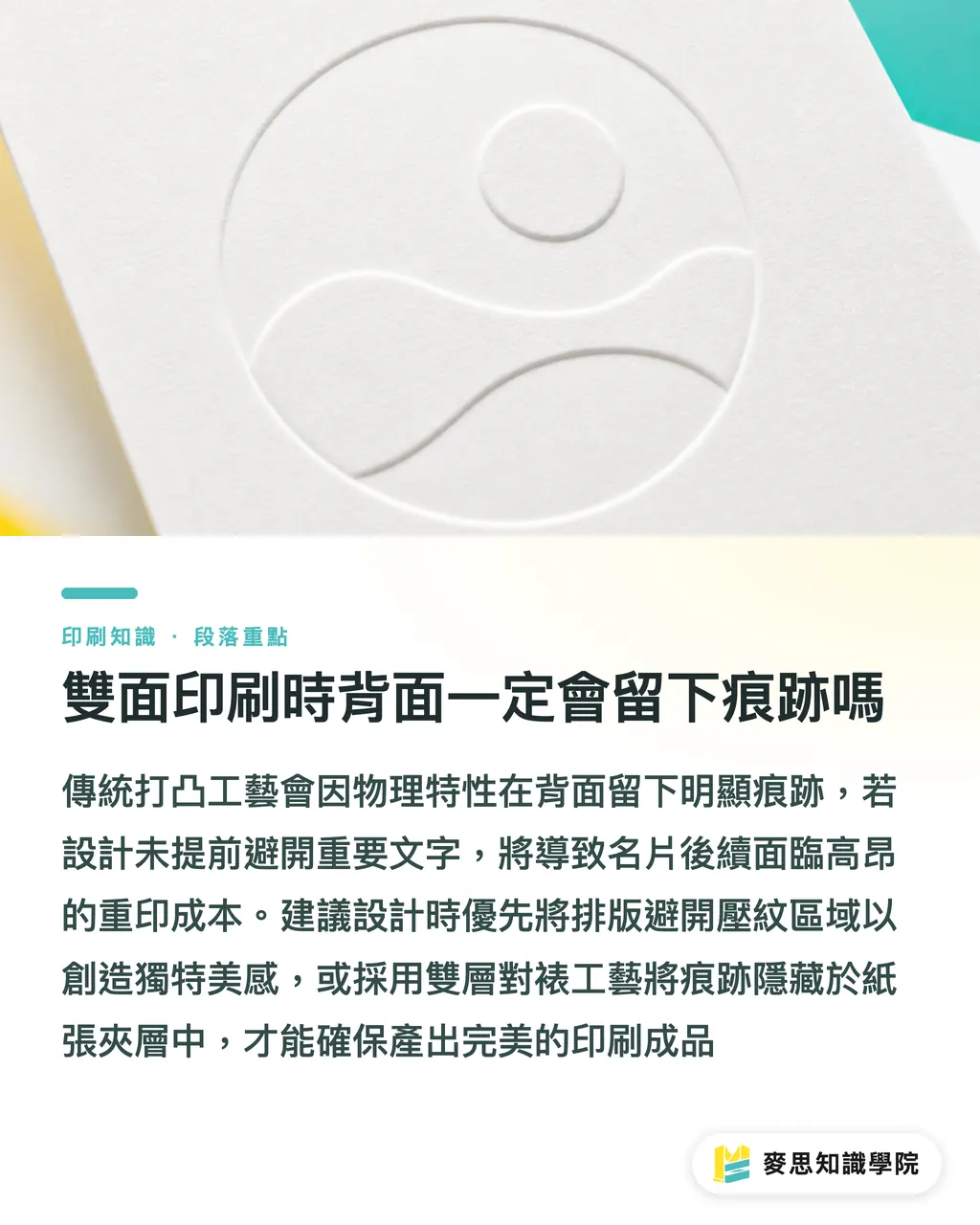
As long as it is traditional embossing or debossing, if the front is raised, the back will inevitably be depressed (and vice-versa)
If you have designed a double-sided business card with important information, never place the embossing over the text on the back
I usually suggest two solutions to MINDS clients:
・Adjust the layout on the back to avoid the embossed area, turning the depression into a form of 'negative space' aesthetic
・If the budget permits and the paper is thin enough, consider dual-layer mounting: emboss one sheet first and then laminate it with another sheet, hiding the marks in the middle
Although mold costs are a one-time expense, failing to consider these physical limitations in the early stages makes the cost of reprinting far higher than the price of that metal die
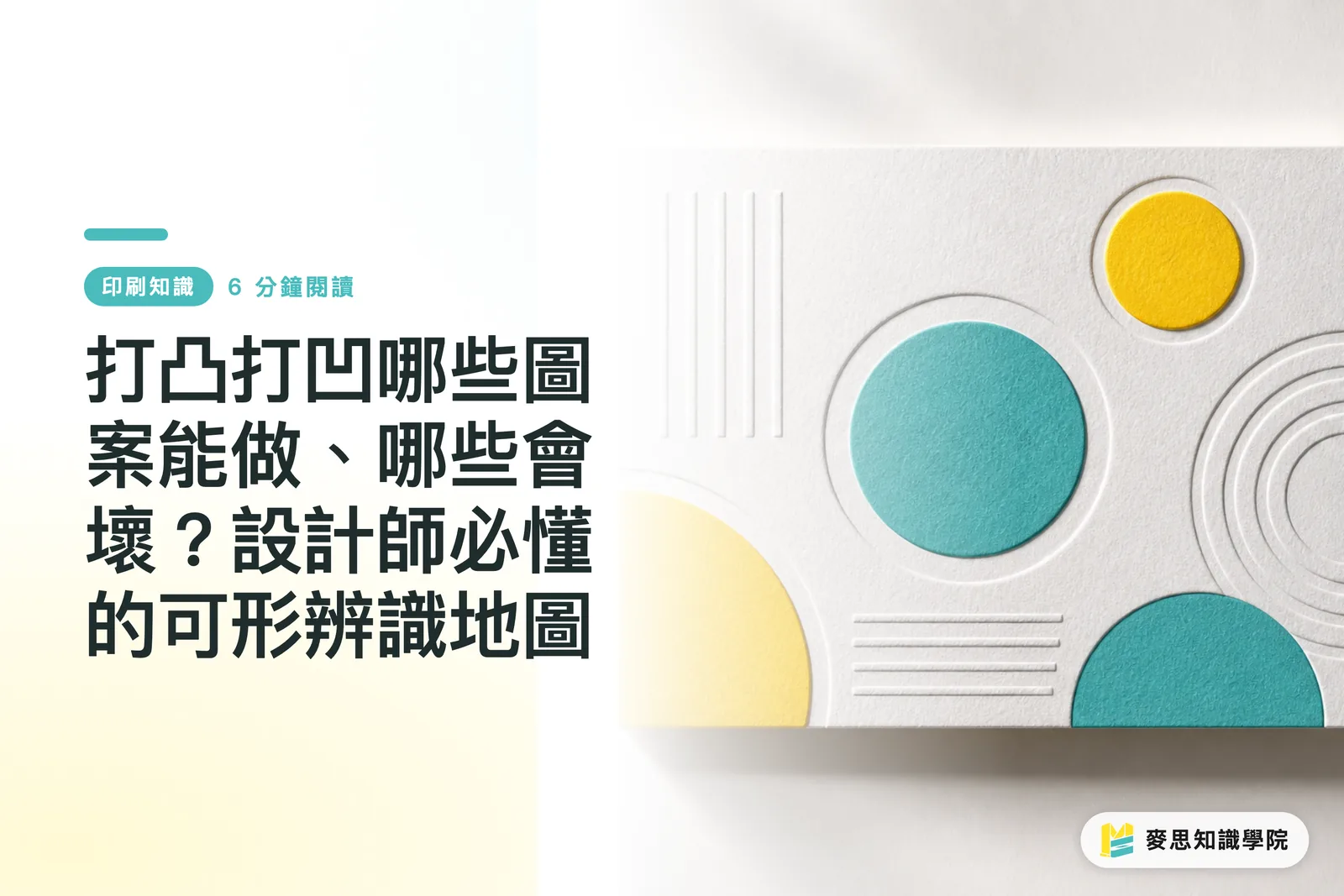
Key Takeaways
・Embossing/Debossing relies on a male-female die press; lines that are too thin or dense will never achieve a dimensional effect
・250g to 350g thick cardstock is the ideal partner, capable of withstanding pressure while showcasing beautiful high-low light and shadow
・Traditional embossing will inevitably leave reverse marks on the back, so you must avoid placing important graphics or text there
・For ultimate eye-catching results, a single-pass 3D foil stamping die can perfectly combine gold foil with raised textures
Reflections for the Future
Teams transitioning from print manufacturing to SaaS or AI applications must understand that physical constraints cannot be solved by software simulation alone
No matter how exquisite the 3D rendering looks on screen, the production line must still face the tests of paper fibers, humidity, and die pressure
Future prepress support tools should focus on implementing 'poka-yoke' (mistake-proofing) mechanisms rather than just visual previews, such as automatically detecting line thickness or back-printing conflicts; this is the true value that saves small and medium enterprises from reprinting costs
FAQ
- Are the die costs for embossing and debossing calculated separately?
- They are usually priced together because the process requires the production of both a male and female die to clamp the paper. Although the die cost is a one-time expenditure, there is still a basic press fee for each machine run
- Why is my embossing not obvious even though the lines are 1mm thick?
- It may be related to the paper characteristics. If you used paperboard that is too stiff or coated paper that is too thin, the paper fibers cannot be effectively stretched. It is recommended to test with long-fiber fine paper around 300g
- Is it possible to emboss without leaving marks on the back?
- Traditional embossing cannot avoid leaving marks on the back. The only physical solution is to process two sheets separately and then mount them together to hide the marks in the center, though this significantly increases production costs and labor time
Related articles
The Print × AI weekly
The print and AI know-how designers, brands and enterprises can use before they commit — one email, every week
MINDS Free Tools
Spine width and imposition calculators — skip the manual math, free in your browser.
MINDS Group
Need actual printing or gifting services?
From premium printing to online ordering and festive gifts — the MINDS Group sister brands take it from here.