
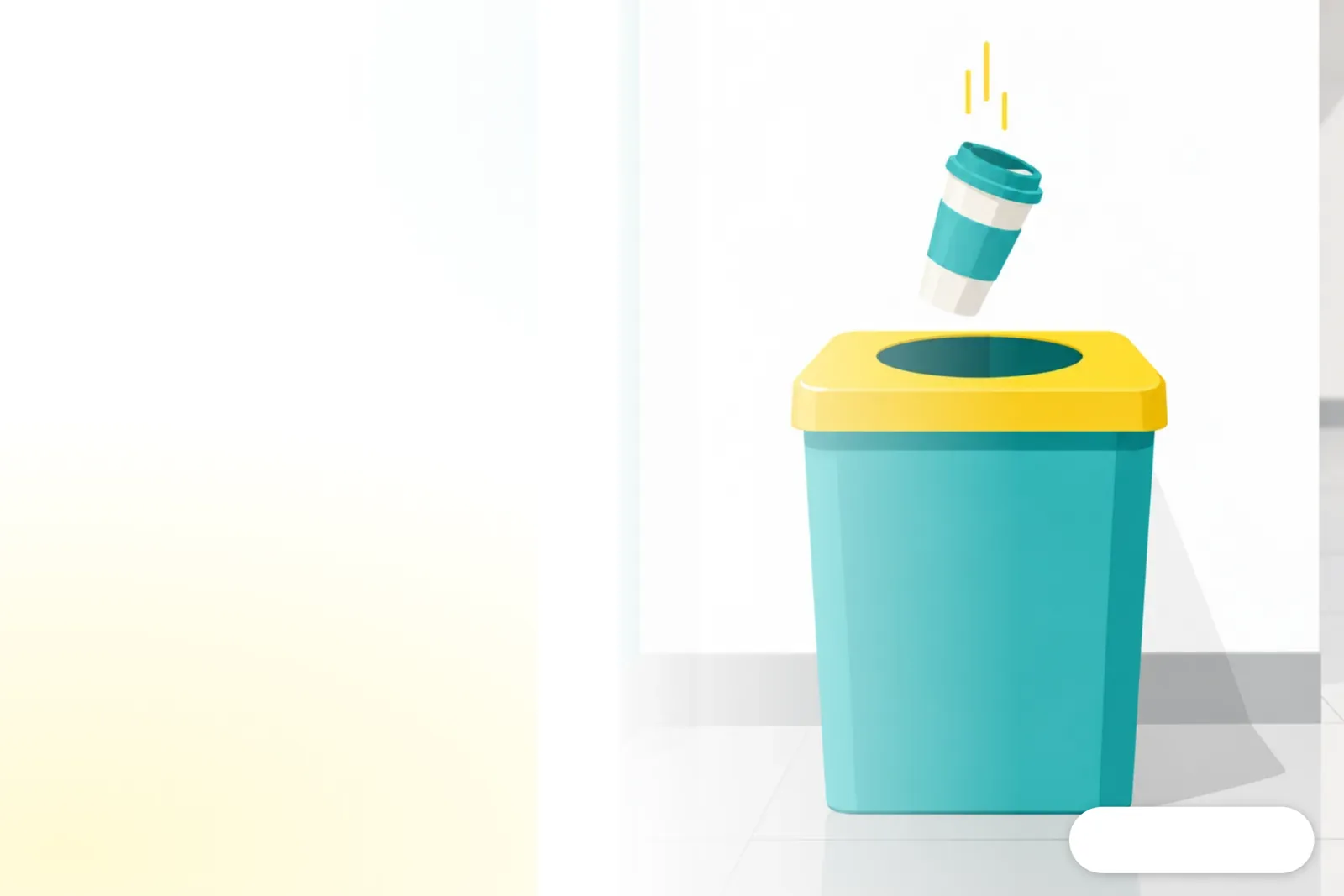
How can a reusable cup skip the deposit and the app?
A reusable cup program can run without deposits or a mandatory app, but the return step has to become part of people's daily route on campus. I look at these programs through what I call the three Mai Strategy print gates, flow first, then whether the container and the printing can hold up
Ecosurety (the UK partner behind this reusable cup trial) worked with the University of the West of England, Bristol (UWE Bristol, which supplied the campus test site) and deliberately skipped both the deposit and the app requirement, relying instead on fixed return points and behavioral design to bring cups back. Full details in the original Packaging Insights report: Ecosurety and UWE Bristol trial reusable cups
Reusable packaging is a container system that gets collected, cleaned, and inspected before going back into circulation, the point is getting containers to flow back, not making thicker cups
What this case actually proves is that deposits and apps aren't a required starting point for a reuse program. One campus trial still can't guarantee return rates across every commercial setting, what matters is still whether the return point sits on someone's natural path and whether a person is actually responsible for it

How does a no-deposit model get cups back through flow alone?
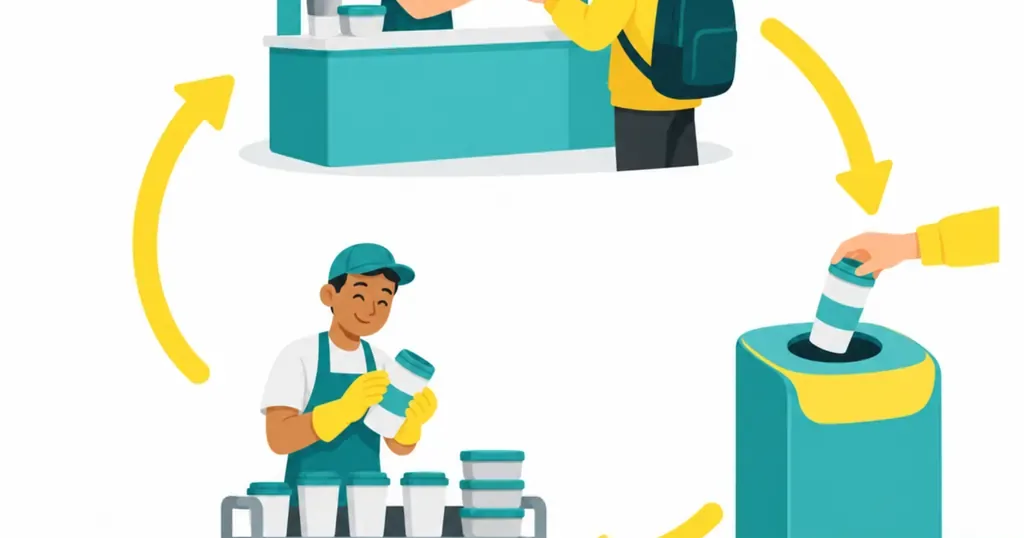
It works by putting fixed return points where memory and effort costs stay low, so the customer just has one clear extra step after finishing their drink. I'd break the campus trial down into three on-the-ground questions
・1. The return location shows up right when someone picks up the cup, information travels with the cup, not separately
・2. The return point sits on a path people already walk, so returning a cup isn't a detour
・3. Collection, cleaning, inspection, and restocking each have an owner, otherwise the front-facing promise has nothing behind it
None of these three steps need an app downloaded first. The location of the return point, its signage, and what staff on-site actually say to people matter more. When a printer gets the brief, cup body, table signage, and bin labeling should all sit on one flow diagram, not just a pretty cup mockup handed over on its own
Skip the deposit and the app, what does the brand gain, and what does it take on?
This design lowers the barrier to a first try, but it shifts management responsibility onto whoever runs the site. The cost doesn't disappear, it just moves from a deposit mechanism into collection, cleaning, restocking, and communication
Advantages:
・No upfront deposit, so customers never have to deal with refunds
・No app registration, so a campus trial can observe actual return habits directly
Trade-offs:
・Without a deposit, loss and restocking costs land entirely on the operating budget
・Without an app, there's no layer of notifications, reminders, or individual tracking, signage and staff have to carry more of that load
I'd treat this as a fixed-site strategy, not something to copy straight onto multi-store or multi-city distribution. Once the scope widens, return-point density and who's accountable for what become a different problem entirely
Which three print gates does a reusable cup design need to clear first?
Clear container requirements, durable printing, and return-behavior information first, visual consistency and the sustainability story come after
・1. Container requirements: confirm material, food-contact conditions, and washing method upfront, don't carry over ink and sticker habits from paper cups
・2. Print verification: check ink adhesion, abrasion resistance, and color recognition, and run proofs through the actual wash-and-handling cycle the cup will face
・3. Behavioral information: both the cup body and the return bin need to spell out where to return it, a zero-app setup can't treat a QR code as the only entry point
What kills a print job fastest on the floor is a sustainability slogan that fades faster than the cup does. What a brand needs to sign off on isn't a single cup graphic, it's a whole identity system that reads clearly from pickup through use to return
Where should Taiwanese brands and small-to-midsize printers start?
Pick one fixed site, run a small trial through a full cycle of pickup, use, and return, then decide whether a deposit or an app is even necessary
・1. Map the site first, marking the pickup point, return point, and whoever's responsible for collecting cups
・2. Write container material, cleaning method, wash/abrasion durability, and return signage into the print brief
・3. Watch how the return point actually gets used, cup loss, cleaning returns, and on-site complaints
・4. Only add a deposit, an app, or other management tools once the actual problems are clear
If a brand wants to move from disposable cup sleeves to durable branding with return prompts, start by discussing proofing and sign-off conditions with MINDS Printing. To turn a cross-department process into a proper brief, bring it to the Mai Strategy Knowledge Academy advisory team to map out who's responsible for what
Running one site smoothly is more useful than buying a whole system upfront
Key takeaways
・Whether returns flow smoothly comes down to the return path first, deposits and apps are just tools layered on after
・Zero deposit and zero app lower the entry barrier, but they push on-site management responsibility back onto operations
・Print sign-off for reusable cups has to check wash durability, abrasion resistance, recognizability, and return prompts all at once
・Taiwanese brands should run a fixed-site trial first, then decide whether to scale up or add digital tools
Where this could go next
On the manufacturing side, container material, food-contact conditions, washing method, and print durability can all go straight into the proofing sheet. On the design side, the cup body, return point, and on-site prompts should be treated as one integrated interface. For AI, start with version organization, spec comparison, and complaint classification, not with building an app nobody asked for. SaaS (Software as a Service, meaning management functions delivered over the network) can turn return points, cup counts, and cleaning status into optional modules, added only once an actual management need shows up on-site. The brand's next move is concrete: pick one fixed site, map the route from pickup to return, and take that map to the Mai Strategy Knowledge Academy advisory team and MINDS Printing to confirm materials, printing, and who owns execution
Further reading
FAQ
- Does a reusable cup program have to collect a deposit?
- No. The Ecosurety and UWE Bristol campus trial deliberately skipped the deposit and relied on fixed return points and on-site behavioral design instead. This approach works best when you test it first in a setting where accountability is clearly defined
- Without an app, how do customers know where to return the cup?
- The return point relies on the pickup location, the cup body, and the bin's signage all reinforcing each other, so returning becomes a natural step along the way. An app can come later, it shouldn't replace clear on-site information
- When a printer takes on a reusable cup job, what should they ask first?
- Ask about container material, food-contact conditions, and washing/handling method first, then verify ink adhesion, abrasion resistance, and color recognition. Proofing standards for disposable paper cups can't just be carried over directly
- How does a brand decide whether a trial is worth scaling up?
- Check whether the return point is actually being used, whether cup loss stays manageable, whether the cleaning process holds steady, and whether staff keep having to explain the same thing over and over, then decide whether to add a deposit, an app, or SaaS management
Related articles
The Print × AI weekly
The print and AI know-how designers, brands and enterprises can use before they commit — one email, every week
MINDS Free Tools
AI background removal, a LINE sticker maker, spine & imposition calculators — all free, right in your browser, no upload.
MINDS Group
Need actual printing or gifting services?
From premium printing to online ordering and festive gifts — the MINDS Group sister brands take it from here.