
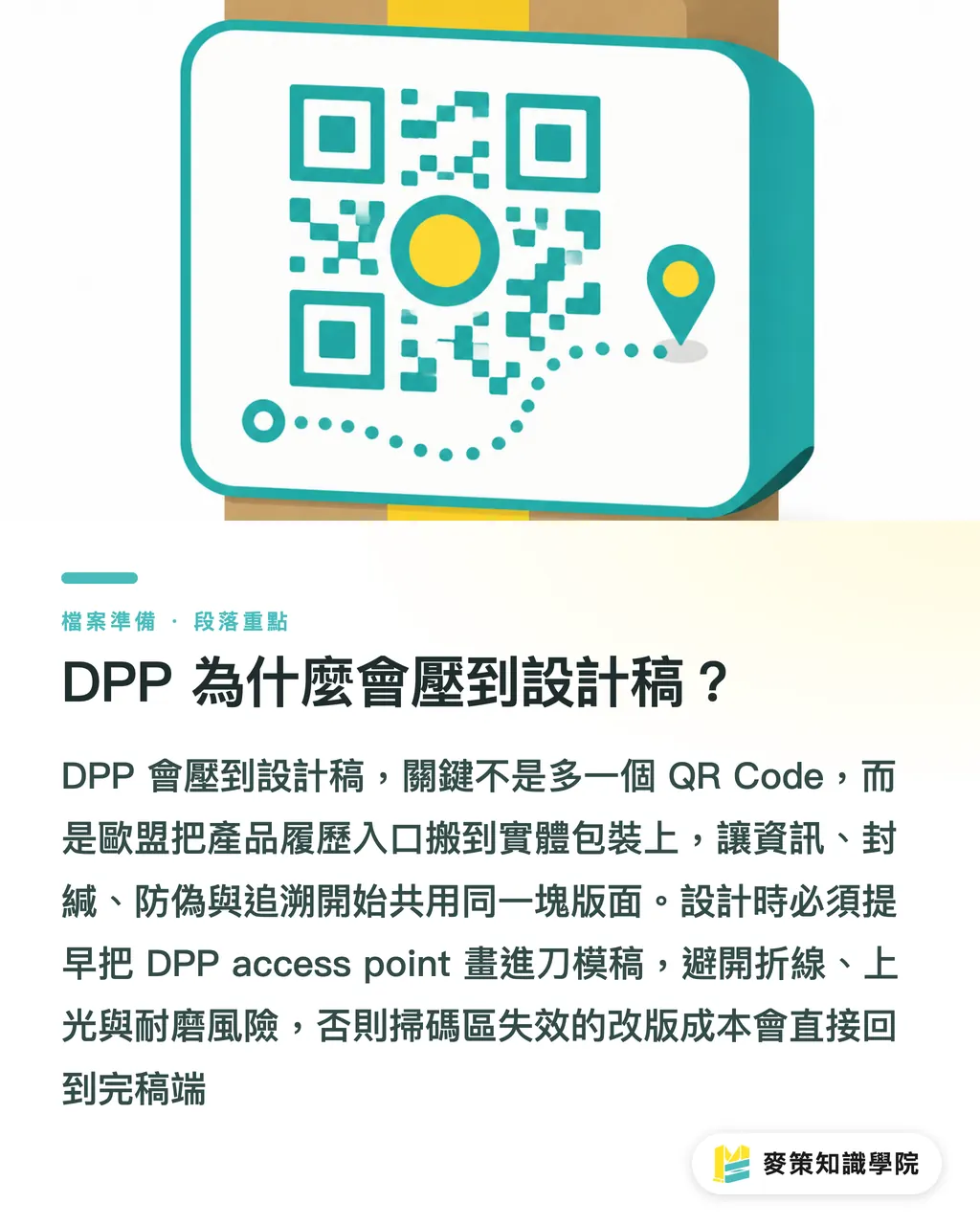
Why Does DPP Impact Design Artwork?
DPP hits design artwork because the EU is putting the entry point for product data right onto physical packaging. The Securikett multifunctional security label case has already packed sealing, tamper protection, and QR traceability onto a single label
A DPP (Digital Product Passport) is a digital record that lets people look up materials, origin, repair, recycling, and compliance data for a product. Users usually reach the data page via a QR Code (Quick Response Code) or another data carrier
The European Commission has already rolled out the DPP Registry and testing environment. The Registry logs unique product identifiers and metadata, while detailed records stay with the economic operator or authorized service providers. Batteries are already locked into a mandatory deadline of February 2027
Prepress teams will feel the pinch first. You cannot just shove a QR Code into an empty corner at the last second anymore. Sealing zones, dielines, varnishes, and abrasion testing all affect scan reliability. I would much rather draw the DPP access point into the dieline layout one version early than discover after proofing that the scan target landed right on a fold line
How Do Multifunctional Security Labels Work?
Multifunctional security labels pack 4 distinct jobs onto a single substrate. For this setup, Securikett combines structured adhesive coatings, Void technology, silicone coatings, and custom die-cutting for material control
・Sealing: Secures trays or box lids with the label, cutting down the need for heat-sealed lids
・Tamper-evident indicators: Leaves a Void pattern, tear marks, or substrate deformation once opened
・Authentication: Builds an authentication feature directly into the label or the scanning flow
・Digital ID: Maps serialized labels to product records and backend permissions
Tamper-evident means that once packaging is opened or peeled, the label leaves visible evidence, letting warehouses, retail channels, and consumers spot tampering with the naked eye
The digital layer relies on code hubs like Codikett to issue and route unique codes while managing role-based access and scan contexts. Master data can stay inside existing systems, presenting a unified portal whenever someone scans the front end
When reviewing these projects, what worries me most is a gorgeous layout with broken material logic. Ventilation holes, viewing windows, tear zones, and the QR Code quiet zone must be planned together on the same dieline. Splitting them up forces prepress teams to patch holes in the final revision
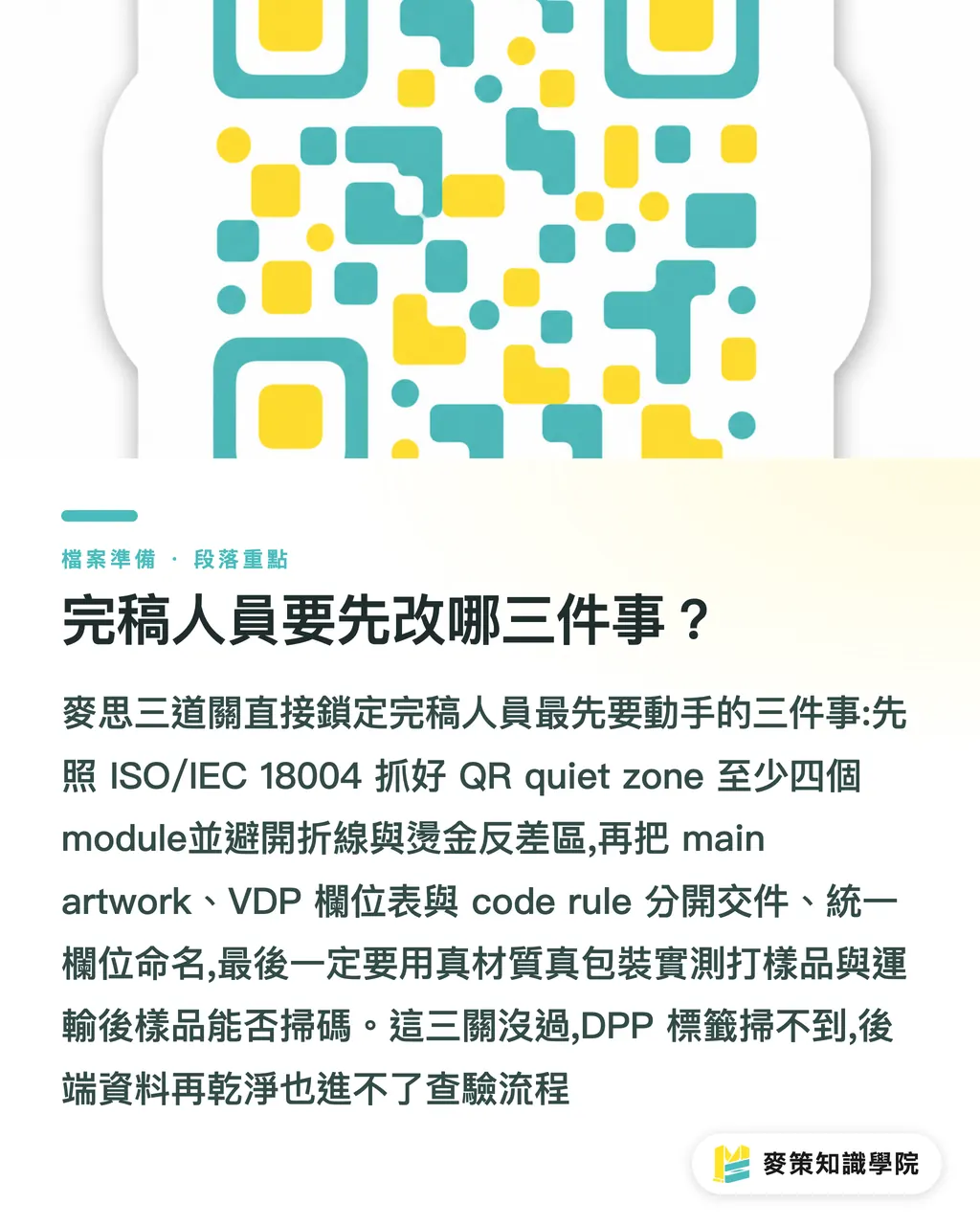
Which 3 Things Must Prepress Teams Change First?
Prepress teams need to tackle the QR quiet zone, VDP data layers, and environmental durability checks first. If a DPP label cannot be scanned, backend data will never reach the verification stage, no matter how clean it is
VDP (Variable Data Printing) merges unique serial numbers, batch codes, QR codes, or tracking URLs into the same base artwork during printing, linking every individual label to distinct data
Mai Strategy's 3 Print Checkpoints can go straight into your job handoff sheet:
・① Layout check: Following standard ISO/IEC 18004 QR Code practice, keep a quiet zone of at least 4 modules. Keep the QR clear of fold lines, tear notches, high-gloss spot varnishes, and foil stamping areas
・② Data check: Separate the main artwork, VDP field mapping spreadsheet, and code rules during handoff. Do not use different field names across Excel, Illustrator layers, and your database
・③ Production check: Run a pilot with the real product, real data, and actual packaging. Scan test proofs, labeled finished goods, and samples subjected to transit friction tests
If a brand client plans to revamp security features, serial numbers, and packaging design all at once, the design team can consult MINDS early on dielines, materials, and variable data handoff specs. That saves endless back-and-forth compared to tacking on a QR Code after artwork is already finished
Which Projects Should Small and Mid-Sized Print Shops in Taiwan Take On?
Small and mid-sized print shops in Taiwan should start by targeting DPP pilots and export packaging redesigns. The Securikett case makes the requirements very clear: clients usually get stuck when trying to roll out data governance, interoperability, durable codes, and permission management all at once
No need to rush
Batteries face a hard deadline in February 2027, with textiles, apparel, steel, and construction materials also designated as priority product categories. For cosmetics and food contact materials common in Taiwan, exact rollout dates still depend on upcoming regulations, but packaging clients are already asking about QR traceability, batch records, and authenticity verification
Here is how I would prioritize incoming projects:
・High priority: Brands that already sell to EU clients, have clean SKU management, and are willing to run a pilot on a single real product
・Medium priority: Clients currently redesigning packaging whose master data is still scattered across ERP systems, Excel sheets, and vendor emails
・Low priority: Projects that only want a QR Code as a promo landing page link, with zero batch records and no assigned data owner
For small test runs to verify layout and scanning instructions, you can run proofs and design checks through MINDS. Once you move into anti-counterfeit substrates, sealing structures, and serialized labels, step back into custom printing and data workflow specs. Otherwise, your quote sheet will turn into pure guesswork
Key Takeaways
・For DPP labels, make sure it scans first before worrying about what data appears
・If your artwork lacks a proper QR quiet zone, you will be rebuilding the entire prepress file later, not just making a quick tweak
・Test security substrates, variable codes, and data access permissions together. Testing them in isolation hides real-world production glitches
・Small and mid-sized printers in Taiwan are now selling a reliable label delivery workflow. The physical sticker is just one layer
Looking Ahead
My advice is straightforward. Designers should draw the DPP access point directly into the dieline first. Printers should get up to speed on VDP, scan verification, and durability testing. Brands should clean up their master data first. When adopting AI, start by matching SKU fields, flagging missing image assets, and checking that QR codes match version numbers. For SaaS teams, do not rush to pitch massive enterprise platforms. Focus on getting code issuance, data ownership, role-based access, and update logs clear enough for clients to understand. That alone is plenty
Further Reading
FAQ
- Do DPP labels have to use RFID?
- Not necessarily. The Securikett case treats QR codes, serialized labels, and secure data carriers as the primary entry points. RFID is better suited for bulk scanning or closed-loop logistics
- What is the most common mistake designers make when submitting DPP QR layouts?
- The most frequent blunder is scaling the QR Code like a regular graphic. A DPP QR needs an intact quiet zone, a locked position, sharp contrast, and must steer clear of fold lines, dielines, tamper tear strips, and spot gloss reflections
- Do small and mid-sized print shops need to buy new equipment right now?
- Run pilots first instead of rushing into expensive machinery purchases. Validate VDP, scanning, abrasion resistance, and data update workflows using real products, real data, and actual packaging. Only discuss equipment once you identify exact capability gaps
- What business opportunities does DPP create for graphic design studios?
- Design studios can bundle DPP access points, packaging information architecture, QR instructional copy, and revision control into their pitches. That addresses export brands' procurement pain points far better than basic visual layout alone
Related articles


The Print × AI weekly
The print and AI know-how designers, brands and enterprises can use before they commit — one email, every week
MINDS Free Tools
Imposition calculator and preflight file check — free prepress tools, right in your browser.
MINDS Group
Need actual printing or gifting services?
From premium printing to online ordering and festive gifts — the MINDS Group sister brands take it from here.