
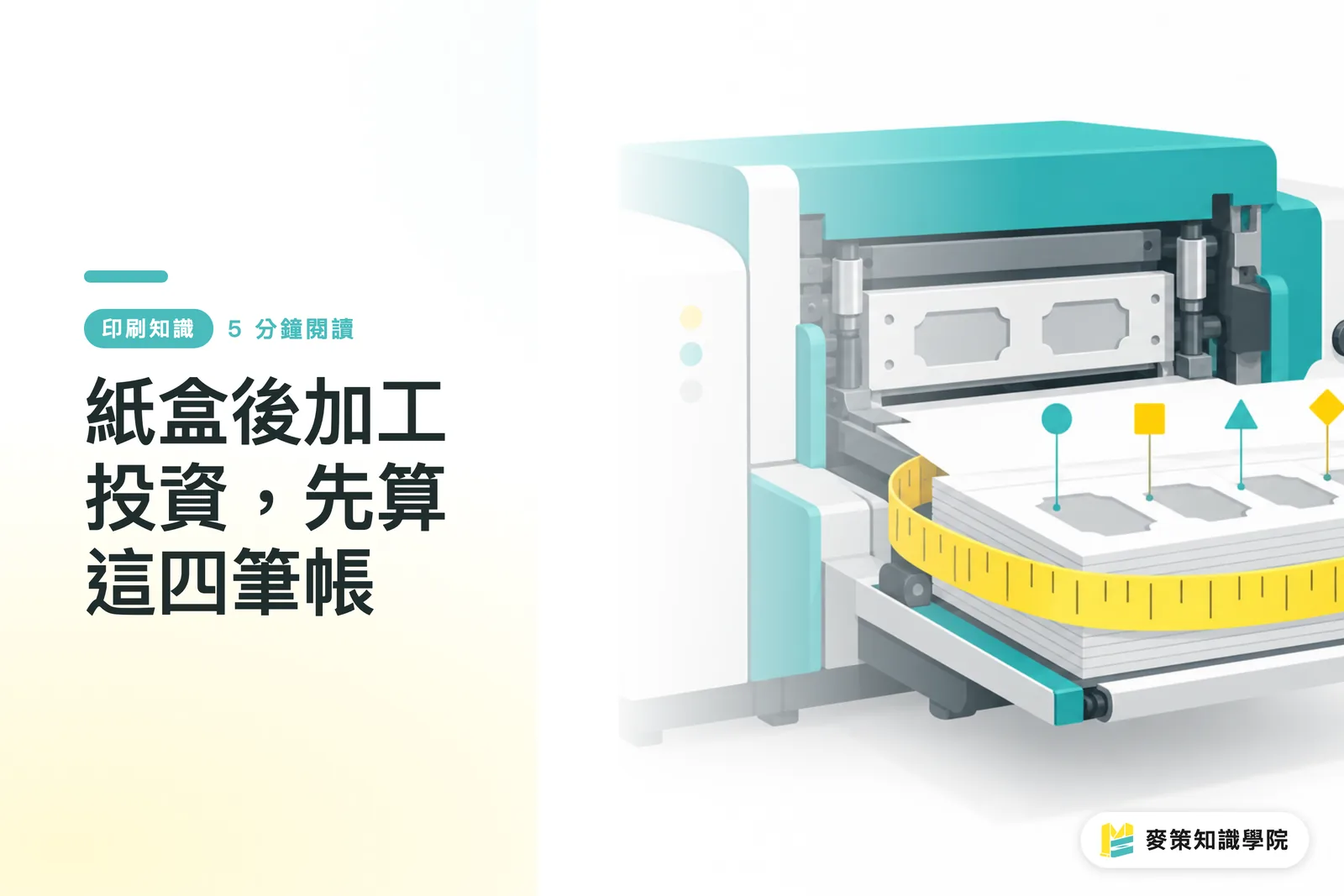
Which Costs Should a Carton Plant Check Before Investing in Postpress?
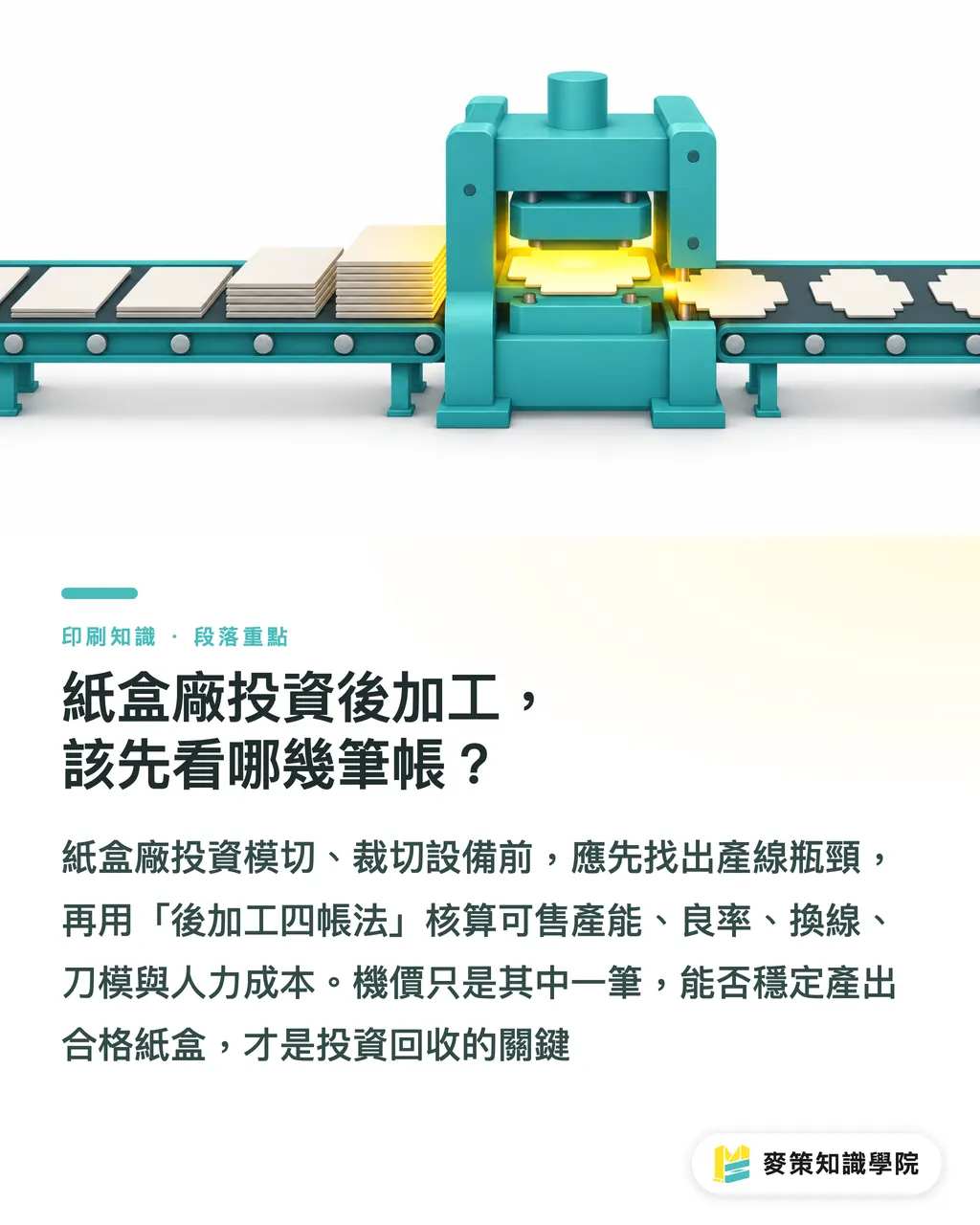
For carton plants buying die-cutting and cutting equipment, start by finding the bottleneck. Then use what I call the "four-part postpress check" to work through saleable capacity, yield, changeovers, and die tooling and labor costs. The machine price is only one line item. The investment pays back when you can turn out good cartons consistently
Postpress covers the steps after printing that cut, die-cut, crease, or glue paper stock into finished products ready for delivery. Die-cutting uses a cutting die to cut the carton outline and press in fold lines, while leaving tiny nicks that temporarily hold the sheet together for feeding and registration
BOBST, a die-cutting equipment maker, continues to supply the die-cutters used by Cardbox Packaging, a paper-based food packaging manufacturer. Carton maker Ultimate Paper Box, meanwhile, has added equipment from Koenig & Bauer, maker of the CutPRO Q 106 cutter. Both put capital into postpress, but neither case publishes machine specs or payback figures that can be compared directly
What Does BOBST's Continued Investment Tell Us?
Cardbox cites productivity and reliability as reasons for investing in BOBST. The Austrian paper packaging plant installed a NOVACUT 106 ER die-cutter in 2017, then chose two VISIONCUT 106 LER automated die-cutters in 2021 and 2024. Its die-cutting equipment works alongside two sheet-fed offset presses and other postpress equipment
I care less about the fact that Cardbox bought three machines than about each follow-on investment being grounded in how the existing equipment performed. If a new machine only speeds up one station, downstream sorting and delivery can become harder to coordinate, and actual capacity may not rise. Speed alone doesn't answer the question
Cardbox Packaging continues to invest in BOBST die-cutting equipment notes that customers expect large orders to maintain their cutting quality and arrive on time and in full. Equipment evaluations should account for saleable good output and delivery times, not just the top speed listed in a brochure
Why Is Recycled Thin Paperboard Harder to Die-Cut?
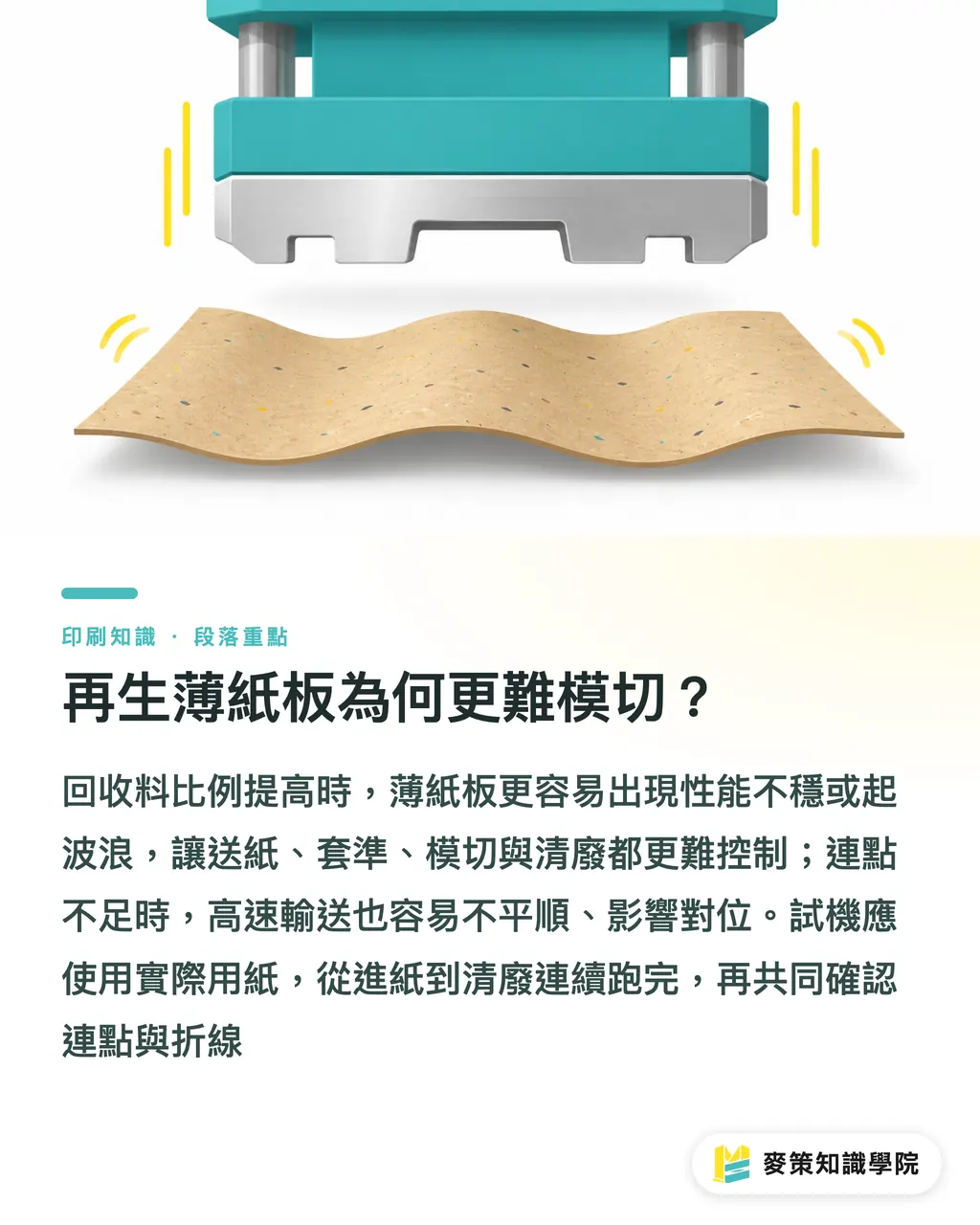
As recycled content rises in thin paperboard, the stock can behave inconsistently or develop waviness. That makes everything harder to control, from feeding and registration (keeping sheets in the right position at each station) to stripping (removing the waste around the carton blanks)
Cardbox points out that if there aren't enough nicks, the tiny paper bridges left between cuts in a die line, sheets won't feed smoothly at high speed or stay in register across stations. When the sheet runs unpredictably, cutting quality can fluctuate too
Carton plants should test with the paperboard they actually run, not just standard white board. Run a continuous trial from feeding through registration, die-cutting, and stripping, then have the die maker and design team review the nicks and crease lines together. I wouldn't use a machine's no-load speed to vouch for a paperboard production run
What Can Automatic Feeding and TooLink Do?
The value of automatic feeding and TooLink is that die-cutting and die-prep information can be viewed in the same workflow. Cardbox's latest VISIONCUT 106 LER line integrates automatic feeding. TooLink, BOBST's data platform for connecting machines and dies, brings together die data, recipes, and job history so operators can look up production information
Plants can start by checking whether die numbers match the physical tools, whether job recipes use consistent names, and whether records from past jobs are easy to retrieve. If these three sets of information are managed separately, connecting them won't stop operators from hunting things down or resetting settings
Cardbox says it uses this connected setup to increase production flexibility, shorten changeovers, and improve productivity. The case gives no figures for minutes saved or operators reduced, so those numbers don't belong in a payback sheet yet
How Should Small and Mid-Sized Carton Plants in Taiwan Make the Call?
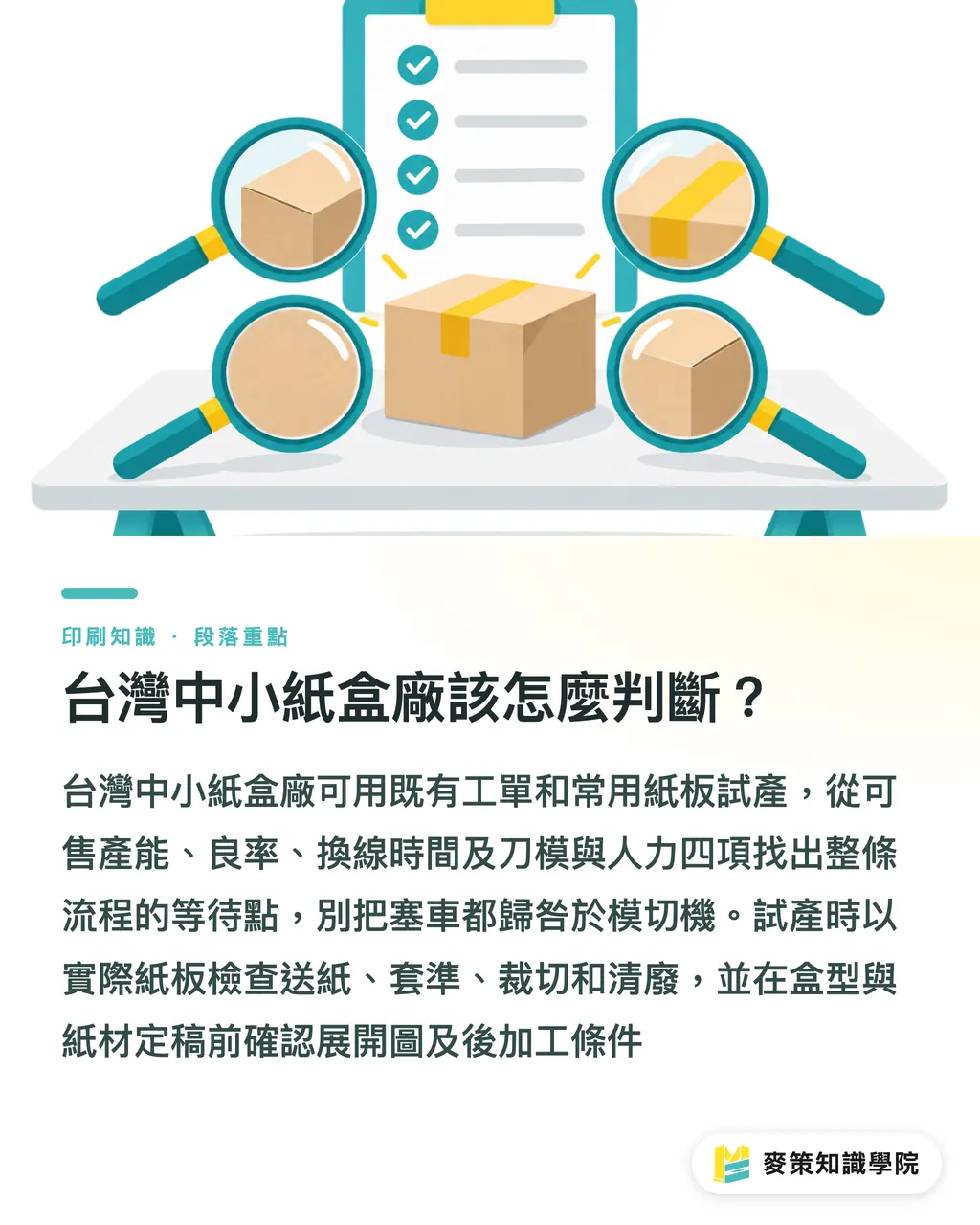
Small and mid-sized plants in Taiwan should run trials using existing job orders and commonly used paperboard, then compare the four checks. Cardbox's die-cutters work alongside two sheet-fed offset presses and other postpress equipment. That's a reminder to find the waiting point across the whole workflow instead of blaming every bottleneck on the die-cutter
・Saleable capacity: Identify the repeat orders and small, fragmented jobs you handle most often, then find where each one gets held up
・Yield: Use actual paperboard to check feeding, registration, cutting, and stripping
・Changeovers: Record the time spent changing dies, setting up the machine, and approving the first article
・Die tooling and labor: Check die life, maintenance, and where operators need to step in
Before finalizing the carton style and paper stock, brand customers can ask the printer to review the dieline and postpress requirements. If a project combines fully custom commercial printing with packaging presentation, confirm the paper stock, color, and postpress specs with MINDS before sampling
Key Takeaways
・Start with the bottleneck, then compare saleable good output
・Cardbox continued investing in die-cutting equipment in 2017, 2021, and 2024, citing productivity and reliability
・Thin paperboard and recycled content can bring waviness, feeding, and registration problems
・Automatic feeding and job history make information easier to find, but they don't replace production trials on actual paperboard
What to Consider Next
If print shops use consistent names for die numbers, paper stock, recipes, job orders, and defect causes, and the design team confirms the carton dieline and paper stock before sampling, brand buyers can request quotes against the same specs. AI/SaaS teams can first help retrieve die histories and changeover records. Once the data matches what's happening on the shop floor, then it makes sense to talk about predicting yield
Further Reading
FAQ
- What should a carton plant look at first when investing in die-cutting equipment?
- Find the actual bottleneck first, then compare saleable capacity, yield, changeovers, and die tooling and labor costs. Top speed doesn't tell you how many good cartons you can deliver per shift
- Which is a better fit, the BOBST VISIONCUT 106 LER or the Koenig & Bauer CutPRO Q 106?
- The cases provided don't compare the specs of the two models, so you can't make the call based on brand alone. Run trials with your usual paperboard, carton styles, and job loads, then break down the costs
- Why does recycled paperboard affect die-cutting?
- Thin paperboard with more recycled content can develop waviness, making feeding and registration harder. Too few nicks can also make high-speed feeding unstable, so validate the die design with the paperboard you actually use
- When should brand customers ask a printer to check postpress requirements?
- Ask the printer to review them before the paper stock, carton style, and dieline dimensions are finalized. That gives you time to check whether the die lines, crease lines, and gluing requirements work together
Related articles


The Print × AI weekly
The print and AI know-how designers, brands and enterprises can use before they commit — one email, every week
MINDS Free Tools
Spine width and imposition calculators — skip the manual math, free in your browser.
MINDS Group
Need actual printing or gifting services?
From premium printing to online ordering and festive gifts — the MINDS Group sister brands take it from here.