

Why Are Corrugated Boxes Still the Mainstay?
Corrugated boxes remain the leading packaging format. At Pack Expo, the FBA said major markets include general manufacturing, distribution, e-commerce and agriculture. When assessing demand, MINDS (a mid- to high-end fully custom commercial printer) starts by looking at how boxes are used, rather than letting any one channel speak for the whole market
A corrugated box is a shipping container made by bonding a wavy corrugated medium between flat sheets. It is commonly used for stacking, warehousing and distribution, and protects goods during handling. FBA stands for Fibre Box Association. The report quotes its vice president on the U.S. market. Here, FBA refers to the industry association, not Amazon's Fulfillment by Amazon
The report says e-commerce demand has offset some of the losses caused by manufacturing moving overseas. FBA Executive Vice President Cory Martin shared this observation at Pack Expo in Chicago on October 19, 2026. Read the report on corrugated boxes maintaining their position amid market changes
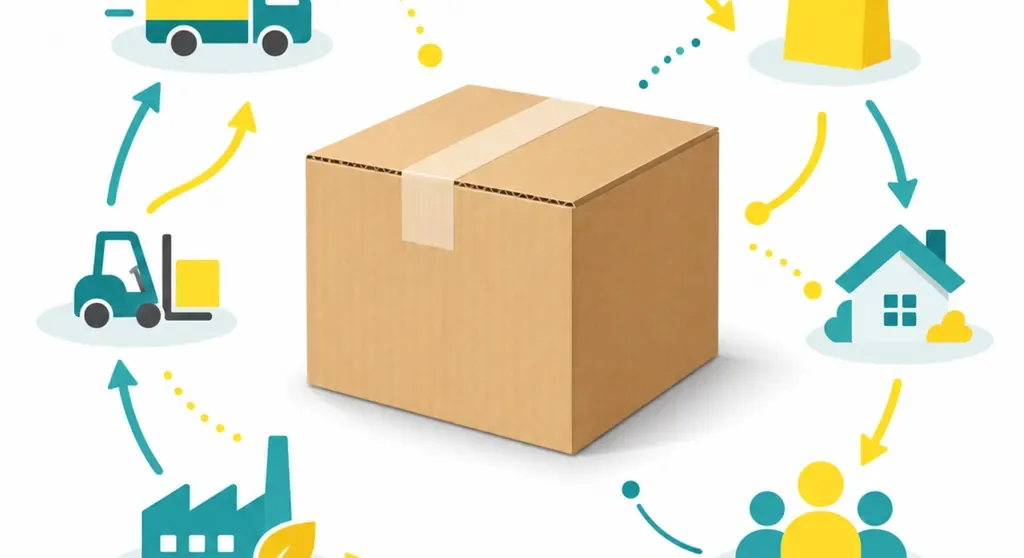
How Should Brands Read the Market Changes Cited by the FBA?
Brands should factor trade, lightweighting and extended producer responsibility regulations into purchasing decisions. The FBA identified all three as forces changing the conditions of the corrugated box market. MINDS recommends checking whether they affect product sourcing, packaging choices or responsibility requirements
Extended producer responsibility (EPR) is a system in which producers take responsibility for managing their products or packaging after use. The report says trade decisions can affect customers' businesses and sourcing, as well as the equipment used by U.S. corrugated manufacturers, since some machinery is made overseas and then shipped to the United States
I wouldn't take lightweighting to mean simply using thinner board. Brands should have their design and supply teams assess protection, shipping conditions and applicable responsibility requirements together, then confirm that any changes will work for actual shipments
Does E-commerce Growth Mean More Boxes Are Needed?
E-commerce growth does not automatically translate into greater overall box demand. The FBA says e-commerce has offset some of the market losses caused by manufacturing moving overseas. MINDS recommends looking at orders from individual channels separately from total box demand
Hold on
The FBA also noted that the U.S. corrugated industry gets busy every fall as holiday shopping picks up, and that the pattern has been relatively steady in recent years. Seasonal peaks can explain short-term scheduling pressure, but on their own they do not prove that demand is growing year-round
I would check order purpose, shipping season and product sourcing together. Start with the source, then see whether more e-commerce orders mean more shipments, or whether existing manufacturing and distribution needs have simply shifted channels
How Can Brands Use MINDS's Three Questions for Box Demand?
MINDS's three questions for box demand turn the market changes cited by the FBA into checks for purchasing meetings. Manufacturing, distribution, e-commerce and agriculture offer a starting point for classifying use, but they do not mean Taiwan has the same demand mix
・The use question in MINDS's three questions for box demand: What kind of shipment are these boxes for, and where in general manufacturing, distribution, e-commerce or agriculture will the product be used?
・The change question in MINDS's three questions for box demand: Which of the following has already changed sourcing, packaging needs or purchasing terms: trade, lightweighting or extended producer responsibility?
・The evidence question in MINDS's three questions for box demand: Have internal shipping plans and packaging specifications changed together? Also confirm that the FBA's observations about the U.S. market do not automatically apply to your brand's own orders
How Can Brands Turn Their Reading of the Market into Purchasing Decisions?
Before using the FBA's observations about the U.S. market to guide purchasing, brands should check their own shipping destinations and paper sources. The report says nearly all the fiber used in U.S. corrugated boxes comes from U.S. paper mills, and imports of corrugated boxes are also limited. That supply structure cannot be applied directly to Taiwan
Check the source first
MINDS recommends listing product use, shipping destination, peak-season plans, any planned weight changes and the regions where packaging responsibility requirements apply in the demand brief. That gives the brand, design team and supplier the same terms for discussing box purchases. If you need to sort through your purchasing assumptions, talk with the Mai Strategy Knowledge Academy consulting team about turning market signals into questions specific to your brand
Key Takeaways
・When assessing corrugated box demand, MINDS starts by breaking down use, then looks at changes in individual channels
・The trade, lightweighting and extended producer responsibility factors cited by the FBA can change market conditions. They do not necessarily mean more boxes will be needed
・E-commerce has offset some of the losses caused by manufacturing moving overseas. That does not, by itself, mean total demand is growing
・The U.S. paper sourcing structure cannot be applied to Taiwan. Brands need to check their own shipping destinations and supply sources
A Further Thought
MINDS's three questions for box demand can serve as a shared demand brief for brands, designers and suppliers. Packaging suppliers can spell out the materials they can handle and their lead times. Designers can tie weight reduction back to product protection. Brands can confirm shipping destinations and responsibility requirements. AI and SaaS teams can attach channel, seasonal and sourcing assumptions to demand forecasts, so purchasing teams can see why the forecast changed instead of receiving only a total box count
Further Reading
FAQ
- Are corrugated boxes still the leading packaging format?
- Yes. At Pack Expo, the FBA said corrugated boxes remain the leading packaging format, with major markets including general manufacturing, distribution, e-commerce and agriculture
- Does FBA refer to Amazon here?
- No. In this article, FBA stands for Fibre Box Association, the industry group discussing the U.S. corrugated market in the report. It is separate from Amazon's Fulfillment by Amazon
- Will e-commerce growth bring a matching increase in box demand?
- Not necessarily. The FBA says e-commerce has offset some of the losses caused by manufacturing moving overseas. Brands should assess channel orders separately from overall box demand
- Can brands in Taiwan apply the U.S. view of box supply as-is?
- They should not. The FBA report describes paper and box supply in the United States. Brands in Taiwan still need to check their own paper sources, shipping markets and packaging requirements
Related articles



The Print × AI weekly
The print and AI know-how designers, brands and enterprises can use before they commit — one email, every week
MINDS Free Tools
AI background removal, brand stamping, and a LINE sticker maker — free design tools, right in your browser, no upload.
MINDS Group
Need actual printing or gifting services?
From premium printing to online ordering and festive gifts — the MINDS Group sister brands take it from here.