

Overview
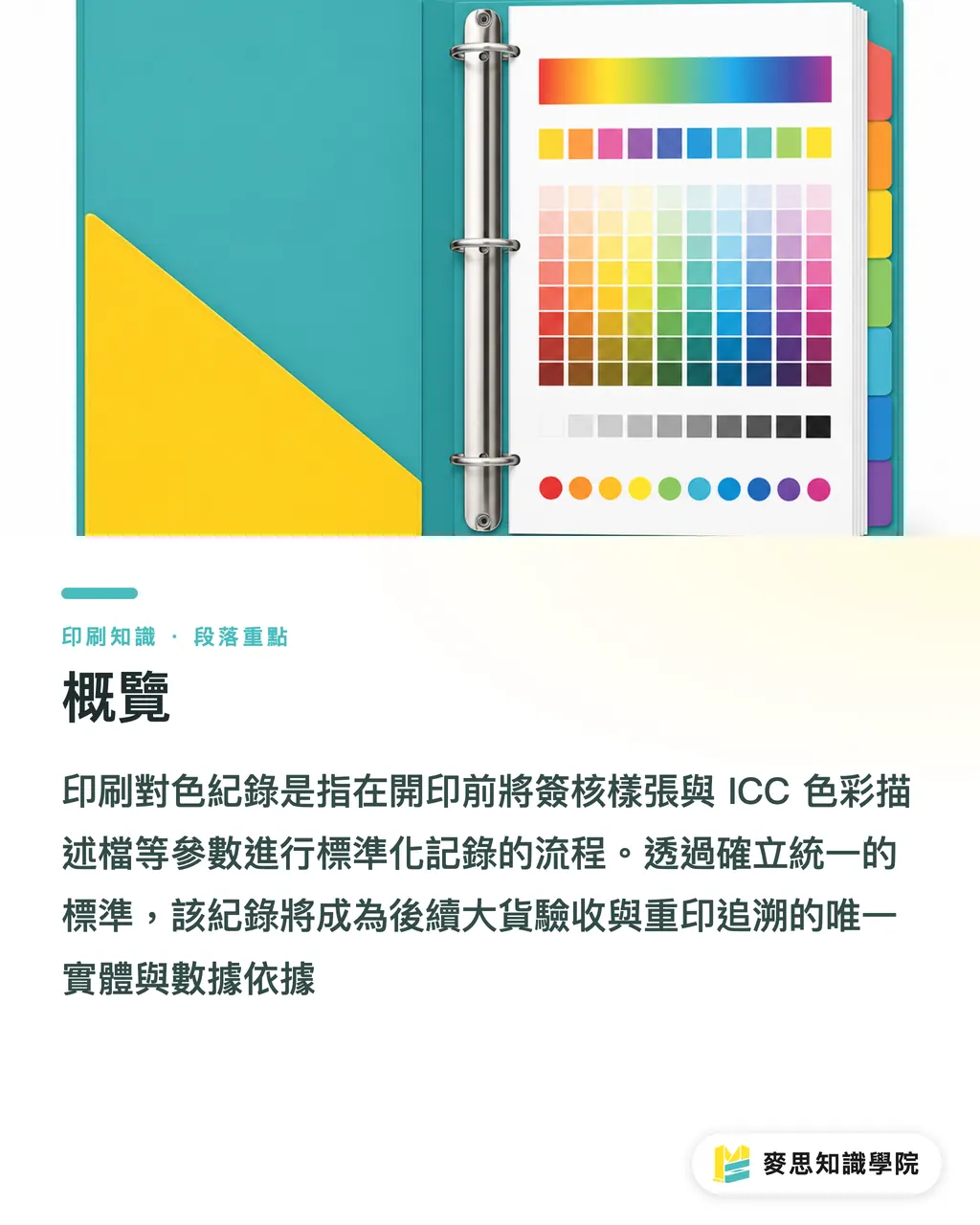
A print color matching record is a standardized process of documenting the signed proof, printing method, paper stock, ICC profile, and pressroom ink adjustment parameters before starting the press run. It serves as the sole physical and data-driven benchmark for final delivery inspection and reprint tracking
What Core Items Should a Print Color Matching Record Include?
A complete print color matching record must cover both the physical signed proof and 7 core parameters, including sign-off date, file version, paper stock, printing method, ICC profile, ISO 3664 standard viewing light source, and pressroom color adjustment data
In my ten-plus years of monitoring pressroom operations, most printing disputes don't come from poor pressmanship, but from sloppy preliminary records. Many designers assume that sending the file to the press factory completes their job, only to end up with color shifts and no record to reference. A complete sign-off record is your last safety net before starting the press
When building a standard color matching record, I recommend that designers log the following technical dimensions on the sign-off sheet:
・Signed file version: State the final artwork filename and the exact timestamp of the last revision
・Paper stock and basis weight: Record paper brand, weight, and coating characteristics, such as 150gsm Jinhua Card or 120gsm Uncoated Book Paper
・Printing process and equipment: Specify offset printing, digital printing, or spot color (Pantone) printing
・Color profile: Note the ICC profile embedded in the file, such as FOGRA39 or GRACoL2006
・Standard viewing light source: Standardize on D50 5000K color temperature light sources specified by ISO 3664
・Pressroom micro-adjustments: Log prepress ink key volume and CMYK tonal curve adjustment percentages
・Physical sign-off sample number: Assign corresponding control numbers to the physical digital proof and the sign-off sheet
This is very common
If you have doubts about file specifications before handoff, consult the Mai Strategy Knowledge Academy Consulting Team first to clarify file setup and color space settings, saving you redundant proofing runs and communication costs
Why Photos Can Never Serve as a Basis for Print Acceptance
Photos taken with smartphones or cameras are affected by lens sensors, screen color gamuts, and ambient lighting, failing to reproduce the optical reflectance and paper texture of physical prints. Therefore, photos can only serve as secondary documentation and must never replace physical signed proofs
The biggest mistake during press checks is snapping a photo, sending it via LINE, and saying "Looks good." Phone screens use wide-gamut RGB displays, whereas press production uses four-color CMYK overprinting, making their underlying color reproduction models fundamentally different. Add automatic smartphone white balance adjustments to the mix, and the photo sent across looks entirely different from the actual sample on press
Physical proofs possess distinct physical characteristics such as paper fiber reflection, ink dry-back, and surface gloss. Photos can, at best, confirm layout placement and check for missing text, but they cannot serve as a benchmark for color acceptance
Only physical samples count
Whether it is a digital proof or the first press pull from the production line, it must be properly marked as "Signed and Approved Proof" and sealed by both parties. If you need long-term training in color standardization, subscribe to the Mai Strategy Knowledge Academy Newsletter for the latest prepress color management insights

How to Prevent Verbal Color Tweaks From Causing Blunders in Multi-Department Reviews
When multiple departments review proofs, a single-point accountability system must be established. One designated final decision-maker must physically sign the hard-copy proof with the version logged. Any verbal request for color adjustments not documented on the sign-off sheet will not be cleared for printing
I've handled many reprint compensation cases where the root cause was simply "Marketing wanted it a bit redder, and Design thought the printer got the message." Multiple departments chime in with opinions, the final press run misses expectations, and everyone claims they meant something else
To avoid getting caught in this responsibility sandwich, the review workflow must enforce clear ownership and a clear paper trail:
・① Designate a single point of contact: Cross-functional teams can share feedback, but only one person liaises with the printer and signs the proof
・② Mark up and sign the physical proof: Draw red ink lines directly on the hard-copy proof for color tweaks, adding explicit written instructions like "Decrease C by 5%"
・③ Void obsolete proof versions: Once a new proof is produced, mark the old proof with a big cross immediately to keep press operators from grabbing the wrong version
Never cut corners here
A signature isn't just paperwork; it marks the official transfer of printing authorization. Without a signature from the final decision-maker, the press line stays off
What Are the Standard Operating Procedures for Pressroom Color Matching and Sample Archiving?
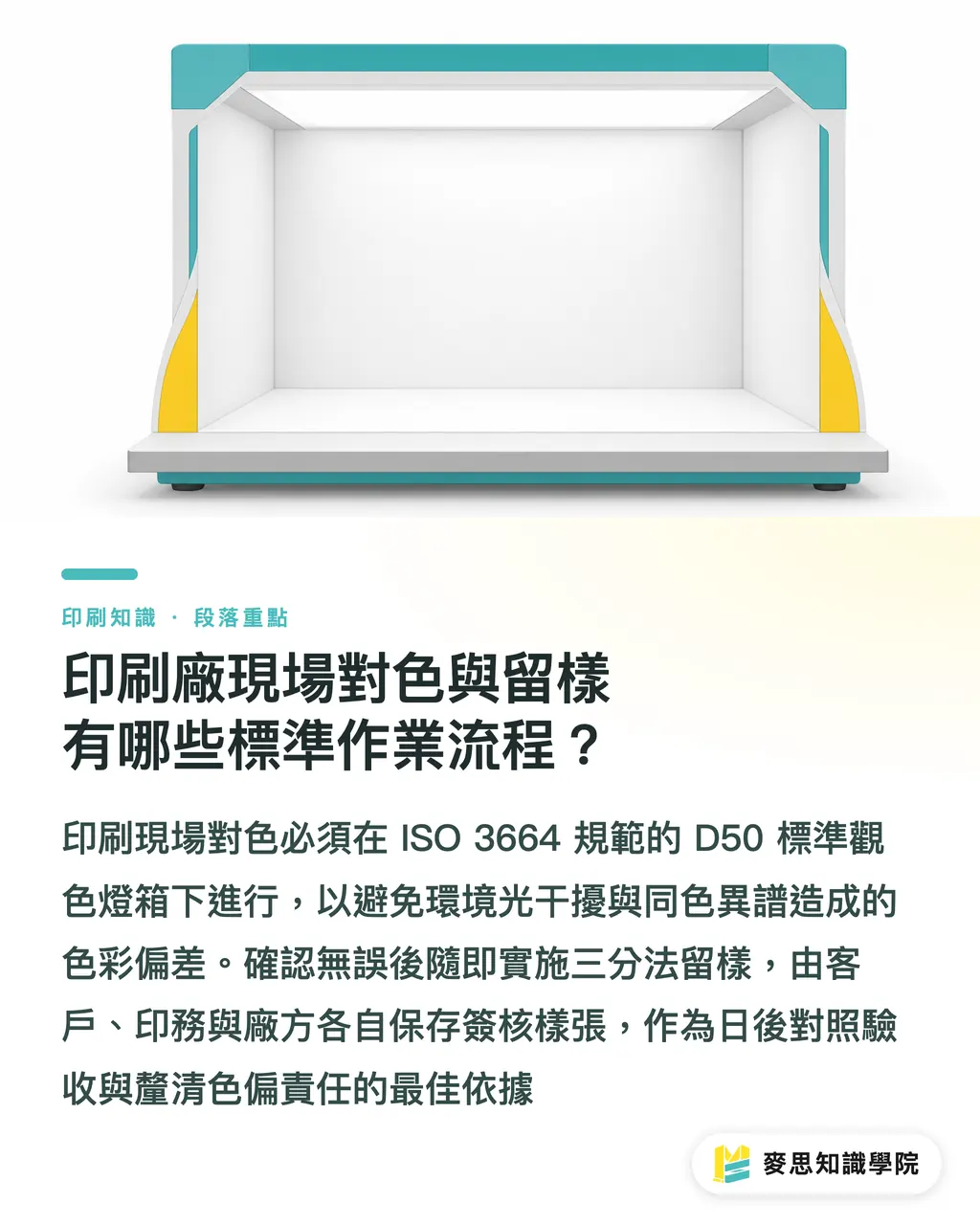
Pressroom color matching must take place under ISO 3664-compliant D50 standard viewing light booths, using a three-way sample retention system where signed proofs are distributed to the production manager, the printing plant, and the client
Many designers perform press checks by walking over to a fluorescent light or heading out to daylight in the hallway. In color science, this triggers metamerism. The same print looks vastly different to the naked eye under 6500K D65 light versus a 5000K D50 standard light source
Standard operating steps for pressroom color matching and sample retention:
1. Calibrate the viewing environment: Turn on a D50 viewing light booth with Color Rendering Index Ra>95, minimizing ambient light interference
2. Compare production press sheets against signed proofs: Place the first press sheet fresh off the machine side-by-side with the previously signed digital proof
3. Execute three-way sample retention: Once approved for production, mark three identical-quality sample proofs on press for archiving by the client, project management, and the pressroom floor
4. Build digital archives: Save photos of signed-off proofs alongside scanned ink adjustment logs in the project traceability folder
If disputes arise upon final delivery, all three parties bring out their archived physical proofs under standard lighting, making color shift responsibility instantly clear
Key Takeaways
Print color matching records must combine physical signed proofs with 7 technical parameters to serve as a valid basis for acceptance
Smartphone photos cannot recreate the physical optical properties of print; press checks and acceptance must rely strictly on hard-copy proofs
The review process must designate a single decision-maker to sign off in ink, rejecting verbal color changes to establish clear production accountability
Sample retention follows a three-way mechanism, with side-by-side comparisons conducted under ISO 3664 D50 standard light sources
Further Thoughts
Looking at collaborative trends spanning print manufacturing and graphic design, future color matching management will evolve into a dual system balancing digital tracking with physical sample archiving. For designers and procurement teams, building traceable sign-off standards goes beyond preventing print failures; it serves as a foundational pillar for smoother cross-team communication. Businesses should implement single-point sign-offs and three-way sample retention starting with their next print job to keep quality control firmly in their hands
FAQ
- Is it acceptable to take photos for the printer to confirm color?
- No. Smartphone photos are distorted by camera sensors, automatic white balance, and RGB screen rendering, failing to reflect true CMYK reflectance. Color matching must rely on physical signed proofs evaluated under ISO 3664 D50 light sources
- How long should print sign-off proofs be safely archived?
- We recommend keeping them for at least 6 months after final delivery inspection. For recurring reorders, store sign-off proofs in a moisture-controlled, dark environment as a long-term color benchmark
- What color temperature should be set for pressroom viewing?
- The printing industry standard viewing light source is D50 (5000K color temperature) specified by ISO 3664, which prevents color rendering shifts caused by metamerism
- What should be done when different departments have conflicting feedback during proof reviews?
- Establish a single point of contact. One designated final decision-maker must consolidate all feedback, mark up the physical proof, and sign it. No verbal modifications without a final signature will be cleared for press
Related articles





The Print × AI weekly
The print and AI know-how designers, brands and enterprises can use before they commit — one email, every week
Tool Library
RGB↔CMYK conversion, ΔE color difference and brand color print analysis — free color management tools, computed right in your browser.
MINDS Group
Need actual printing or gifting services?
From premium printing to online ordering and festive gifts — the MINDS Group sister brands take it from here.