
Why Is Box Sealing Always the Bottleneck on Packaging Production Lines?
Box sealing is the essential final post-press stage where folding cartons transition from flat paperboard into 3D structures, directly affecting structural strength and pass rates
Box sealing (Box Sealing / Folding Carton Gluing) refers to the post-press process where printed and die-cut folding cartons are folded, glued, and pressed into shape. It is the final step before boxes enter filling, directly determining structural strength and finished product pass rates
Having worked on packaging plant floors for over a decade, the most common scenario I see is high-speed presses and die-cutters running fast up front, while the gluing and sealing area in the back is piled high with semi-finished goods waiting for manual assembly. Traditional sealing relies heavily on manual labor and seasoned technicians. When handling complex composite packaging boxes or specialty box styles, line changeovers can easily take hours. During labor shortages or peak demand, post-press finishing instantly becomes the fatal roadblock for the entire line
To keep folding carton finishing on track, packaging plants must strictly follow the standard operation of 'MINDS (MS, mid-to-high-end fully customized commercial printing) Three Checkpoints for Folding Carton Post-Press Finishing':
・Checkpoint 1: Pre-press structural pre-check, calculating paper basis weight and crease score depth with precision
・Checkpoint 2: Glue formulation matching, setting glue coverage based on film lamination or specialty materials
・Checkpoint 3: Sealing pressure test, ensuring the formed box resists compression without delaminating
If print quality compliant with ISO 12647 fails due to finishing mistakes, all the effort put into the earlier steps goes down the drain
How ColorDynamics ClosePro X Cuts Finishing Hours Through Automation
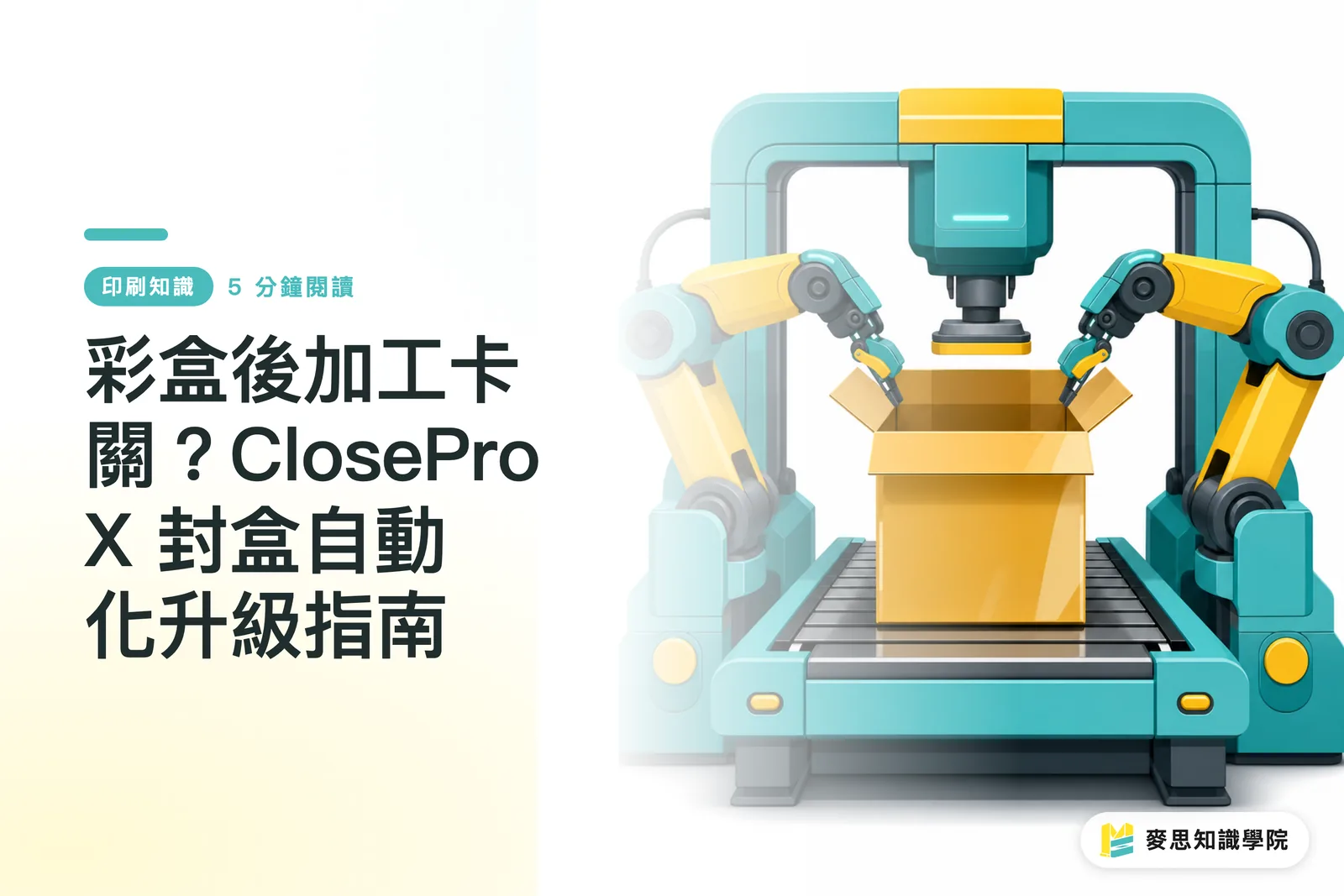
ColorDynamics ClosePro X replaces manual folding and closing with mechanical automation, driving down sealing hours and human error rates for conventional folding cartons and composite packaging boxes
It's simple
In the past, operators handling composite packaging boxes had to repeat four steps: positioning, folding, glue application, and pressing. Over long shifts, finger fatigue led to misaligned box corners and uneven glue application. The ClosePro X optimizes the mechanical structure for post-press finishing, standardizing a process that once depended heavily on operator feel. Whether handling standard folding cartons or multi-material composite packages, the machine maintains consistent processing precision
As the market shifts toward low-volume high-variety orders and tight turnaround times, finishing automation offers more than just speed. It makes lead time forecasting extraordinarily accurate. If you want to evaluate finishing feasibility for your brand packaging, check out the high-end custom commercial printing services from MINDS, which leave room for automated box sealing right from the structural design stage
How Small and Mid-Sized Packaging Plants Should Evaluate Box Sealing Automation
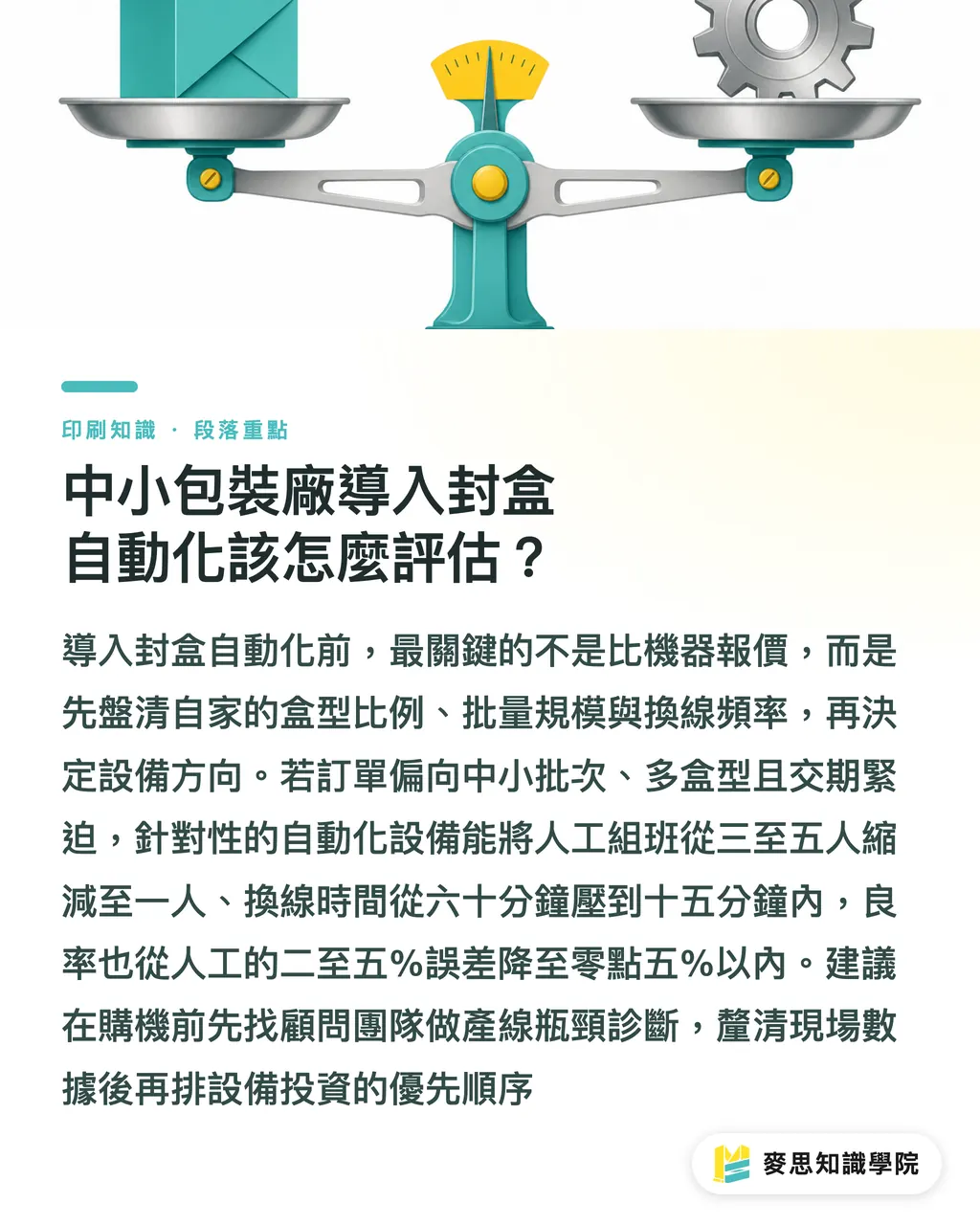
Evaluating box sealing automation equipment goes beyond looking at machine price tags. You have to run the numbers based on your mix of box styles, average order batch sizes, and changeover frequencies
Don't rush in just yet
Many plant managers want to buy new machinery the moment they see it, while overlooking their actual order patterns. If over 80% of your work consists of high-volume standard box styles, conventional high-speed gluers might suffice. But if your orders skew toward small-to-medium batches, diverse box structures, and tight deadlines, automated equipment built for sealing folding cartons and composite packaging boxes like the ClosePro X delivers maximum value
When evaluating an automation upgrade, consider comparing across these dimensions:
・Labor reliance: Traditional manual sealing requires a 3 to 5 person crew, while automated sealing takes just 1 person to monitor the machine and restock materials
・Changeover setup time: Manual machine adjustment takes 45 to 60 minutes, while automated module adjustments take under 15 minutes
・Finished yield control: Manual error rates run about 2% to 5%, whereas automated sealing stays under 0.5%
・Turnaround agility: Manual operations struggle with 48-hour rush orders, while automated production lines enable scheduling right upon order placement
For small and mid-sized printing plants weighing their transformation options, consider contacting the Mai Strategy Knowledge Academy consultant team for a production line bottleneck diagnosis to clarify shop-floor parameters before prioritizing machinery investments
Three Practical Steps to Boost Folding Carton Finishing Efficiency
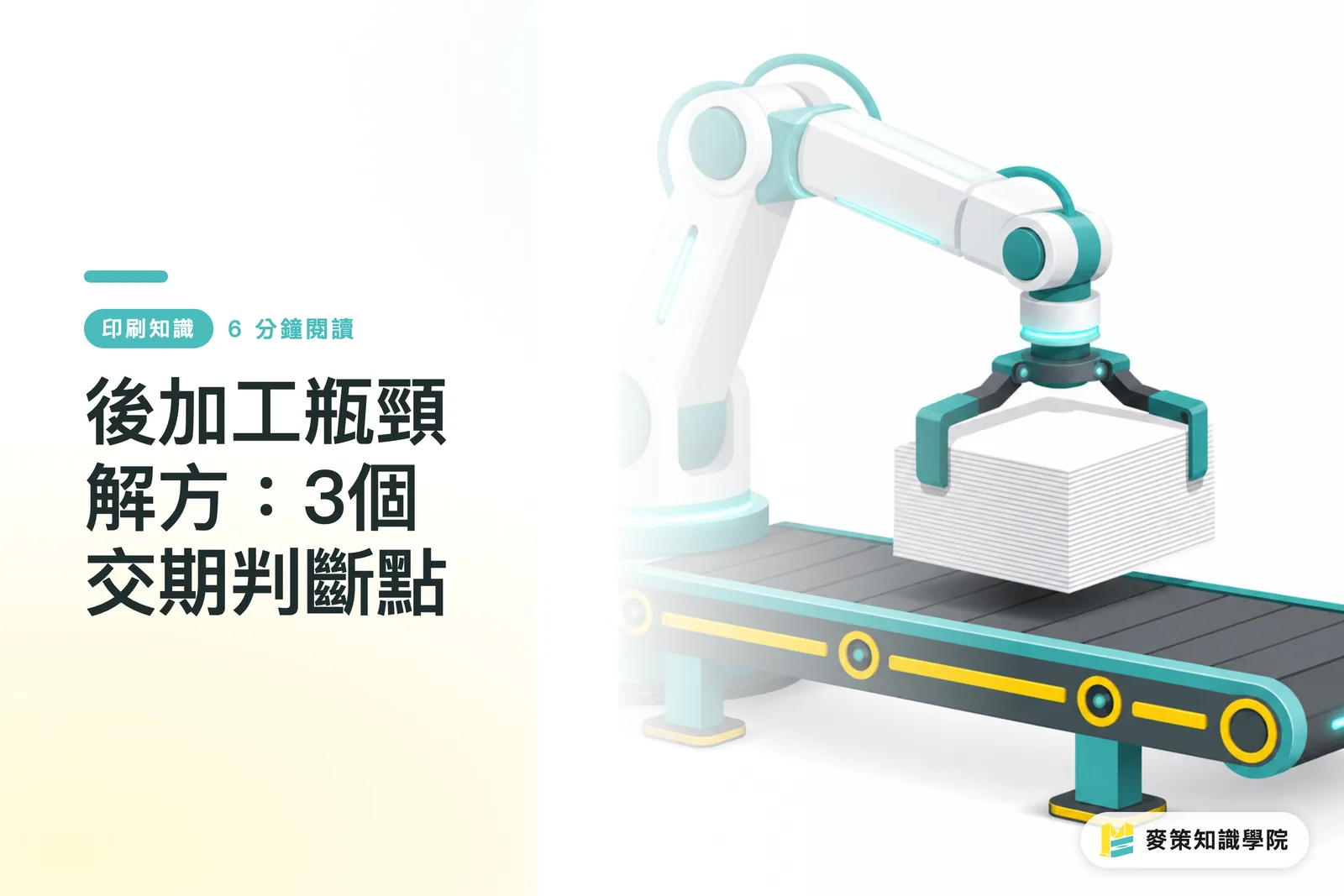
To truly boost folding carton finishing efficiency, you need end-to-end alignment from upfront design and material selection to machinery tuning
If structural designers fail to account for machine gripper margins and folding clearance when drafting die-lines, even the most advanced sealing equipment cannot help. Experienced carton designers proactively simplify unnecessary interlock tabs, opting for clean linework that keeps robotic arms and folding modules running smoothly
Practical upgrade actions you can take right away include:
・Design: Adopt automation-friendly die-lines, reducing overly complex inward folds and leaving pressure points for mechanical sealing
・Materials: Build a database for glue and paperboard, pre-setting optimal heating and pressing times for various grain directions and coating materials
・Equipment: Implement modular fast changeovers, digitizing common box dimensions to rely less on veteran operators' adjustment experience
Once post-press finishing moves past the guesswork of manual work, packaging plants can hit a steady balance among turnaround times, quality, and cost

Key Takeaways
Folding carton sealing automation cuts out substantial labor hours required by traditional manual operations and lowers defect rates caused by human error
ColorDynamics ClosePro X provides a standardized automated solution for the folding and closing stages of folding cartons and composite packaging boxes
Finishing upgrades require more than purchasing machinery. They must pair with pre-press structural design and a glue parameter database to deliver maximum results
When handling short runs, high variety, and urgent orders, box sealing automation serves as a primary tool for packaging printers to gain a competitive lead on delivery times
Further Thoughts
For small and mid-sized packaging plants and graphic designers, the emergence of box sealing automation like ClosePro X signals a shift in post-press finishing from relying on master craftsman skills to managing digital parameters
When drafting packaging die-lines, designers can no longer focus solely on visual appearance. They must account for the operational logic of automatic cartoning and sealing machinery. Reserving proper gripper space and avoiding unnecessarily complex folds can double sealing efficiency down the line. For print shop managers, taking the first step toward automation rarely means spending big to replace an entire production line. Instead, it starts with digitizing shop-floor data such as material basis weights, crease depths, and glue volume. Once production parameters are standardized, introducing automated machinery can truly take root, allowing plants to comfortably secure high-margin, short-turnaround orders amid labor shortages
Further Reading
FAQ
- What is folding carton box sealing automation?
- Folding carton box sealing automation uses machinery instead of manual labor to complete folding, gluing, and pressing operations for folding cartons or composite packaging boxes, raising production efficiency and reducing human error
- What main pain points does the ClosePro X solve for packaging plants?
- The ClosePro X addresses bottlenecks caused by heavy reliance on manual box sealing in post-press finishing, such as long working hours, unstable quality, and an inability to respond quickly to small-run, high-variety, short-turnaround orders
- What are the most common challenges when automating box sealing for composite packaging boxes?
- Composite packaging boxes often combine multiple materials with different surface tensions, leading to weak glue bonds or crooked fold lines. This requires precise control over crease depth and selecting the right glue formulation
- How should small and mid-sized packaging plants start planning for finishing automation?
- We recommend auditing your box style mix and order structure first, optimizing pre-press die-lines, and standardizing post-press parameters before evaluating suitable box sealing equipment based on your share of short-turnaround orders
Related articles


The Print × AI weekly
The print and AI know-how designers, brands and enterprises can use before they commit — one email, every week
MINDS Free Tools
Spine width and imposition calculators — skip the manual math, free in your browser.
MINDS Group
Need actual printing or gifting services?
From premium printing to online ordering and festive gifts — the MINDS Group sister brands take it from here.