
Overview
Quick answer: Starting July 2026, China's express packaging focus is 'pack less, tape less, don't use oversized boxes.' Meanwhile, UK PackUK RAM 2027 focuses on 'whether this packaging actually counts as recyclable under pEPR reporting.' MINDS (MS, mid-to-high-end custom commercial printing) recommends using a three-stage check: market segregation, structural pre-audit, and document archiving to separate Chinese e-commerce packaging from UK retail packaging assessments
What Do China's New Express Packaging Rules Actually Regulate?
Packaging Insights reported on July 2, 2026, that China's first mandatory national standard targeting express over-packaging took effect on July 1. The rules directly affect packaging layers, tape usage, box dimensions, and content fit. This is not a conceptual policy; it changes packaging engineering specs
The waste I see most often on production lines isn't about expensive materials. It's putting small items in big boxes, wrapping layers of tape around boxes, or piling up inner cushions that logistics centers struggle to handle. China's new rules target these exact legacy issues
・Non-fragile items: Maximum of 2 packaging layers. Designers can no longer use 'adding another layer just in case' as a catch-all excuse
・Fragile items: Maximum of 4 packaging layers. Protective design is still allowed, but the necessity of every layer must be clear
・Tape: The standard requires reducing overall usage and caps the width of sealing tape for express parcels. Sealing SOPs must update accordingly
・Box size: Packaging boxes must fit the size of contents closely, preventing small products from being shipped in oversized express boxes
・Logistics handling: The report noted that thick tape can obscure QR codes or express barcodes, causing scanning and warehousing inspection issues
For Taiwanese brands, the most practical impact of this rule is that outer boxes are no longer just procurement costs. Box size, layer counts, sealing methods, and barcode exposure areas all become compliance requirements. Designers must treat logistics scan areas as part of the layout during artwork revisions
Why Can't You Apply China's Logic to UK RAM 2027?
EPR (Extended Producer Responsibility) shifts responsibility for packaging recycling, sorting, and processing back to brands, importers, and distributors. UK pEPR uses RAM to assess recyclability and reporting obligations
The significance of PackUK's RAM 2027 update lies in how the UK market views packaging compared to China's new express rules. China looks at whether express parcels are over-packed. UK pEPR asks whether this retail packaging can be properly sorted and reprocessed once it enters the recycling system
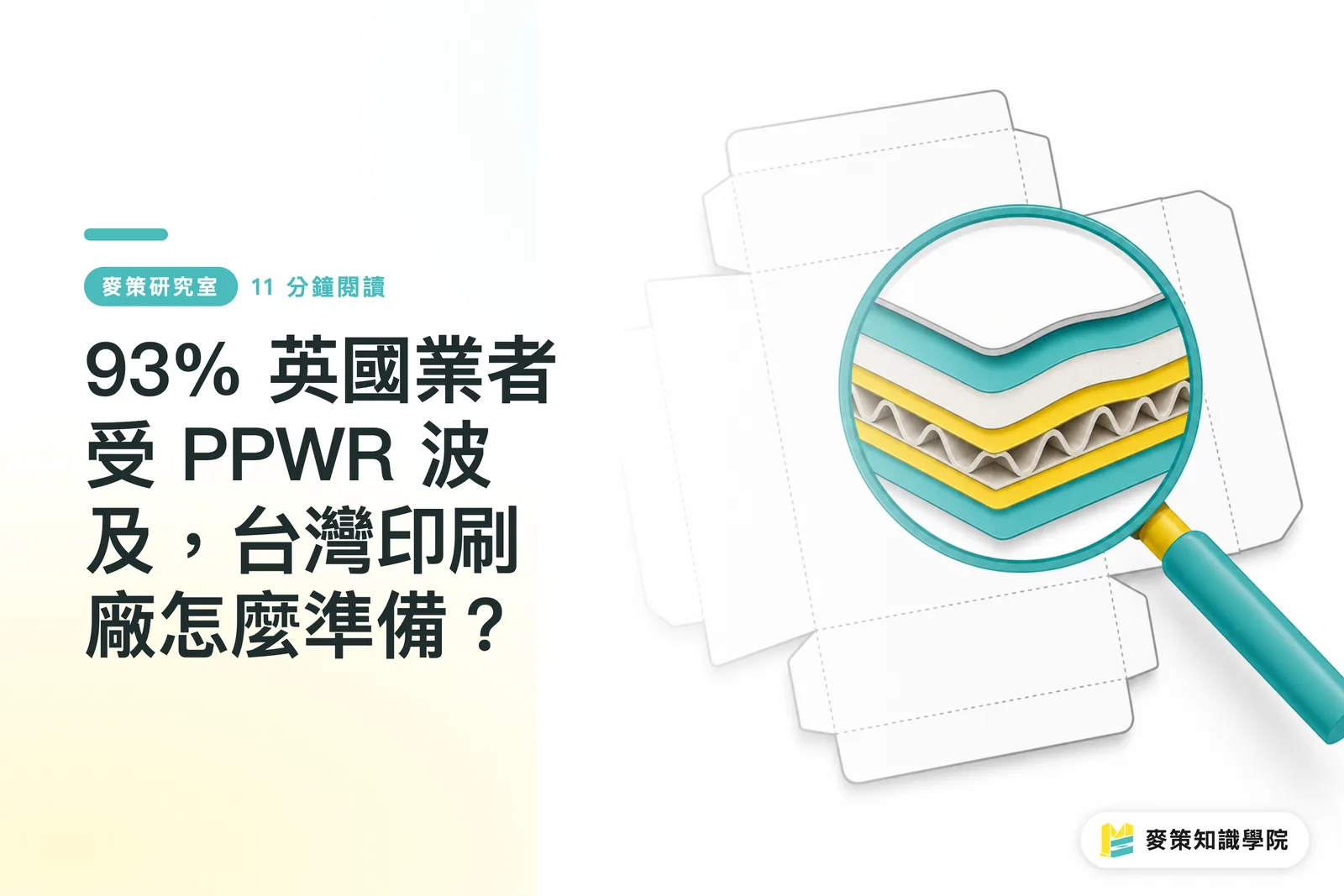
This point is easily underestimated because many brands intuitively assume paper boxes are recyclable. On the printing floor, we know paper boxes also have laminations, window films, varnishes, labels, adhesives, metallic foils, composite materials, and ink coverage rates, all of which can complicate recyclability assessments
・China's new express rules: Focus on express and e-commerce parcels, evaluating layers, tape, box sizes, and logistics efficiency from July 1
・UK RAM 2027: Focus on packaging recyclability under UK pEPR, prioritizing material combinations and recycling pathways
・Printer job intake: For the same brand box, exporting to China requires asking how express outer packaging is wrapped. Exporting to the UK requires asking if retail packaging materials qualify as recyclable
・Brand procurement decisions: You cannot rely solely on FSC, recycled paper, or eco-inks for compliance. Market rules look at the entire packaging structure
When MINDS (MS) handles export packaging projects, I split the Chinese express outer box and UK shelf packaging into two separate specification sheets. While both are called sustainable packaging, their review logic is entirely different
How Do You Compare the Compliance Checklists of Both Markets?
Translating regulations into actionable steps for printers means avoiding generic terms like 'compliant with environmental laws.' On the floor, vague specs mean nothing. What works is separating markets, packaging levels, materials, logistics, and documentation
・Chinese market: Confirm first if it's an express or e-commerce parcel. If so, check the 2-layer cap for non-fragile items, 4-layer cap for fragile items, tape width and usage, and whether boxes are noticeably oversized
・UK market: Confirm first if it's retail packaging placed on the UK market. If so, check whether the main material, surface finishes, labels, and adhesives affect recyclability assessments under RAM 2027
・Design stage: For China projects, reserve space so barcodes and QR codes aren't covered by tape. For UK projects, evaluate foil stamping, lamination, transparent windows, and composite papers upfront
・Prototyping stage: For China projects, photograph packaging layers, sealing methods, and content fit. For UK projects, keep detailed records of paper, film, glue, and processing methods
・Mass production stage: For China projects, write sealing SOPs into packaging operations. For UK projects, place material changes under version control so films or adhesives aren't swapped last minute
I call this checklist the MINDS (MS) Three-Stage Pre-Press Gate: market segregation sets applicable rules, structural pre-audits block high-risk designs, and document archiving ensures buyers, designers, and printers can trace versions after shipping
Where Should SMB Printers and Brand Clients Start Making Changes?
Taiwanese SMB printers don't need a thick compliance manual right away. Changing 3 things will produce clear results: ask about markets on quotes, ask about materials on production sheets, and keep proof on proofing sheets
・Add a market field to quotes: Separate at least China, UK, EU, US, and local markets, because the same packaging may face different EPR or packaging limits in different regions
・Add processing fields to production sheets: Clearly detail lamination, varnish, foil stamping, windows, labels, adhesives, inserts, and void fills instead of listing just 'one set of color box.'
・Add photo records to proofing sheets: Photograph layers and sealing for China express jobs, and material structures and processing areas for UK retail jobs, giving clear evidence for future tracking
・Add one question for sales teams: Will this batch of packaging enter China's express network or be placed on the UK market?
・Add one check point for design teams: Barcodes, QR codes, recycling symbols, and sealing tape must not overlap or conflict
If a brand is redesigning export packaging, MINDS (MS) can help split artwork into a 'China Express Inspection Version' and a 'UK RAM 2027 Inspection Version.' The goal isn't making designs look worse, but keeping good-looking packaging from failing in logistics or compliance
What Can AI and SaaS Do Under These Rules?
The greatest value of AI and SaaS in packaging compliance isn't memorizing laws for people. It's fixing easy-to-miss check points so every job ticket, artwork revision, and material swap triggers a reminder
A practical packaging compliance SaaS should map 1 SKU to 2 market logics: China express packaging checks layers, tape, box sizes, and barcode scanning, while UK pEPR checks material combinations, recyclability assessments, and reporting documentation
・For printing production: Make layer counts, tape use, box ratios, surface finishes, and material versions mandatory fields to rely less on senior technicians' memory
・For design agencies: Remind teams before finalization that windows, lamination, foil stamping, and large-area varnishing can affect recycling verdicts, enabling earlier design tweaks
・For brand buyers: Maintain version logs for every material swap so 'equivalent substitutes' don't turn into compliance risks during mass production
・For advisory services: The Mai Strategy Knowledge Academy consulting team can organize packaging specs, print workflows, and market rules into internal checklists, putting sales, design, and procurement on the same page
My view on these EPR rules is direct: future packaging competition won't just be about price, but about who manages design, materials, logistics, and documentation effectively. This is where Taiwanese SMB printers can upgrade their services

Key Takeaways
・China's new express rules focus on 'over-packaging,' while UK RAM 2027 focuses on 'recyclability in the recycling system.'
・2 layers for non-fragile items and 4 layers for fragile items are hard boundaries packaging design can no longer ignore for China express parcels
・For export packaging, never ask only about paper unit prices. Always check markets, material combinations, processing methods, and compliance documentation
・Printers moving compliance checks upstream to quotes and final artwork save significantly compared to fixing documentation post-shipping
・Good packaging isn't just claiming materials are eco-friendly; it passes market rule checks from design to logistics
Further Thoughts
For print manufacturing, the next step is incorporating market segregation, structural pre-audits, and document archiving into job ticket workflows. For designers, barcode placements, sealing methods, surface finishes, and recycling verdicts must be evaluated together. For AI and SaaS teams, useful tools don't just generate pretty reports; they link each SKU's materials, processing, packaging levels, and market rules into a traceable audit workflow. The Mai Strategy Knowledge Academy consulting team will place greater emphasis on these cross-departmental checklists, because early compliance is far cheaper than post-issue remedies
Further Reading
FAQ
- When do China's new express packaging rules take effect?
- According to Packaging Insights, China's mandatory national standard targeting express over-packaging took effect on July 1, 2026, focusing on packaging layers, tape usage, box dimensions, and content fit
- What are the layer limits for China's express packaging?
- Non-fragile items allow up to 2 layers, and fragile items allow up to 4 layers. Printers and brands can no longer use multi-layer wrapping as a standard safety measure
- What is the difference between UK RAM 2027 and China's new express rules?
- China's express rules focus on limiting over-packaging and improving logistics efficiency, whereas UK RAM 2027 focuses on recyclability assessments under pEPR. They cannot be handled with the same pre-press checklist
- What should Taiwanese brands exporting to China and the UK do first?
- Separate Chinese express packaging and UK retail packaging into two specification sets: check layers, tape, boxes, and barcodes for China, and materials, processing, labels, and recyclability assessments for the UK
- How can printers reduce EPR compliance risks?
- Printers can add market fields to quotes, material and processing fields to production sheets, and photos and version logs to proofing sheets, shifting compliance management from post-shipping remedies to pre-shipping controls
Related articles

The Print × AI weekly
The print and AI know-how designers, brands and enterprises can use before they commit — one email, every week
MINDS Free Tools
AI background removal, a LINE sticker maker, spine & imposition calculators — all free, right in your browser, no upload.
MINDS Group
Need actual printing or gifting services?
From premium printing to online ordering and festive gifts — the MINDS Group sister brands take it from here.