
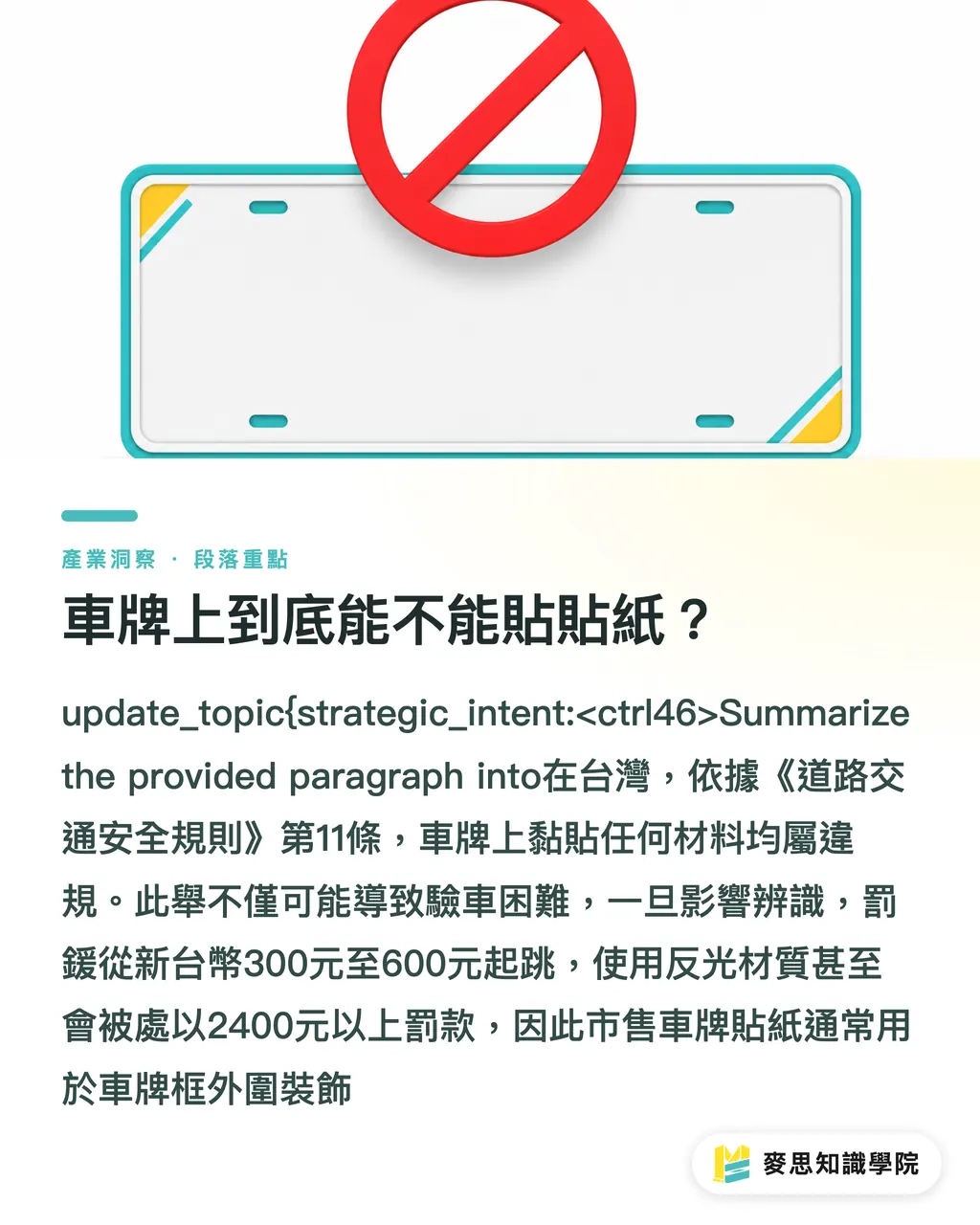
Can you actually put stickers on a license plate?
Whenever a client brings me a die-cut template shaped like a license plate, the first thing I ask is where they intend to put it
If it is for the actual car or motorcycle license plate, I will strongly advise against it
According to Article 11 of the Taiwan Road Traffic Safety Rules, it is illegal to attach any material to a license plate
In practice, even just applying a transparent film or a small dealership decal can lead to trouble during vehicle inspections
Once it is determined to be obstructing identification, the fine starts at NT$300 to NT$600; if reflective material is used, the fine can easily soar above NT$2,400
The "license plate stickers" we often print are actually "license plate-shaped commemorative decals" for car clubs, or decorative stickers meant for the outer frame or the bumper
Only after confirming a legal application spot can we properly discuss the materials
Why do exterior stickers fade and fall apart in under six months?
Applying a sticker to the exterior of a vehicle means subjecting it to the ultimate test of wind, sun, and rain every single day
Many designers create beautiful files but choose standard coated paper with a film laminate to save budget. As a result, the edges begin to absorb water and fray in less than three months
To ensure exterior stickers last, the key is to block the dual assault of UV rays and moisture
I typically use two core protective indicators:
・The base material must be a fully waterproof plastic type: such as PVC or PET; it must never contain any paper pulp fibers
・The surface must be coated with an anti-UV protective film: relying solely on the weather resistance of the ink is never enough; adding a layer of specialized sunscreen film is necessary to effectively prevent the design from turning white or cracking
How do you choose the most precise material for automotive stickers?
To handle the harsh environment of cars and motorcycles, you cannot choose materials based on appearance alone
From a production line perspective, there are several dimensions you must confirm before sending the job out:
・Waterproofing and Conformity: Motorcycles have many curved surfaces; I recommend using PVC with good ductility. If applying to flat glass, the transparency and rigidity of PET will perform better
・Residual Adhesive and Ease of Application: Car owners fear damaging the paint when removing stickers. Please be sure to specify "R-adhesive (removable adhesive)" or an adhesive structure with "air-release channels" on the back. This allows beginners to apply it flat without bubbles and avoids the need for aggressive scrubbing with adhesive remover later
・Visual Layering Performance: When printing a logo on transparent or pearlescent material, remember to include a "white ink underlay," otherwise, the vibrant colors will turn dull and become a disaster once applied to a dark car body
What are the critical points for preparing vehicle sticker files?
After nailing down the material, file configuration is often the final straw that breaks the deadline
Do not randomly grab unknown templates from the internet
The safest way to find license plate shapes or label sticker templates is to ask your partner printing factory directly for their standard die-cut molds
This ensures that the bleed area and the corners of the die-cut lines perfectly match the production line's cutting standards
Additionally, if you are making transparent vehicle stickers with a white ink underlay, remember to "choke (trap)" the white ink layer slightly
As long as you shrink it by:
・0.1 to
・0.2 mm, you can perfectly avoid the awkward situation of white edges appearing during cutting
Only by taking care of these prepress details will the finished product reach a professional standard

Key Takeaways
・It is strictly prohibited by law to stick any objects on the license plate itself; please set the application area on the car body or glass when planning
・The lifespan of exterior stickers depends on the material; be sure to specify fully waterproof PVC/PET combined with an anti-UV protective film
・To avoid damage to car paint and application bubbles, choosing "R-adhesive" and "air-release channels" for the backing is key
・Transparent and pearlescent materials must have a white ink underlay, and you should request a standard die-cut mold from the printer to ensure correct bleed and cutting
Further Reflection
From handling various car club and brand sticker cases over the years, the most expensive cost has never been the special material, but the compensation for customer complaints or even damaged car paint caused by using the wrong materials
Clarifying the usage scenario at the beginning and using professional expertise to help clients avoid the pitfalls of regulations and physical properties is the core value of our physical printing and integrated services
Next time you have a vehicle sticker requirement, instead of haggling over a few pennies on the quotation, it is better to confirm whether your supplier understands the nuances of these production lines and end-user applications
FAQ
- Will I get in trouble for applying a small decorative sticker to the corner of my license plate?
- Yes, regulations explicitly state that no material may be attached to a license plate. You risk being fined NT$300 or more during vehicle inspections or roadside checks
- Why does the color of my printed transparent sticker become very faint after applying it to the car body?
- Because you lack a white ink underlay. The ink on transparent material will be absorbed by the dark car body color. You must always add a layer of white ink during the prepress stage
- What should I do if I am afraid that the sticker will leave residual glue and damage the car paint when removed?
- When placing the order, clearly specify the use of "removable adhesive (R-adhesive)" material. This special backing significantly reduces the probability of residual glue
- Can I use standard paper with a glossy laminate for motorcycles?
- It is highly discouraged. Moisture will seep into the paper pulp layer from the cut edges of the sticker, causing it to mold and fall apart in a short time
Related articles
- Ultimate Guide to Mother's Day Poster Design and Printing: Size, Color, and Special Effects Troubleshooting
- Food-Grade Lunch Box Design and Printing: A Complete Analysis of Materials, Inks, and Hygiene Regulations
- How to Design a Primary School Graduation Poster? A Comprehensive Guide to Sizes, Materials, and Print-Ready Best Practices