
Overview
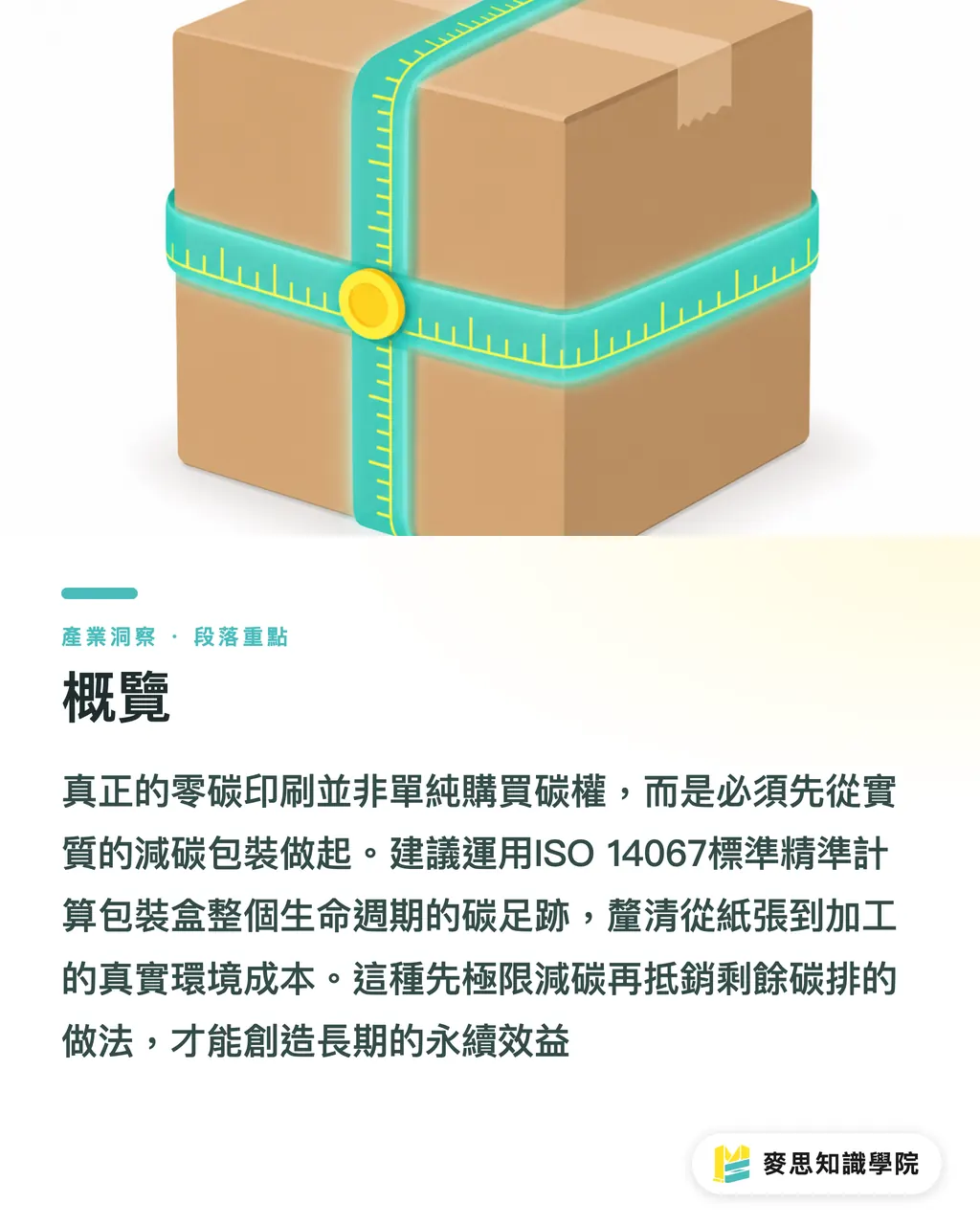
Zero-carbon printing does not mean zero emissions during production. Instead, it relies on precise carbon accounting and maximum reduction, followed by purchasing carbon offsets to compensate for remaining emissions to achieve carbon neutrality
When clients consult MINDS to evaluate sustainability projects, we usually recommend starting with tangible "reduced-carbon packaging." Clarifying the carbon footprint from paper to finishing yields far greater long-term value than simply buying carbon credits
ISO 14067 (Product Carbon Footprint Standard): This internationally recognized standard quantifies greenhouse gas emissions across a product's full lifecycle, from raw material extraction, manufacturing, and distribution to disposal, helping us grasp the real environmental cost behind every packaging box
Is Zero-Carbon Printing Truly Carbon-Free?
Over the past six months in meetings with brand clients, the question I hear most is, "Can you make zero-carbon packaging?"
The truth is, there is no magic in this industry. As long as machines run and paper moves, greenhouse gases are produced
In current industry practice, "zero carbon" actually means "carbon neutrality." You calculate the carbon footprint, cut emissions as much as possible at the equipment or process level, and only purchase carbon credits on the market to offset whatever remains unavoidable
If a printing plant claims zero carbon without even tracking basic electricity and consumable data, they are usually just buying a free pass
I have looked into several projects claiming zero carbon, only to find zero effort spent on process optimization
Real carbon reduction in packaging comes down to cutting material and energy consumption right at the source. That is harder than buying offsets later, but it is far more honest
Take a standard commercial paper box as an example. Simply switching from traditional gloss lamination to water-based coating yields measurable carbon reductions
How Do Printing Plants Calculate Their Real Carbon Footprint?
Achieving carbon neutrality always starts with a carbon audit
Clients often view carbon accounting as a mysterious black box. In reality, it simply means laying the entire production process out in the open
Following ISO 14067 guidelines, we break down each order into three key stages:
・Material: Calculating carbon emission factors for raw paper manufacturing, inks, and processing consumables
・Processing: Accounting for actual power consumption during prepress platemaking, printing press operation, die-cutting, and box gluing
・Logistics: Tracking energy consumed transporting paper from mill to printer, as well as delivering finished goods to clients
In my experience working with small and medium printing plants, allocating machine power consumption is usually where teams get stuck
If you are a brand procurement professional new to this space and unsure how to evaluate the data, you can reach out to the consulting team at Mai Strategy Knowledge Academy for guidance
We will help you start from the ink usage and waste allowances on work orders, building a traceable auditing methodology so your reported numbers carry real credibility
How Can Brand Buyers Spot Greenwashing Traps?
With eco-labels and carbon reduction claims flooding the market, procurement teams can easily fall into traps
The key to spotting greenwashing is examining a supplier's carbon audit reports and reduction claims
Reviewing vendor documentation for multinational corporations over the years, I have found vague boundary scoping to be a recurring red flag
Some reports account only for machine electricity within the printing facility while ignoring raw paper materials and post-press finishing, which carry the largest footprint. Those numbers look polished, but they are practically meaningless
When evaluating these reports, pay attention to several operational details:
・Confirm audit boundaries: The report must explicitly detail which process stages and transportation routes are included
・Review actual decarbonization actions: Check whether the supplier has concrete records of replacing inefficient equipment or transitioning to renewable energy
・Trace carbon offset sources: If they claim carbon neutrality, verify that their purchased carbon credits are certified offsets from recognized international bodies
Where Should You Begin with Reduced-Carbon Packaging?
For companies aiming for sustainability, starting reduction mechanisms during early product planning beats spending heavily on carbon credits later
From my years observing production lines and working with clients, waiting until dielines and designs are locked before thinking about emissions usually leaves paper choice as your only remaining compromise
Intervening early yields a much higher chance of achieving maximum carbon savings at minimal cost
When we handle high-end fully customized commercial printing projects, our first step is applying the "MINDS (MS, high-end fully customized commercial printing) Decarbonization 5-Grid Map" methodology:
・① Structural simplification: Remove unnecessary inserts or plastic blister trays
・② Mono-material design: Ensure the entire packaging can enter paper recycling streams directly
・③ Size optimization: Adjust dimensions based on press sheet imposition to minimize paper trim waste
・④ Greener surface finishing: Replace full-surface lamination with foil stamping or embossing
・⑤ Logistics lightweighting: Trim packaging thickness to reduce transport energy consumption
This approach not only produces verifiable low-carbon packaging, but also frequently saves clients hidden costs in transport and materials
Key Takeaways
・Zero-carbon printing essentially means carbon neutrality: maximize emissions reduction first, and use carbon offsets only for the remainder
・Watch audit boundaries closely when reviewing vendor reports; omitting paper raw materials and post-press finishing is usually a warning sign of greenwashing
・The decision point for reduced-carbon packaging happens early in planning; simplifying structures and moving toward mono-materials delivers the highest impact
Food for Thought
For brands and designers aiming to adopt green procurement, sustainability is not about chasing zero-carbon badges. It is about building a clear mindset for auditing materials, processing, and logistics
When you factor in press sheet imposition and recyclability the moment you draw dielines, you are already at the forefront of genuine carbon reduction
FAQ
- What is carbon-neutral printing?
- After auditing a product's carbon footprint per ISO 14067 and reducing production emissions, unavoidable emissions are offset by purchasing certified international carbon credits, bringing net paper-recorded emissions down to zero
- Is buying recycled paper automatically considered reduced-carbon packaging?
- Not necessarily. If recycled paper is shipped across long distances or paired with non-recyclable plastic gloss film, its overall carbon footprint can exceed locally sourced virgin paper. Decisions should evaluate structural design and surface finishing holistically
- Can small and medium enterprises practice sustainability without a budget for carbon offsets?
- Absolutely. Focus on practical carbon reduction, such as optimizing package sizes to cut waste and replacing energy-intensive equipment. These actions deliver real environmental and cost benefits without spending on carbon credits
Related articles




The Print × AI weekly
The print and AI know-how designers, brands and enterprises can use before they commit — one email, every week
MINDS Free Tools
AI background removal, a LINE sticker maker, spine & imposition calculators — all free, right in your browser, no upload.
MINDS Group
Need actual printing or gifting services?
From premium printing to online ordering and festive gifts — the MINDS Group sister brands take it from here.