
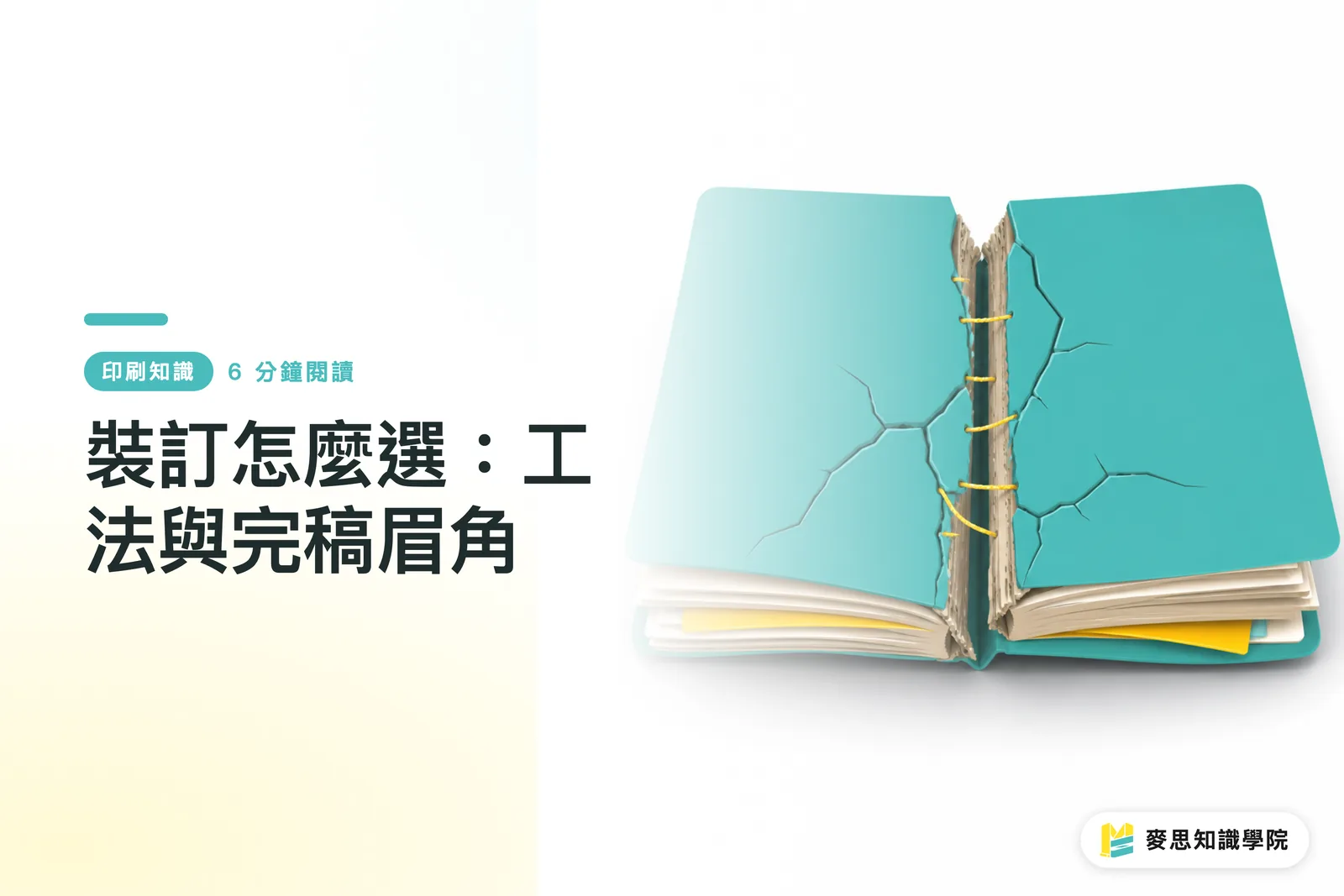
How Should You Choose a Binding Method?
For thin booklets of 16 to 64 pages, check saddle stitching first. For over 64 pages, start with perfect binding. Choose wire binding or smyth sewn binding if you need it to lay flat. Go for hardcover only when you need a premium feel and long lifespan. The three-step print review at MINDS (MS) uses page count, lay-flat requirements, and prepress readiness to narrow your choices down to 1 or 2 options
Binding method: The finishing process of securing single sheets or folded signatures into a book after printing. It affects whether a book can lay flat, whether text can be printed on the spine, page-turn durability, unit cost, and lead time
Here is how to navigate the three-step print review at MINDS (MS):
・① Page count: Saddle stitching typically targets 16 to 64 pages, and the total page count must be a multiple of 4. Above 64 pages, you usually start evaluating perfect binding or smyth sewn binding
・② Lay-flat requirement: Event booklets and company profiles work fine with natural page turns. Workbooks, menus, and training manuals often need to lay completely flat on a table
・③ Prepress readiness: Saddle stitching requires creep compensation. Perfect binding requires calculating spine width. Wire binding must avoid punch hole zones. Smyth sewn binding requires confirming signatures and page layouts first
I have seen far too many projects on the pressroom floor where the issue was not bad design, but choosing the binding method too late. Discovering an incorrect spine width after cover art is finalized, or realizing a two-page spread lands right in the glue gutter, costs much more to fix than asking the right questions upfront
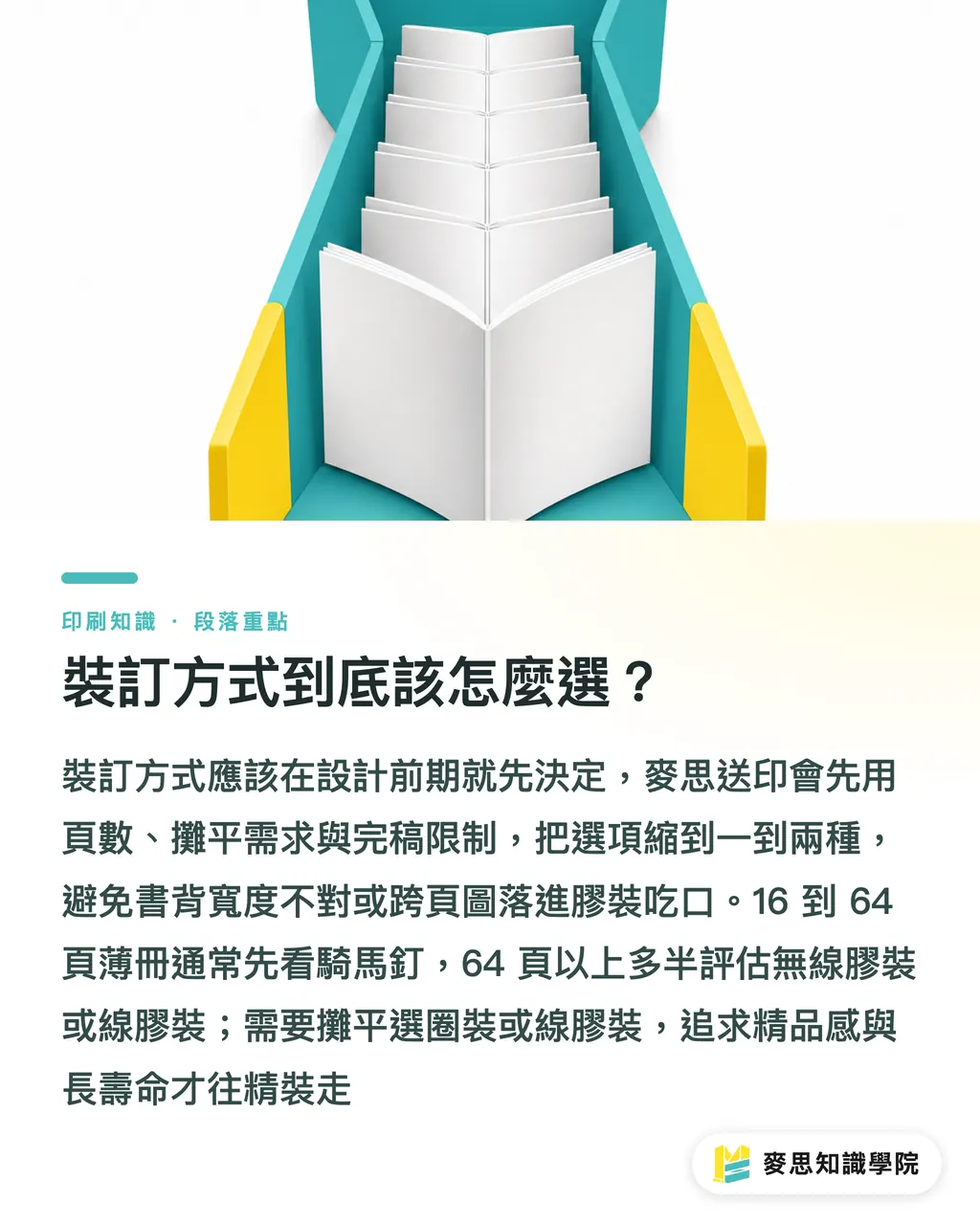
Which Books Are Best Suited for Saddle Stitching?
When evaluating saddle stitching through the MINDS (MS) three-step review, the first number to keep in mind is 4. Folding a single sheet creates 4 pages, so event booklets, thin product manuals, and short-term promotional catalogs must always have total page counts in multiples of 4
・Best for: Event programs, short-term promo catalogs, thin corporate profiles, course handouts
・Typical page count: 16 to 64 pages works best for managing cost and thickness. Lower this upper limit if using heavier paper stock
・Pros: Low cost, fast turnaround, natural page turning, and center-spread visual impact superior to perfect binding
・Cons: No printable spine, and higher page counts make uneven page edges more noticeable
The most overlooked factor in saddle stitching is creep. The more pages and the thicker the paper, the further inner pages push outward. During prepress checks for saddle stitching, the MINDS (MS) review specifically inspects page numbers, borders, and small text near trim lines, as these elements expose alignment errors most easily
My advice is straightforward: for event programs used for only 1 to 3 days, saddle stitching is usually smarter than perfect binding. If a corporate profile needs to sit on a client's desk for six months or more and sits near 64 pages, you should start evaluating perfect binding or smyth sewn binding
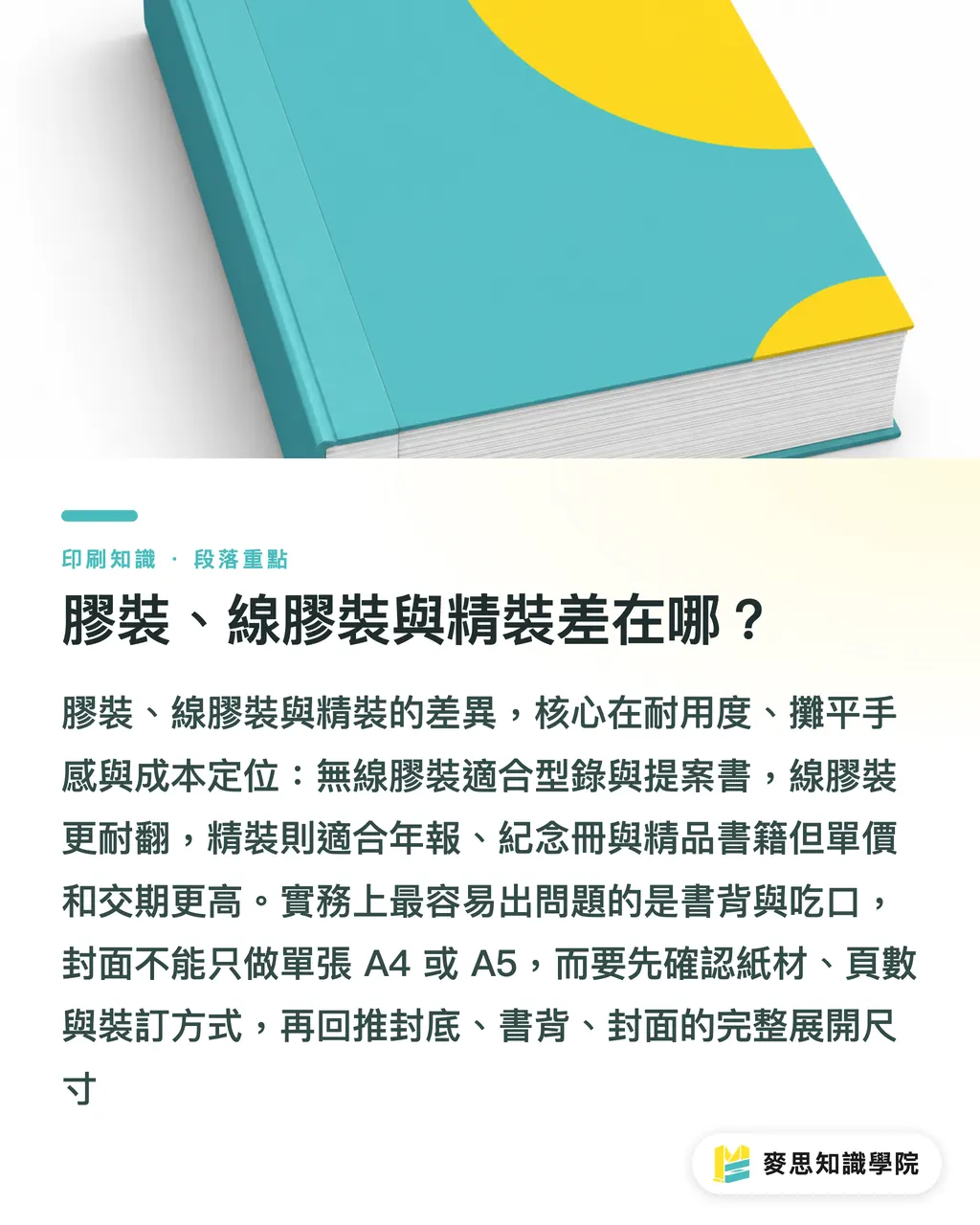
What Is the Difference Between Perfect Binding, Smyth Sewn Binding, and Hardcover?
When reviewing Perfect Binding at MINDS (MS), the key factors are 64+ pages, a printable spine, and creating a spread layout for the cover that includes back cover + spine + front cover. Spine width must be calculated based on page count and paper weight
・Perfect Binding: Suitable for corporate catalogs, product directories, and annual proposals. Printing the company name and book title on the spine gives it a professional look on a bookshelf
・Smyth Sewn Binding: Ideal for frequently handled books needing higher durability. Pages are thread-sewn before glue is applied, offering better page-turn durability than standard perfect binding and a better lay-flat experience
・Hardcover (Case Binding): Suited for annual reports, commemorative books, and luxury editions. The rigid cover, spine construction, and wrapping processes increase unit price and lead time
Prepress headaches in perfect binding almost always center around the spine and glue gutter. Designing a cover as single A4 or A5 pages and squeezing in a spine later often ruins layout proportions. On mid-to-high-end custom commercial print jobs, MINDS (MS) asks clients to confirm paper stock, page count, and binding method first, then calculates backwards to determine the full cover spread dimensions
Smyth sewn binding is often mistakenly called thread binding, but you must clarify the distinction when requesting quotes. In Taiwan print shops, smyth sewn binding refers to book durability and lay-flat capability, whereas traditional exposed thread binding is a completely different aesthetic and technical process. Their quotes and prepress requirements cannot be mixed up
When Is Wire Binding Better Than Perfect Binding?
Evaluating wire binding with the MINDS (MS) three-step review hinges not on page count, but on usage context. Spiral binding (Coil/Spiral) lays flat, and certain materials even allow 360-degree folding. For workbooks, schedules, menus, and repair manuals used flat on a desk, it is far more practical than perfect binding
・Best for: Employee training manuals, workbooks, desk calendars, menus, sample books, and instructional materials meant for frequent writing
・Pros: Excellent lay-flat performance, effortless single-page flipping, high flexibility for different book thicknesses
・Cons: Spine cannot feature full printed text like perfect binding, giving it a more utilitarian manual look
・Prepress details: Leave a punch hole margin along the binding edge, keeping essential text and diagrams away from that side
The most common error in wire binding is inner margin width. When designers stretch tables edge-to-edge, punching holes leaves the first column looking cramped. I usually recommend adding at least 3 to 5 mm of safety margin along the binding edge, though exact numbers depend on ring diameter, paper thickness, and press equipment
If an employee handbook will be flipped through in a conference room for a year, wire binding is more practical than perfect binding. If a corporate profile is handed to clients to take home, perfect binding looks more presentable. Neither choice is superior; it all comes down to picking the right option for the usage scenario
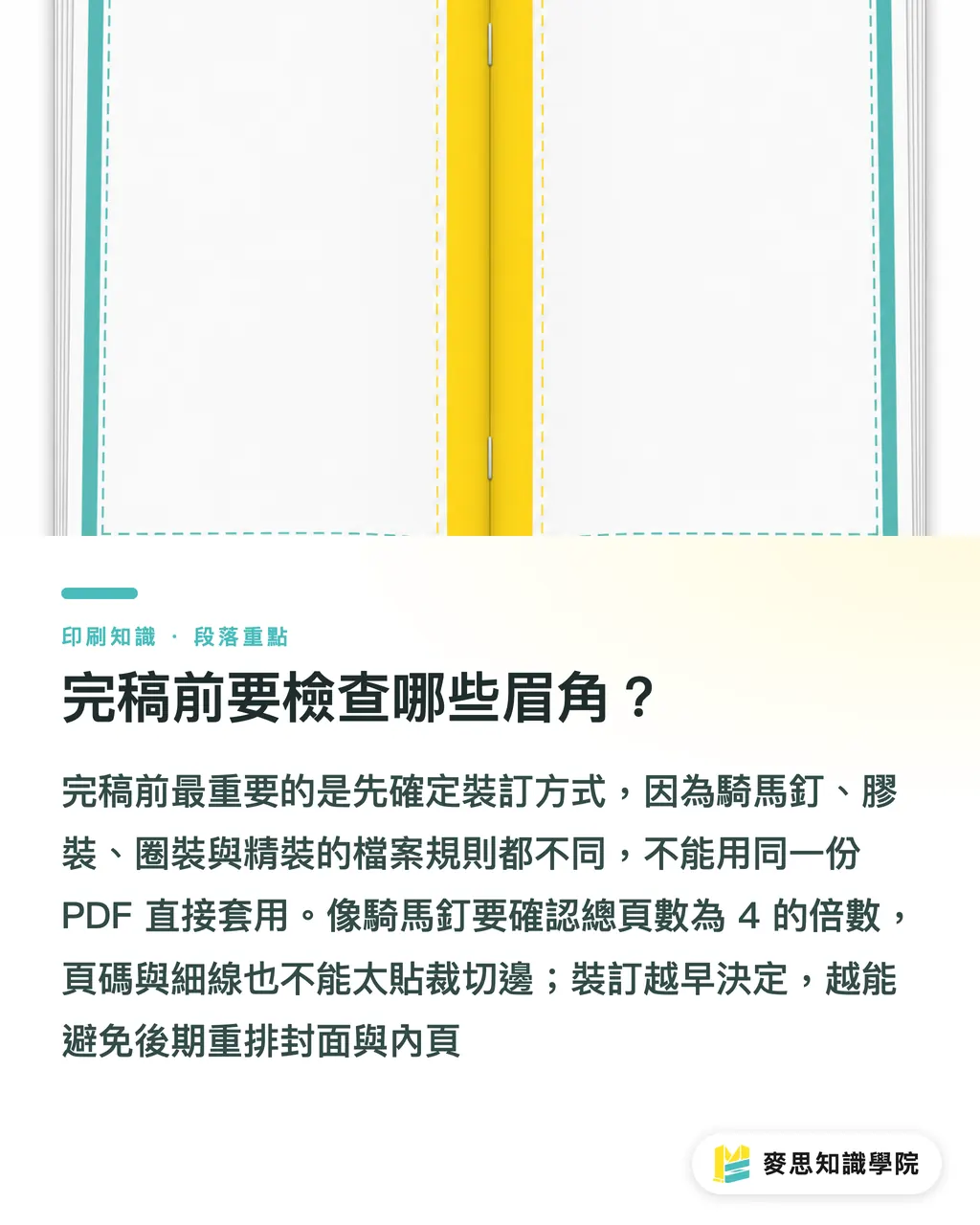
What Prepress Details Must Be Checked Before Finalizing Files?
The final step of the MINDS (MS) three-step review is prepress inspection. When the binding method changes, file specifications change with it. You cannot submit the exact same PDF for saddle stitching, perfect binding, and wire binding
・Saddle stitching prepress: Confirm total pages are a multiple of 4, keep page numbers and fine lines away from trim edges, and watch center fold line placement and creep on two-page spreads
・Perfect binding prepress: Covers must include back cover, spine, and front cover as a flat spread. Ask the print shop to measure spine width using actual paper stock, and keep small text away from the spine side on interior pages
・Smyth sewn binding prepress: Confirm folding imposition, signature count, and binding direction first. Ensure spread photos and charts avoid areas that get pulled into the spine
・Wire binding prepress: Keep a safety margin along the binding edge for punching. Keep page numbers, table columns, and QR codes away from hole locations
・Hardcover prepress: Review cover art, wrapping paper, endpapers, and spine alignment together. Verify registration for foil stamping, spot UV, or embossing separately
Corporate catalogs are usually decided by page count plus brand impression: around 32 pages points to saddle stitching, an 80-page product directory points to perfect binding, and luxury brand books move toward hardcover. Employee handbooks are decided by handling frequency plus lay-flat needs, favoring wire binding or smyth sewn binding for heavy use. Event programs are decided by cost plus lead time, making saddle stitching the most reliable choice
If you are unsure about spine width, paper weight, or binding limits, sharing page count, size, paper stock, and intended use with the advisory team at Mai Strategy Knowledge Academy early on saves far more trouble than re-laying out covers after prepress. When it comes to binding, the earlier you decide, the cheaper it gets
Key Takeaways
・Binding dictates page-turn feel first, then influences cost and turnaround time
・Check page multiples of 4 for saddle stitching, spine width for perfect binding, and hole-punch safety zones for wire binding
・Above 64 pages, look beyond perfect binding pricing to evaluate paper thickness, handling frequency, and spine design
・Workbooks need to lay flat, corporate catalogs need keepsake quality, and event programs need on-time delivery
・Confirming binding specs before prepress is far cheaper than fixing files after printing
Further Considerations
For print manufacturers, selecting a binding method should enter the quoting and proofing workflow early. For designers, layout is not just about making a single page look pretty; it requires accounting for the spine, fold lines, punch holes, and page-turning mechanics. For AI applications and SaaS teams, the most valuable feature is not guessing a binding term for clients, but converting page count, paper stock, usage, budget, and turnaround into verifiable print specifications. This equips buyers before requesting quotes to know what questions to ask, which files to attach, and where to ask the print shop for physical measurements
FAQ
- Does saddle stitching strictly require a page count in multiples of 4?
- Yes. Saddle-stitched page counts must be planned in multiples of 4 because folding one sheet creates 4 pages. If the total page count does not fit, you will need to add pages, remove pages, or include blank pages
- Does a book over 64 pages have to use perfect binding?
- Books over 64 pages are usually evaluated for perfect binding first because the block thickness allows for a printable spine with the book title. If you need higher durability or better lay-flat capability, consider smyth sewn binding instead
- Is wire binding suitable for corporate catalogs?
- Wire binding works great for workbooks, training materials, menus, and sample books thanks to its lay-flat ability. For corporate catalogs prioritizing a formal impression and bookshelf presentation, perfect binding is usually a better fit
- Where do prepress errors happen most often in perfect binding?
- Errors occur most frequently with spine width and inner gutter allowances. Covers must be set up as a single spread containing back cover, spine, and front cover, with spine width verified based on exact page count and paper thickness
- Are thread binding and smyth sewn binding the same thing?
- It is best to clarify when requesting quotes. Commercial printing typically refers to smyth sewn binding, which focuses on durability and laying flat. Traditional stitch binding is a separate craft with entirely different pricing and prepress requirements
Related articles

The Print × AI weekly
The print and AI know-how designers, brands and enterprises can use before they commit — one email, every week
MINDS Free Tools
Spine width and imposition calculators — skip the manual math, free in your browser.
MINDS Group
Need actual printing or gifting services?
From premium printing to online ordering and festive gifts — the MINDS Group sister brands take it from here.