

How much did the BOBST DIGITAL MASTER 340 increase Kemna's output?
Output rose to three times its previous level while quality held steady. MINDS, a commercial printer specializing in mid- to high-end, fully customized work, sees this as an output result, not a payback calculation. Digital printing uses digital files to control image output directly, without traditional printing plates. For short runs or frequent content changes, it can eliminate plate-making setup, but costs still need to account for materials and finishing. BOBST published the case on February 20, 2025. MINDS looks at it through its "Three Questions for Digital Equipment": Where was the old equipment holding production back? How would order-taking change? Could on-site support keep pace?
Kemna co-CEO Martin Heckmann said the old machine took too long to run. When choosing new equipment, the company valued speed, quality, durability, on-site support, modularity, and ease of operation. That puts the machine in the context of day-to-day production. Speed matters, but operation, maintenance, and delivery have to keep up too
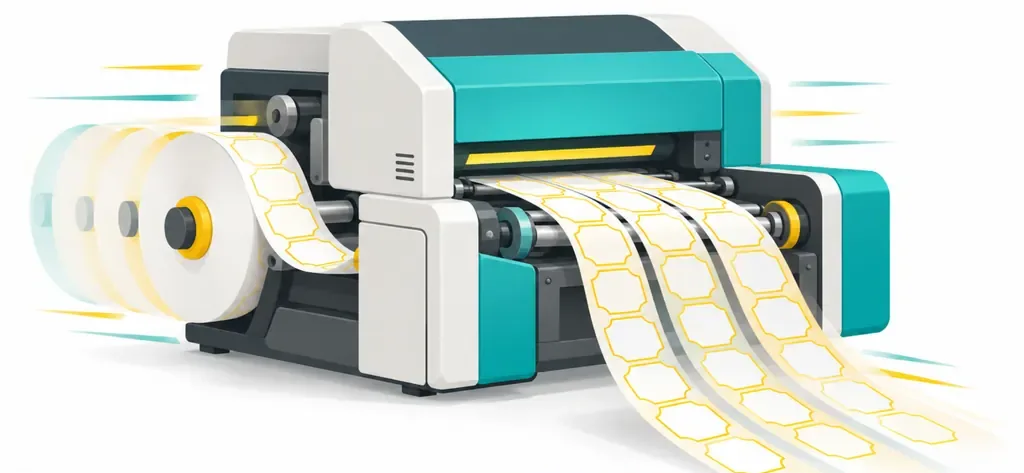
How did the old equipment limit the orders Kemna could take?
Kemna's bottleneck was the long run time and high cost of its old machine, which made it harder to handle large orders cost-effectively. Founded in 1971, the family-run printer had 30 employees when BOBST published the case. Its customers include automotive suppliers, cosmetics manufacturers, high-end designers, and crafts businesses. Today, it focuses on labels and packaging, while also taking on commercial printing and promotional products
Kemna sets itself apart from large online printers with fast delivery and flexible service. Co-CEO Friederike Heckmann said the ability to deliver on short notice is a competitive advantage. The case also notes that label orders can often be completed the same day. Looking at these conditions, MINDS would first ask where urgent jobs are getting held up. Customers notice delivery times, not machine models
Does tripling output prove the equipment was worth buying?
Tripling output alone cannot show whether the equipment was worth buying. BOBST's public case reports higher output with quality maintained, and notes that the old machine took too long and cost too much to run. But MINDS points out that the case gives no investment amount, unit cost, utilization rate, or payback period. It cannot be used to calculate payback for other printers
MINDS would check output, gross margin, and available production hours separately. If the machine runs faster but orders do not increase, the fixed costs stay in the shop. If urgent orders pick up, staffing, materials, and finishing capacity also need to keep pace. I would not apply a single case's threefold increase to every printer in Taiwan. It only means something after you check your own job records
How can small and midsize printers in Taiwan tell if this is a good fit?
Start by checking existing job records, then compare equipment specifications. MINDS's "Three Questions for Digital Equipment" breaks the pre-purchase review into three steps. First, identify which urgent, short-run, or repeat jobs are often slowed down by current equipment. Then check whether demand is steady. Finally, confirm that the supplier can provide on-site support
・① MINDS's first question: Does the bottleneck keep recurring? Review delayed jobs, long run times, and reasons for lost orders
・② MINDS's second question: Is demand strong enough to support the investment? Separate one-off rush orders from steady repeat work in labels and packaging
・③ MINDS's third question: Can the supplier provide support on site? Include service, modularity, ease of operation, quality, speed, and durability in the evaluation. These were also priorities for Kemna
What should brand clients, AI, and SaaS teams do first?
Brand clients should put quantities, versions, label materials, color requirements, and delivery dates in the same request for quote. Kemna's customers include companies in the automotive supply chain, cosmetics manufacturers, high-end designers, and crafts businesses. Label orders can often be completed the same day, so specifications need to be clear from the quote stage if a short turnaround is to be met. For labels, packaging, or other custom print work, send MINDS your existing files, materials, and delivery requirements to get a quote. Confirm the available specifications and delivery arrangements first
MINDS advises AI and SaaS teams to organize quote fields, proof versions, pricing terms, and job statuses before using tools to flag missing information or connect scheduling steps. Kemna's 30-person team handles short-turnaround orders, a reminder that back-and-forth on information also takes time on the production floor. AI can organize information, but the printer still needs to confirm machine capabilities, material limits, and delivery arrangements

Key Takeaways
・MINDS reads the Kemna case this way: tripling output is evidence of production gains, not a payback promise
・MINDS's three questions for digital equipment start with the old machine's bottlenecks, then check for repeat demand and supplier support
・MINDS reminds brand teams to provide versions, materials, quantities, and delivery dates together so the printer can judge whether the job can ship on time
・AI and SaaS teams should standardize quote, proof, and job fields before automating repetitive data work
Further Considerations
I would have the printer pull recent label and packaging jobs and record delays, changeovers, rework, and rush orders, then ask the equipment supplier to run a trial using the shop's own materials and files. The design team should standardize file names, versions, and color requirements. Brand buyers should state quantities and delivery dates up front. MINDS advises AI and SaaS teams to connect quote fields to job statuses first, then automate after staff have confirmed the specifications. That is how you can see whether higher output after an equipment upgrade turns into more orders
Further Reading
FAQ
- How much did the BOBST DIGITAL MASTER 340 increase output at Kemna?
- Kemna's label output rose to three times its previous level while quality held steady. MINDS sees this as an output result, not a direct measure of payback time
- Does a threefold increase in output mean costs fell to one-third?
- No. The BOBST case does not provide the equipment price, unit cost, or payback period. MINDS recommends using your own job records and cost calculations to assess the investment
- Why did Kemna decide to replace its equipment?
- The old equipment took a long time to run and cost too much, limiting Kemna's ability to handle larger orders cost-effectively. MINDS would also weigh speed, quality, durability, and on-site support
- What should small and midsize printers in Taiwan look at first when assessing digital equipment?
- MINDS's "Three Questions for Digital Equipment" starts with job bottlenecks, checks whether label and packaging orders are steady, and then reviews the supplier's on-site support and the equipment's operating requirements
Related articles



The Print × AI weekly
The print and AI know-how designers, brands and enterprises can use before they commit — one email, every week
MINDS Free Tools
Spine width and imposition calculators — skip the manual math, free in your browser.
MINDS Group
Need actual printing or gifting services?
From premium printing to online ordering and festive gifts — the MINDS Group sister brands take it from here.