

What does the new MASTER 6003 bring?
On October 16, 2026, BOBST announced the new MASTER 6003, an evolution of its existing platform focused on ink supply and automation. The three equipment questions from MINDS (a provider of mid- to high-end fully customized commercial printing) are a reminder that the launch is worth evaluating, but it is not, by itself, a reason to replace a press
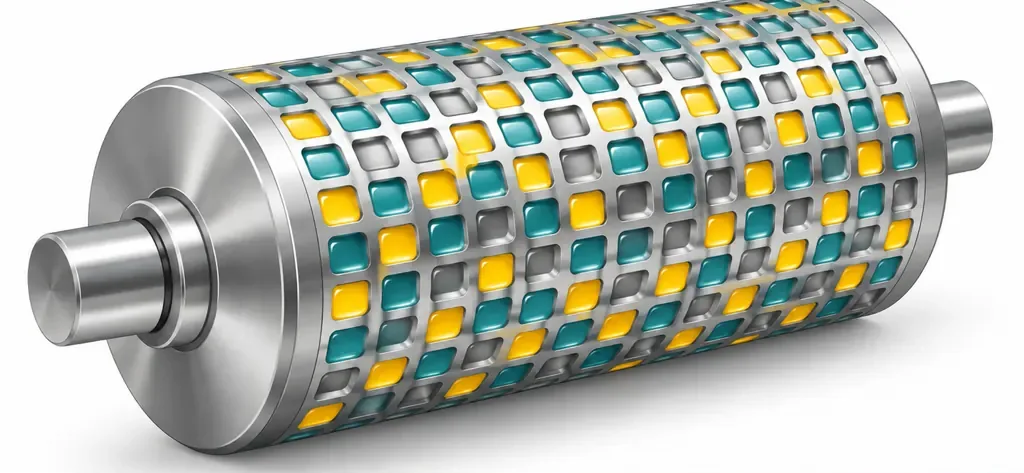
Gravure printing transfers ink from engraved cells on a cylinder onto a material. The cells need to stay clean and the ink supply needs to remain steady for consistent transfer, so equipment decisions have to account for operations and consumables too
The BOBST announcement of the new MASTER 6003 gravure press focuses on ink supply and automation features. The materials available so far do not include full specifications or delivery dates. Printers still need formal documentation from the manufacturer to check compatible materials, configurations, production requirements, and supply arrangements
Does 60% less circulating ink mean 60% savings on every job?
That is not what the figure means. The MASTER 6003's LeanPrint® ink supply system adjusts the path and piping between the ink container and the ink pan, reducing the amount of ink circulating during production by 60% compared with the existing setup. BOBST says solvent consumption can be reduced by up to 40%
Less ink exposed to the air can help reduce solvent use and waste, while making the production environment cleaner and safer. The first of MINDS's three equipment questions is to confirm what each percentage measures: "60% less circulating ink" does not mean 60% less ink used on each printed sheet, and "up to 40% less solvent" is not a guaranteed result for every plant
Before buying, ask the manufacturer to explain the comparison baseline and test conditions. Then use your own typical jobs, ink issue and return amounts, and solvent records to estimate potential savings. If the calculation baselines differ, the percentages in an equipment presentation cannot be used directly to assess payback
Even at the same print volume, a package with large solid areas may use a different amount of ink from a design with sparse halftones. In the purchasing documents, I would put "circulating ink volume" and "ink used per job" in separate columns, so neither side can interpret "ink reduction" differently
What information will operators be able to see?
Operators can view ink and energy data in real time through the MASTER 6003 HMI, the screen used to check machine information and operating controls. The third of MINDS's three equipment questions is whether this information can be used in shop-floor management and in the records customers need
The announcement says a pressure measuring device will provide four indicators of ink status:
・Ink already used for the current job
・Ink currently circulating inside the press
・Ink remaining that has been prepared for the job
・Estimated ink still needed to complete the job
The energy page also displays real-time electricity and compressed air consumption. This can help operators spot potential efficiency issues earlier and support resource tracking and documentation. These figures do not save ink on their own. The plant still needs to confirm how the data is stored, whether it can be exported, and whether it can be tied to individual jobs
The source does not mention real-time solvent measurement, so set up separate weighing or replenishment records for acceptance. Do not treat ink measurements as solvent data
How much can automatic cleaning shorten changeovers?
The figure in BOBST's announcement is that a cleaning cycle takes less than one minute. It is not the full changeover time from stopping the press to meeting production requirements again. The MASTER 6003's new moving ink pan design allows the pan to be positioned quickly, smoothly, and precisely in relation to the engraved cylinder, helping maintain stable ink transfer at high speeds and reducing manual adjustments
The automatic wash-up system cleans dried ink from the engraved cells in each unit. It starts only the units that need cleaning, eliminating the need for manual cleaning. The second of MINDS's three equipment questions is how much these steps help with actual changeover preparation. Record the cleaning cycle, operator checks, material preparation, and total changeover time separately
Cell cleanliness affects ink transfer. When short runs become more common, setup work also takes up more space in the schedule. During acceptance, record cleaning results, the number of manual interventions, and total preparation time to see what a one-minute cleaning cycle actually saves on your production line
The updated auxiliary cart lets operators remove the ink pan from either side and lowers the pan to reduce lifting. The positioning system helps align the cylinder according to the print repeat length, removing one manual positioning step when mounting the plate
How should small and midsize printers in Taiwan assess it?
Small and midsize printers in Taiwan should start by using MINDS's three equipment questions to record their current setup, then ask the manufacturer to turn the announced features into acceptance criteria
・First question: Compare circulating ink volume, actual ink use, and solvent records for representative jobs
・Second question: Confirm materials, operating conditions, and cleaning methods, and record total changeover time separately
・Third question: Request specifications, delivery dates, installation and training details, after-sales support, and data export conditions
MINDS's three equipment questions do not fill in missing specifications on the manufacturer's behalf. Recalculate every savings figure using your plant's annual orders. If a brand is still deciding on a printing method, it can first talk with MINDS about the finished product, print volume, materials, and delivery dates, then check whether the equipment fits actual orders
When one package has multiple versions, the design team can group them by color count, solid area, and print volume, so differences between files are not mistaken for differences in the equipment

Key takeaways
・The MASTER 6003's 60% figure refers to circulating ink volume. Solvent consumption may be reduced by up to 40%
・One minute is the cleaning cycle time. It should not be treated as the total changeover time
・Before assessing the equipment, organize your own records for ink use, solvent, cleaning, and energy
・Get formal information from the manufacturer on specifications, delivery dates, material requirements, and after-sales support
A further thought
The manufacturing team should first confirm whether machine data can be tied to individual jobs. The design and brand teams should make the materials, print volume, and delivery dates clear. Then purchasing has a shared basis for comparison. AI or SaaS teams building consumables forecasts or traceability reports should also confirm how data fields, timestamps, and jobs are linked. Being able to read usage figures does not tell you how many resources the finished product actually consumed
Further reading
FAQ
- How much ink can the MASTER 6003 gravure press save?
- BOBST says the new ink supply system reduces the amount of ink circulating during production by 60% compared with the existing setup, and solvent consumption can be reduced by up to 40%. These are different measurements. Check actual savings against your own jobs
- Does the one-minute figure for the MASTER 6003 refer to the full changeover time?
- No. The one-minute figure in the announcement is the time needed for the cleaning cycle in units that require cleaning. Record the full changeover separately, including material preparation and operator checks
- How does the LeanPrint® ink supply system reduce circulating ink?
- LeanPrint® adjusts the ink supply path and piping between the ink container and the ink pan, reducing the amount of ink circulating inside the press during production and the amount of ink exposed to the air
- Should small and midsize printers in Taiwan switch to the MASTER 6003 now?
- First check the formal specifications, delivery dates, and material requirements. Then estimate the return using your own records for ink, solvent, cleaning time, and energy. A product announcement gives you a starting point for evaluation, but it cannot replace a purchasing analysis
- What data should I verify when buying the Master 6003?
- Use comparable jobs to check actual ink use, circulating volume, prepared ink, and estimated ink needs. Record electricity, compressed air, and solvent replenishment separately
Related articles

The Print × AI weekly
The print and AI know-how designers, brands and enterprises can use before they commit — one email, every week
MINDS Free Tools
Spine width and imposition calculators — skip the manual math, free in your browser.
MINDS Group
Need actual printing or gifting services?
From premium printing to online ordering and festive gifts — the MINDS Group sister brands take it from here.