
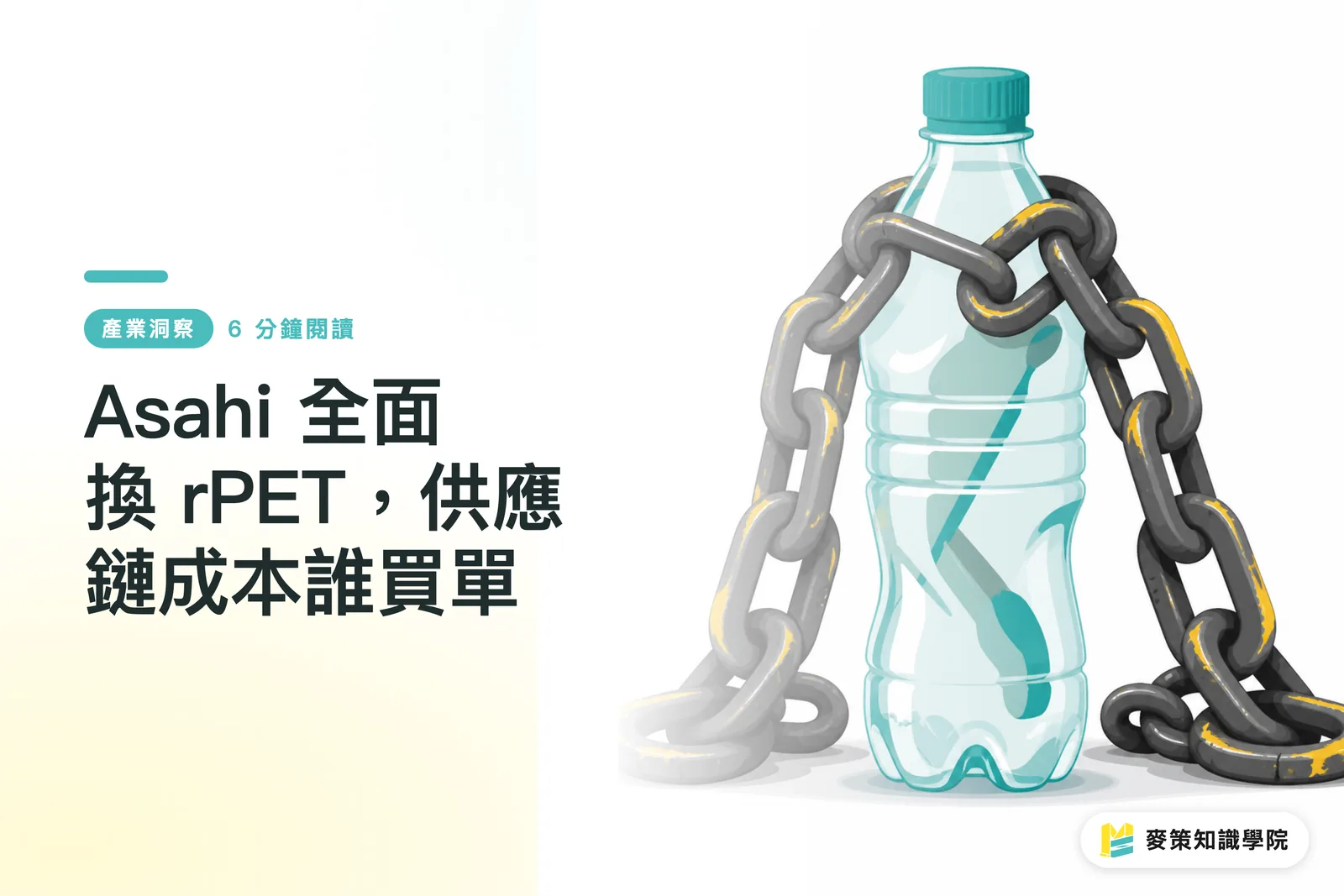
Why Asahi's rPET Promise Lands on the Print Floor
Asahi's latest move switches its Australian soft drink bottles entirely to recycled plastic (rPET). That brand commitment trickles all the way down to bottle fabrication, labeling, and printing handoffs. The four variables highlighted in Asahi Switches Australian Soft Drink Bottles to Recycled Plastic show why switching materials never stops at the procurement desk
rPET stands for recycled polyethylene terephthalate, which is recycled PET cleaned and processed into packaging-grade material. When the base material changes, existing processing parameters must be re-evaluated
When a brand turns '100% recycled plastic bottles' into a marketing claim, consumers see a simple slogan, but procurement and print teams face multiple handoff points. In my experience with sustainable packaging projects, the first question to ask is which suppliers this rPET change passes through and who signs off at each stage. How large to print the marketing claim is the least of your immediate concerns
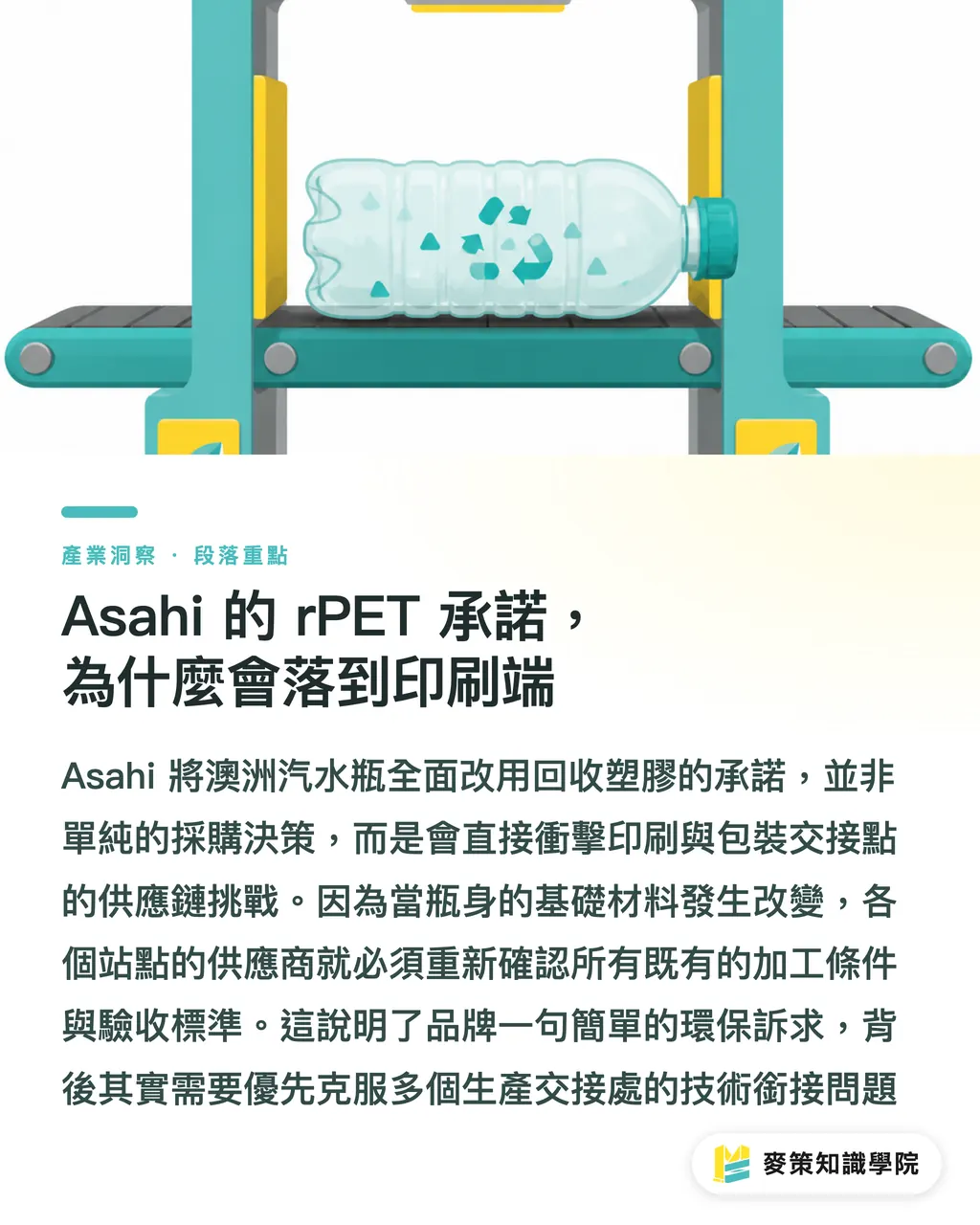
Why Switching Materials Triggers Four Print Checkpoints
Switching to rPET impacts bottle processing, label adhesion, ink migration resistance, and printing temperatures all at once. If any of these four areas fall through the cracks, a brand's sustainable packaging gets stuck right at the production handoff
・Bottle processing: Get actual rPET material and processing specs first. Old proofs cannot serve as baselines for the new material
・Label adhesion: Check bottle surface characteristics, labeling conditions, and end-use environments together. Unchanged label dimensions do not mean unchanged risk
・Ink migration resistance: The ability of ink components not to transfer to adjacent materials or contents under contact, stacking, or temperature variations. This belongs on the sign-off checklist
・Printing temperature: Document material verification and press parameters in the same change log, and confirm a repeatable temperature window before volume production
The most common misstep I see is design treating rPET purely as a bottle procurement issue, leaving the printer in the dark until the last minute. By then, color, labels, adhesion, and temperature are already tangled together, and rework quickly blows up into a full round of re-validation
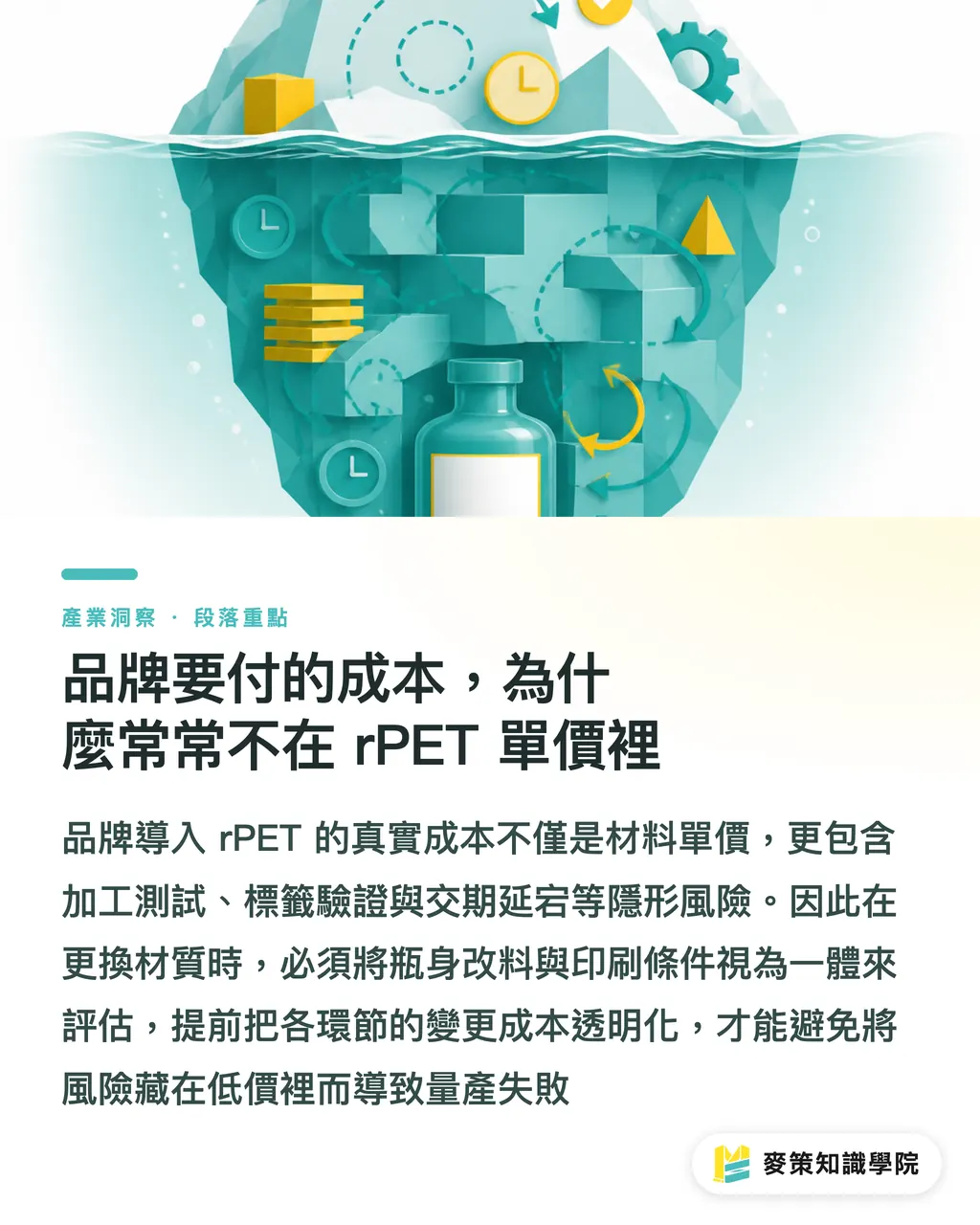
Why the Real Costs to Brands Aren't in the rPET Unit Price
Brands need to budget for the total cost of change, including material validation, processing tests, label and ink verification, back-and-forth communication across vendors, plus the risk of rework and missed deadlines if things fail
The Asahi case is a good reminder that bottle material changes and print conditions must be treated as parts of the same job order. Bottle processing, label adhesion, ink migration resistance, and printing temperatures cannot be managed in silos
・Brands: Break down '100% rPET adoption' into material scope, vendor responsibilities, and verifiable acceptance criteria. Do not let marketing slogans outrun technical specs
・Designers: Include notes on label materials, inks, and finishing in final production files to prevent last-minute layout overhauls when material updates arrive late
・Print shops: Itemize proofs, testing, retention samples, issue handling, and lead-time buffers in quotes so brands see the real cost of service
In my experience with rPET projects, whenever recycled material supply conditions shift, lead times and backup plans take the hit first. Hiding risk behind a low price tag leaves no margin for anyone to fix problems during mass production
How Brands Turn Sustainability Promises into Verifiable Specs Before Going to Print
To turn an rPET promise into verifiable specs, brands should put material, processing, printing, and delivery responsibilities onto a single change checklist, signed off jointly by the brand, designer, and print shop
In practice, I use the Mai Strategy Three Pre-Print Gates to clarify three questions upfront before sending files to press
・Step 1: Material gate. Confirm the bottle rPET grade, supplier, processing conditions, and scope of commitment, turning '100% adoption' into specifications the whole team can understand
・Step 2: Processing gate. Define testing methods, sample requirements, and owners for label adhesion, ink migration resistance, and printing temperatures, rather than just settling for a pretty proof
・Step 3: Production gate. Establish how defects are judged, who has sign-off authority, whom to notify of changes, and keep retained samples and records from the first production run
For brands, the value of this checklist is keeping procurement, design, and QA on the exact same page. When you need to translate specs into commercial production, you can work with MINDS to review material changes and pre-print conditions step by step
What Capabilities Should Small and Mid-Sized Print Shops Build First for rPET Jobs?
Small and mid-sized print shops should focus first on cross-vendor change management and traceable sign-offs. Upgraded equipment marketing can wait
This is a workflow issue. The four variables in the Asahi case give smaller shops a clear framework to start asking consistent questions
・Design: List rPET, label adhesion, ink migration resistance, and printing temperatures as pre-flight checks, leaving material and finishing notes directly beside the artwork
・Production: Reconfirm proofing and volume run parameters the moment materials change. Treat previous parameters as reference points only
・Management: Use simple SaaS (Software as a Service) forms or shared logs so brands, printers, label makers, and finishing vendors all see the same revision
・AI adoption: Let AI (Artificial Intelligence) help compare spec versions, compile test logs, and flag missing items, while keeping material compatibility calls and sign-off decisions with floor staff and QA
You do not need an elaborate system to get started, just a standardized form, a sample log, and a designated sign-off owner. When you want to turn these questions into internal SOPs, contact the Mai Strategy Knowledge Academy consulting team to help procurement look beyond just price tags
Key Takeaways
・rPET may look like a simple material change, but for brands it is a complete overhaul of bottle, label, ink, and temperature dynamics
・A '100% recycled plastic bottle' claim can only be verified when broken down into supplier roles, processing conditions, and production accountability
・Budgeting must factor in testing, rework, and delivery risks instead of merely comparing raw material unit prices
・Small and mid-sized print shops should first set up change checklists and retention sample logs, then bring in AI to track revisions and catch missing details
Further Thoughts
For print manufacturers, build these four variables into pre-quote questionnaires and retention sample logs. For designers, deliver final artwork bundled with material, label, and ink notes. For AI rollout, focus first on spec comparisons and missing item alerts without letting AI replace material compatibility decisions. For SaaS product teams, ensure data fields capture version history, test samples, sign-off owners, and change rationales. For their next project, brands can gather procurement, design, QA, and print partners for a quick sync to translate '100% rPET' into actionable acceptance criteria before locking in budgets and schedules, bringing the lessons from Asahi straight into everyday production workflows
Further Reading
FAQ
- What changed with Asahi's Australian soft drink bottles?
- Asahi switched its Australian soft drink bottles entirely to recycled plastic (rPET). This material switch directly affects bottle processing, label adhesion, ink migration resistance, and printing temperatures
- Does rPET only increase raw material procurement costs?
- Brands also need to budget for material validation, processing trials, label and ink testing, supplier coordination, and the risks of rework and schedule delays. The raw material unit price is only one part of the equation
- What should brands verify first before sending jobs to press?
- Use the MINDS (MS) 'Three Pre-Print Gates' to confirm material specs, processing and print tests, and mass production sign-off ownership, turning the '100% rPET' claim into a verifiable document
- Can small and mid-sized print shops take on rPET jobs without heavy equipment investments?
- Yes. They can start by establishing change management, proof sample retention, sign-off logs, and cross-supplier coordination. Massive equipment is not the only hurdle, but validating material and print conditions cannot be skipped
Related articles


The Print × AI weekly
The print and AI know-how designers, brands and enterprises can use before they commit — one email, every week
MINDS Free Tools
Imposition calculator and preflight file check — free prepress tools, right in your browser.
MINDS Group
Need actual printing or gifting services?
From premium printing to online ordering and festive gifts — the MINDS Group sister brands take it from here.