
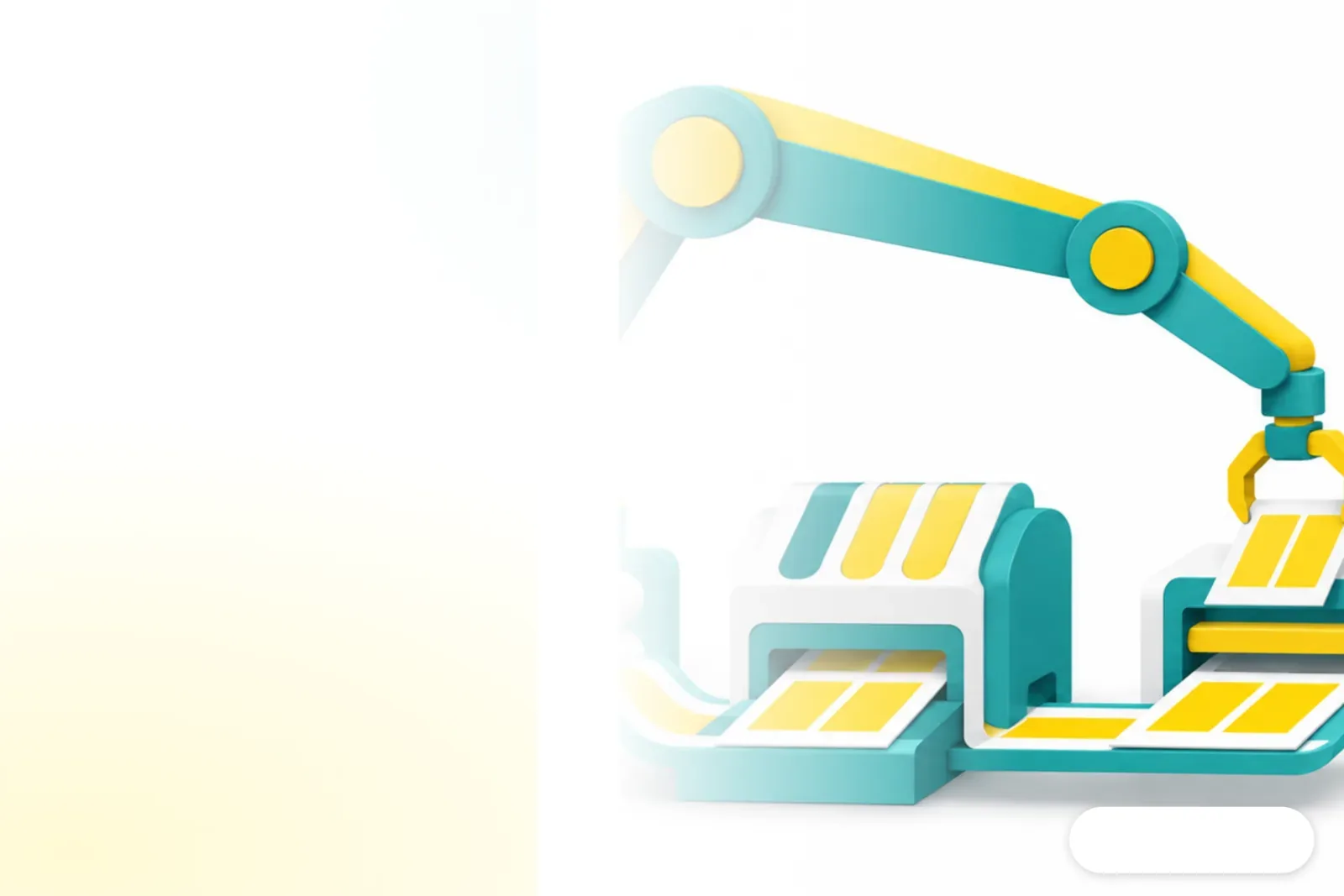
Why are AI and humanoid robots both appearing on the print industry's agenda?
The print industry is starting to view software decisions, physical equipment and sustainability as parts of the same operating picture. FESPA, an international organization for the printing industry, is focusing on AI, humanoid robotics and innovation at FESPA Australia 2026. The FESPA Congress in Porto is also covering digital printing, AI and sustainability. These are industry discussion topics. They do not mean robots are already common in print shops. My view is that equipment assessments should look beyond the speed of a single machine and ask whether a job can move all the way through to delivery Source: FESPA Australia 2026: How AI and Humanoid Robotics Are Transforming Print

Where can print shops start using AI on the production floor?
Start by checking job order data and handoff points governed by fixed rules. Then assess whether AI could cut down on back-and-forth. Physical AI connects AI to sensors and machinery so it can recognize conditions and take action in the real world. In a print shop, the key question is whether it can take on a production task based on the job's requirements. Start by reviewing whether quote details are complete, whether prepress files have passed checks, or how rush jobs are handed to schedulers. These are use cases worth assessing. The source does not confirm that any specific equipment can already handle them. If paper stock, deadlines and file versions are often clarified over the phone, organizing the required fields will do more good than buying a machine
Which part of the workflow should print shops rethink first?
Start by clarifying how information moves from order intake to shipping. If quoting, prepress, scheduling and shipping each keep a separate version of the job order, someone can easily use the wrong file after a revision. Rush jobs can also get stuck in a verbal handoff. The FESPA Congress has put digital printing, AI and sustainability on the same agenda. It reminds me to look at scheduling and material choices when assessing equipment. Print shops can first check whether job orders clearly record quantity, size, color requirements and deadline, then identify which details still need repeated confirmation. Whether new equipment can access the same data will directly affect how much time it saves on the production floor
How can small and midsize print shops decide whether to invest?
Use Mai Strategy's three-part review of intake, production and delivery to identify a workflow worth piloting, then evaluate it on a small scale. Start with common job orders:
・Intake: List the required details for quotes, files, paper stock and deadlines. Confirm who updates the file version when there are revisions
・Production: Review machine handoffs and finishing schedules. Note tasks that involve repeated data entry, handling or verbal confirmation
・Delivery: Set a process for routing missing files, incorrect versions and rush orders back to a person for handling. Then record rework, waiting time and delays before and after the pilot
This kind of workflow review can start with one product or one type of job order. For help mapping job orders, prepress and deadlines together, contact the Mai Strategy Knowledge Academy consulting team
What risks should be assessed before humanoid robots enter the production line?
First, identify the tasks on the production floor and the situations that need exceptions handled. Then consider whether the equipment is a good fit. FESPA Australia 2026 has put humanoid robots on the print innovation agenda, giving print shops a reason to review repetitive tasks such as handling, replenishing materials and picking and placing items. But the source provides no figures on equipment performance, return on investment or maturity. Interest in the topic does not guarantee added capacity. If the work environment changes often, material specifications vary, or exceptions still rely on experienced workers' judgment in the moment, clarify the handoff rules first. Brand clients should also prepare file versions, color requirements, deadlines and packaging instructions so the print shop can schedule production against consistent requirements

Key takeaways
・Start AI adoption by organizing job order fields, then confirm which back-and-forth tasks automation could eliminate
・Humanoid robots signal an industry trend. Equipment purchases still need to match the task and production floor conditions
・Digital printing, AI and sustainability are on the same agenda. Review scheduling and material choices together
・Run a small pilot. Record rework, waiting time and delays before discussing return on investment
A question to consider
As a next step, pick a common type of job order and map the people and equipment it passes through from intake to shipping. Then choose a handoff that involves the most repeated checks and try improving it. When print shops make job orders, file versions and exception reports clear, AI and equipment have reliable working conditions. SaaS teams can also start with fields, permissions and exception alerts to reduce the need for production staff to go back and hunt for information
Further reading
FAQ
- Should print shops buy humanoid robots now?
- FESPA has put humanoid robots on the print industry's agenda, but that does not prove the equipment is right for every production line. Review repetitive tasks, working conditions and exception handling first, then assess the investment
- What should AI handle first in a print shop?
- Organize job orders, file versions and handoff details first. Then assess which steps in quoting, prepress checks or scheduling could involve fewer repeated confirmations
- Will AI replace prepress staff?
- AI can help check whether information is complete or flag items that need review. Prepress staff still need to judge whether files, color and production conditions are suitable for printing
- How can brand clients support print automation?
- Provide consistent file versions, color requirements, deadlines and packaging instructions so the print shop can schedule production using clear job orders
Related articles
The Print × AI weekly
The print and AI know-how designers, brands and enterprises can use before they commit — one email, every week
MINDS Free Tools
AI background removal, brand stamping, and a LINE sticker maker — free design tools, right in your browser, no upload.
MINDS Group
Need actual printing or gifting services?
From premium printing to online ordering and festive gifts — the MINDS Group sister brands take it from here.