

Why Prepress Label Checking Is So Prone to Failure
Prepress file communication and verification probably take up more than half of our daily work
The cost of a mistake often means production stoppage or reprinting an entire batch, which is especially common in food and cosmetic packaging
Taiwanese regulations explicitly state that food labels must include at least six core fields: product name, ingredients, food additives, net weight, manufacturer information, and expiration date
Cosmetics have their own set of complex labeling requirements specified by health authorities
As long as one warning is missing, or the font size is off by even a millimeter, the batch may be blocked from retail channels or face fines
This is why many designers and procurement specialists have bloodshot eyes from proofreading before sending files to print

How AI Can Help in Prepress Label Review
Based on the clients and projects I have encountered recently, AI acts like a tireless assistant in the early stages of the design process
When you upload your packaging design file, AI can quickly perform an initial check of the text and layout
It can scan in one second whether the six aforementioned core fields are complete, without missing anything due to visual fatigue
AI can also accurately detect if Chinese font sizes fall below the minimum requirements stipulated by regulations
For those necessary warnings that designers often shrink or forget for the sake of aesthetics, AI's initial screening prompts can significantly reduce the incidence of such low-level errors
Why You Still Shouldn't Send to Print Directly After AI Review
Over the past six months, I have often been asked: since AI catches errors so quickly and accurately, will we no longer need human review for labels in the future?
I must say directly that if a client takes an AI-generated or AI-reviewed draft and demands it be sent to print immediately, it is absolutely a ticking time bomb
The fatal limitation of AI is that it lacks actual legal judgment and scientific verification capabilities
It can only compare whether an ingredient is 'written there,' but it cannot verify if the chemical names and additive proportions on the ingredient list are scientifically correct
Regulations are constantly changing, and AI cannot accurately judge whether the latest amendments by health authorities apply to current specific products
This involves the attribution of compliance liability, which no automated tool can replace the formal endorsement of regulatory professionals
How to Establish a Prepress Label Checklist in Practice
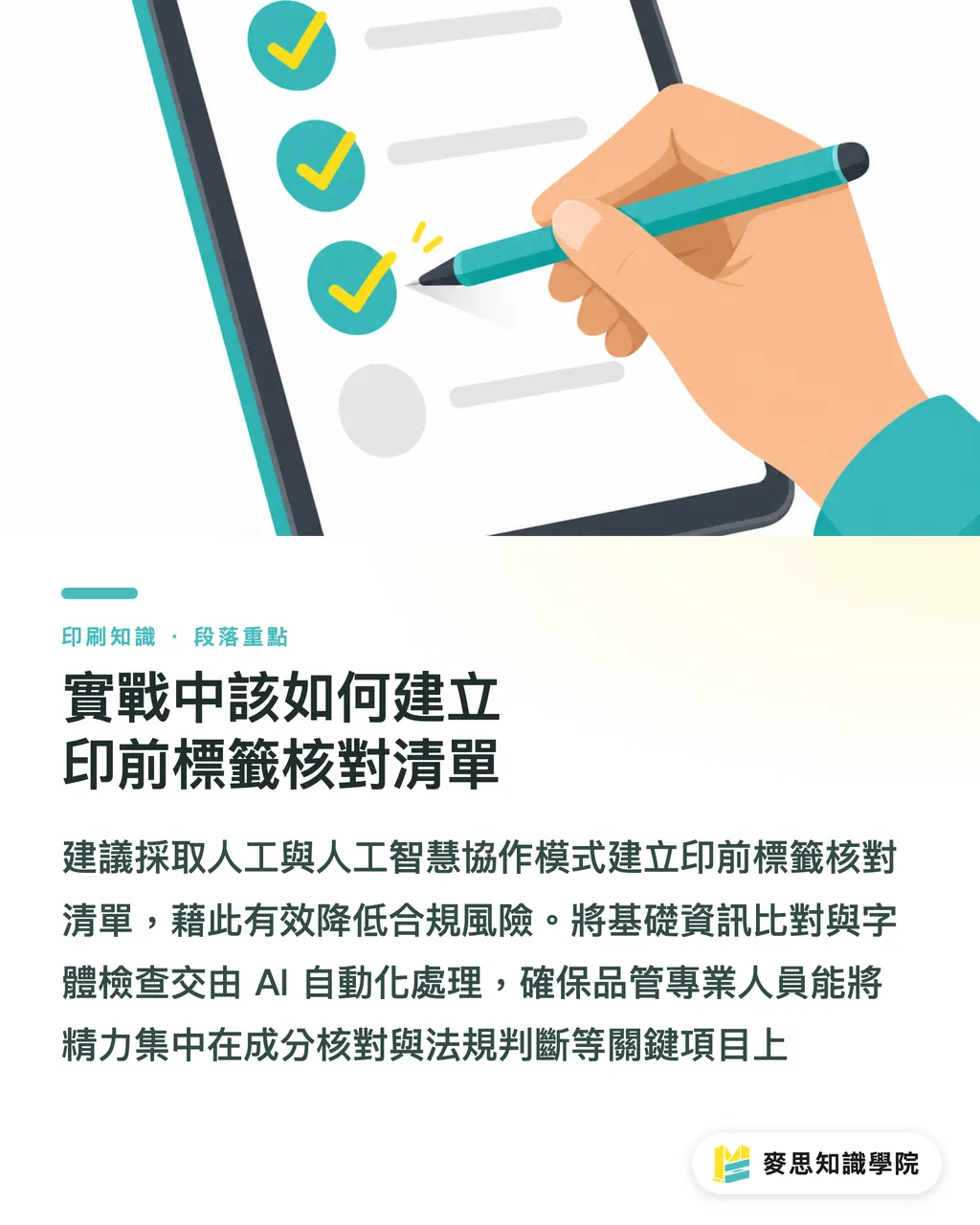
To avoid hitting compliance landmines, I strongly recommend establishing a collaborative workflow of 'AI first, human follow-up.'
Leave the trivial visual checks to the machine, and reserve human energy for judgment and approval
You can refer to this responsibility division checklist template I often use when mentoring clients:
・Basic field completeness: Let AI compare whether placeholders for product name, ingredients, net weight, and manufacturer info are all present
・Layout and font specifications: Use AI to check if Chinese font sizes meet standards and if warnings are in prominent positions with sufficient contrast
・Ingredients and scientific facts: Must be manually verified word-for-word by quality control or regulatory professionals to ensure additive names and labeling order are legal
・Latest regulatory adaptability: Procurement or project managers must confirm whether the packaging complies with the latest announcements from authorities and category specifications for the current season
Key Takeaways
・AI is an excellent initial screening tool that can instantly catch layout errors like missing text, missing fields, and font sizes that are too small
・Regarding the accuracy of ingredients and the latest regulatory changes, the gatekeeping of regulatory consultants and quality control personnel is still absolutely necessary
・Introducing a standard operating procedure of 'AI first, human follow-up' is the only way to balance prepress efficiency with business compliance
Extended Thoughts
For those in printing manufacturing and SaaS, integrating AI compliance checks into prepress systems is an inevitable direction
However, the system interface must clearly label the AI's disclaimer, positioning the tool as a way to 'reduce visual fatigue for designers' rather than 'replace regulatory review.'
Helping clients block common-sense prepress disasters while holding the line on professional judgment is the most valuable integrated service
FAQ
- Can AI help check all the statutory fields for food labels?
- AI can only perform preliminary text and field presence checks, such as verifying if core information like product name and manufacturer is included, but it cannot judge the legality and veracity of the content text
- If AI says my packaging label has no issues, can I send it to print immediately?
- Absolutely not. AI cannot verify the scientific accuracy of food additives, nor can it track the latest regulations. Formal final confirmation by regulatory or quality control personnel is still required before sending to print
- How should designers incorporate AI into the prepress checking process?
- Treat AI as the first line of defense to quickly catch low-level errors like font sizes being too small or missing warnings, and save the time saved from naked-eye proofreading for more core visual design and material communication
Related articles





The Print × AI weekly
The print and AI know-how designers, brands and enterprises can use before they commit — one email, every week
MINDS Free Tools
AI background removal, brand stamping, and a LINE sticker maker — free design tools, right in your browser, no upload.
MINDS Group
Need actual printing or gifting services?
From premium printing to online ordering and festive gifts — the MINDS Group sister brands take it from here.