
Why is U.S. packaging regulation moving on two fronts?
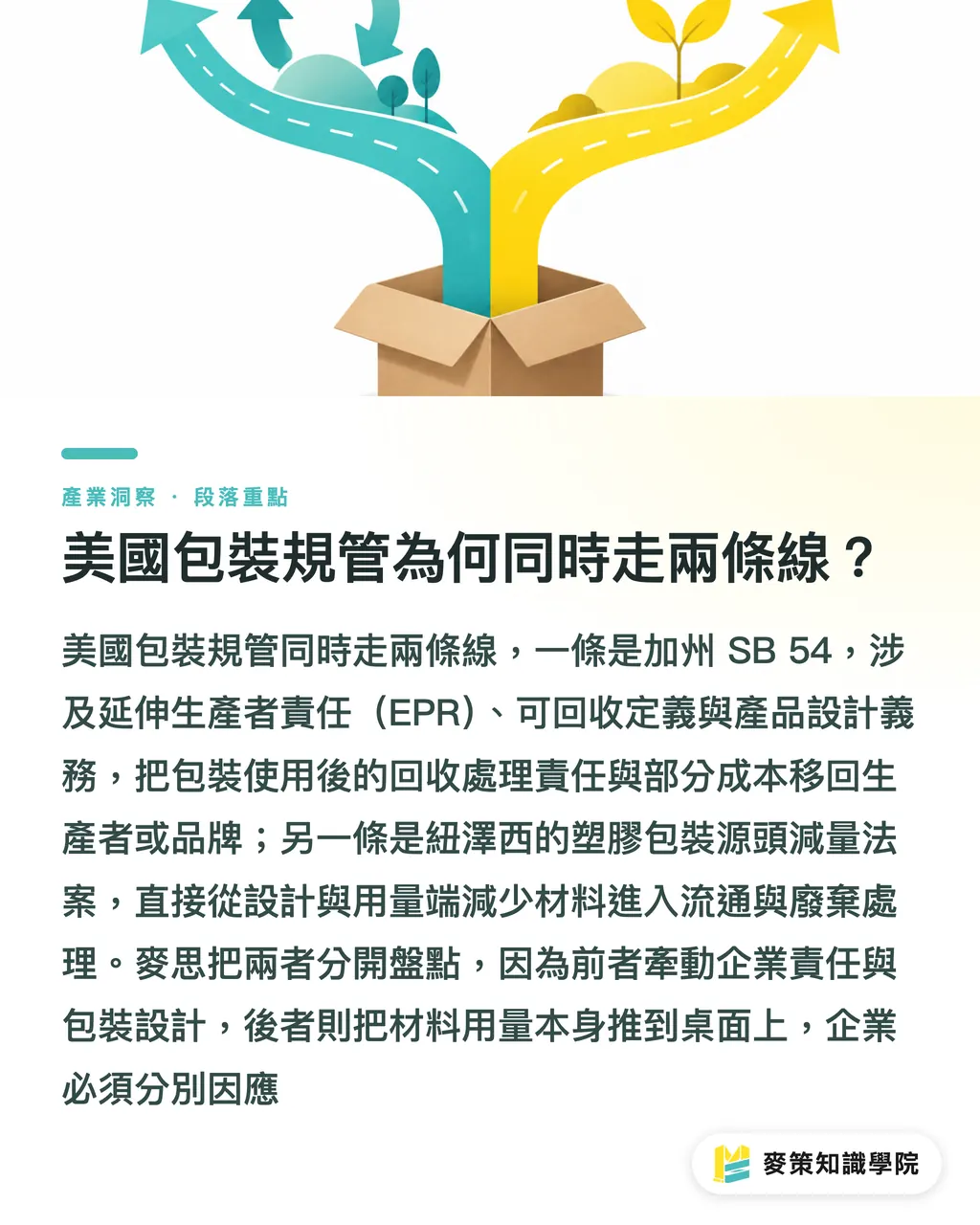
U.S. packaging regulation is advancing on two fronts. California's SB 54 covers EPR, definitions of recyclability, and product design obligations. New Jersey, meanwhile, has proposed a plastic packaging source reduction bill. MINDS is tracking the two separately because the first affects corporate responsibility and packaging design, while the second puts material use itself on the table. Extended producer responsibility (EPR) shifts responsibility for recycling and processing packaging after use, along with some of the costs, back to producers or brands. Source reduction cuts packaging materials through design and lower material use, so less material enters circulation and the waste stream
What is the SB 54 lawsuit challenging?
The lawsuit over California's SB 54 challenges how the rules define "recyclable," what they require of product and packaging design, and the compliance and financial obligations that businesses would take on. The American Forest & Paper Association (AF&PA), the Flexible Packaging Association (FPA), and other groups had previously sued California officials over SB 343, the "Truth in Labeling" law. On October 8, 2026, they filed an amended federal complaint seeking to include provisions related to SB 54 and arguing that they raise free speech and constitutional concerns. MINDS treats this as the plaintiffs' legal argument. It should not be described as a court finding that the law is unconstitutional. A complaint is not a ruling. Brands should still check packaging labels against material specifications so the design does not make a claim that purchasing cannot support with matching material records
What could New Jersey's source reduction bill change?
New Jersey's bill puts the focus on plastic packaging source reduction. That means brands need to look beyond recyclability and review how much packaging they use. A news page published by the FPA on October 9, 2026, lists the bill but gives no operational details or timeline, so MINDS will not describe it as a packaging ban that is already in effect. Brands can start by checking which packaging layers could be reduced, then confirm whether any changes would affect product protection, shelf display, or required information. Removing one layer of film may seem simple. If it leads to more damage in transit, the material savings could turn into return costs
What should Taiwanese brands do first?
Taiwanese brands should first create a state-by-state index of their U.S. sales destinations, then link each SKU to its current packaging documents. MINDS recommends keeping the same version number across design files, purchasing specifications, and supplier records. If a carton says "recyclable" but the packaging specification only uses a generic term for a composite material, it will be hard for the brand to explain how the claim matches the materials actually used. This inventory does not mean every package needs to be changed now. It is a way to identify which product, state, and packaging version needs attention. While the rules are still developing, record the current state of things so there is a baseline for any changes later
How can brands build the inventory into their packaging workflow?
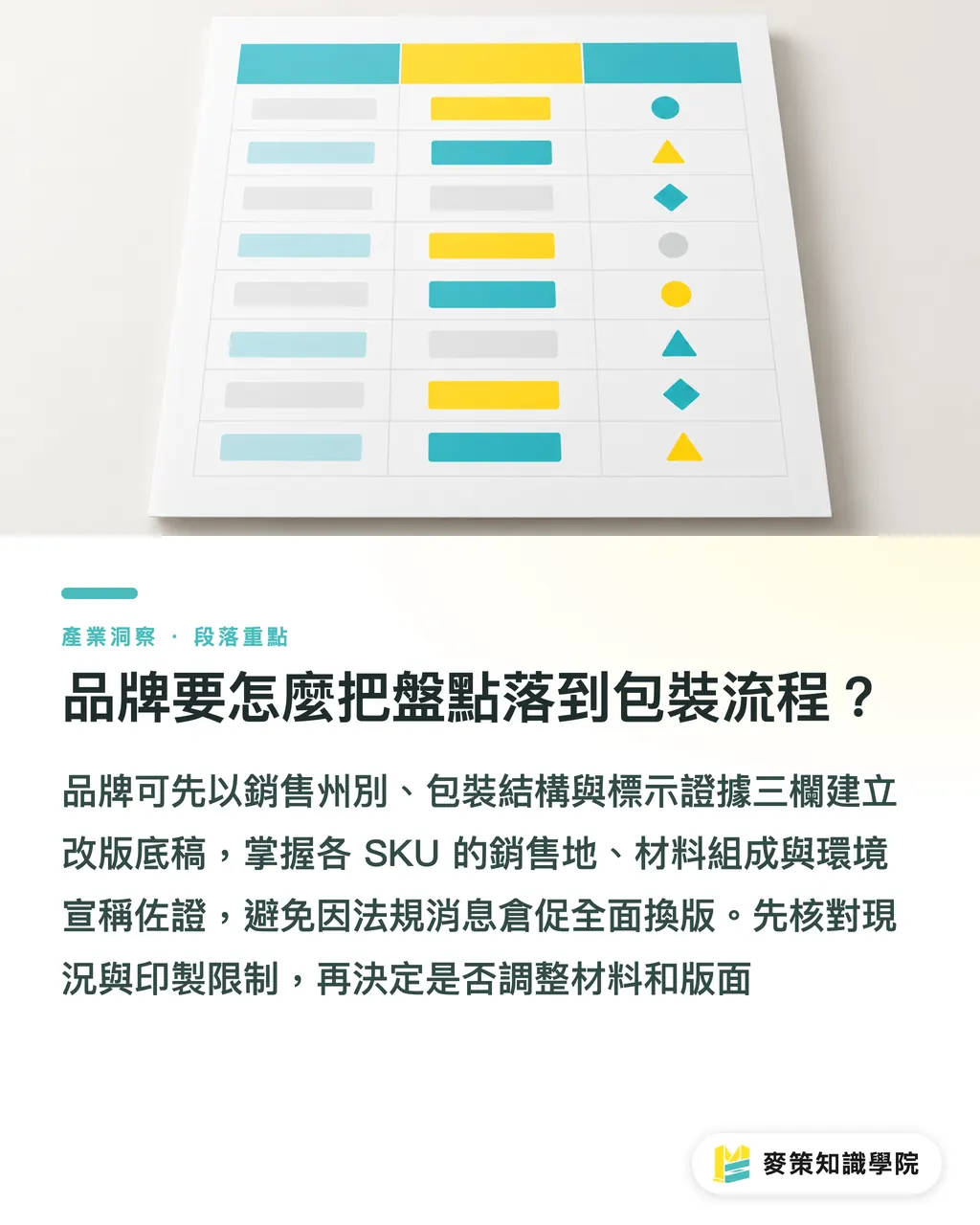
MINDS recommends using three columns as a starting point for packaging revisions, so a regulatory update does not trigger a rushed, full redesign
・Sales state: Record the U.S. sales destinations for each SKU and track California SB 54 and New Jersey's source reduction bill separately
・Packaging structure: Keep records of current materials and composite layers so you can specify what changed when assessing a reduction
・Labeling evidence: Save the environmental claims, supplier specifications, and supporting documents for each version so the wording can be checked against the materials actually used
If your brand is preparing a redesign and needs to confirm print constraints, bring the current artwork and material information to MINDS to discuss packaging print requirements. Take stock of the current setup first, then decide whether to change the materials or layout
Key takeaways
・The SB 54 lawsuit presents the plaintiffs' arguments. Brands should continue tracking the litigation and regulatory developments
・The California dispute centers on definitions of recyclability and design obligations, while New Jersey's bill brings plastic packaging volumes into the discussion
・Keep packaging versions and labeling records by state and SKU before evaluating a redesign
・Assess material reduction plans alongside product protection and supplier documentation
Further thoughts
I would first ask brands to organize packaging records for every SKU so they can track versions. There is no need to rush into choosing a single replacement material. The design team can maintain the labeling file versions, while the printer records the material and process documents. AI or SaaS tools can link state information to each SKU's packaging records and flag missing fields or inconsistent versions. Brands should leave regulatory interpretation to their legal teams. Taiwanese small and midsize printers can prepare a packaging materials sheet now, so when customers ask about U.S. export specifications, they do not have to dig through old emails
Further reading
FAQ
- Has SB 54 been ruled unconstitutional?
- The FPA reports that industry groups filed an amended complaint arguing that some provisions raise free speech and constitutional concerns. That is not a court ruling
- When will New Jersey's plastic packaging source reduction bill take effect?
- The FPA news page says the bill addresses source reduction for plastic packaging, but does not provide an effective date or specific requirements
- Do Taiwanese brands need to replace all their U.S. packaging now?
- There is no need to redesign everything based only on a lawsuit and a bill. First inventory sales states, packaging versions, and environmental labels, then assess what to change against the final rules
- What is the difference between EPR and source reduction?
- EPR shifts responsibility for recycling packaging after use and some of the costs back to producers or brands. Source reduction focuses on using less packaging material through design and lower material use
Related articles
The Print × AI weekly
The print and AI know-how designers, brands and enterprises can use before they commit — one email, every week
MINDS Free Tools
AI background removal, a LINE sticker maker, spine & imposition calculators — all free, right in your browser, no upload.
MINDS Group
Need actual printing or gifting services?
From premium printing to online ordering and festive gifts — the MINDS Group sister brands take it from here.