
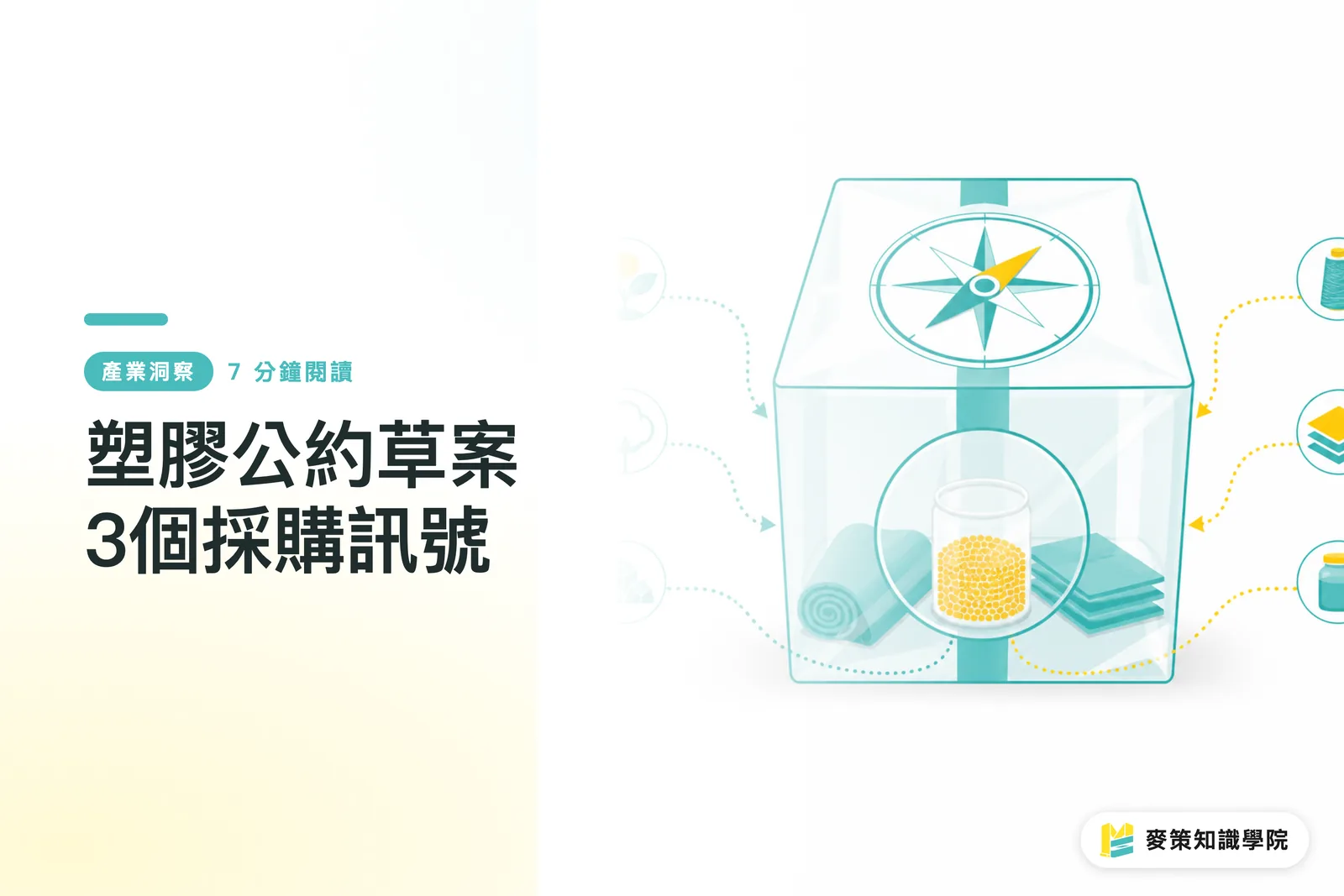
What Was Cut from the Draft?
What got stripped away were the enforcement teeth holding the production side accountable. Controls on virgin plastic production and consumption, production reporting, monitoring, and required actions following effectiveness evaluations were all flagged as weakened or removed by the Environmental Investigation Agency in a Packaging Insights report on August 11, 2026
The Global Plastics Treaty is a legally binding agreement negotiated under the UN Environment Programme (UNEP). In plain terms, countries want a single rulebook for plastic responsibility across design, production, and end-of-life disposal
The Environmental Investigation Agency (EIA) is an NGO focused on environmental crime and pollution governance. Amy Youngman, Legal and Policy Specialist at EIA, criticized the draft for bracketing or dropping references to "production" and weakening mechanisms for monitoring and effectiveness evaluation
I do not view this simply as international negotiations turning conservative. For the packaging supply chain, having no production-side accountability means statutory regulations are temporarily missing a hard mandate. But brand owners still face the exact same question: how much virgin plastic is in the packaging, how much recycled content is used, and can the data be verified?
Why Brands Cannot Wait for the Treaty to Be Finalized
Brands cannot afford to wait for the treaty to be finalized because procurement scorecards move faster than regulation. FMCG clients in Europe, the US, and Japan are already adding traceability and disclosure capabilities to their supplier questionnaires
Extended Producer Responsibility (EPR) shifts packaging recycling, disposal, and disclosure costs upstream to brands and supply chains, rather than leaving the burden at the waste stage. Working on brand packaging projects over recent years, I have seen EPR shift from a legal compliance issue into a daily procurement priority
The timeline matters. As Packaging Insights reported, the next informal Bangkok Heads of Delegation (HODs) meeting is scheduled for September 27-30, 2026, with INC-5.4 negotiations extending into 2027. Brands should not focus on when the treaty enters into force. The real question is whether enterprise clients will demand supplier data during this 2026-2027 window
Do not rush
For small and mid-sized brands, this is not an order to replace every packaging material with paper overnight. A more practical approach is to break down current packaging into four fields: material, supplier, application, and compliance risk. That way, procurement, design, and the print shop all work from the same dataset
What Questions Will Flexible Packaging, Labels, and Coated Paper Face First?
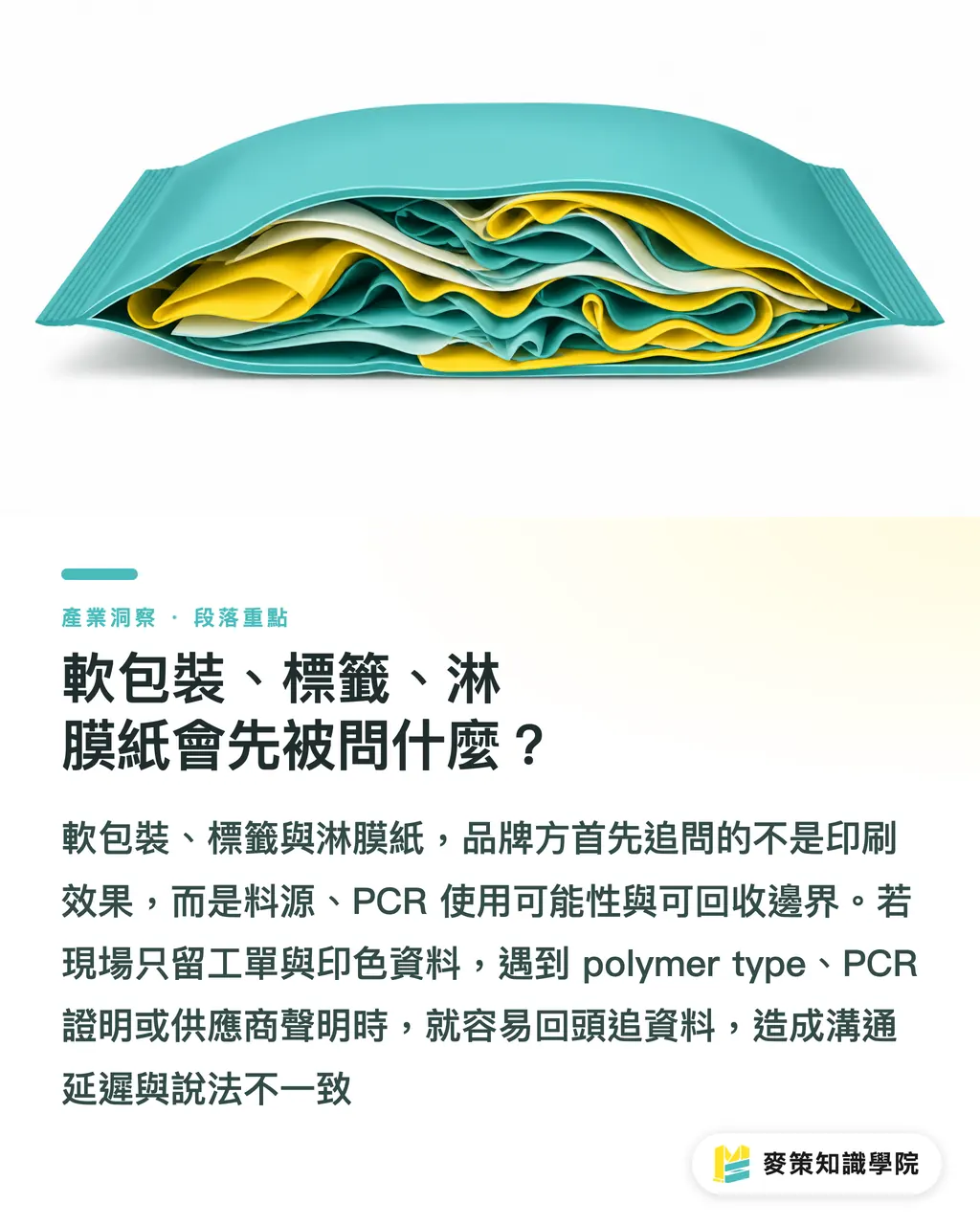
Flexible packaging, labels, and coated paper will face scrutiny over material origins and recyclability boundaries first, not just print quality
Post-Consumer Recycled (PCR) material is reprocessed from products used and discarded by consumers. Brand buyers use it to verify whether packaging genuinely reduces virgin plastic usage. Virgin plastic, by contrast, is newly manufactured directly from petrochemical feedstocks without any recycled content
On the production floor, I focus first on the 3 categories brand buyers question most:
・Flexible packaging: Film types, layer structures, inks, adhesives, PCR feasibility, and food contact limits must all trace back to supplier documentation
・Labels: Facestocks, adhesives, release liners, and laminations directly affect recycling sorting. Bottle labels in particular cannot just be hand-waved with the buzzword "eco-friendly material."
・Coated paper: When paper substrates are coated with PE or PLA, the exact ratio of paper to plastic must be documented. You cannot claim plastic reduction just because it looks like paper
These items share a common problem: printers often keep only work orders and color formulas. When a brand asks for polymer types, PCR certificates, or supplier declarations, tracking the data backward is slow and prone to inconsistencies
What Data Should Small and Mid-Sized Printers Organize First?
Small and mid-sized printers should organize material sourcing evidence first instead of rushing to switch substrates. I use the "Mai Strategy 3 Material Sourcing Questions" to get the paperwork in order
A Bill of Materials (BOM) breaks down finished packaging into paper, film, ink, adhesive, finishing processes, and supplier versioning. For packaging projects, it is far more practical than any ESG slogan. If a brand is redesigning packaging for export, MINDS can help align print specifications, material selection, and supplier documentation early, preventing cases where designs are locked in but compliance data cannot be retrieved
The "Mai Strategy 3 Material Sourcing Questions" are simple, but they work:
・Where did this material come from: Supplier names, grade numbers, batch codes, and material declarations must match
・What went into this batch: Virgin resin, PCR content, paper base, coating, inks, and adhesives must be recorded separately
・How to account for the finished goods: Work orders, BOMs, revision versions, delivery batches, and client sign-off records must connect cleanly
That is enough to start
Many small and mid-sized print shops are fully capable of producing sustainable packaging. The real issue is that data sits scattered across purchasing, prepress, sales, and warehouse logs. Once you pull that data together, you have what you need to discuss PCR adoption, mono-material structures, down-gauging, or refillable formats
How Brands Can Avoid Overstating Sustainability Claims
Brands must define their packaging boundaries clearly before pitching improvement roadmaps. The controversy around the Global Plastics Treaty is a reminder that without transparent disclosure, sustainability claims quickly turn into empty marketing
ISO 14021 (the standard for self-declared environmental claims) requires environmental claims to be specific, verifiable, and free of vague wording. When brands put "eco-friendly," "recyclable," or "plastic-reduced" on packaging, websites, and catalogs, those claims must link directly to specific materials, percentages, applicable regions, and recycling conditions
I recommend a 3-tier communication structure rather than jumping straight to flawless claims:
・Current baseline: What materials are in this packaging right now, and which components still contain virgin plastic
・Active improvements: What alternatives have been evaluated, such as PCR integration, down-gauging, paper-based substitution, or refill pouch design
・Technical constraints: Why certain materials cannot yet be replaced due to food contact rules, barrier properties, oil resistance, cold chain demands, or shelf-life requirements
When you need to unify packaging specifications, procurement questionnaires, and website technical articles into one consistent narrative, the Mai Strategy Knowledge Academy consulting team can assist with content and specification audits. Making exaggerated claims will leave you scrambling during audits. Precise disclosure demonstrates genuine brand accountability
Key Takeaways
・Weakened treaty language will not soften brand procurement standards
・No matter how well you pitch recyclability, unverified material sourcing will fail supplier audits
・The challenge in flexible packaging goes beyond printing, because every single layer must be accounted for
・Build your BOMs and batch records before switching materials to avoid costly trial and error
Further Considerations
For printing manufacturers, the next step is embedding material documentation directly into daily work orders. For designers, creative proposals must clearly define visuals, substrates, and claim boundaries together. For AI deployment, prioritize document comparison, version alerts, and missing file warnings rather than inventing non-existent PCR certificates for brands. For SaaS teams, the highest-value features are not flashy dashboards, but structured supplier data fields, audit logs, BOM exports, and automated customer questionnaire population
Further Reading
FAQ
- Has the Global Plastics Treaty already taken effect?
- The Global Plastics Treaty is still under negotiation. The Packaging Insights report on August 11, 2026, covered a new informal Aid to Negotiations document and NGO criticisms, not an enacted regulation
- If production accountability was weakened, why should brands still be concerned?
- Even if production accountability was toned down in the draft, brand enterprise buyers can still require suppliers to disclose virgin plastics, PCR content, material sources, and recycling constraints. Procurement pressure arrives well before statutory deadlines
- Do flexible packaging printers need to switch to PCR immediately?
- Not all flexible packaging can adopt PCR right away. Food contact safety, barrier performance, and processing stability must be validated first. A practical first step is compiling complete material sourcing ledgers and supplier documentation
- Can coated paper be treated directly as plastic-reduced packaging?
- Coated paper cannot be labeled as plastic reduction just because it looks like paper. Brands must clearly specify the paper substrate, coating materials, recycling requirements, and application limits
Related articles




The Print × AI weekly
The print and AI know-how designers, brands and enterprises can use before they commit — one email, every week
MINDS Free Tools
AI background removal, a LINE sticker maker, spine & imposition calculators — all free, right in your browser, no upload.
MINDS Group
Need actual printing or gifting services?
From premium printing to online ordering and festive gifts — the MINDS Group sister brands take it from here.